Visual Learning Word Problems Worksheets for Ages 4-6
5 filtered results
-
From - To
Discover engaging "Visual Learning Word Problems Worksheets for Ages 4-6" that blend fun and education seamlessly. These worksheets by Kids Academy offer young learners visually stimulating word problems designed to enhance math skills and critical thinking. Each sheet utilizes colorful illustrations and easy-to-understand scenarios to help children grasp basic mathematical concepts. This approach not only motivates young minds but also strengthens their ability to solve problems independently. Perfect for early learners, these worksheets support foundational math skills, making learning both enjoyable and effective. Prepare your child for future academic success with our expertly designed visual learning tools.
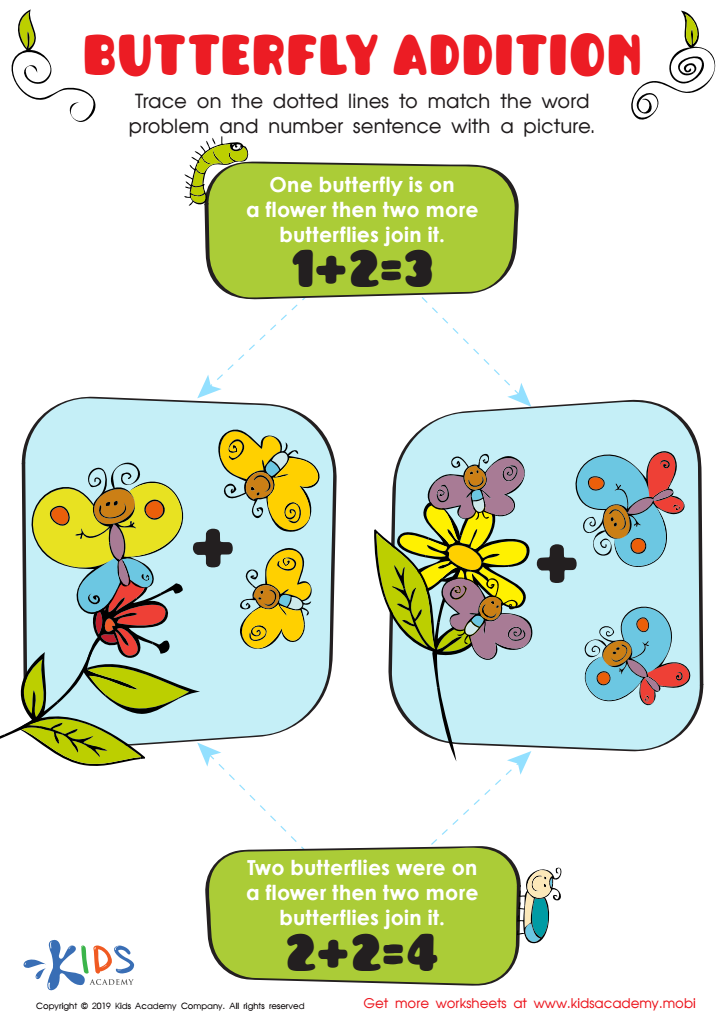
Butterfly Addition Worksheet
 Assign to My Students
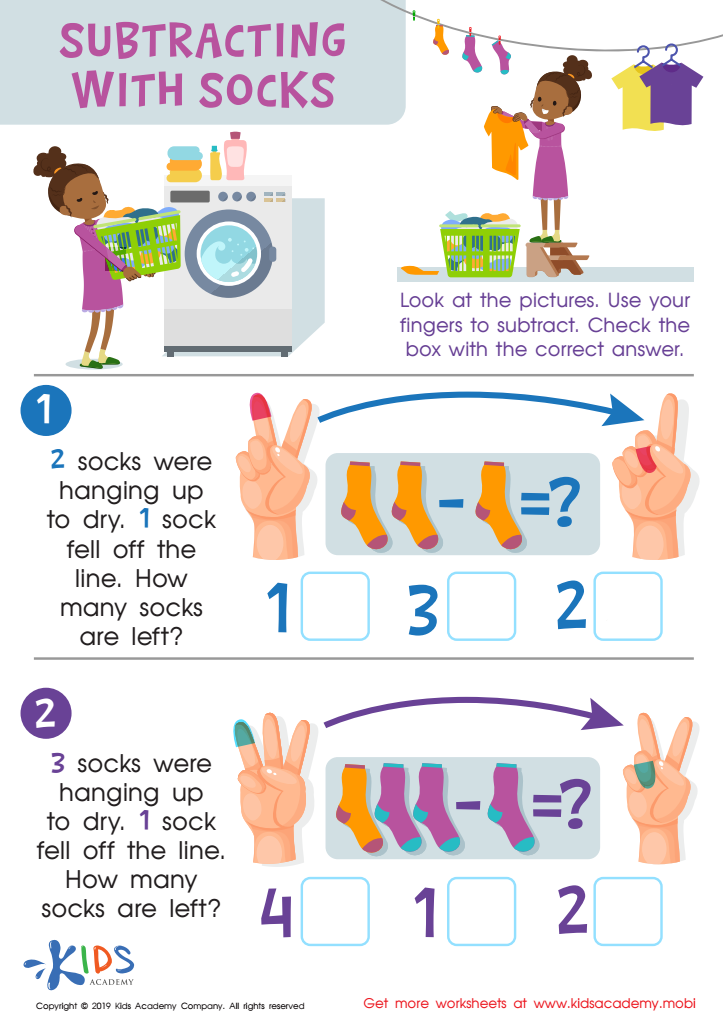
Subtracting Socks Worksheet
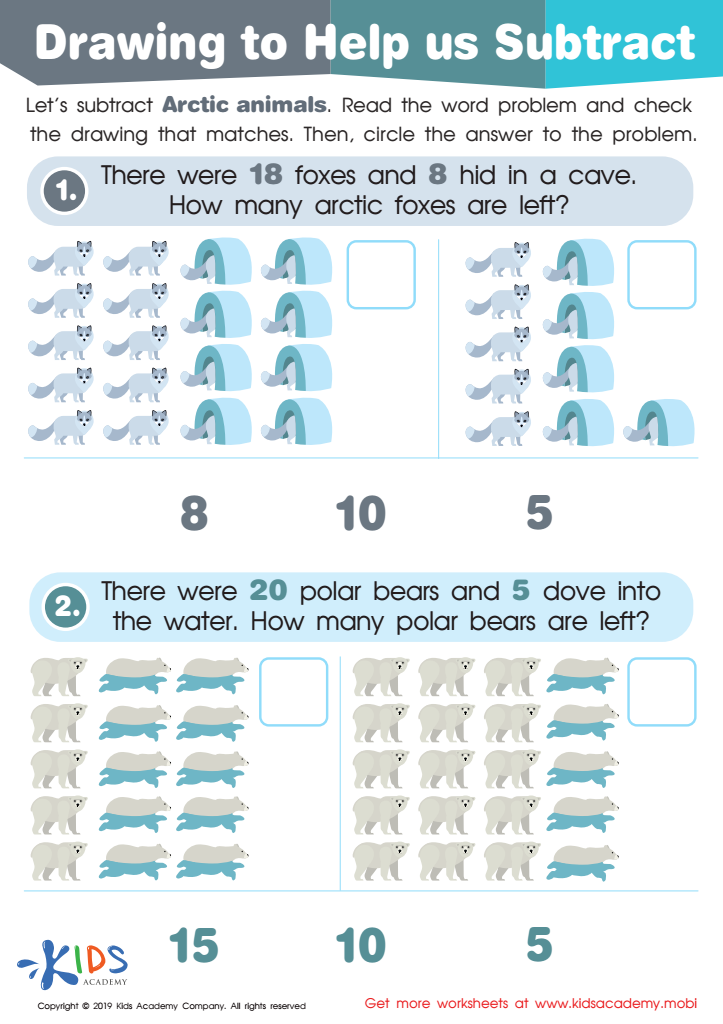
Drawing to Help Us Subtract Worksheet
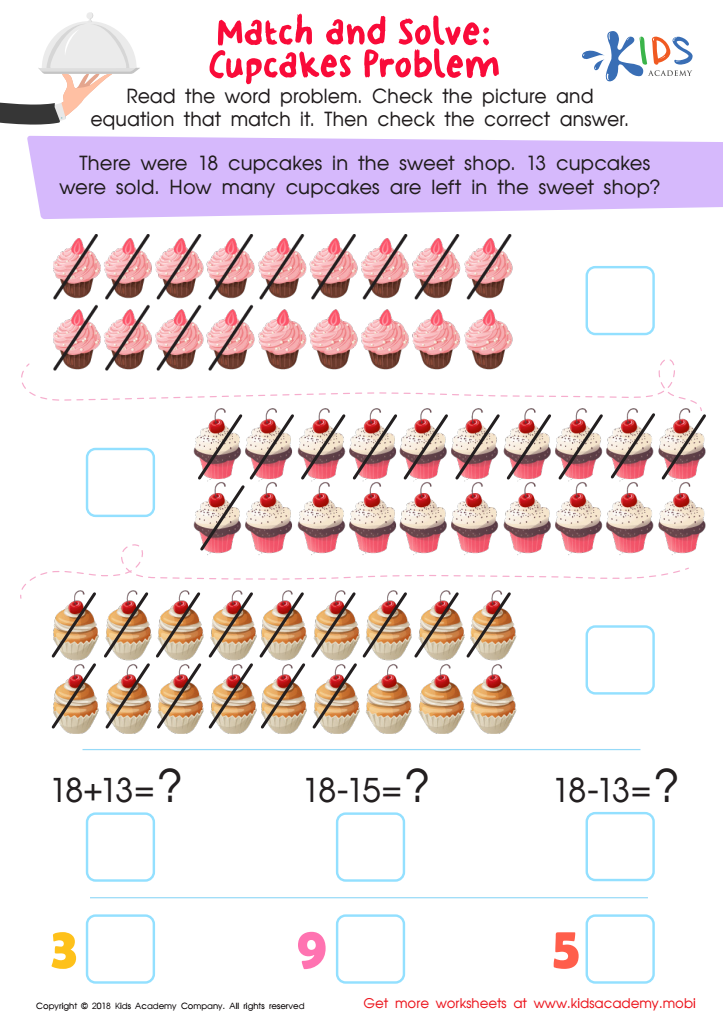
Match and Solve: Cupcakes Problem Worksheet
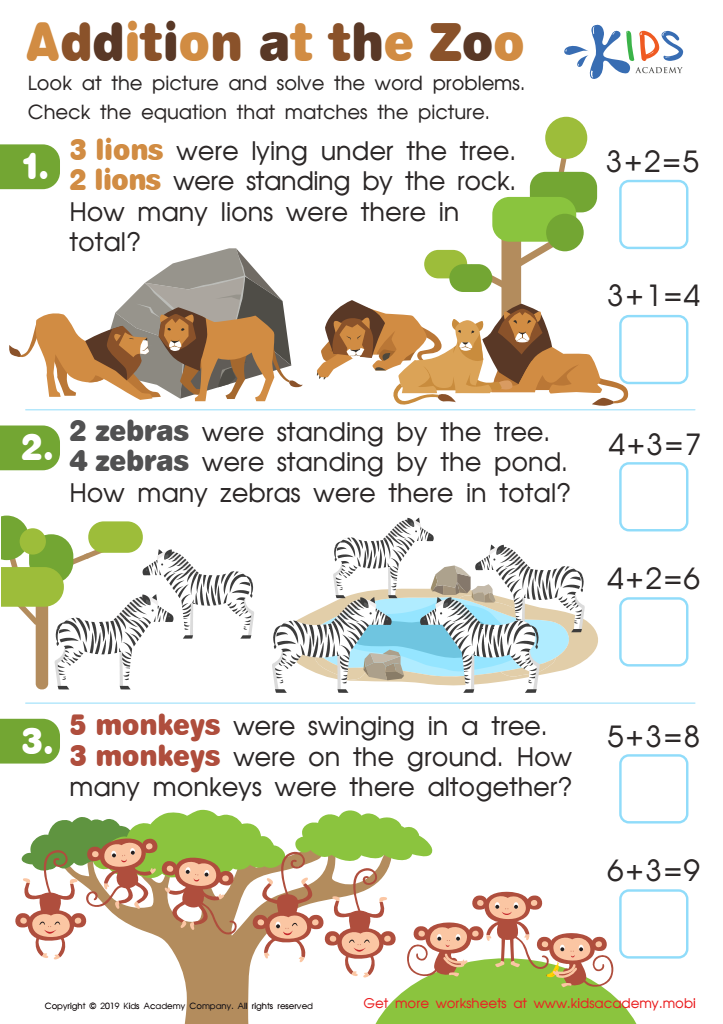
Addition at the Zoo Worksheet








Visual Learning Word Problems are crucial for children aged 4-6 because they lay the foundation for math comprehension and problem-solving skills in a developmentally appropriate manner. At this early stage, young children are often more comfortable with concrete objects and visual representations than abstract numbers. Visual aids, like pictures or diagrams, make math relatable and easier to understand. When children see pictures of apples being added or subtracted, for instance, they can easily grasp the concept behind the numbers.
For teachers, using visual learning word problems can make lessons more engaging and interactive. It supports differentiated instruction, catering to various learning styles. Some students might struggle with text-heavy problems but would thrive with visual aids, ensuring that all pupils have an equal opportunity to succeed.
For parents, incorporating visual learning into daily routines helps reinforce classroom teachings at home. It can foster a supportive learning environment, making math feel less intimidating and more enjoyable. Moreover, early exposure to such effective learning strategies will build a solid foundation for future academic challenges, instilling confidence and a positive attitude towards learning.
In summary, visual learning word problems for this age group bridge the gap between concrete and abstract thinking, aiding cognitive development, and making math a fun, engaging subject for young learners.








