
Analytical skills Reading Worksheets for Ages 4-6
6 filtered results
Difficulty Level
Grade
Age
-
From - To
Subject
Activity
Standards
Boost your child's critical thinking with our "Analytical Skills Reading Worksheets for Ages 4-6." Designed to develop young minds, these engaging activities encourage comprehension, pattern recognition, and problem-solving skills through fun stories and interactive tasks. Each worksheet is crafted to challenge and entertain, making learning an enjoyable experience. Perfect for early readers, these resources lay a strong foundation for future academic success. Foster analytical abilities while nurturing a love for reading. Visit our page and give your child a head start with our expertly-created analytical skills reading worksheets designed specifically for young learners.
Favorites
With answer key
Interactive
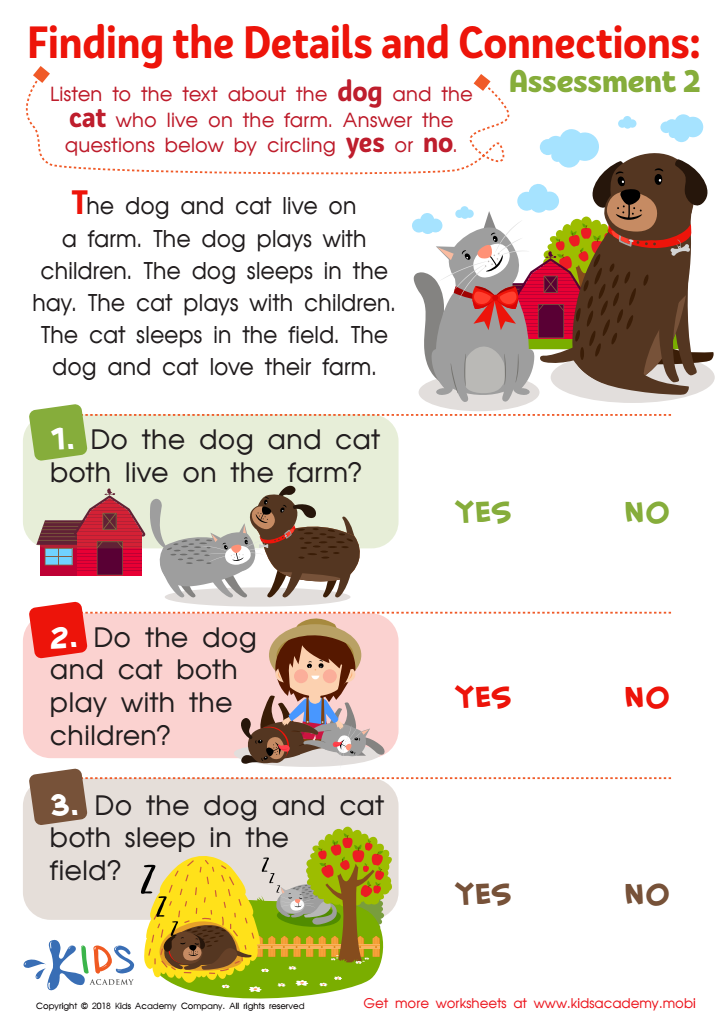
Finding the Details and Connections: Assessment 2 Worksheet
Does your child love animals? If you have pets, they'll relate to the text in this worksheet. Read it aloud to them and help them answer the simple questions by circling yes or no. The story is about a dog and cat living on a farm. Let your child read it aloud to you if they can.
 Assign to My Students
Finding the Details and Connections: Assessment 2 Worksheet
Worksheet
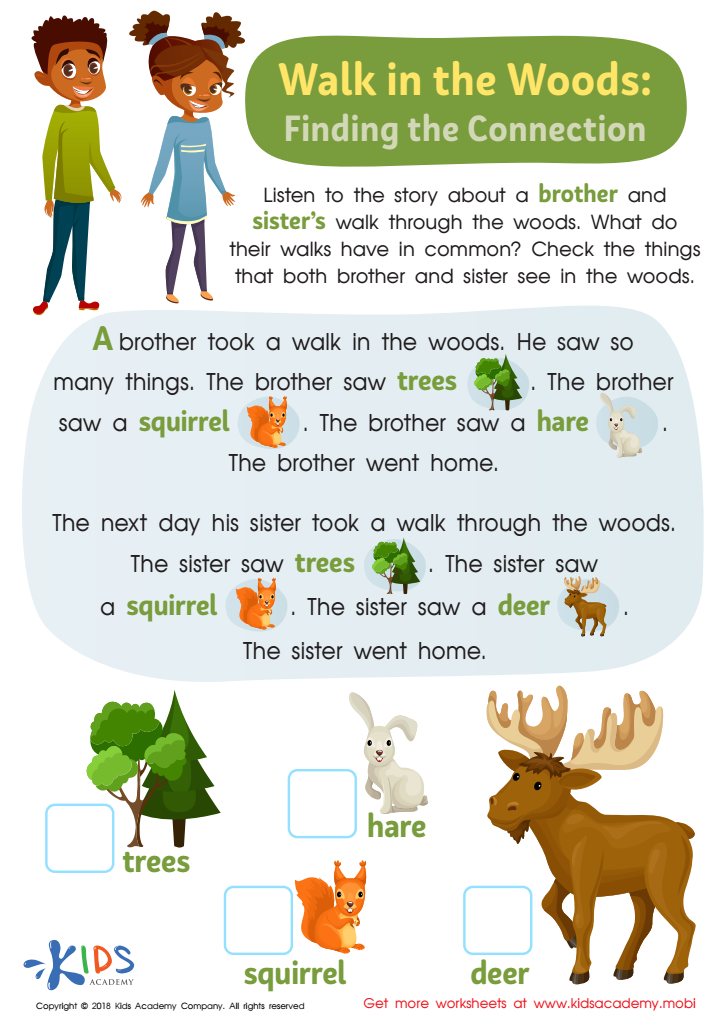
Walk In the Woods: Finding Connections Worksheet
Brother and sister took a walk in the woods to connect with nature and get some exercise. As they went, they noted different things like birds and plants, which they share in this story. Read it to your little ones, and help them check off the items the two saw. It's a great way to learn about nature and enjoy the outdoors.
Walk In the Woods: Finding Connections Worksheet
Worksheet
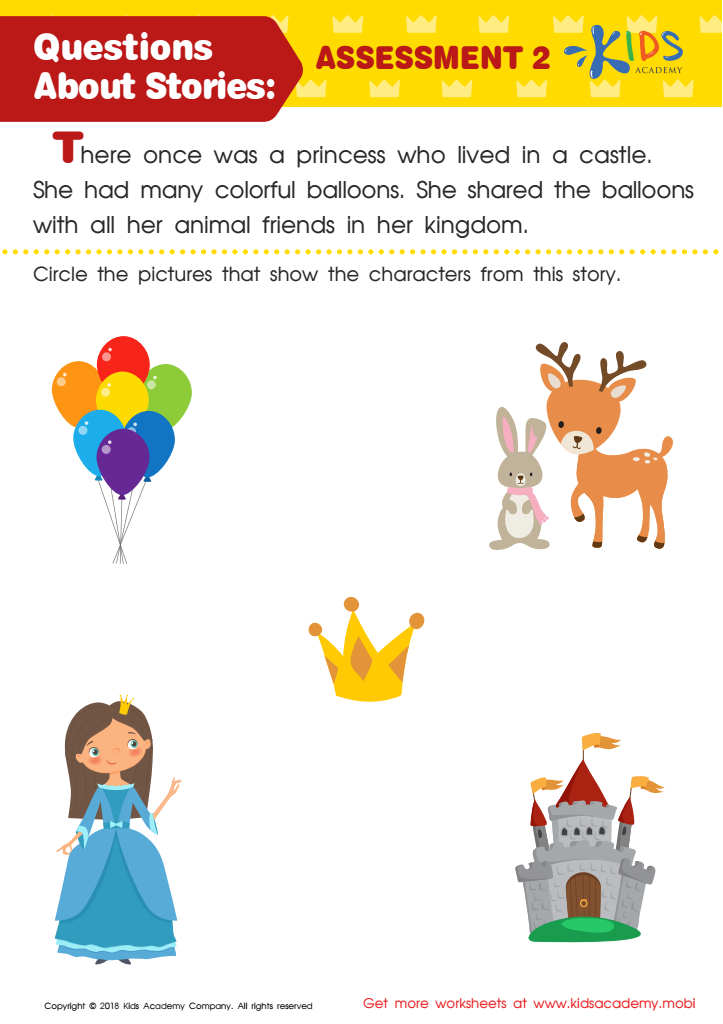
Questions About Stories: Assessment 2 Worksheet
Talk to your child about what a princess is and what activities they associate with that word. Then, read the story to them and help them identify characters in the pictures. Look out for details and ask them questions to ensure they understand.
Questions About Stories: Assessment 2 Worksheet
Worksheet
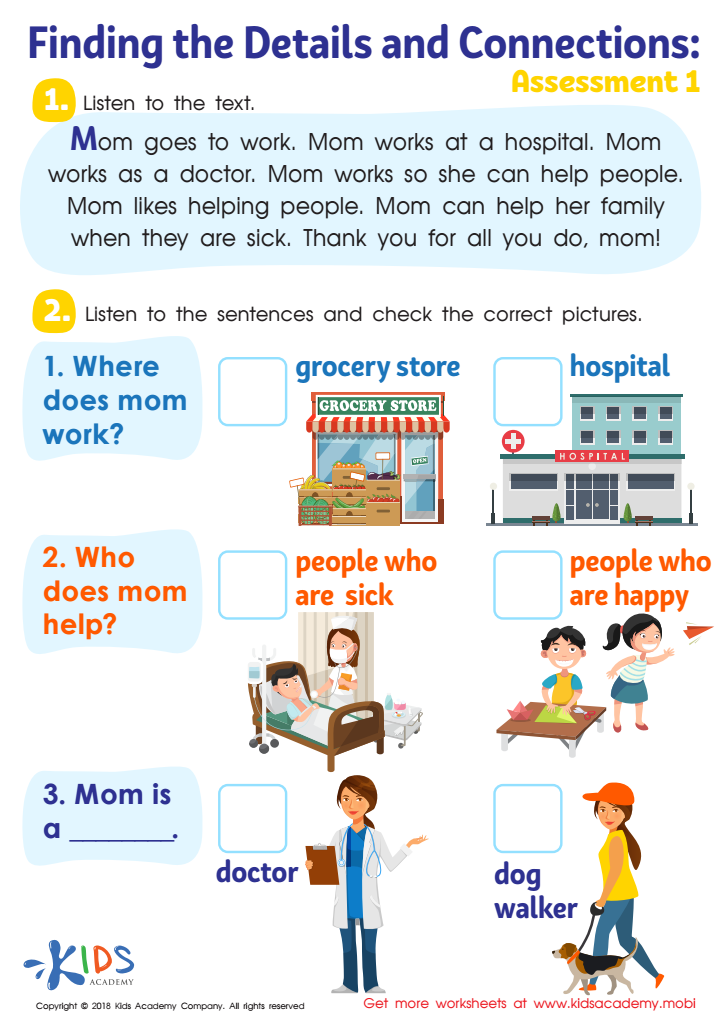
Finding the Details and Connections: Assessment 1 Worksheet
Ask your students what their parents do for a job. Do they know what profession their mom is in and where she works? Professionals have places they go to do their job. In this task, Mom goes to a hospital and is a doctor. Read the text and help them check the right pictures.
Finding the Details and Connections: Assessment 1 Worksheet
Worksheet

Questions About Stories: Assessment 1 Worksheet
Winter brings snow, cold, short days, and darkness. Schools can even close due to heavy snow. Ask your child what their favourite winter activities are and what color they associate with 'winter'. This worksheet takes place in a winter forest. Look at the 4 pictures with your child, and help them identify which one shows the correct setting.
Questions About Stories: Assessment 1 Worksheet
Worksheet
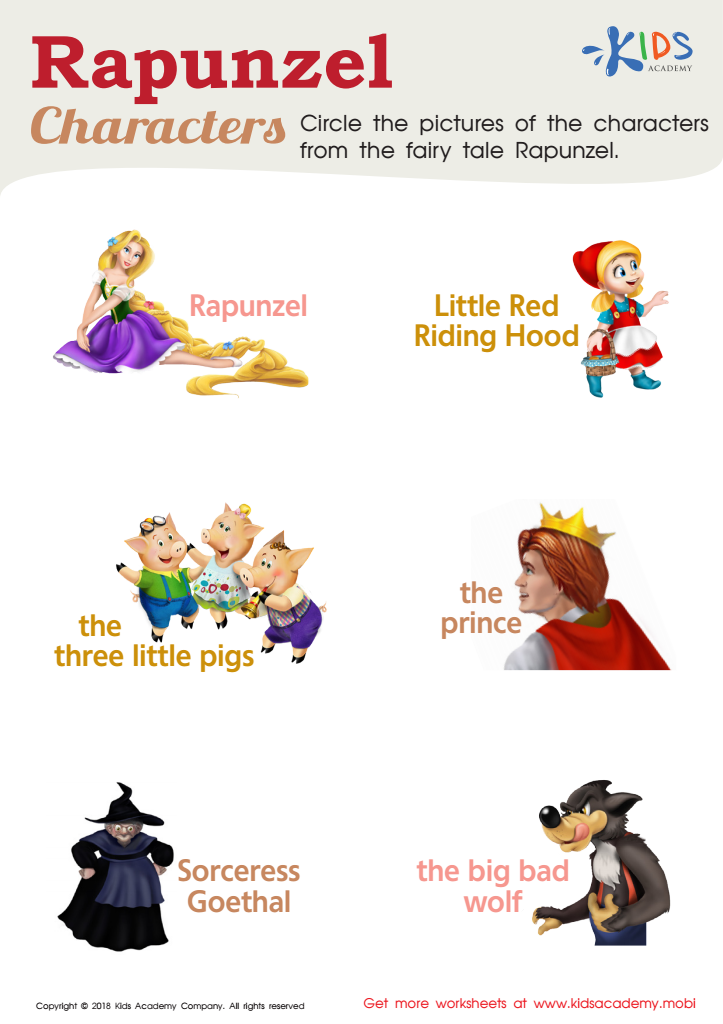
Rapunzel Characters Worksheet
This fun and colourful worksheet is perfect to see what your kids have learned from story time. Test their knowledge with a Rapunzel-themed exercise! Ask them to circle the pictures of the characters from the fairy tale. Helping them to remember the lessons taught in the stories you have read.
Rapunzel Characters Worksheet
Worksheet
Join Kids Academy for Free
Who is primarily going to use this learning content?







Analytical skills reading is crucial for children aged 4-6 as it lays the groundwork for successful academic and personal development. At this formative stage, young learners are rapidly developing cognitive abilities, and engagement in activities that promote analytical thinking can significantly enhance these processes. Early exposure to analytical reading helps children understand stories, identify patterns, and make predictions, fostering a deeper comprehension beyond surface-level recognition of words.
For parents and teachers, instilling these skills early means preparing children to tackle increasingly complex materials as they grow. Analytical reading encourages curiosity, critical thinking, and problem-solving — essential tools for navigating not just academic challenges but everyday situations. When children learn to ask questions about a text, determine cause and effect, and draw inferences, they are developing a mindset that is inquisitive and evaluative.
Moreover, these skills support emotional growth and communication. Analytical reading can help children better understand different perspectives and emotions within stories, promoting empathy and social awareness. Investing effort into nurturing analytical reading skills at this young age ensures that children develop strong foundations for lifelong learning, enjoyment of literature, and competent interaction with the world around them. This early development translates into improved academic performance and a richer understanding of various subjects later in life.








