Improve counting skills Reading Worksheets for Ages 4-6
4 filtered results
-
From - To
Enhance your child's counting skills with our engaging reading worksheets designed for ages 4-6. Our platform offers a collection of interactive activities that make learning to count fun and effective. Through colorful illustrations and age-appropriate challenges, children will develop crucial numerical skills while enjoying the process. Each worksheet is tailored to reinforce counting concepts through exciting games and playful exercises, ensuring active participation. Parents and educators will find these resources useful for fostering early math competencies in a creative way. Start your child's counting journey today with our carefully crafted materials that support early literacy and numeracy in a joyful learning environment!
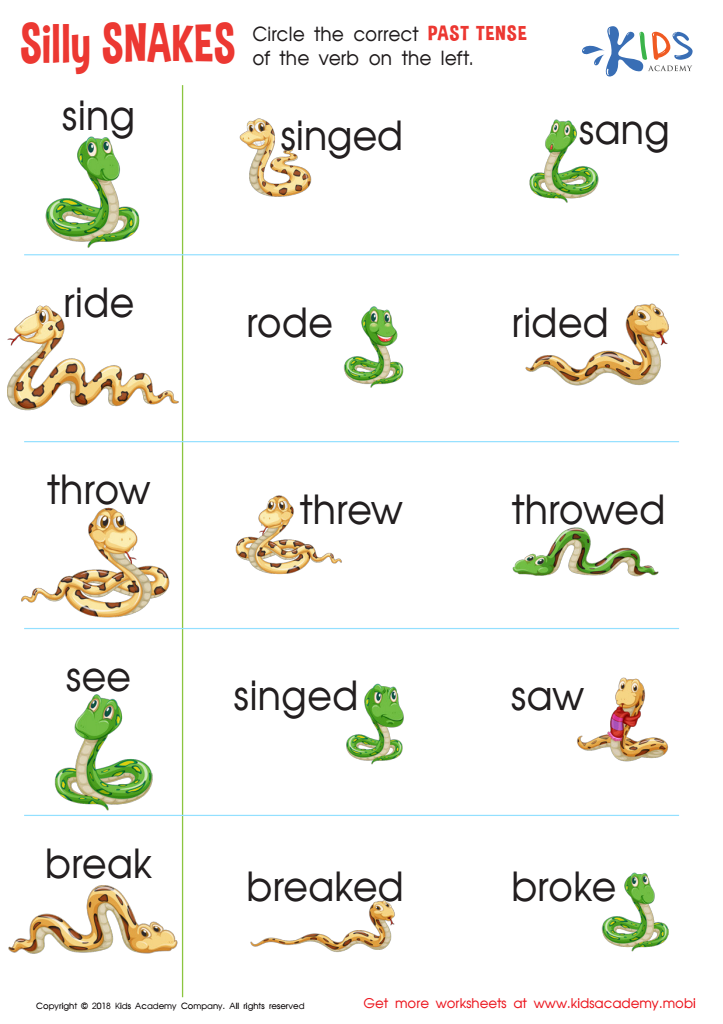
Silly Snakes Worksheet
 Assign to My Students
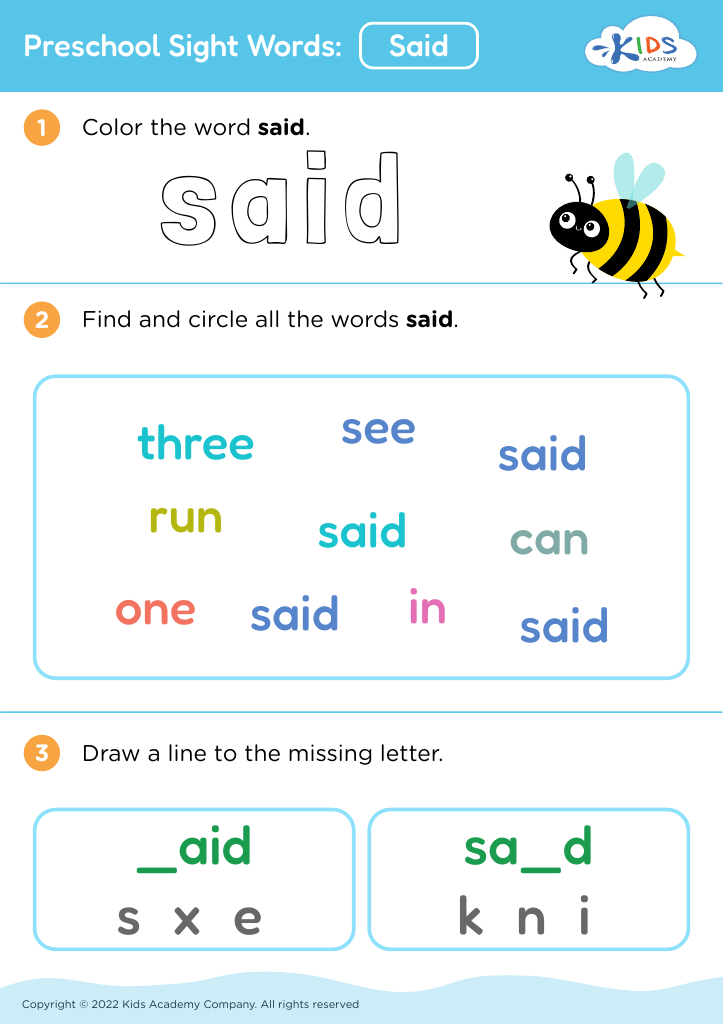
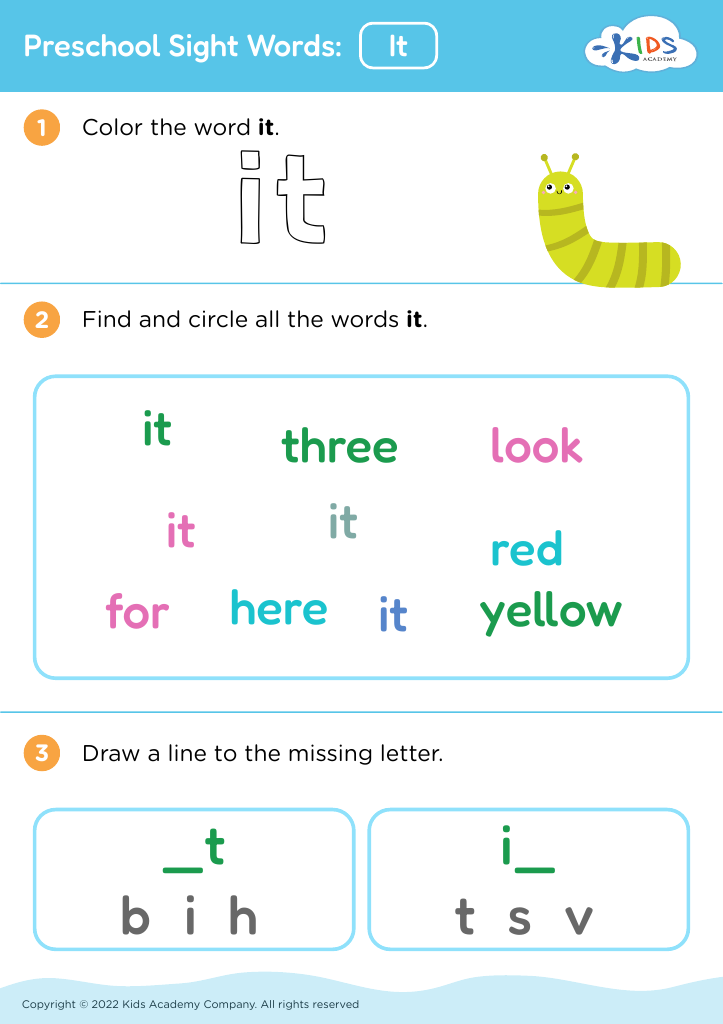
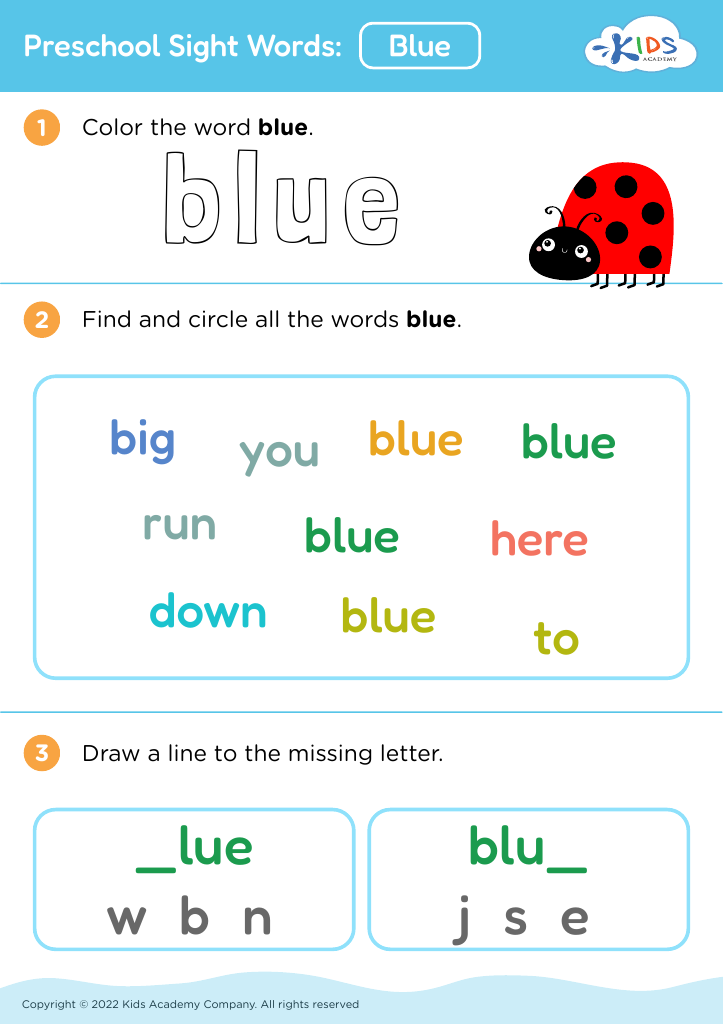







Improving counting skills in children aged 4-6 is fundamental for their cognitive development and future academic success. During these formative years, children are highly receptive to learning, and grasping basic counting concepts lays the groundwork for more complex mathematical understanding later on. Counting not only supports number recognition but also fosters skills such as one-to-one correspondence, which is essential for accurate counting and other mathematical operations.
Incorporating counting into daily activities can enhance children's engagement, making learning fun and meaningful. This can include counting objects during playtime, engaging in songs that emphasize numbers, or even incorporating numbers into stories during reading time.
Parents and teachers should care about developing these skills as they are integral to a child's confidence in math, which is crucial for academic performance. Proficiency in counting also aids children in daily life, such as managing money or measuring ingredients during cooking.
Moreover, nurturing counting skills fosters critical thinking and problem-solving abilities. In a classroom setting, basic counting proficiency promotes collaborative learning, as children share and discuss their methods with peers. Therefore, prioritizing counting skills for young learners is vital in promoting a well-rounded foundation for their educational journey.








