Rhyming skills development Reading Worksheets for Ages 4-6
3 filtered results
-
From - To
Boost your child's early literacy with our Rhyming Skills Development Reading Worksheets for Ages 4-6. These engaging, age-appropriate printables are designed to help young learners identify and create rhyming words, enhancing phonemic awareness. Each worksheet offers fun and interactive exercises that build the foundation for reading and spelling success. By practicing with these rhymes-centric activities, children will develop crucial listening and sound discrimination skills. Perfect for both classroom and home use, these worksheets support parents and teachers in making learning enjoyable and effective. Help your child become a confident reader with our expertly crafted rhyming worksheets!
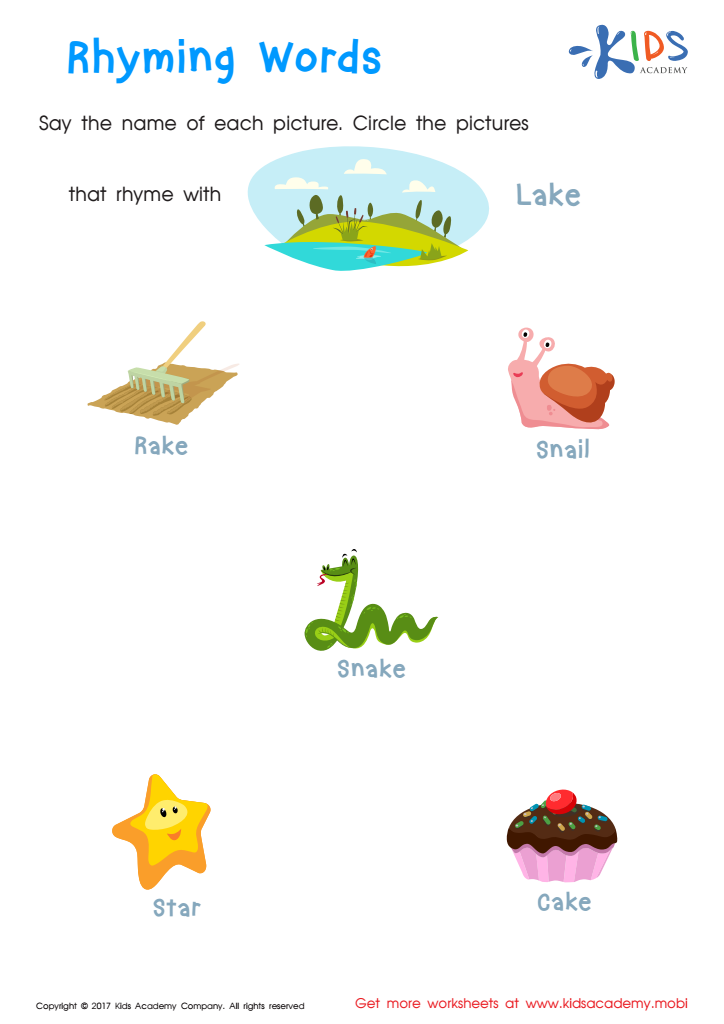
Rhyming Words Rhyming Worksheet
 Assign to My Students
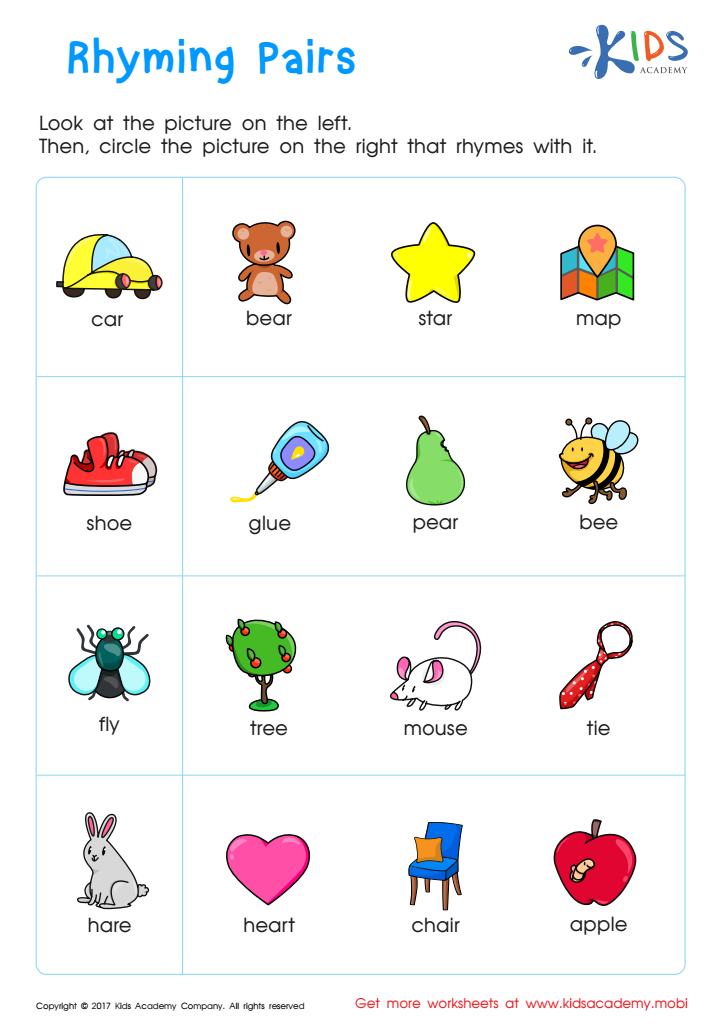
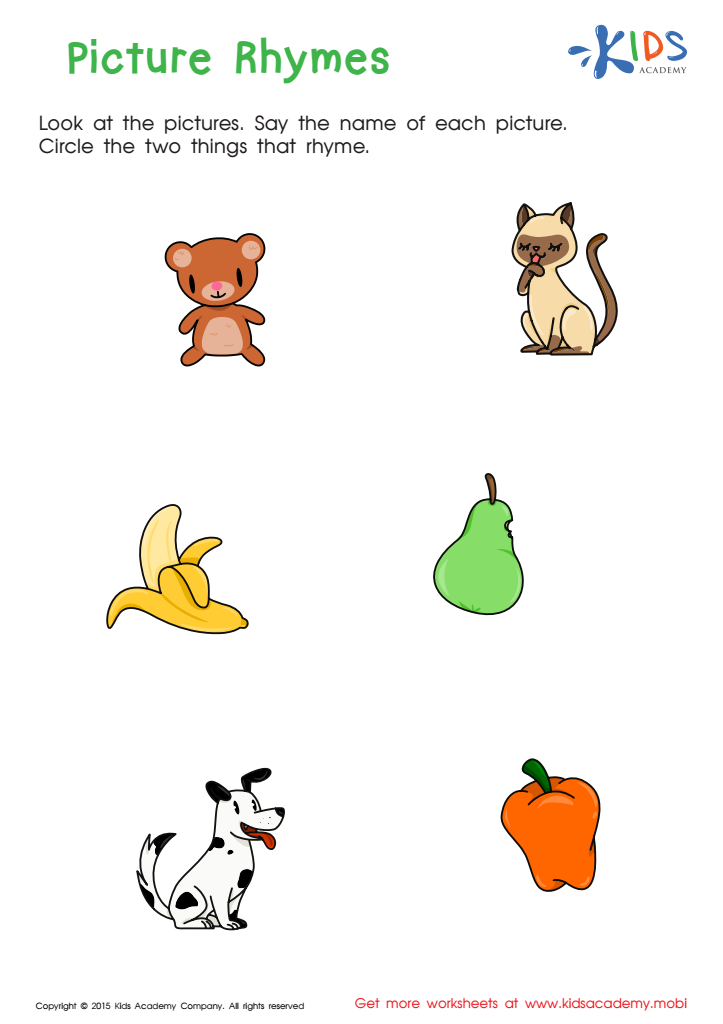
First Words: Picture Rhymes Worksheet







Developing rhyming skills in children aged 4-6 is a critical step in early reading education. For parents and teachers, fostering these skills can yield significant long-term benefits. Firstly, rhyming helps children recognize phonemic patterns and parts of words, which is essential for phonological awareness. This awareness is foundational for decoding words and developing fluent reading skills.
Children who practice rhyming show improved memory, auditory discrimination, and listening skills. For instance, recognizing that "cat" rhymes with "bat" forces them to listen closely to the sounds within words, aiding in word recognition and vocabulary development. Moreover, rhyming activities are fun and engaging, providing an enjoyable way for young learners to interact with language. These activities can make learning less intimidating and more playful, which can help young readers develop a positive attitude toward reading.
Lastly, the ability to rhyme fosters creativity and imagination. When children create their own rhymes, they engage in word play, which enhances cognitive flexibility and problem-solving skills. Therefore, investing time in developing a child’s rhyming skills can lay a strong literacy foundation, making both reading and writing more accessible and enjoyable as they continue their educational journey.








