
Sound Association Reading Worksheets for Ages 4-6
4 filtered results
Difficulty Level
Grade
Age
-
From - To
Subject
Activity
Standards
Discover our engaging Sound Association Reading Worksheets designed specifically for children ages 4-6. These interactive resources help young learners connect sounds with letters and words, enhancing their phonemic awareness and early reading skills. With colorful illustrations and fun activities, kids will playfully explore sound-letter relationships while developing critical literacy skills. Our worksheets encourage independent learning and can be easily integrated into home or classroom settings. Perfect for boosting confidence and preparing your little ones for future reading successes! Start fostering a love for reading with our early literacy tools today. Check out our collection and watch your child's reading skills blossom!
Favorites
With answer key
Interactive
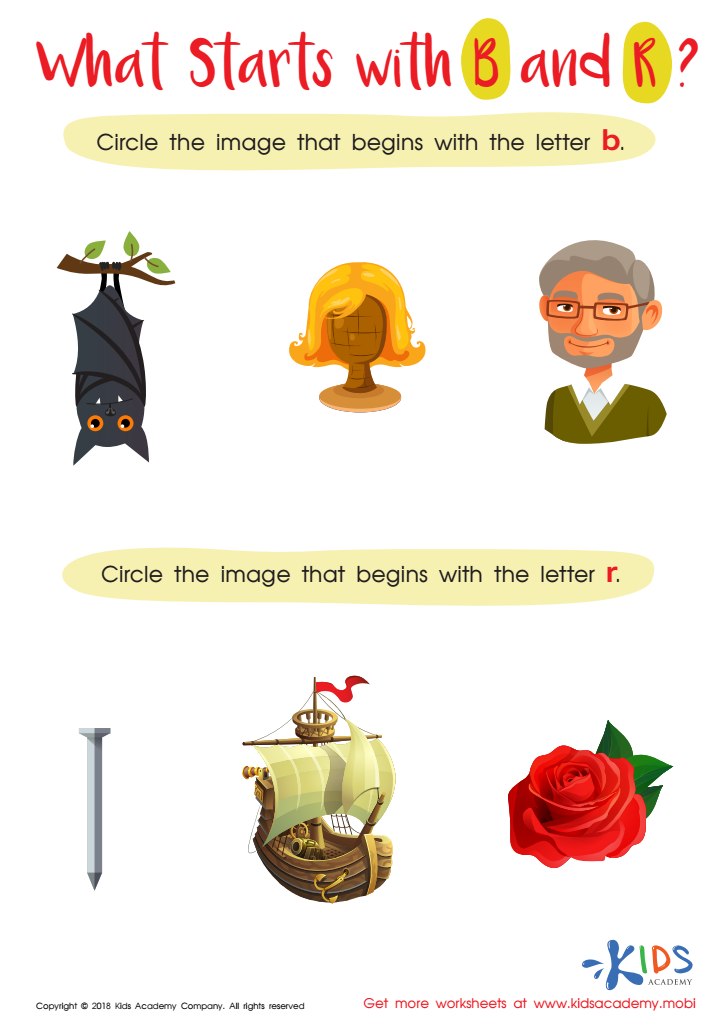
What Starts with B and R? Worksheet
Download this worksheet to help young readers practice visual and motor skills! They'll enjoy matching pictures with "B" and "R" letters while tracing the images. Bright and colorful, this engaging activity will help kids differentiate between words and have fun doing it.
 Assign to My Students
What Starts with B and R? Worksheet
Worksheet
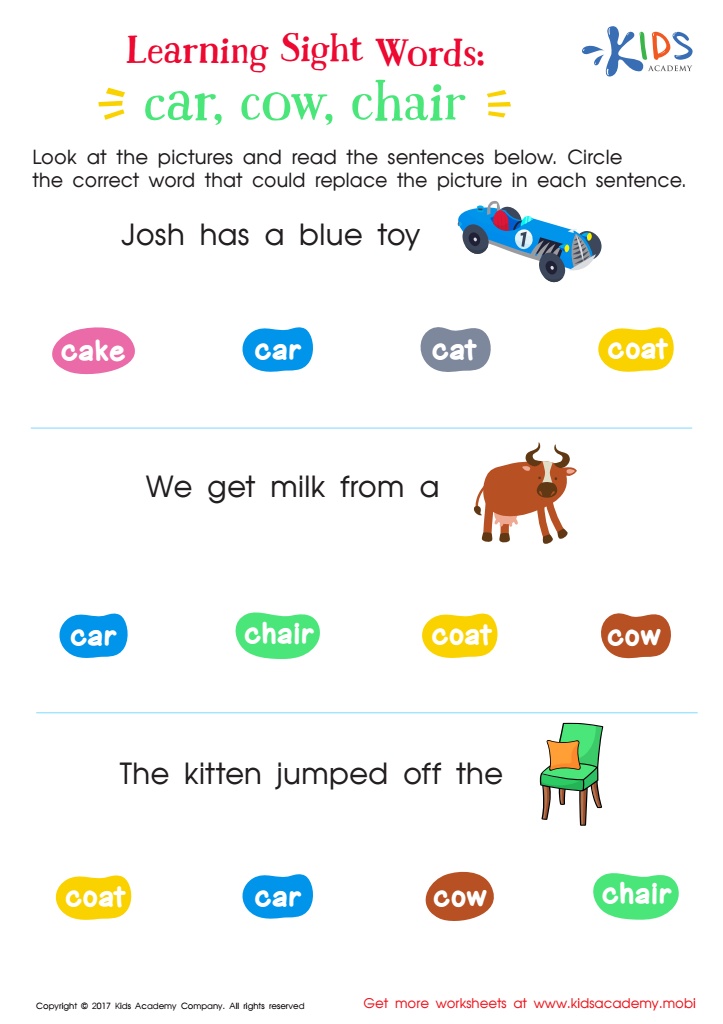
Car, Cow, Chair Worksheet Sight Words Worksheet
Reading can be difficult, so these assignment sheets can help kids stay on track. This one with the words 'Car', 'Cow' and 'Chair' will help your child choose the right words to complete a sentence, strengthen their literacy and give them more confidence in reading.
Car, Cow, Chair Worksheet Sight Words Worksheet
Worksheet
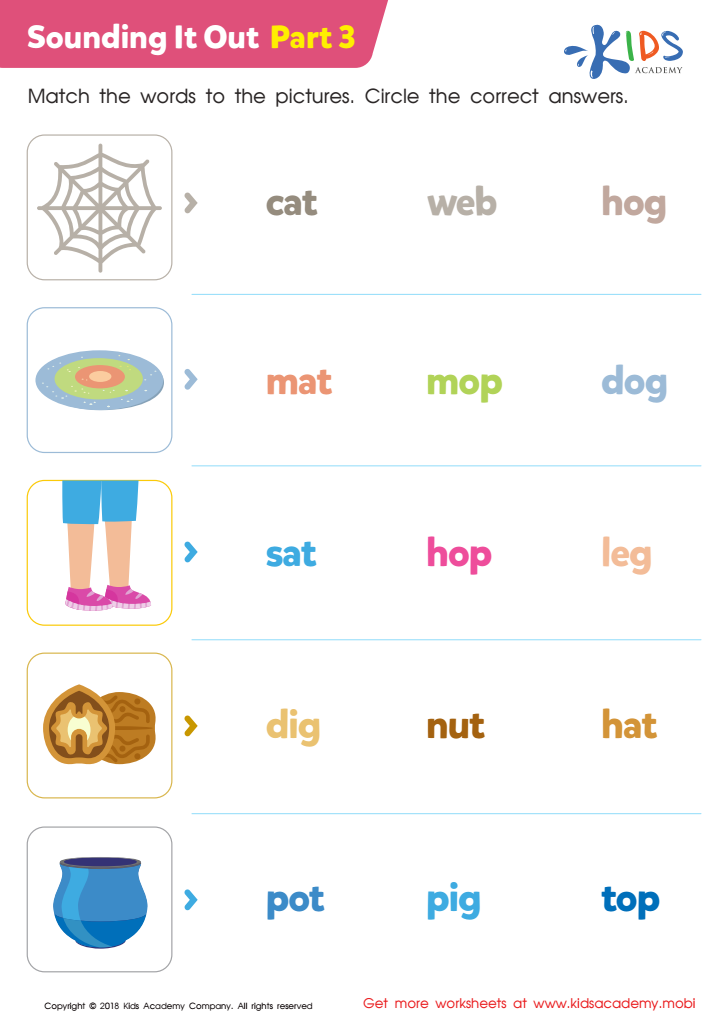
Sounding it Out: Part 3 Worksheet
Once Parts 1 and 2 are complete, this printable phonics worksheet will help kids take their reading skills to the next level! As they gain confidence, give them hints less often and direct their attention to three words in a row. Ask them to read and circle the correct word to complete!
Sounding it Out: Part 3 Worksheet
Worksheet
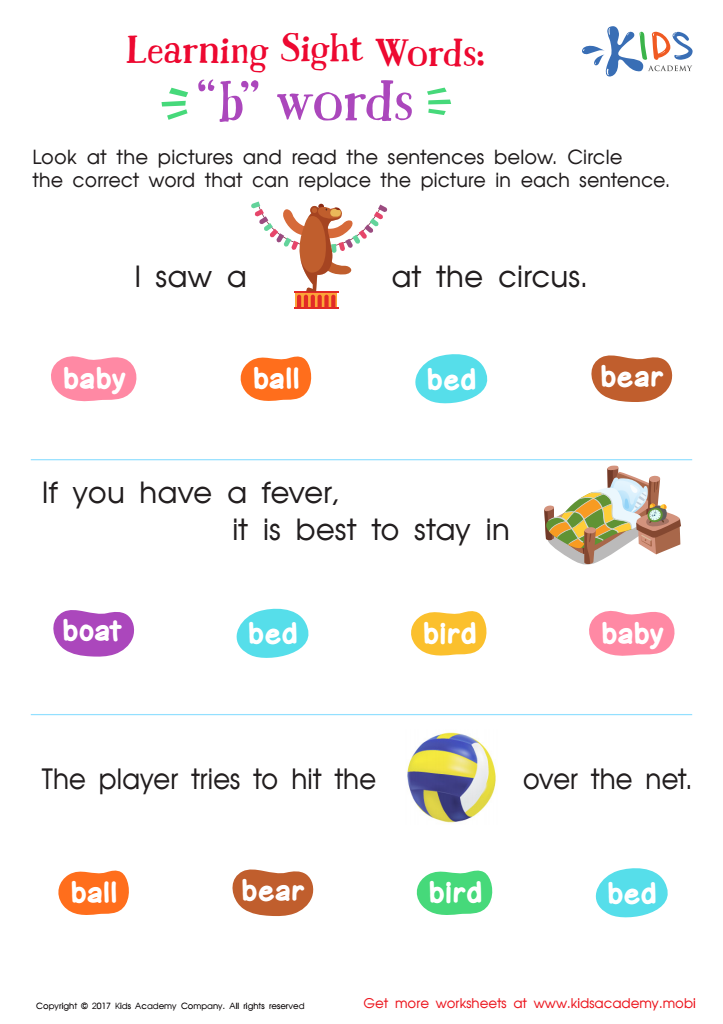
"B" Words Printable Sight Words Worksheet
Kids will learn sight words quickly with this fun worksheet! "B" Words offers guided practice with simple sentences and pictures. Build your child's reading confidence with this helpful worksheet and watch them become a master!
"B" Words Printable Sight Words Worksheet
Worksheet
Join Kids Academy for Free
Who is primarily going to use this learning content?








Sound association reading is a vital component of early literacy development for children aged 4-6. Parents and teachers should prioritize this skill because it lays the groundwork for reading proficiency. At this age, children are developing phonemic awareness, which is the ability to hear, recognize, and manipulate the individual sounds in words. This skill is crucial for decoding words when they begin to read independently.
When children learn to associate sounds with letters, they can better understand the relationship between spoken and written language. This foundational knowledge boosts their confidence in reading and fosters a positive attitude toward literacy. Early exposure to sound association through playful activities like rhyming games, songs, and storytelling helps to make learning enjoyable and engaging.
Additionally, emphasizing sound association aids in vocabulary development and comprehension skills. As children connect sounds with meanings, they become more adept at recognizing words and forming sentences. By fostering these skills, parents and teachers can help ensure that children build a strong literacy foundation, setting them up for ongoing academic success. In an increasingly literate society, nurturing a passion for reading from a young age is essential for children’s overall growth and future opportunities.








