Sound recognition Reading Worksheets for Ages 4-6
3 filtered results
-
From - To
Unlock your child's reading potential with our Sound Recognition Reading Worksheets for ages 4-6! Designed to make learning fun and effective, these worksheets help young learners identify and distinguish between different sounds in words, building a strong phonetic foundation. Through engaging activities, children will enhance their listening skills, word recognition, and phonemic awareness. Ideal for preschool and kindergarten students, our worksheets provide the perfect blend of education and entertainment. Start your child's reading journey today with our expertly crafted sound recognition tools, and watch them transform into confident readers!
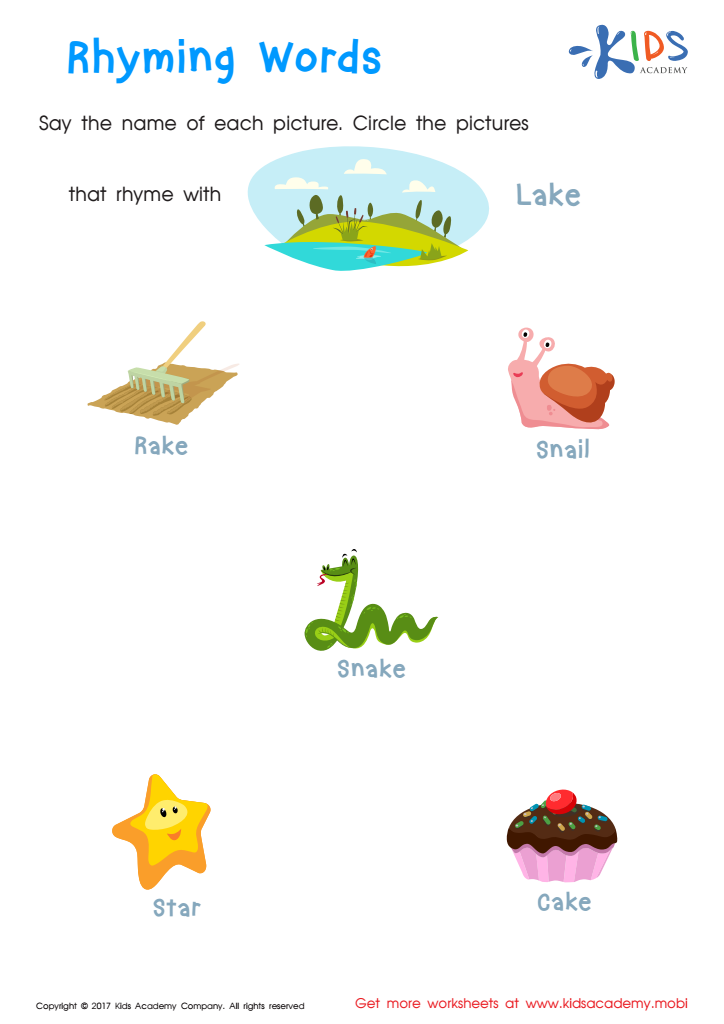
Rhyming Words Rhyming Worksheet

Long and Short U Worksheet
 Assign to My Students
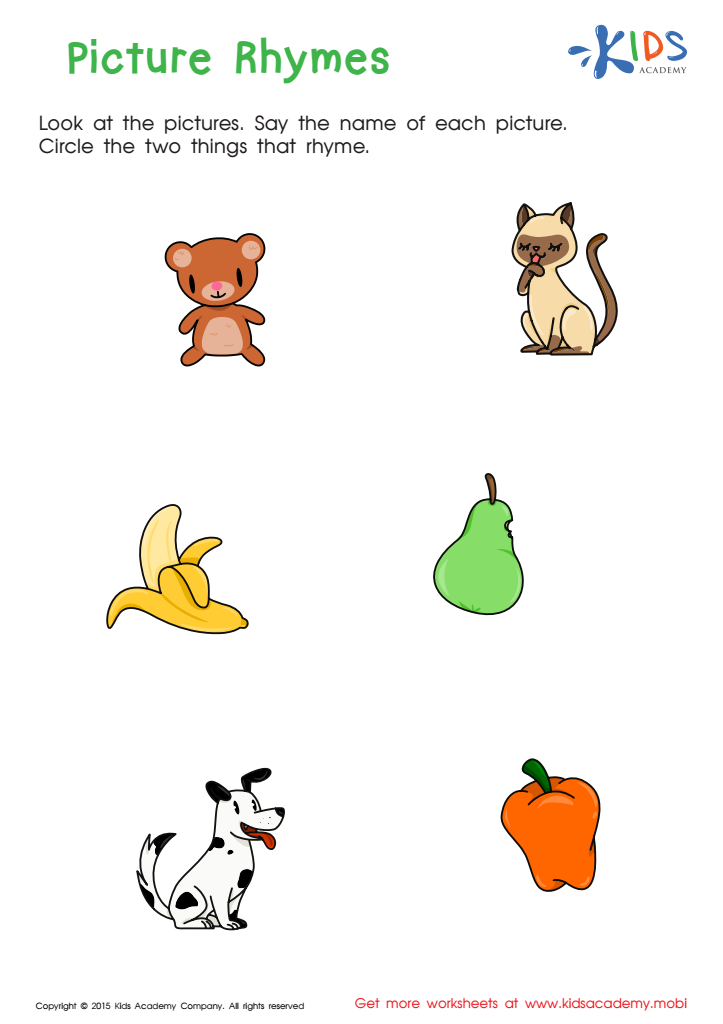
First Words: Picture Rhymes Worksheet








Sound recognition reading, often termed phonemic awareness, is a fundamental skill in early literacy development. For children aged 4-6, recognizing and understanding different sounds within words is crucial for a smooth transition to reading and writing. Here’s why parents and teachers should care:
-
Foundation for Reading: Sound recognition is the building block for reading. Before children can read written words, they need to hear and understand the individual sounds (phonemes) that make up those words. This skill, called phonemic awareness, enables them to connect sounds to letters and blend them to form words.
-
Boosting Confidence: Early success in sound recognition can significantly boost a child's confidence and interest in reading. Children who struggle often face frustration, which can lead to a negative attitude towards reading. Ensuring they develop sound recognition helps foster a positive literacy experience.
-
Predicts Future Success: Strong phonemic awareness in early years is a predictor of reading success. Children who have a good grasp of sounds tend to excel in decoding words, which enhances their fluency and comprehension skills.
-
Prevention of Learning Gaps: Early intervention in sound recognition ensures that children do not lag behind. It can help in identifying and supporting children with reading difficulties, setting them up for sustained academic success.
By nurturing sound recognition skills in children aged 4-6, parents and teachers can lay a strong foundation for lifelong literacy and learning.








