Understanding suffixes Reading Worksheets for Ages 4-6
3 filtered results
-
From - To
Unlock your child's reading potential with our "Understanding Suffixes" worksheets, specially designed for ages 4-6! These engaging resources simplify the concept of suffixes, helping young learners recognize word modifications that change meanings. Through fun activities, interactive exercises, and colorful illustrations, children will enhance their vocabulary and reading skills. Perfect for home or classroom use, our worksheets encourage critical thinking and creativity, making learning enjoyable. Equip your little ones with the tools to decipher new words effortlessly, paving the way for confident reading. Explore our collection today and let the journey to literacy begin!
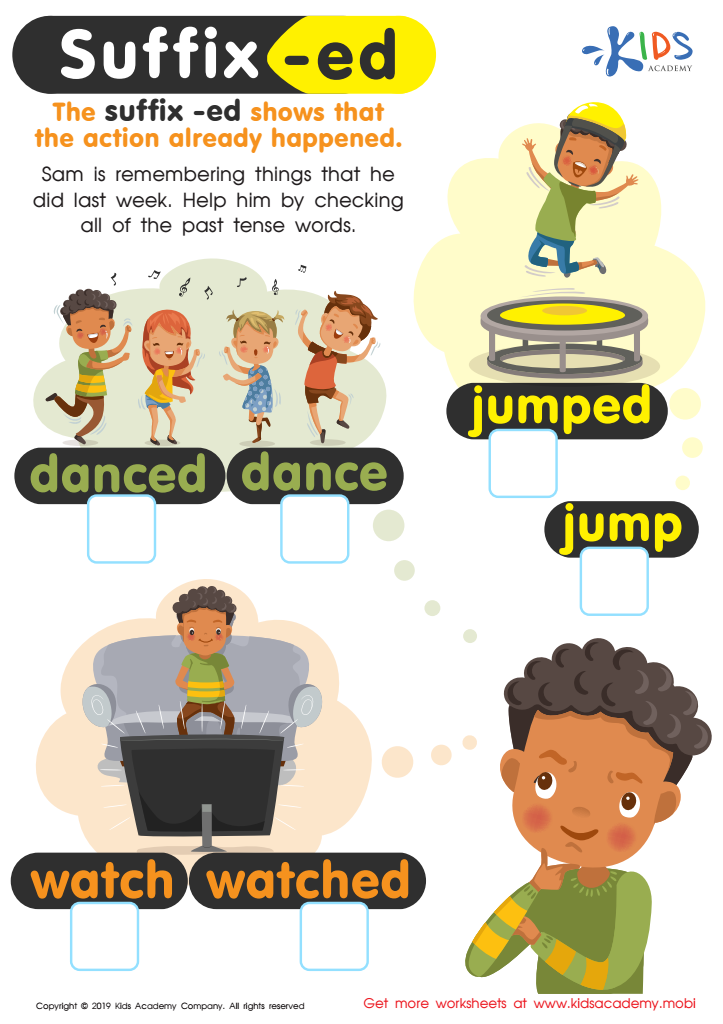
Suffix-ed Worksheet
 Assign to My Students
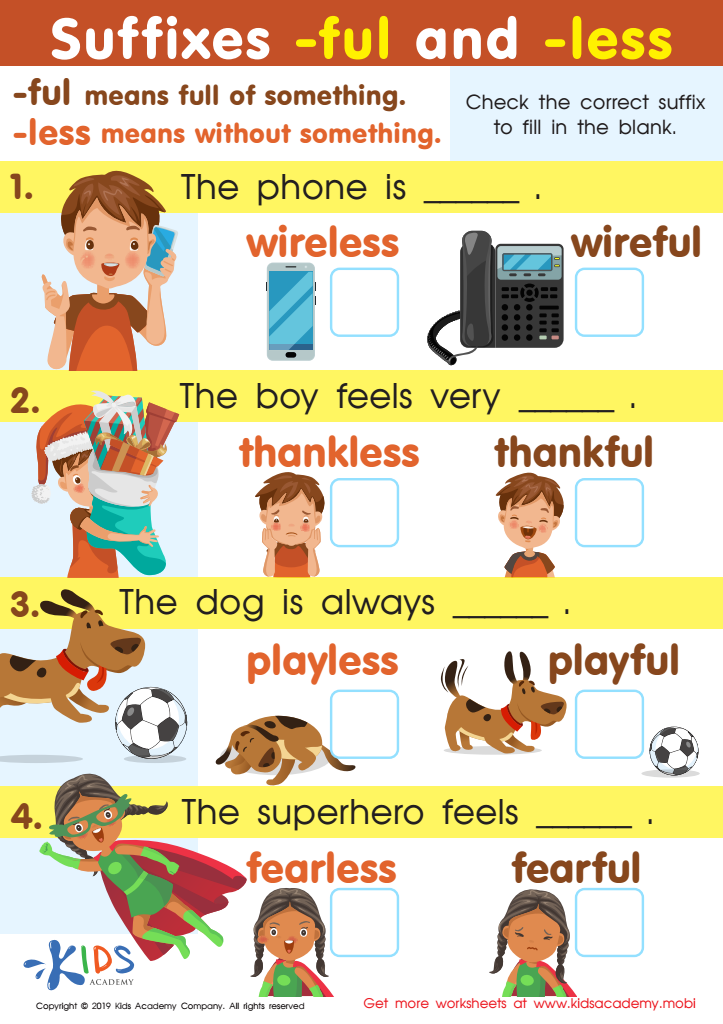
Suffixes –ful and –less Worksheet
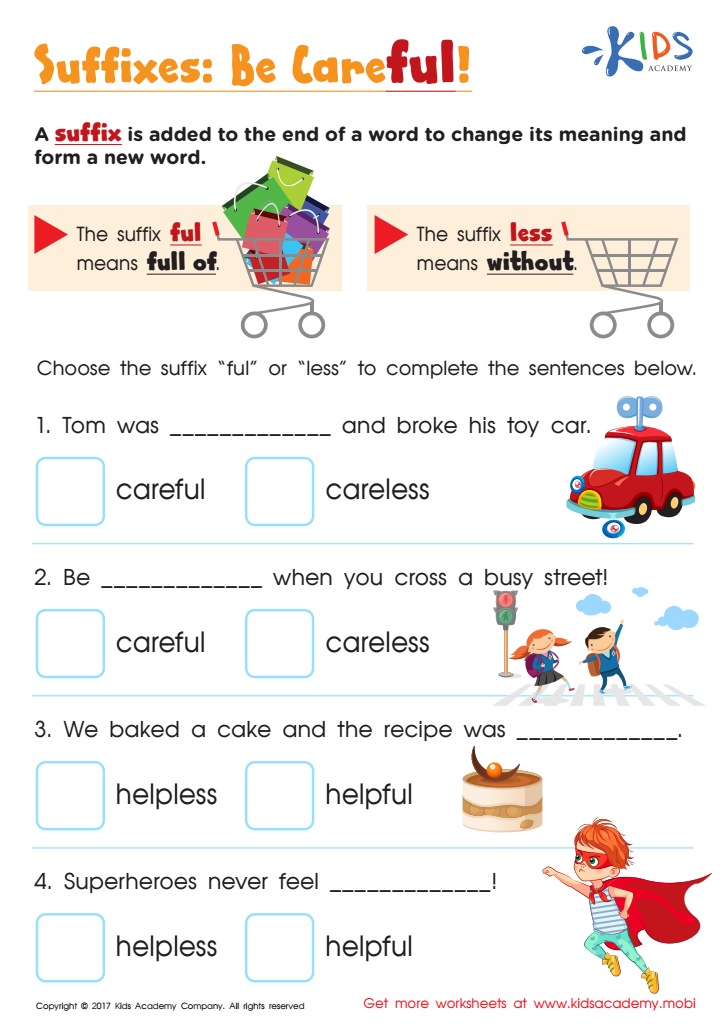
Suffixes Ful and Less Worksheet







Understanding suffixes is crucial for young readers, as it contributes significantly to their linguistic development and literacy skills. For children ages 4 to 6, learning about suffixes enhances vocabulary comprehension, allowing them to decipher new words and expand their language capabilities. Suffixes serve as helpful clues; for instance, recognizing "-ing" indicates an action, while "-ed" suggests something that has happened in the past. This awareness not only aids in decoding unfamiliar words but also fosters a deeper understanding of language structure.
Incorporating suffix study into early reading gives children tools to embrace more complex texts as they progress, unlocking creativity and expression in their own writing as they manipulate language to convey different meanings. It also empowers parents and teachers to instill a sense of confidence in their children, as they can unaided address numerous vocabulary challenges in everyday reading. Ultimately, understanding suffixes lays the foundation for effective communication and critical thinking skills. This understanding is vital as it actively engages literacy strategies, encouraging a love for reading that will benefit children throughout their educational journey and beyond. Promoting early mastery of suffixes builds a solid language base for life's many learning experiences.








