
Basic Addition Reading Comprehension Worksheets for Ages 4-6
3 filtered results
Difficulty Level
Grade
Age
-
From - To
Subject
Activity
Standards
Help your young learner build essential math and reading skills with our "Basic Addition Reading Comprehension Worksheets for Ages 4-6." Designed to engage and educate, these worksheets combine simple addition problems with fun, age-appropriate reading passages. Ideal for preschoolers and kindergarteners, these activities enhance numerical understanding while boosting literacy. Through colorful illustrations and easy-to-follow stories, children practice sums and hone their comprehension skills simultaneously. Perfect for both classroom and at-home learning, these resources aim to make foundational learning enjoyable and effective, setting the stage for academic success. Download now and start your child's educational journey with confidence!
Favorites
With answer key
Interactive
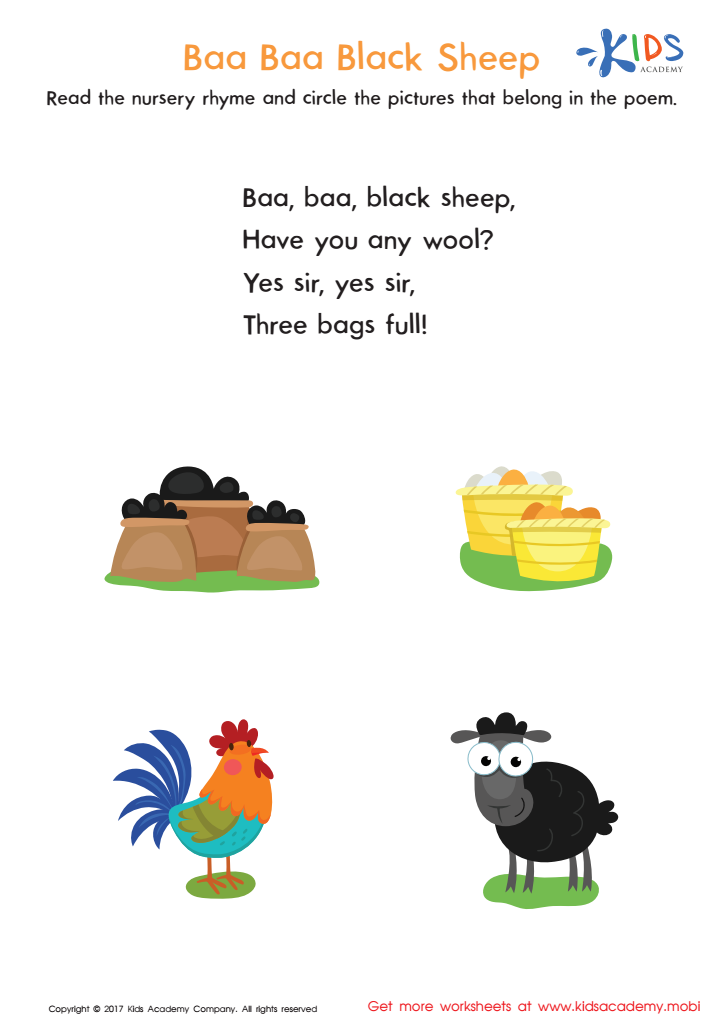
Baa Baa Black Sheep Printable
Jumpstart your child's reading skills with this printable Baa Baa Black Sheep worksheet! Recite the lines with them, then have them select the pictures associated with the poem to test comprehension. Fun and educational!
 Assign to My Students
Baa Baa Black Sheep Printable
Worksheet
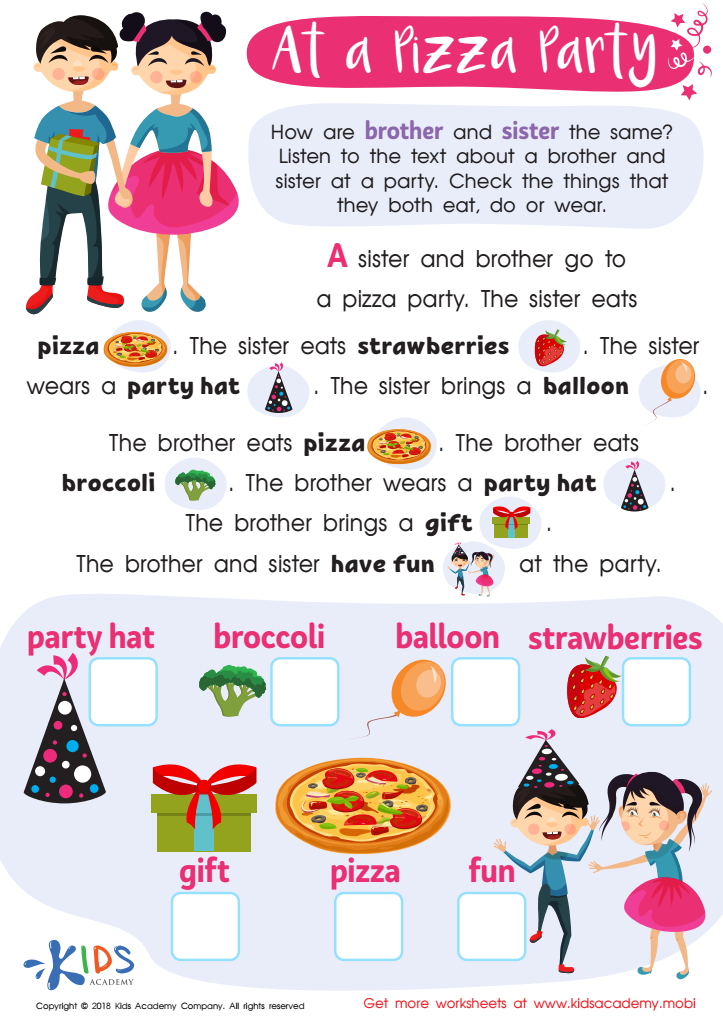
At a Pizza Party Worksheet
Parties are the best! Eating, playing, singing, dancing and gift-exchange - what's your child's fave part? In this worksheet, a brother and sister are eager to enjoy their party. Read the text to them and help them check what they do, eat, and wear. 80 words.
At a Pizza Party Worksheet
Worksheet
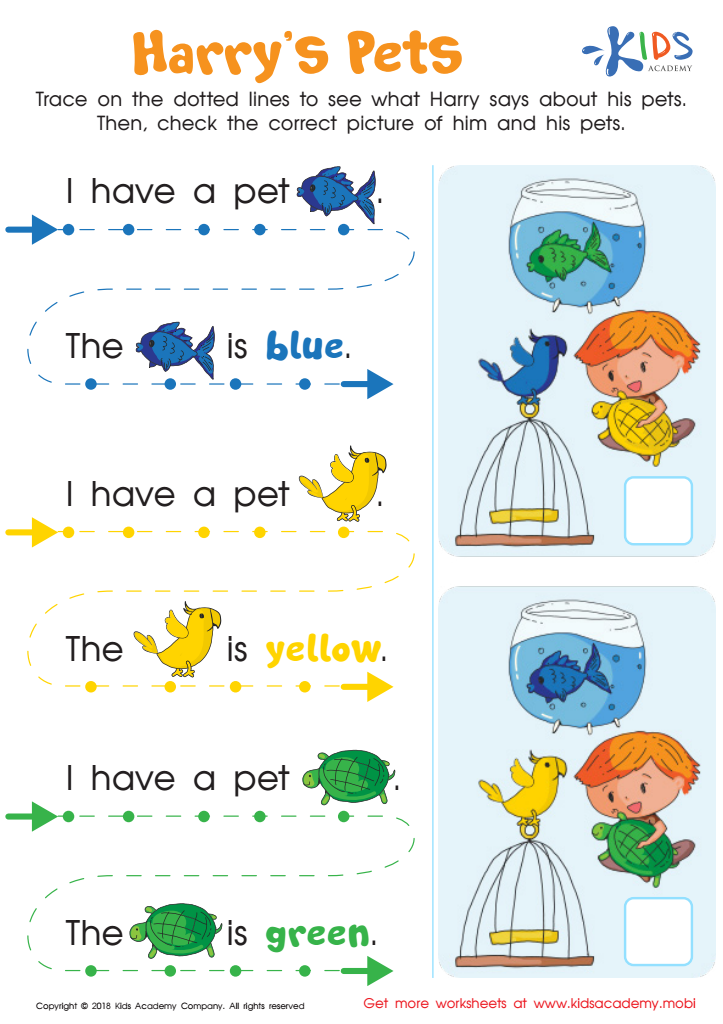
Read from Left to Right: Harry's Pets Worksheet
Help your child read the sentences on this tracing sheet about Harry and his pets. Point to the dotted lines and follow the sentences to the correct picture. Ask your child to identify which animal corresponds to which color. Check the picture to ensure accuracy. 80 words.
Read from Left to Right: Harry's Pets Worksheet
Worksheet
Join Kids Academy for Free
Who is primarily going to use this learning content?








Basic Addition and Reading Comprehension are foundational skills for young children, particularly within the ages of 4-6, guiding them in both academic and daily life. For parents and teachers, prioritizing these skills offers multiple benefits that bolster a child's overall development.
Firstly, proficiency in basic addition lays the groundwork for future mathematical learning. Understanding basic addition helps children make sense of the world, enabling them to quantify and reason with everyday scenarios, such as sharing toys or counting snacks. These early math skills are crucial for building confidence and a positive attitude towards learning more complex math concepts later on.
Secondly, reading comprehension at this age helps children grasp the essence of stories, follow directions, and engage with written materials. Engaging with books not only enhances vocabulary and language skills but fosters critical thinking and imagination. As children improve their ability to understand and interpret text, they become better equipped to follow instructions in other subjects and later in life.
By focusing on these essential skills, parents and teachers support the holistic growth of children. Strong abilities in math and reading form the bedrock of future academic achievement, helping children develop cognitively, socially, and emotionally. Investing time in nurturing these areas can lead to increased enthusiasm for learning and long-term educational success.








