Shape Recognition Reading Comprehension Worksheets for Ages 4-6
3 filtered results
-
From - To
Explore our "Shape Recognition Reading Comprehension Worksheets" designed specifically for children aged 4-6. These engaging worksheets combine fun shape recognition activities with reading comprehension exercises, fostering essential early literacy skills. Each worksheet features vibrant illustrations and simple text, capturing young learners' attention while enhancing their ability to identify and describe different shapes. Perfect for classroom use or at-home learning, our resources support cognitive development and improve vocabulary through relatable, age-appropriate content. Encourage your child’s analytical thinking and creativity as they enjoy discovering shapes in an interactive reading experience. Unlock the joy of learning with our shape-themed worksheets today!
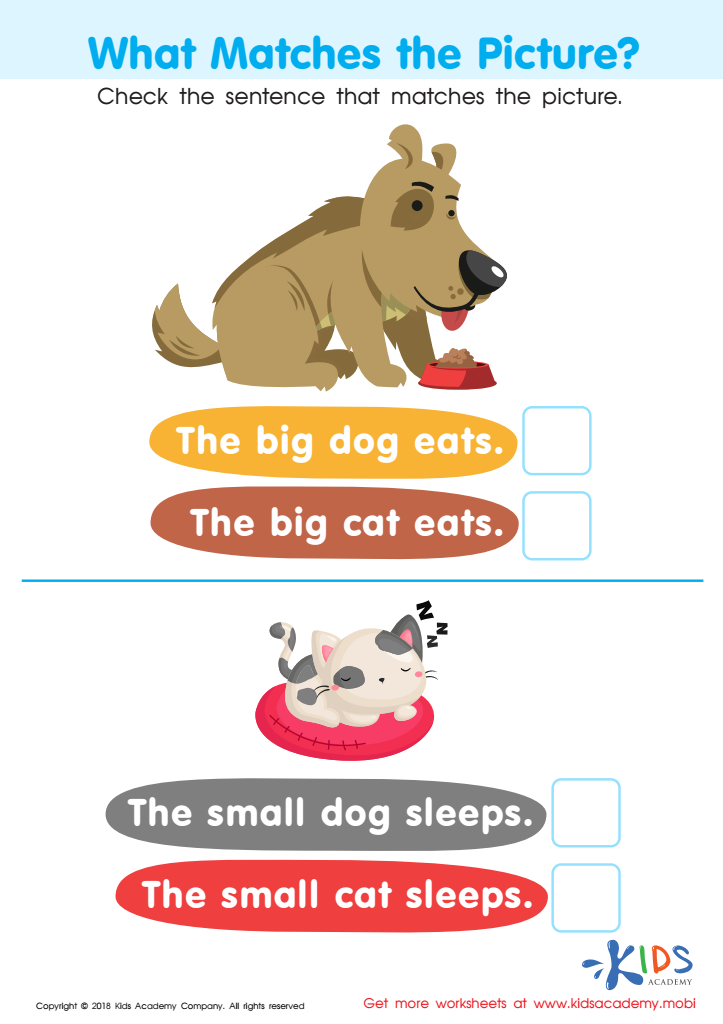
What Matches the Picture? Worksheet
 Assign to My Students
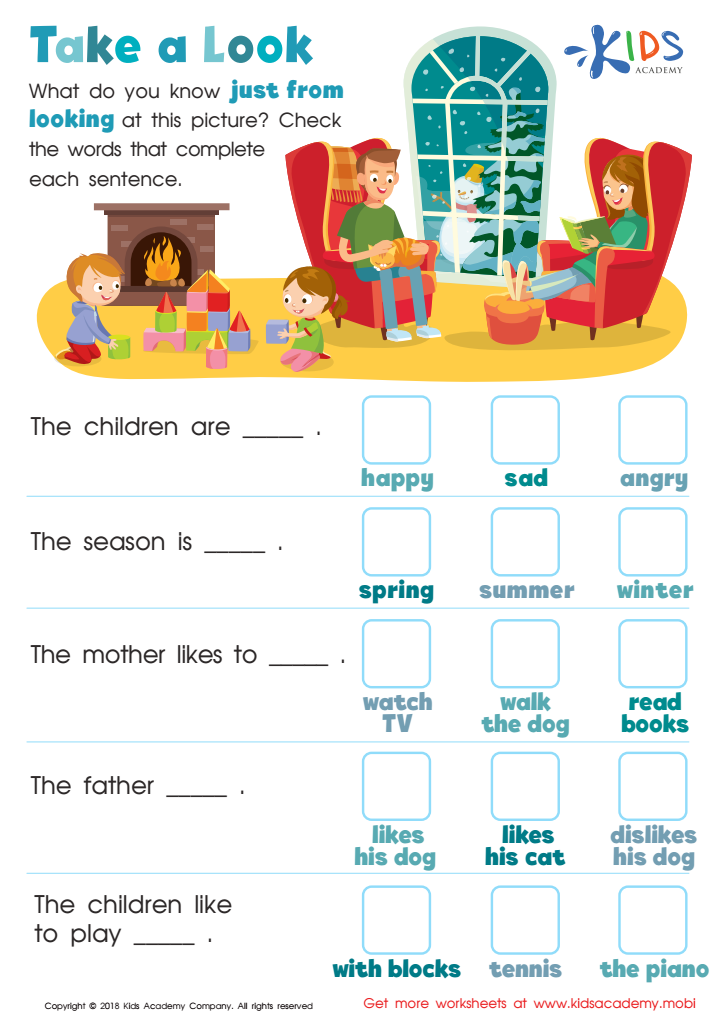
Take a Look - Part 1 Worksheet
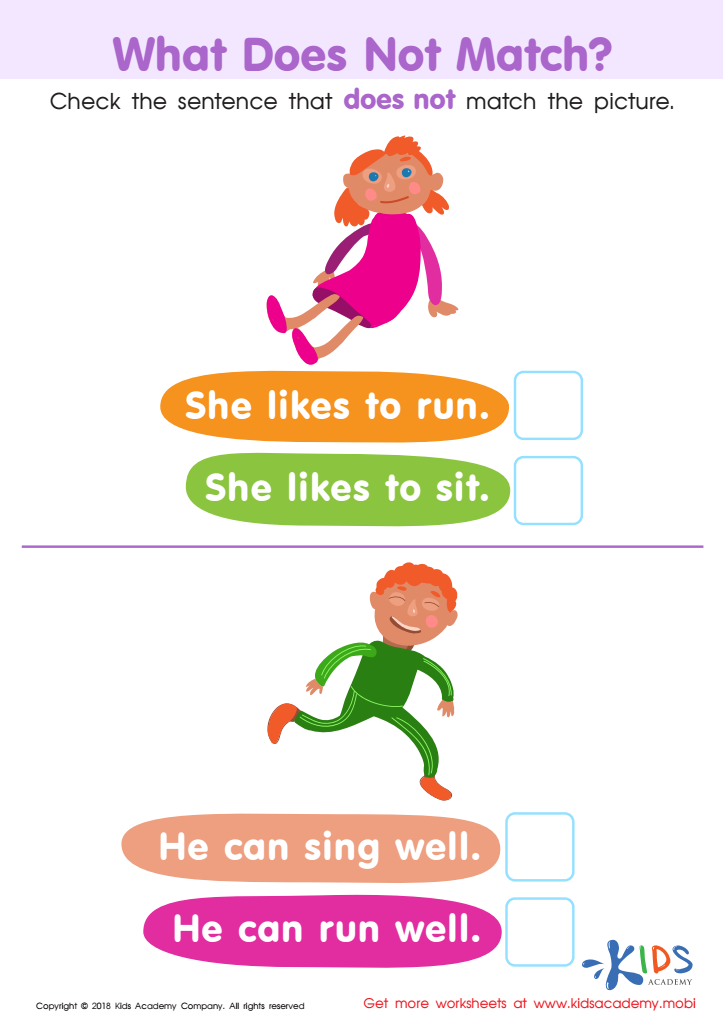
What Does Not Match? Worksheet








Shape recognition is a fundamental skill that plays a crucial role in early childhood education, particularly for children ages 4 to 6. Understanding shapes lays the groundwork for visual-spatial skills, which are essential for later mathematical concepts and problem-solving abilities. By recognizing shapes, young learners enhance their cognitive development, which is vital for reading comprehension. This connection is evident as many letters and words are shaped, making it easier for children to connect letters with sounds and meanings.
Parents and teachers should care about shape recognition because it aids in building children's critical thinking and language skills. Engaging with shapes can stimulate discussions, expanding vocabulary and promoting social interaction. Activities centered around shape recognition encourage fine motor development through hands-on experiences, enriching a child's overall learning.
Moreover, incorporating shape recognition into reading comprehension increases engagement. When children see and understand shapes in stories or illustrations, they are more likely to connect with the material, leading to better comprehension and retention. Ultimately, fostering shape recognition can empower children to become confident learners, paving the way for future academic success in various subjects. By prioritizing this foundational skill, parents and teachers can facilitate holistic development in their children.








