Developing analytical skills Science Worksheets for Ages 4-6
3 filtered results
-
From - To
Enhance your child's analytical skills with our engaging Science Worksheets designed specifically for ages 4-6. These interactive activities blend fun and education, fostering curiosity about the natural world. Your little ones will explore essential concepts through observation, pattern recognition, and simple problem-solving tasks. Our worksheets encourage critical thinking and help children learn to make connections, improving their ability to analyze information effectively. Perfect for homeschooling or supplemental learning, these resources support early development in a nurturing environment. Discover a vibrant array of worksheets that inspire young minds to ask questions and explore their surroundings with creativity and confidence!
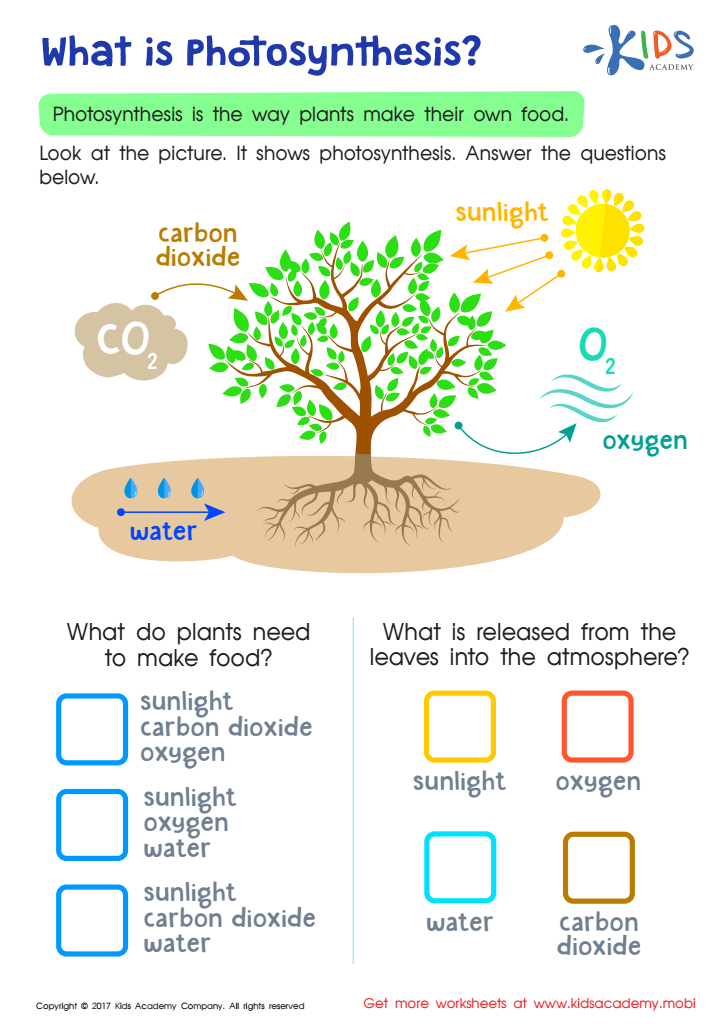
What is Photosynthesis Printable
 Assign to My Students
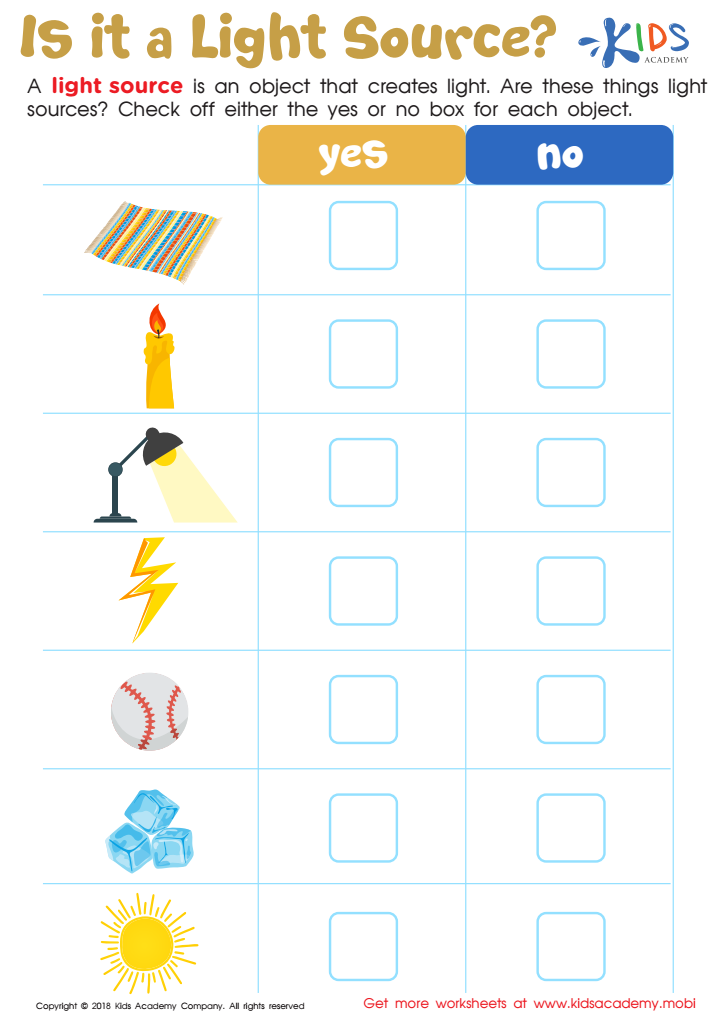
Is It a Light Source? Worksheet

How Light Travels Worksheet








Developing analytical skills in young children, especially in the context of science, is crucial for a multitude of reasons. For parents and teachers of ages 4-6, fostering these skills lays the foundation for critical thinking and problem-solving abilities that will serve children throughout their education and into their adult lives.
At this age, children are naturally curious about the world around them. Engaging them in scientific activities encourages exploration and questioning, driving their desire to learn. Through hands-on experiments, observation, and reasoning, youngsters learn to analyze information, make connections, and draw conclusions. This active learning process not only enhances their cognitive abilities but also bolsters their confidence.
Moreover, analytical skills developed through science can positively impact literacy and numeracy skills. Engaging children in scientific inquiry often involves measuring, counting, observing, and recording—core components of early mathematics and reading development.
Encouraging analytical thinking from an early age prepares children to approach challenges with a strategic mindset. As they navigate complexities in their schooling and beyond, these skills foster adaptability, creativity, and resilience, making them well-equipped to face future demands in an ever-evolving world. In essence, nurturing analytical skills at this formative stage supports holistic development and lifelong learning.







