
Enhancing categorization skills Science Worksheets for Ages 4-6
3 filtered results
Difficulty Level
Grade
Age
-
From - To
Subject
Activity
Standards
Our "Enhancing Categorization Skills Science Worksheets" for ages 4-6 are designed to make early learning both fun and educational. These engaging worksheets help young learners develop their ability to identify, sort, and categorize objects based on different attributes such as shape, size, and color. Perfectly tailored for preschool and kindergarten children, each activity encourages critical thinking and problem-solving skills through interactive exercises. By introducing basic scientific concepts in a playful manner, our worksheets provide a solid foundation for future learning. Foster your child's curiosity and analytical skills with these vibrant and thoughtfully crafted science worksheets!
Favorites
With answer key
Interactive
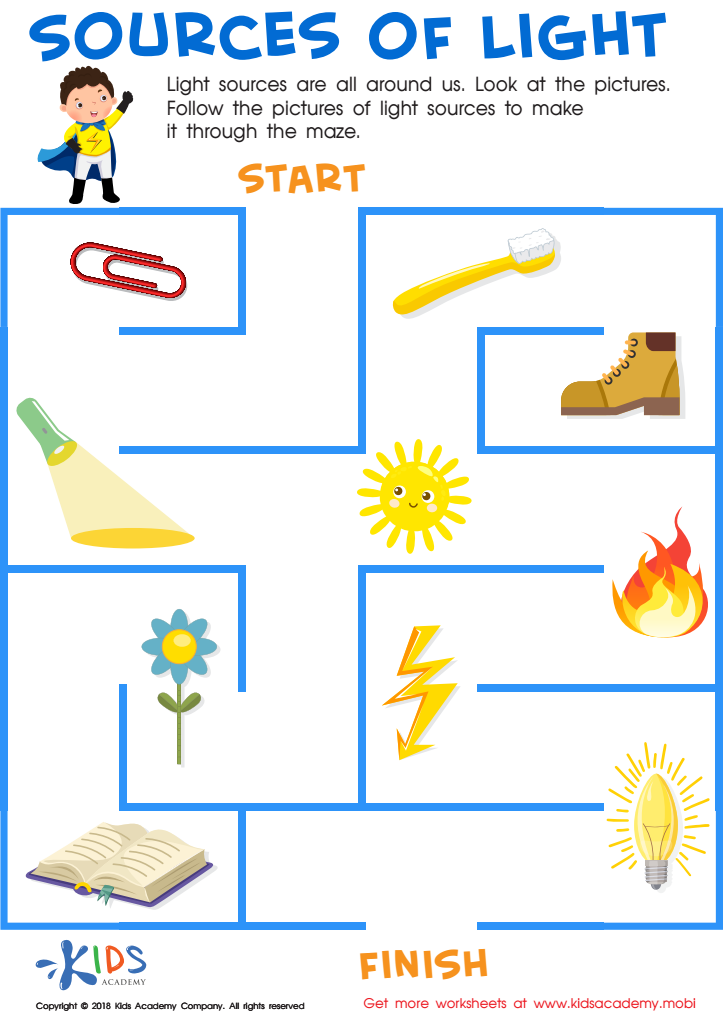
Sources of Light Worksheet
Help your child explore sources of light with this printout exercise. Ask them if they know the sun is the reason for day and night. Then point out other common light sources, then work together to guide them through the maze from start to finish.
 Assign to My Students
Sources of Light Worksheet
Worksheet
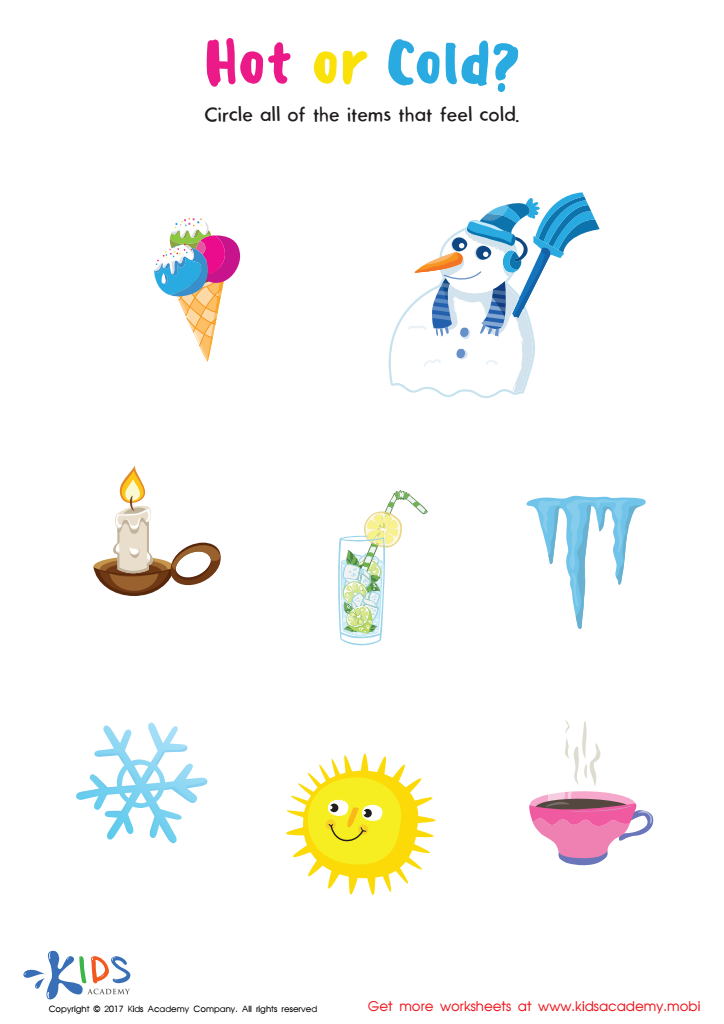
Hot or Cold Printable
Help your child stay safe with this hot or cold worksheet! It promotes problem solving skills and teaches the important concept of temperature differences. Plus, it’s fun! Get your child to learn by playing.
Hot or Cold Printable
Worksheet
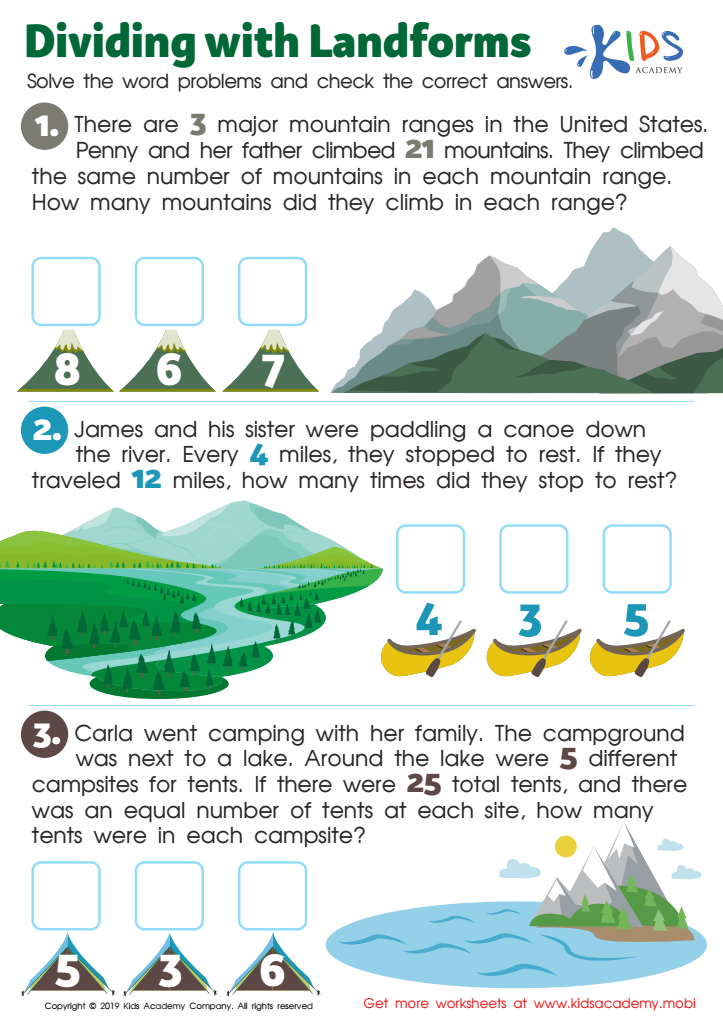
Dividing with Landforms
Mixing subjects to help your child learn is always nice. This worksheet combines landforms, problem-solving and division. The PDF highlights numbers, uses bold colors and provides pictures to help your child understand the questions and answer choices, making them feel empowered, not intimidated.
Dividing with Landforms
Worksheet
Learning Skills
Join Kids Academy for Free
Who is primarily going to use this learning content?







Enhancing categorization skills in science for children ages 4-6 is vital for their cognitive and academic development. At this developmental stage, young minds are exceptionally receptive and capable of absorbing new information rapidly. Engaging them in categorization exercises helps establish foundational skills that are critical across various domains of learning.
For parents and teachers, promoting these skills aids in the development of logical thinking and structuring abilities. When children master categorization, they begin to understand how to group objects, ideas, or events based on shared characteristics. This can lead to a deeper comprehension of more complex scientific concepts later on.
Moreover, categorization improves memory retention because it requires children to organize information systematically. Children who develop these skills exhibit better problem-solving capabilities, as they learn to draw connections and recognize patterns in their everyday life.
For teachers, introducing categorization activities in a science context can make learning more interactive and enjoyable. It allows students to explore and understand their environment by sorting and grouping natural objects, which sparks curiosity and a sense of exploration.
Parents, meanwhile, can further support these skills through everyday activities like sorting toys or food items, thereby mirroring scientific processes of classification. In conclusion, fostering categorization skills at an early age sets the stage for academic success and nurtures an inquisitive, organized mindset ready for lifelong learning.







