
Space knowledge Science Worksheets for Ages 4-6
3 filtered results
Difficulty Level
Grade
Age
-
From - To
Subject
Activity
Standards
Explore the wonders of the universe with our Space Knowledge Science Worksheets for ages 4-6! Designed to spark curiosity and imagination, these engaging worksheets introduce young learners to key concepts about space, including planets, stars, and the moon. Each activity blends fun and education, helping children develop essential skills such as critical thinking, problem-solving, and creativity. With vibrant illustrations and age-appropriate tasks, our worksheets make learning about space an exciting adventure. Perfect for classrooms or home learning, these resources inspire a lifelong interest in science. Start your journey through the cosmos and watch young minds soar to new heights!
Favorites
With answer key
Interactive
 Assign to My Students
Night Sky Search Worksheet
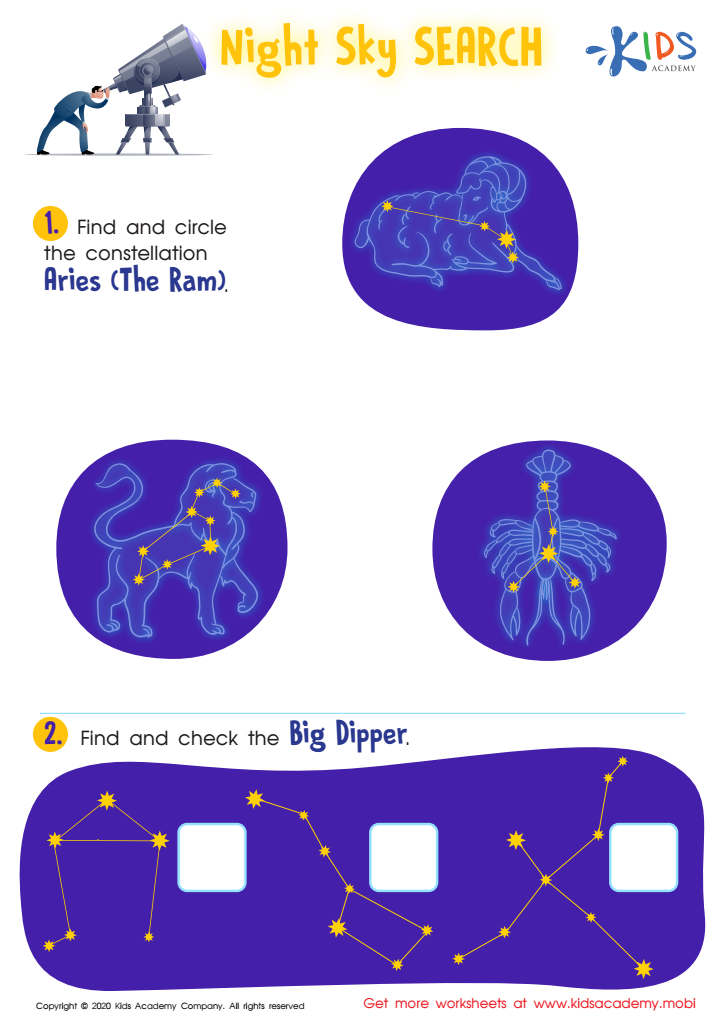
Gaze up into the night sky and spot the stars! Your little astronomer can learn about Aries and Big Dipper constellations with this science worksheet. Simply find the ram for Aries and check the box for Big Dipper. Then, when the weather is right, go outside and look for them in the night sky!
Night Sky Search Worksheet
Worksheet
Stars and Constellations Worksheet
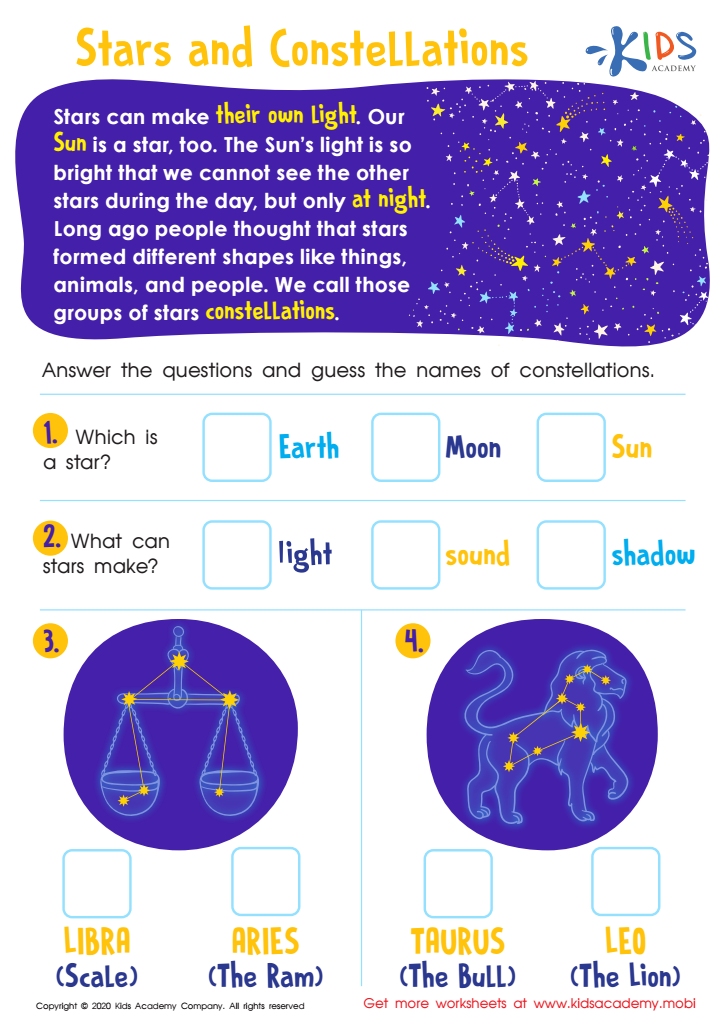
Learn about stars and constellations with this entertaining worksheet! Read the passage at the top of the page to gain an understanding of stars, then test your child's knowledge with the questions below. Check the right answers and finish this science worksheet with your child - they'll be amazed that stars can make their own light, just like the sun!
Stars and Constellations Worksheet
Worksheet
Join Kids Academy for Free
Who is primarily going to use this learning content?







Teaching space knowledge science to children aged 4-6 is crucial for several reasons. First, it sparks curiosity and excitement about the universe, encouraging young learners to ask questions and explore their environment. This age group has a natural inclination to wonder about the stars, planets, and the concept of space, and engaging with these topics can fuel their imagination and critical thinking skills.
Moreover, space education fosters early STEM (Science, Technology, Engineering, and Mathematics) skills. Understanding basic concepts about the solar system, gravity, or the day-night cycle lays the groundwork for more complex ideas later. It promotes observational skills as children learn to notice patterns and changes in the natural world.
In addition, discussing space helps develop language skills and vocabulary. Children learn new words and concepts, supporting their language development and enhancing communication.
Lastly, instilling a sense of wonder about space can contribute to developing a love for lifelong learning. By encouraging an interest in space at an early age, parents and teachers help shape inquisitive minds that value knowledge, exploration, and interpersonal connections, essential traits for future success in an increasingly complex world.







