Understanding directions Science Worksheets for Ages 4-6
4 filtered results
-
From - To
Explore our engaging "Understanding Directions Science Worksheets" tailored for children aged 4 to 6! These worksheets are designed to help young learners comprehend spatial awareness and directional concepts through fun, interactive activities. By following simple instructions, kids will cultivate essential skills important for everyday situations and scientific exploration. Each worksheet features colorful illustrations and age-appropriate challenges that make learning enjoyable. Ideal for home or classroom use, these resources aim to build confidence and improve critical thinking in early learners. Download and nurture your child's understanding of directions while sparking their curiosity about the world around them!
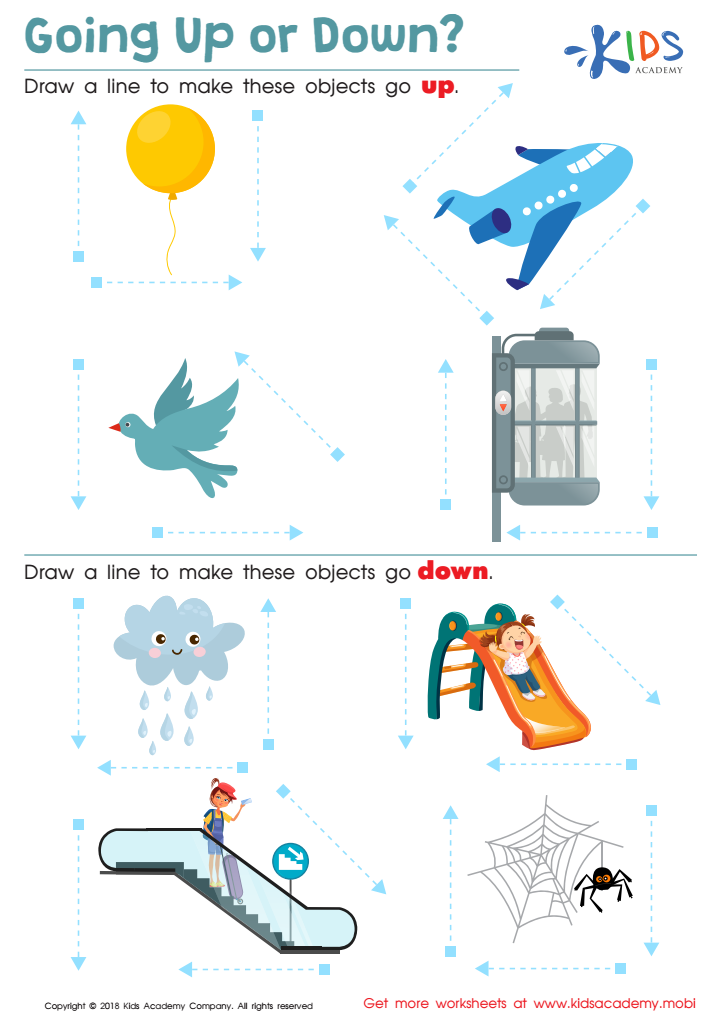
Going up or Down? Worksheet
 Assign to My Students
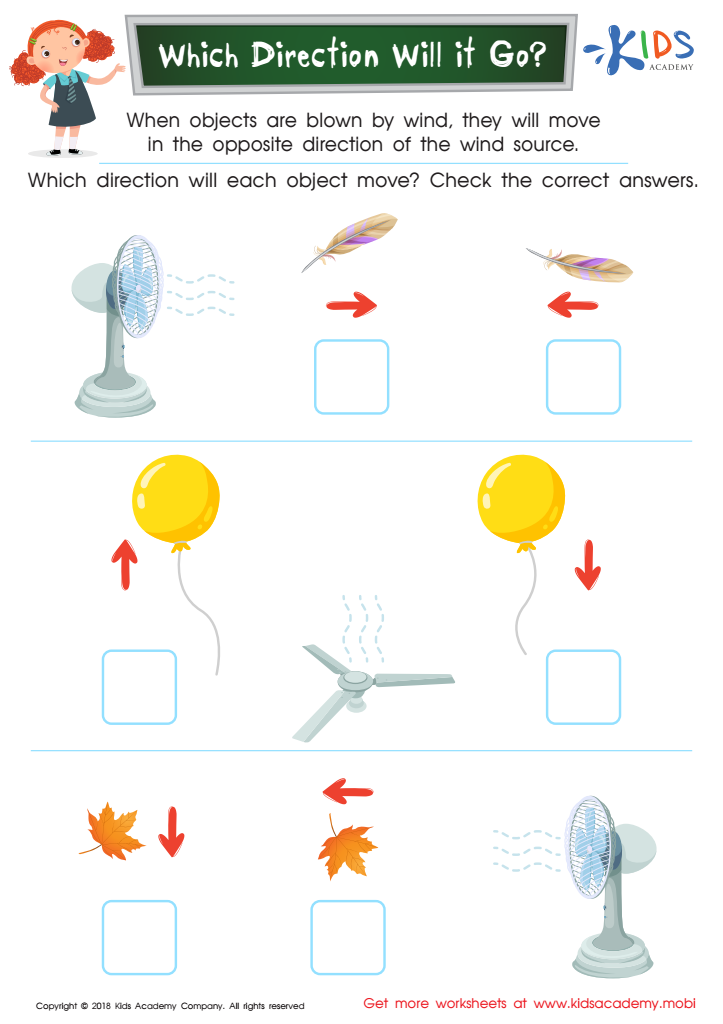
Which Direction Will it Go? Worksheet
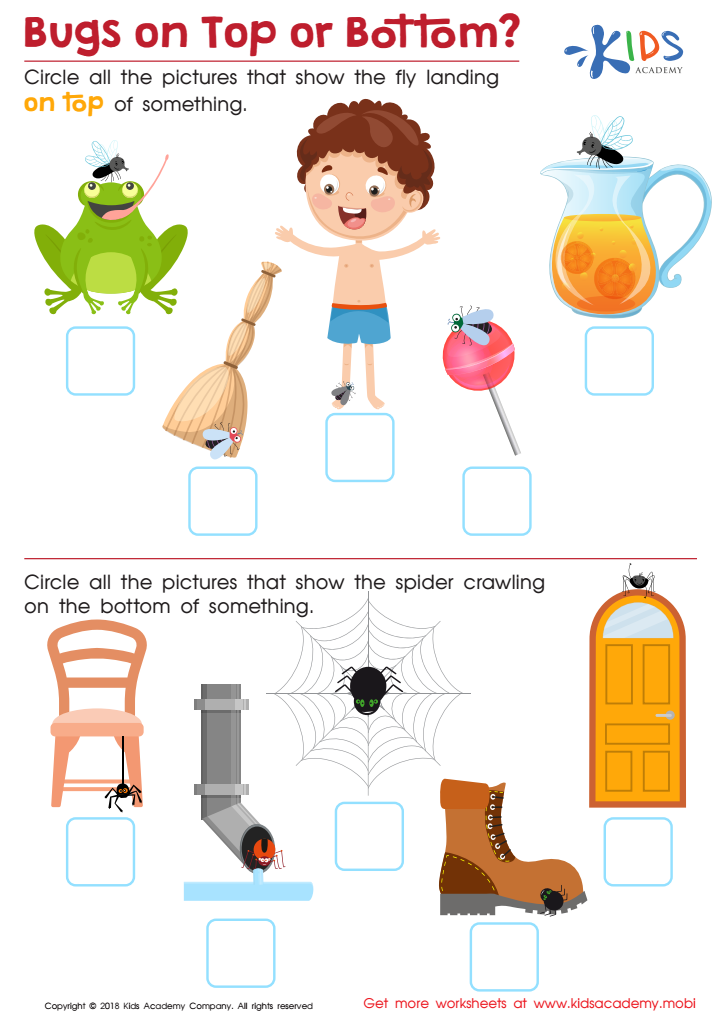
Bugs on Top or Bottom? Worksheet
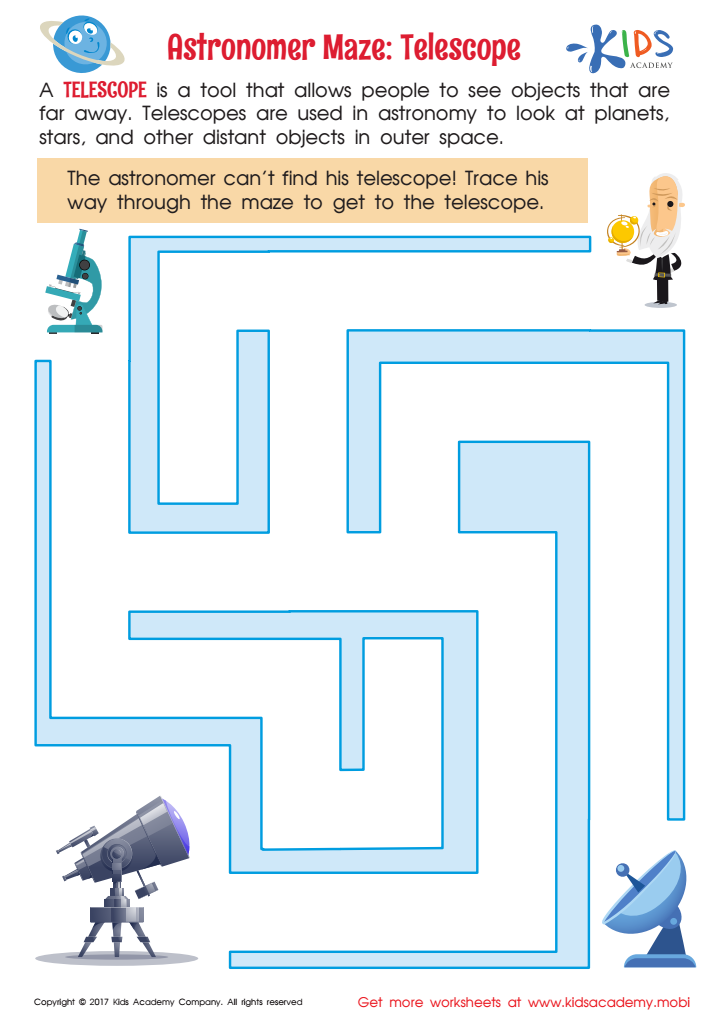
Astronomer Maze: Telescope Worksheet






Understanding directions in science for young children aged 4-6 is vital for several reasons. Firstly, it supports cognitive development; children learn to process information and follow sequential steps, essential skills for future learning. Mastering directions enhances critical thinking as they learn to hypothesize, experiment, and analyze the outcomes. This foundational knowledge fosters curiosity, inspiring children to ask questions about the world around them.
Moreover, early exposure to scientific concepts helps develop language skills. As children articulate their understanding of directions, they enrich their vocabulary and improve communication abilities, which are crucial for overall academic success. Engaging children in science through hands-on activities nurtures their creativity and problem-solving skills.
Parents and teachers also benefit significantly from understanding children’s grasp of directions. It enables them to create more effective, age-appropriate instructional strategies tailored for individualized learning. Recognizing potential difficulties allows for timely interventions, ensuring that all children can achieve mastery in these essential skills. Furthermore, instilling a love for science at an early age encourages lifelong learning and interest in STEM fields, ultimately contributing to a well-rounded, future-ready generation. In short, prioritizing understanding directions in science supports both immediate educational outcomes and long-term growth.







