Decision making skills Community Worksheets for Ages 4-6
3 filtered results
-
From - To
Enhance your child's decision-making abilities with our engaging Decision Making Skills Community Worksheets designed for ages 4-6. These educational resources focus on nurturing critical thinking, allowing young learners to explore choices and their consequences in a fun, interactive way. Through age-appropriate activities, children will gain confidence in evaluating options and understanding their impact on the community. Our worksheets incorporate vibrant illustrations and relatable scenarios, making learning enjoyable while fostering awareness of their roles within a community. Ideal for parents and educators, these resources provide a solid foundation for successful decision-making throughout their lives. Start empowering your child today!
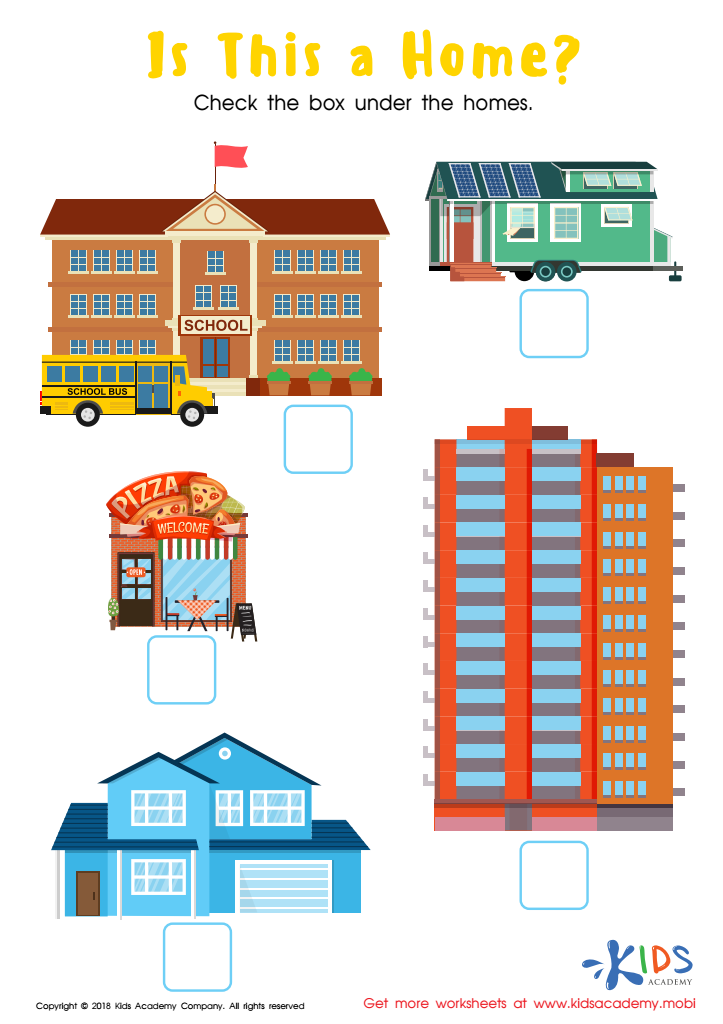
Is this a Home? Worksheet
 Assign to My Students
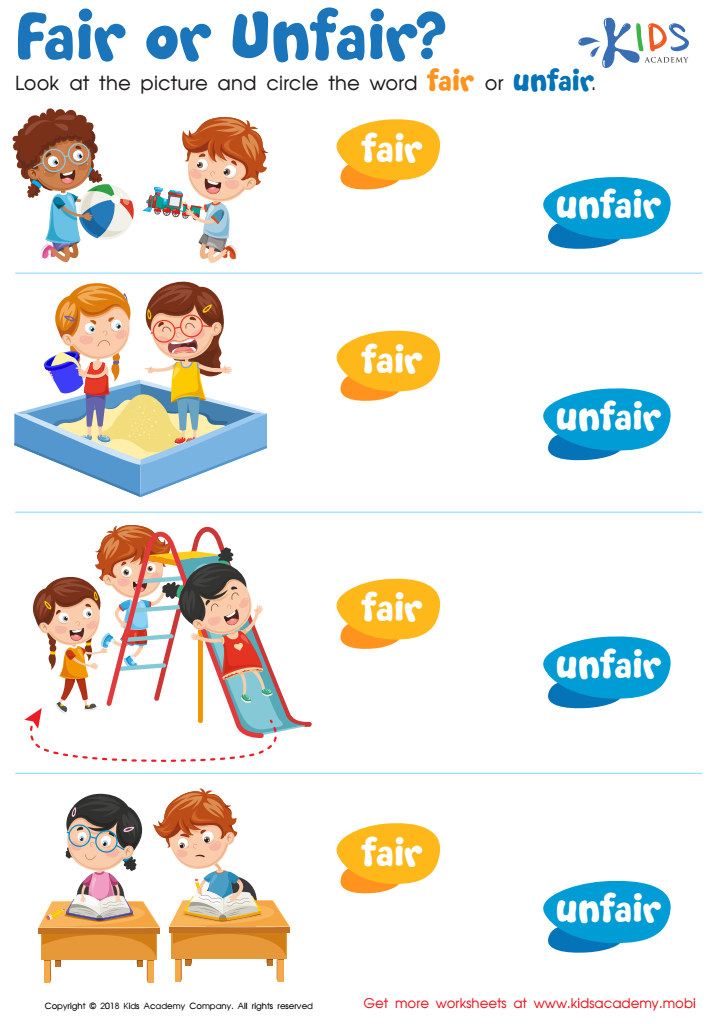
Fair or Unfair Worksheet

Towns Worksheet








Parents and teachers should prioritize decision-making skills in children ages 4-6 for several reasons. During these formative years, children are developing crucial cognitive and social abilities that will serve as the foundation for their future learning and interpersonal relationships. By fostering decision-making skills, adults can equip young learners with the tools they need to navigate challenges, resolve conflicts, and make healthy choices.
Encouraging decision-making in this age range nurtures independence and critical thinking. When children are given opportunities to make choices—whether it’s selecting a book to read, deciding what activity to engage in, or collaboratively resolving a disagreement with peers—they build confidence in their abilities. This empowerment promotes a sense of agency, leading to increased motivation and persistence in tasks.
Moreover, effective decision-making is linked to emotional intelligence. As children learn to weigh options and consider consequences, they develop empathy and awareness of their peers’ perspectives. This capacity for understanding fosters cooperation and strengthens community ties.
Ultimately, supporting decision-making skills in young children not only benefits their individual development but also enhances classroom dynamics and family interactions, creating a more thoughtful, collaborative, and resilient community of learners.








