
Building vocabulary Social Studies Worksheets for Ages 4-6
3 filtered results
Difficulty Level
Grade
Age
-
From - To
Subject
Activity
Standards
Enhance your child's language skills with our engaging Building Vocabulary Social Studies Worksheets, specifically designed for ages 4-6. These worksheets introduce young learners to essential social studies concepts, including community, culture, and geography, while expanding their vocabulary in an age-appropriate manner. Each activity combines playful themes and interactive exercises that promote critical thinking and literacy development. Perfect for parents and educators, our resources encourage meaningful discussions about the world around us, fostering curiosity and understanding. Download our printable worksheets today and watch your child's vocabulary flour flourish, setting a strong foundation for their future learning in social studies and beyond!
Favorites
With answer key
Interactive
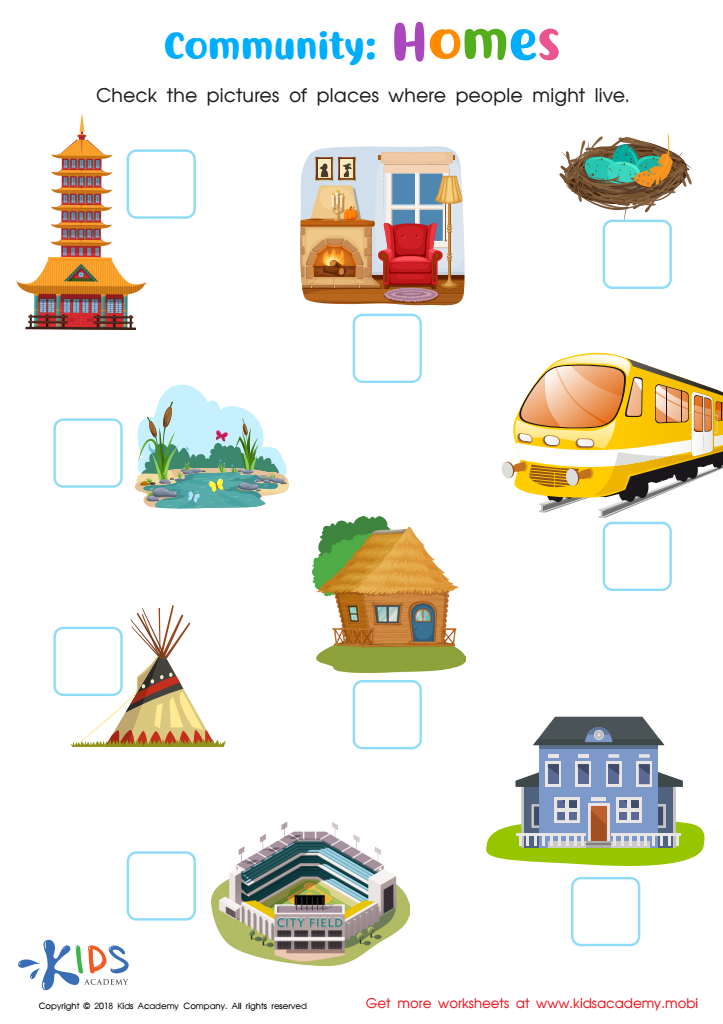
Community: Homes Worksheet
Help your child discover the different types of homes with this free worksheet! Full of colors and pictures, they'll assess which are suitable for people to live in. As they check each picture, they'll use their fine motor skills to draw a conclusion. They'll recognize familiar homes and learn about new ones. There's no place like home!
 Assign to My Students
Community: Homes Worksheet
Worksheet
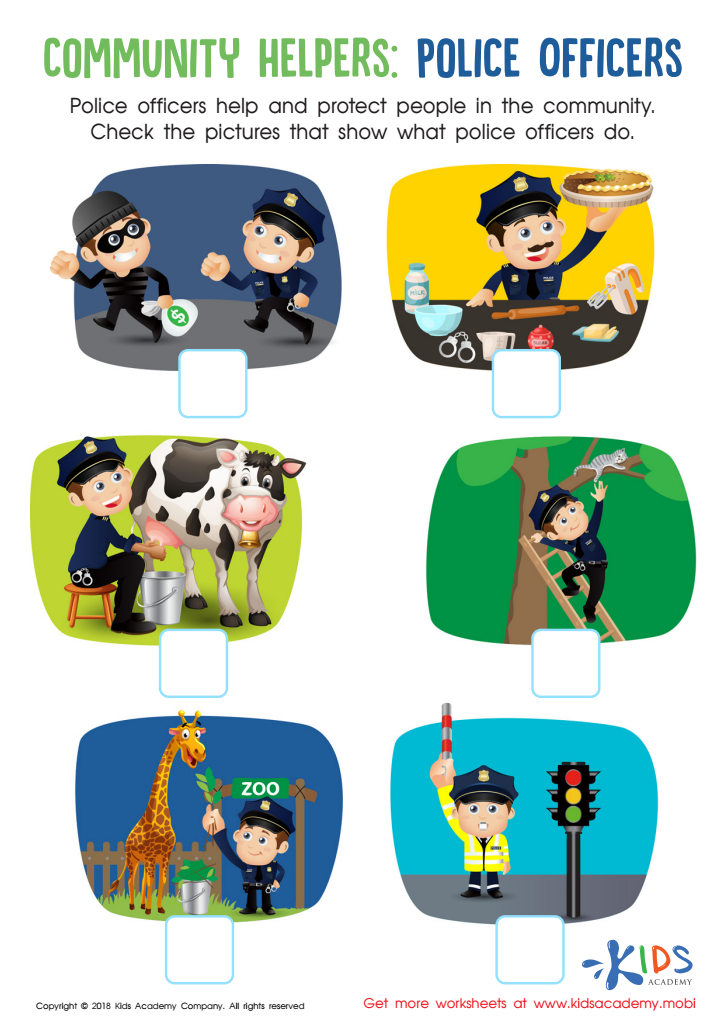
Police Officers Community Helpers Worksheet
Ask your child about police officers and how they help the community. Reference this worksheet to test their knowledge of police duties by asking them to name what the officers are doing in the pictures. Check which pictures correctly depict the duties of a police officer. Answering these questions together can help your child understand how police officers keep the community safe.
Police Officers Community Helpers Worksheet
Worksheet
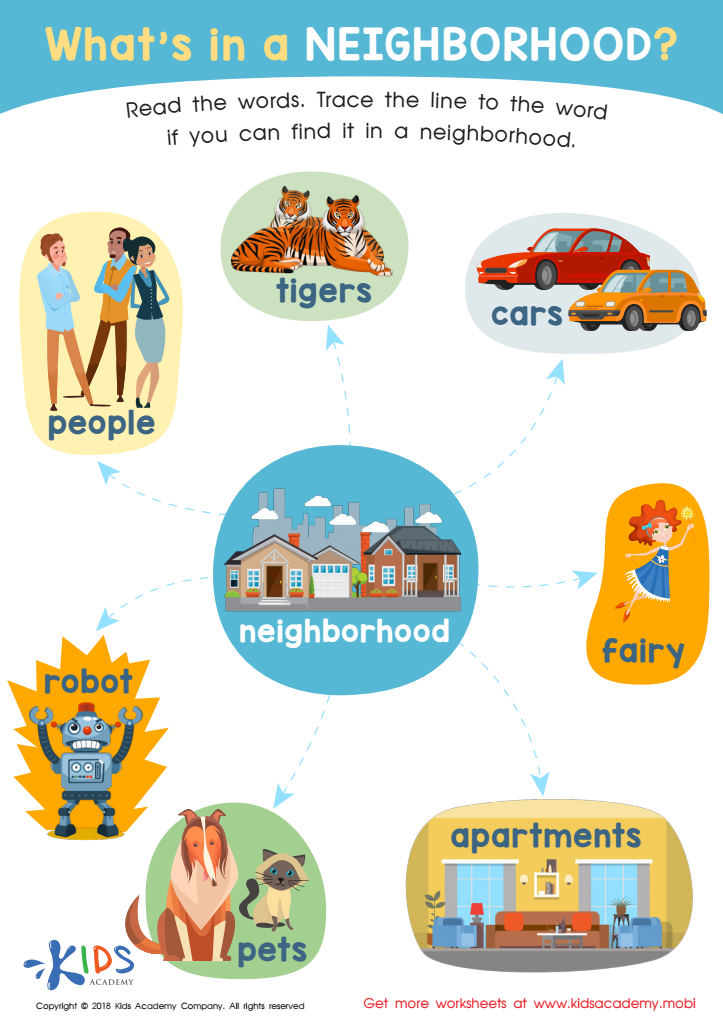
What's in a Neighborhood? Worksheet
This fun worksheet uses picture clues and traceable lines to help kids learn neighborhood words. Kids will match the neighborhood pictures to the correct words and practice connecting the two. The bright colors make it a great way for kids to practice understanding the qualities of a neighborhood.
What's in a Neighborhood? Worksheet
Worksheet
Join Kids Academy for Free
Who is primarily going to use this learning content?







Building vocabulary in Social Studies for children ages 4-6 is crucial for several reasons. At this formative stage, children are eager to explore and understand the world around them. A strong vocabulary lays the foundation for effective communication, critical thinking, and comprehension skills. By exposing young learners to key Social Studies concepts—such as community, culture, geography, and history—parents and teachers can enrich their understanding of themselves and the world.
Moreover, a robust vocabulary enhances literacy skills, as it encourages children to engage with stories and informational texts. This engagement fosters a sense of curiosity and promotes discussion, nurturing social and emotional development. Furthermore, learning about diverse cultures and historical events through vocabulary helps children develop empathy and appreciate differences, thereby fostering inclusivity.
Lastly, effective vocabulary instruction contributes to academic success later in life. Children who have a rich vocabulary in early childhood are more likely to perform well in school. Therefore, parents and teachers should prioritize vocabulary development in Social Studies, guiding children in making meaningful connections to their environment and enhancing their overall learning experience. Engaging in this practice helps cultivate informed, compassionate, and capable members of society.








