Logical Reasoning World Around Us Worksheets for Ages 4-6
5 filtered results
-
From - To
Our "Logical Reasoning World Around Us Worksheets for Ages 4-6" are designed to boost young learners’ problem-solving skills through fun, engaging activities. Each worksheet invites children to explore their surroundings while developing critical thinking abilities. From pattern recognition to sorting and sequencing, these activities foster logical reasoning in a playful manner. Ideal for early learners, our worksheets align with educational standards to ensure kids grasp foundational concepts. Empower your youngster's learning journey with our thoughtfully crafted resources designed to make logical reasoning a delightful adventure! Perfect for educators and parents wanting high-quality, educational content that inspires curiosity and success.
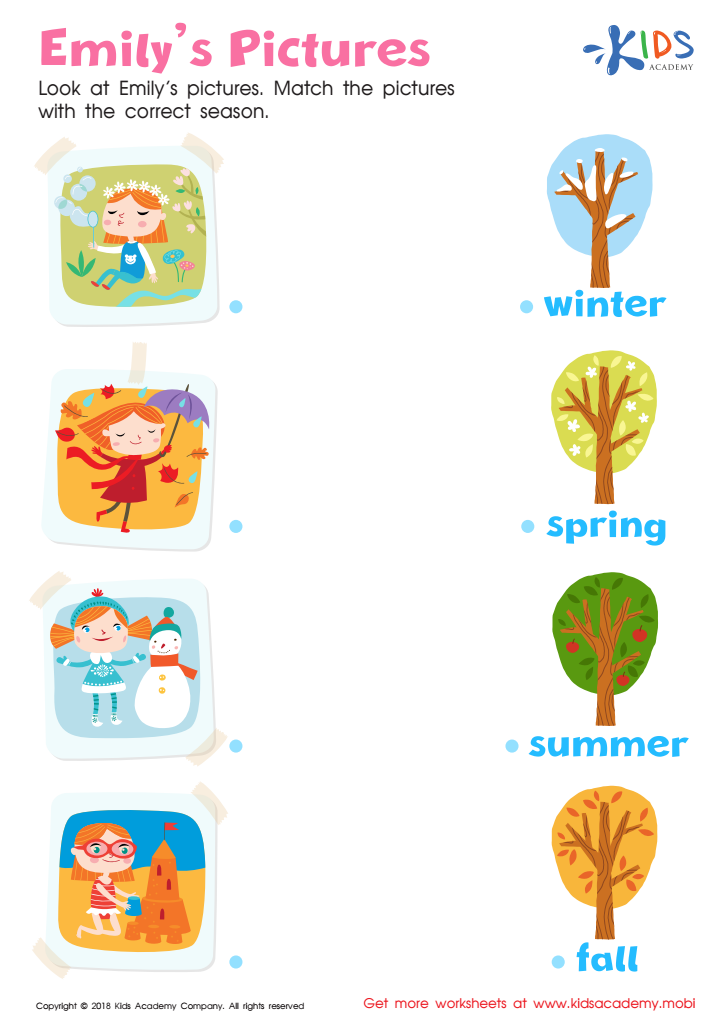
Emily's Pictures Worksheet
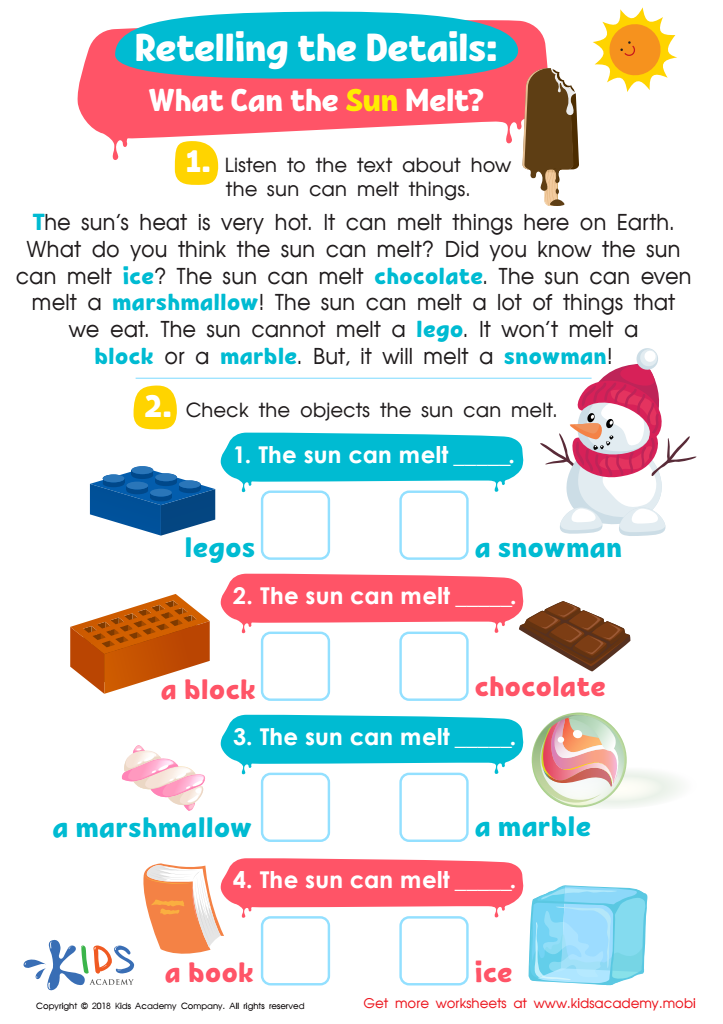
Retelling the Details: What Can the Sun Melt? Worksheet
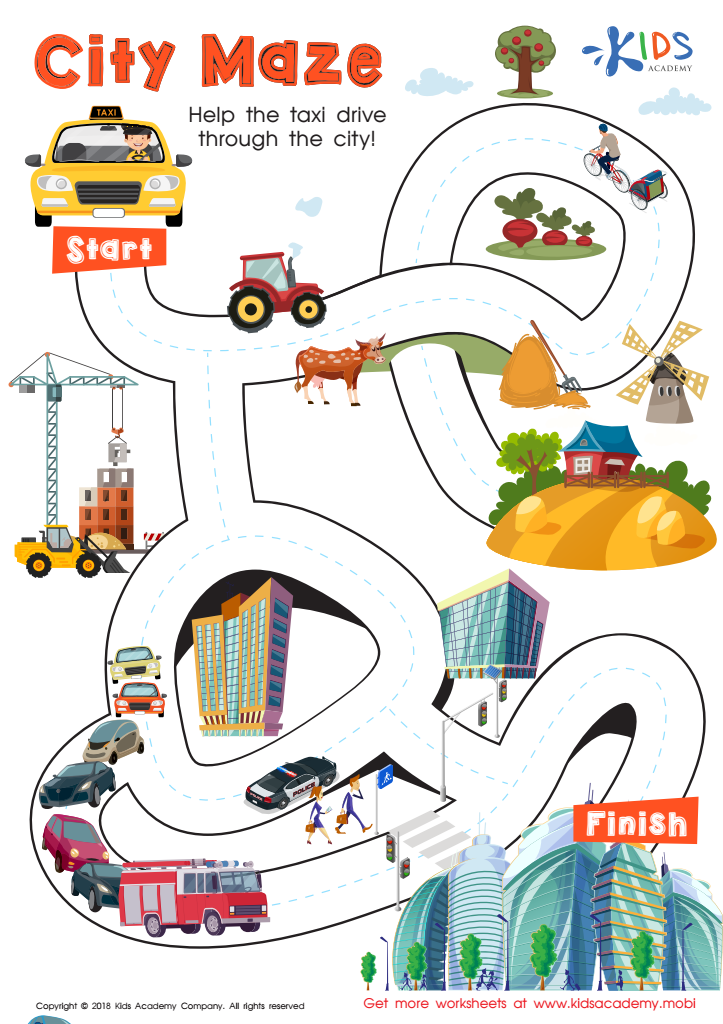
City Maze Worksheet
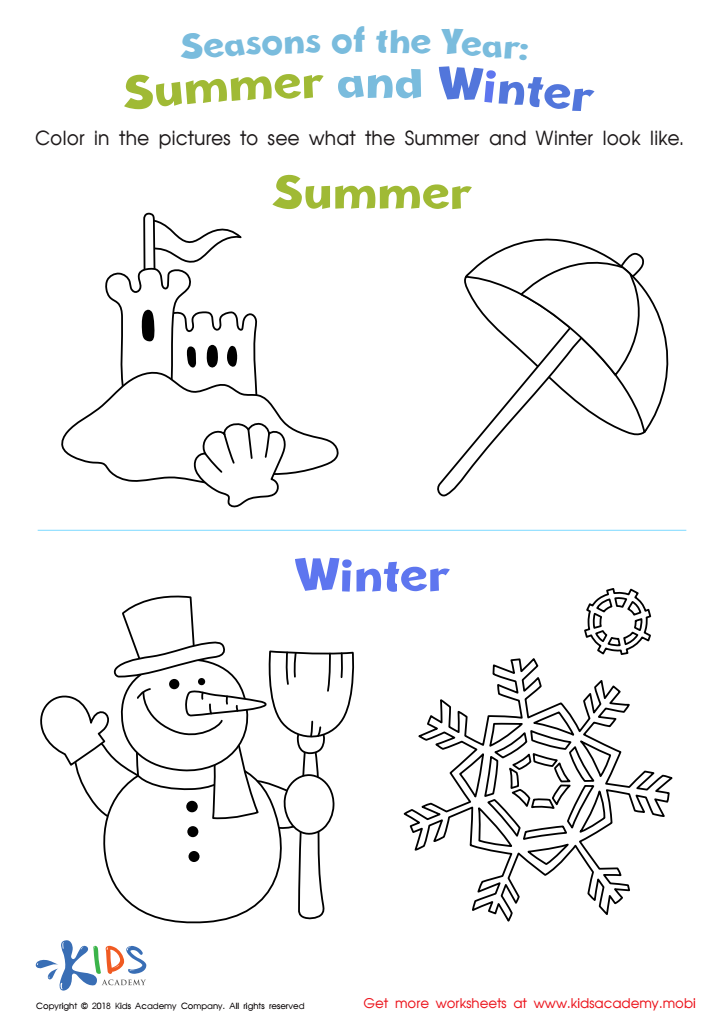
Summer and Winter Worksheet
 Assign to My Students








Parents and teachers should give significant attention to logical reasoning for children aged 4-6 because it forms the foundation for critical thinking and problem-solving skills essential for lifelong learning. At this early stage, children's brains are developing rapidly, making it a prime opportunity to introduce activities that enhance their cognitive abilities.
Logical reasoning helps children understand the relationship between cause and effect, fostering the ability to predict outcomes, make decisions, and solve problems. These skills are not merely academic; they are crucial for navigating daily life. For instance, when children engage in puzzles, sorting tasks, or simple reasoning games, they learn to recognize patterns, observe differences and similarities, and approach problems methodically.
Moreover, nurturing logical reasoning boosts language development as children explain their thought processes and understandings. This communication enhances their vocabulary, comprehension, and ability to articulate ideas clearly.
Addressing logical reasoning early also builds self-confidence. When children successfully solve problems using logical methods, they gain a stronger sense of accomplishment and autonomy.
Parents and teachers can foster this development through playful and engaging activities such as building blocks, simple board games, story sequencing, and interactive learning apps, laying a robust groundwork for future academic progress and real-world decision-making.