
Cognitive Development Writing Worksheets for Ages 4-6
7 filtered results
Difficulty Level
Grade
Age
-
From - To
Subject
Activity
Standards
Our Cognitive Development Writing Worksheets for Ages 4-6 are expertly designed to foster critical thinking and problem-solving skills in young learners. Through engaging and age-appropriate activities, children enhance their writing abilities while stimulating cognitive growth. These worksheets incorporate fun exercises that develop memory, attention, and logic, ensuring a well-rounded foundation for academic success. Perfect for parents and teachers, our resources make learning enjoyable and effective, equipping kids with essential skills needed for their educational journey. Unlock your child's potential with our thoughtfully crafted worksheets, tailored to support cognitive and writing development during these crucial early years.
Favorites
With answer key
Interactive
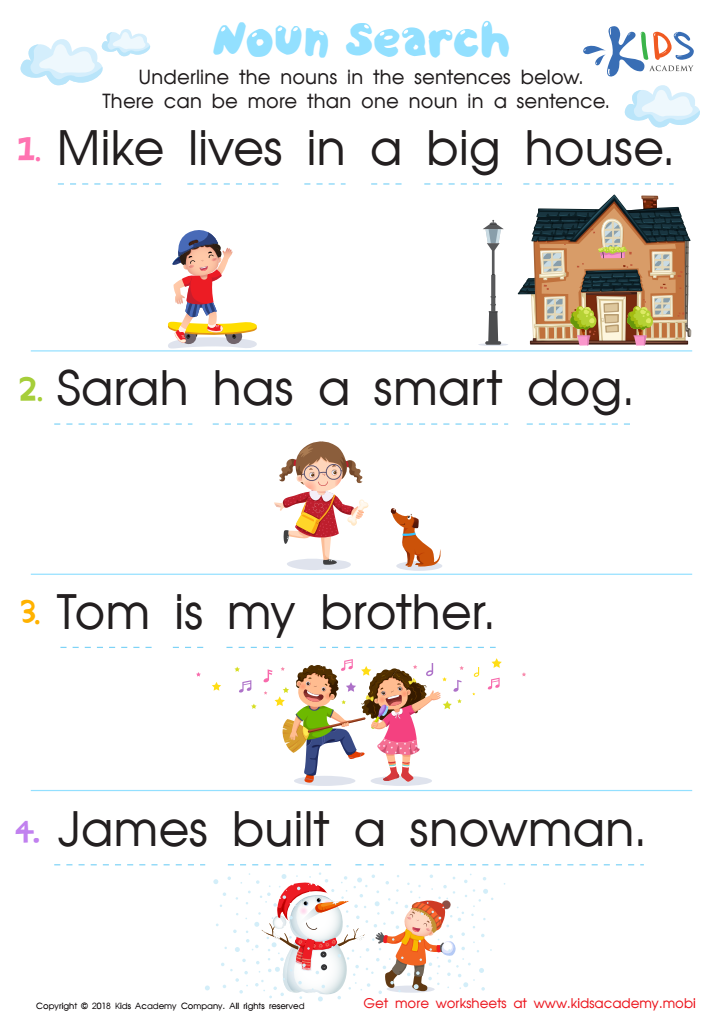
Noun Search Worksheet
To help your children learn the basics of grammar, start with nouns, verbs, adverbs and adjectives. This noun search worksheet will help your child understand the most common part of speech - the noun. Ask them to underline the nouns in each sentence. This is a great way to start learning proper grammar.
 Assign to My Students
Noun Search Worksheet
Worksheet
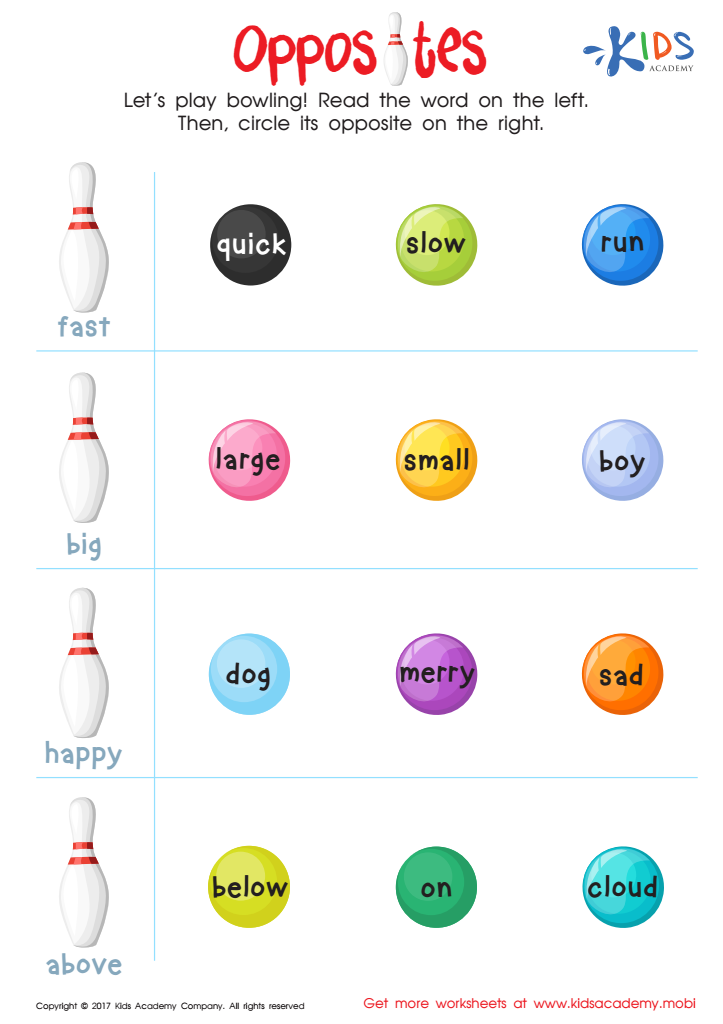
Opposites Worksheet
Have your students identify and circle the opposites of the words on the left. As a fun bowling-themed exercise, read the words and ask your kids if they know the opposites. Look through the options on the right and see if the answer is there; then, circle the correct answers.
Opposites Worksheet
Worksheet
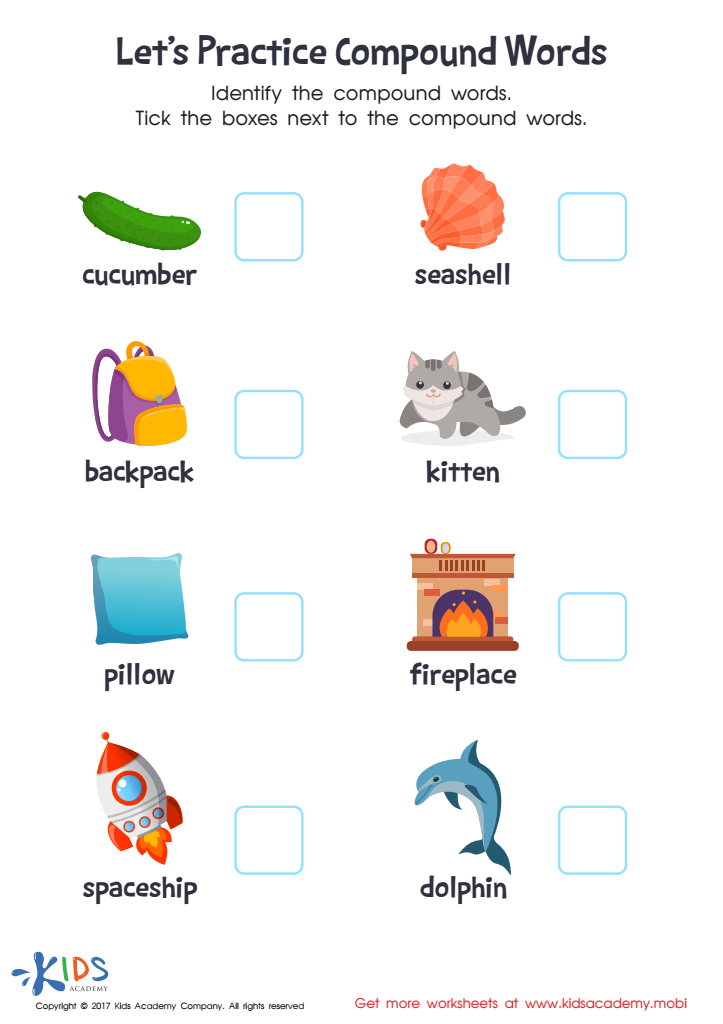
Let's Practice Compound Words Word Structure Worksheet
Test their knowledge of compound words with this fun worksheet and help them build their vocabulary. Have them say the words out loud as they work!
Let's Practice Compound Words Word Structure Worksheet
Worksheet
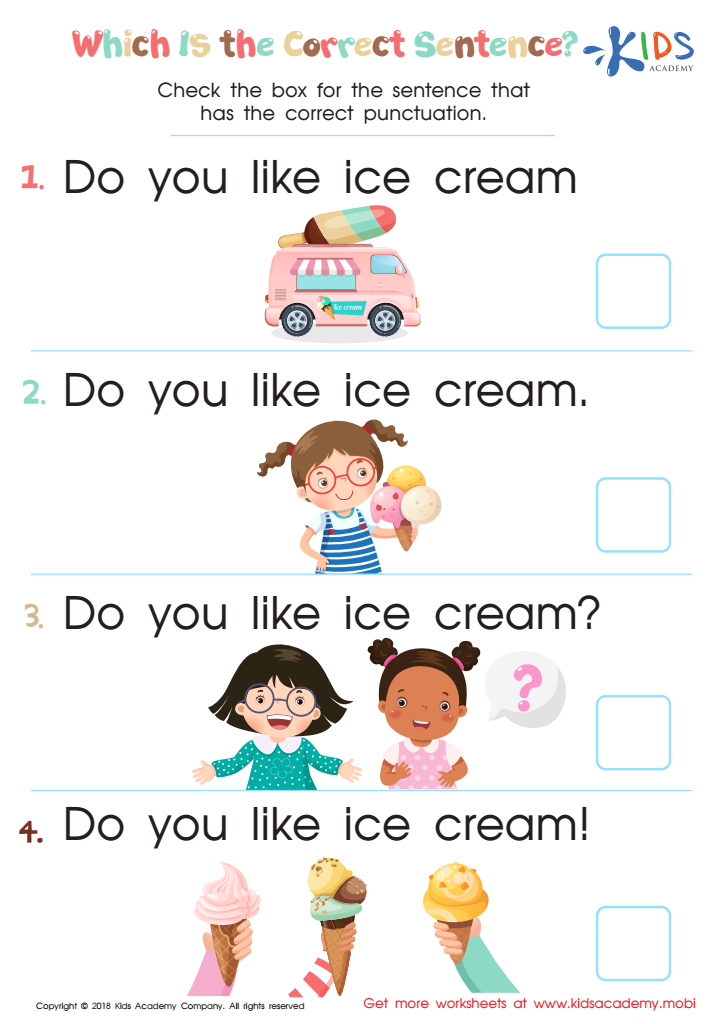
Which is the Correct Sentence? Worksheet
Punctuation is crucial in sentence formation. If your kid still doesn't grasp it, bigger hurdles await when writing sentences. Get them to read simple sentences, then ask if they know the right punctuation. Assist them in selecting the sentence that has the accurate punctuation.
Which is the Correct Sentence? Worksheet
Worksheet
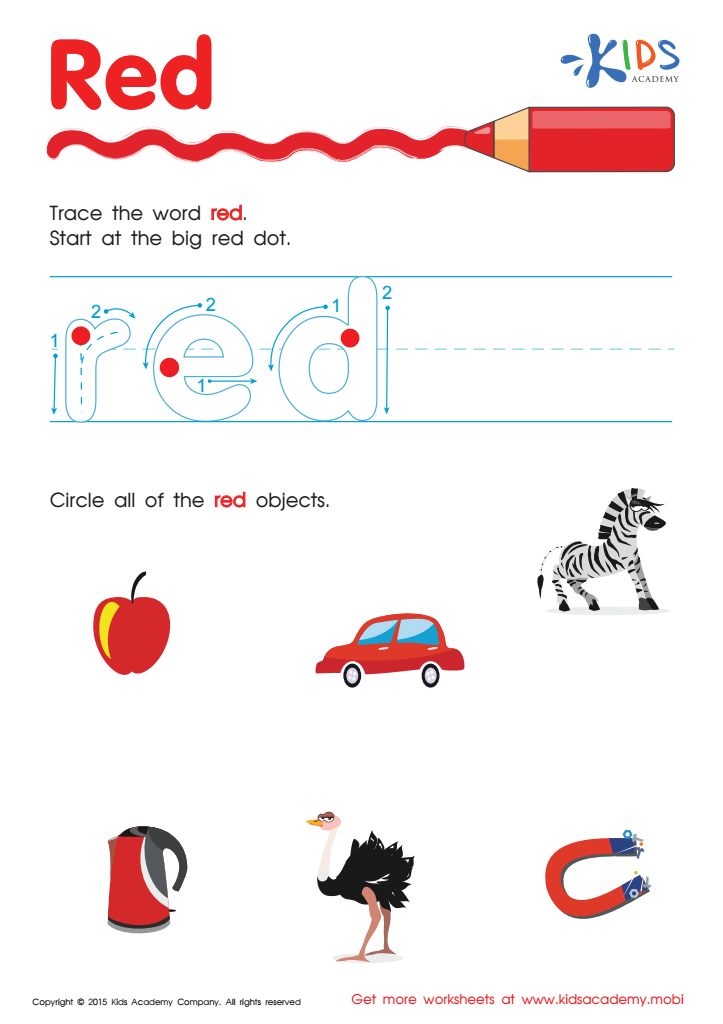
Red Tracing Color Words Printable
Trace red letter by letter, following the arrows and circling all the red objects. Look around your room and find something red. Have fun and become a handwriting master with this worksheet!
Red Tracing Color Words Printable
Worksheet
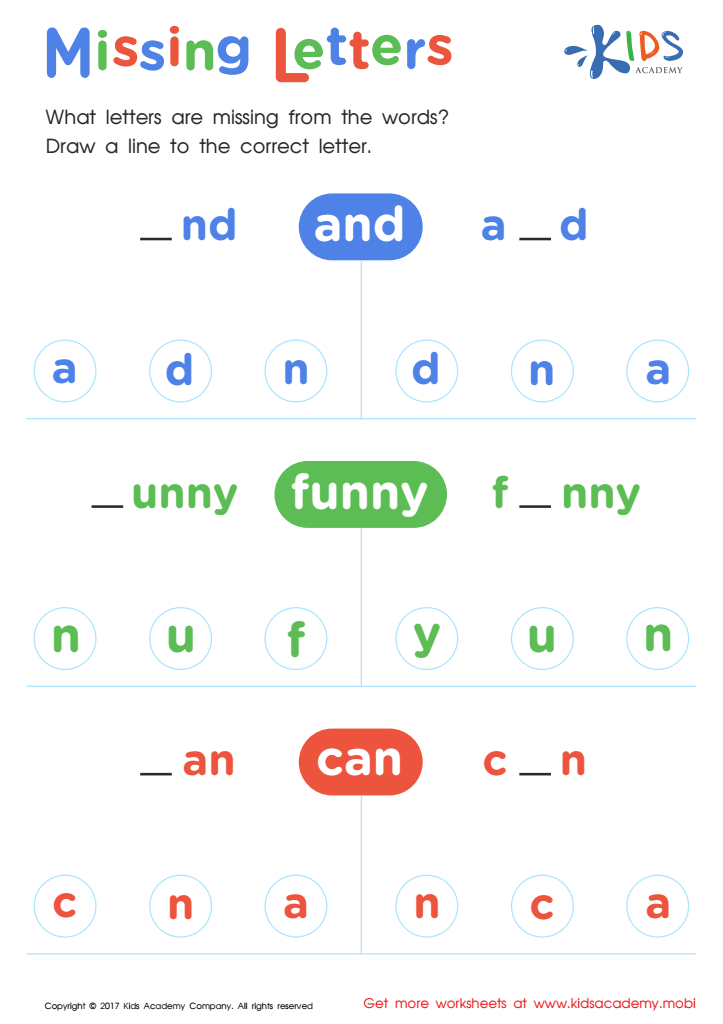
Missing Letters Worksheet
Review sight words with this fun matching worksheet from Kids Academy! Look at the sight words in the middle, read them aloud and find the missing letter on each side for each word. Draw a line to the correct letter to complete the sheet!
Missing Letters Worksheet
Worksheet
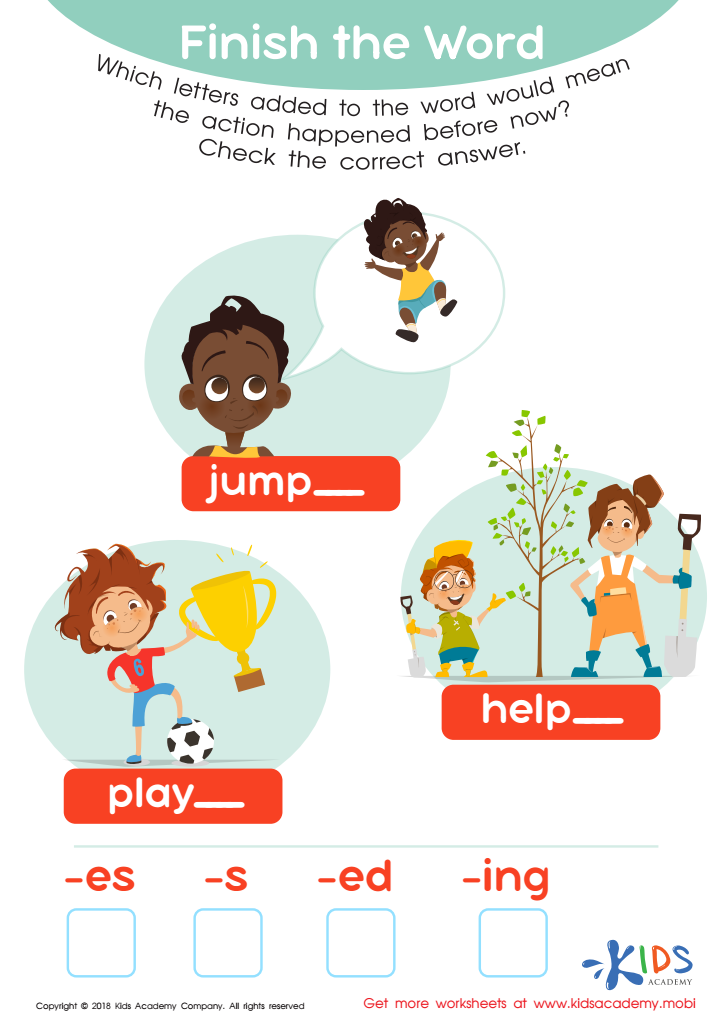
Finish the Word Worksheet
Does your kid know tenses? Listen to see if they are using words correctly. With this worksheet, your kids will learn to use the appropriate past tense forms. Ask them which letters added to words make the action past. Help them check the answers.
Finish the Word Worksheet
Worksheet
Join Kids Academy for Free
Who is primarily going to use this learning content?








Parents and teachers should pay close attention to cognitive development writing for children aged 4-6 as it plays a crucial role in their overall growth and future academic success. During these formative years, children's brains are rapidly developing, and writing activities enhance their cognitive abilities, language skills, and executive functions.
Writing stimulates neural pathways, fostering better brain connectivity. This period sees significant advances in fine motor skills, and writing involves complex hand-eye coordination, helping to refine these skills. As children learn to form letters and create words, they are also developing their understanding of language structures, phonetics, and vocabulary, which are foundational for reading.
Moreover, writing is a powerful tool for self-expression that enhances critical thinking. By structuring thoughts on paper, children learn to organize ideas and develop logical reasoning. This skill transcends language arts, impacting all areas of learning.
Encouraging cognitive development writing also supports emotional growth. It provides an outlet for children to express their feelings and experiences, nurturing their socio-emotional development. When parents and teachers engage in writing activities with children, it strengthens relationships and fosters an encouraging environment for learning.
Therefore, fostering writing skills between ages 4-6 equips children with essential cognitive and emotional tools that underpin lifelong learning and personal growth.








