Punctuation understanding Writing Worksheets for Ages 4-6
4 filtered results
-
From - To
Explore our engaging Punctuation Understanding Writing Worksheets, designed specifically for children aged 4-6! These interactive resources help young learners grasp the fundamentals of punctuation through fun, age-appropriate activities. With vibrant illustrations and simple instructions, kids will enjoy mastering essential skills like identifying periods, commas, and question marks. Our worksheets foster creativity and confidence in writing by providing clear examples and hands-on practice. Ideal for both classroom use and homework, these worksheets encourage repeated practice to reinforce learning. Build your child’s writing foundation today with these comprehensive punctuation resources that make learning fun and effective!
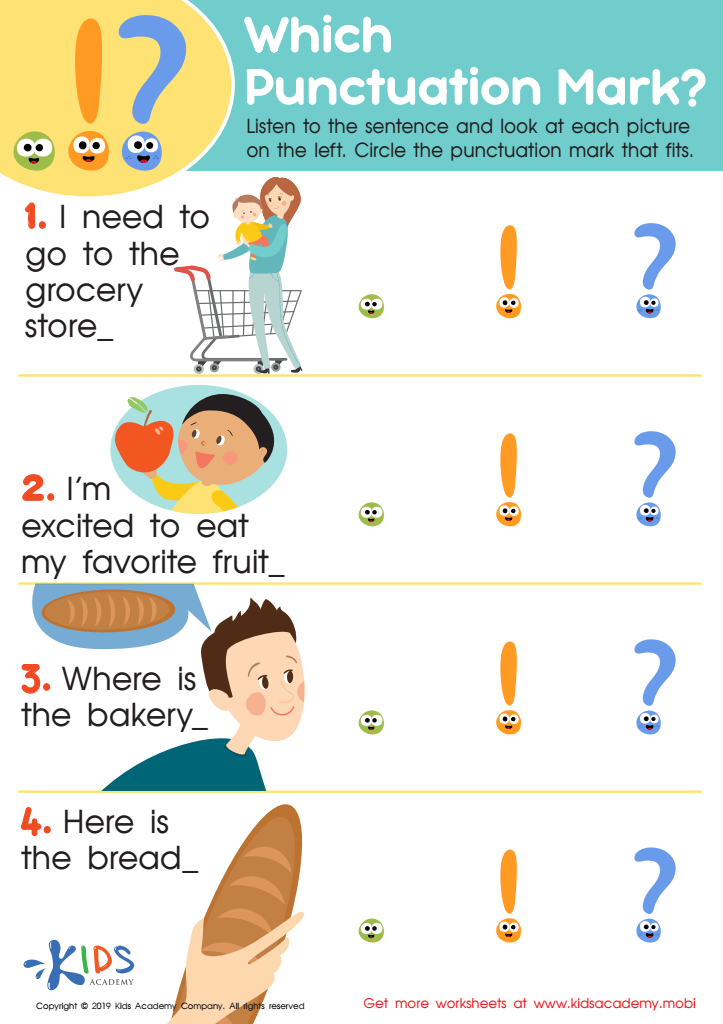
Which Punctuation Mark Worksheet
 Assign to My Students
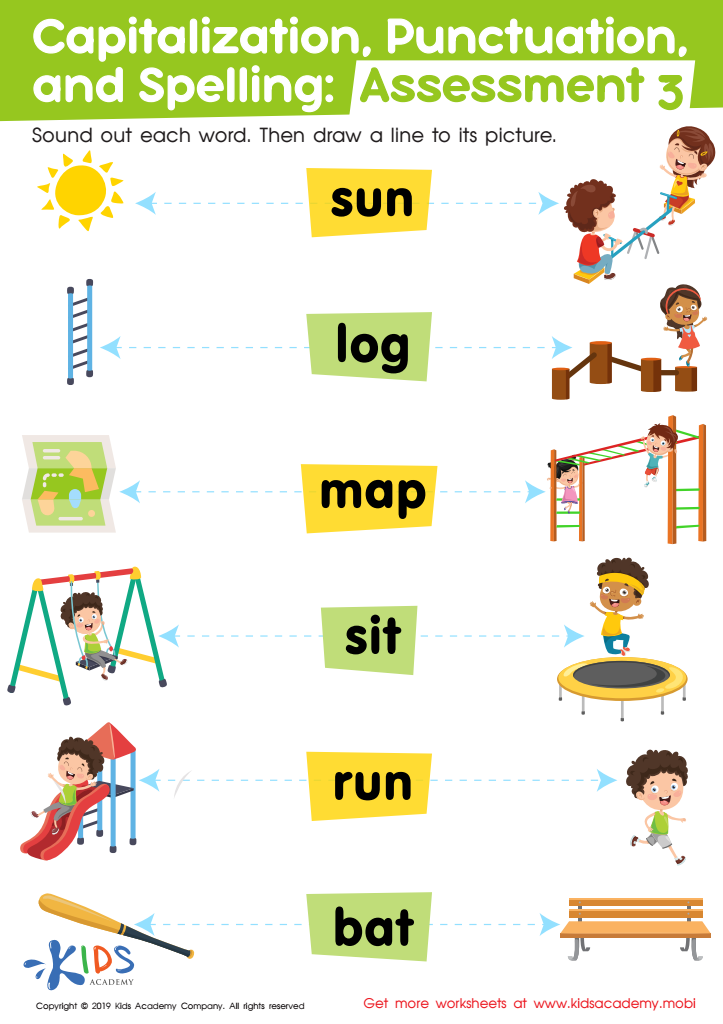
Capitalization. Punctuation. Spelling. Assessment 3 Worksheet
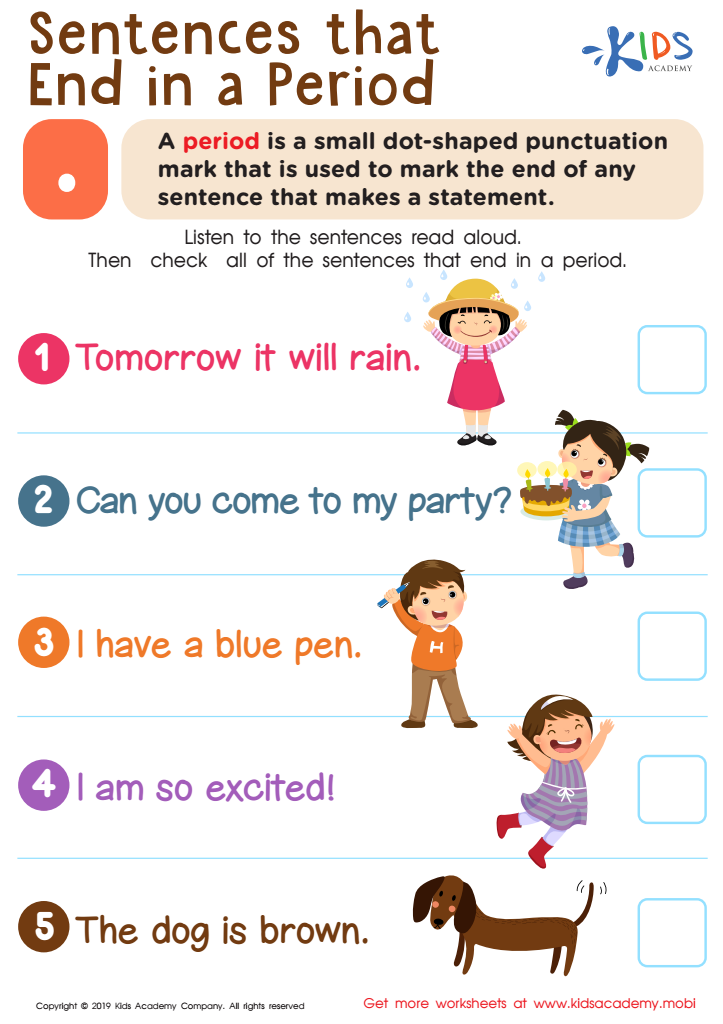
Sentences That End in a Period Worksheet
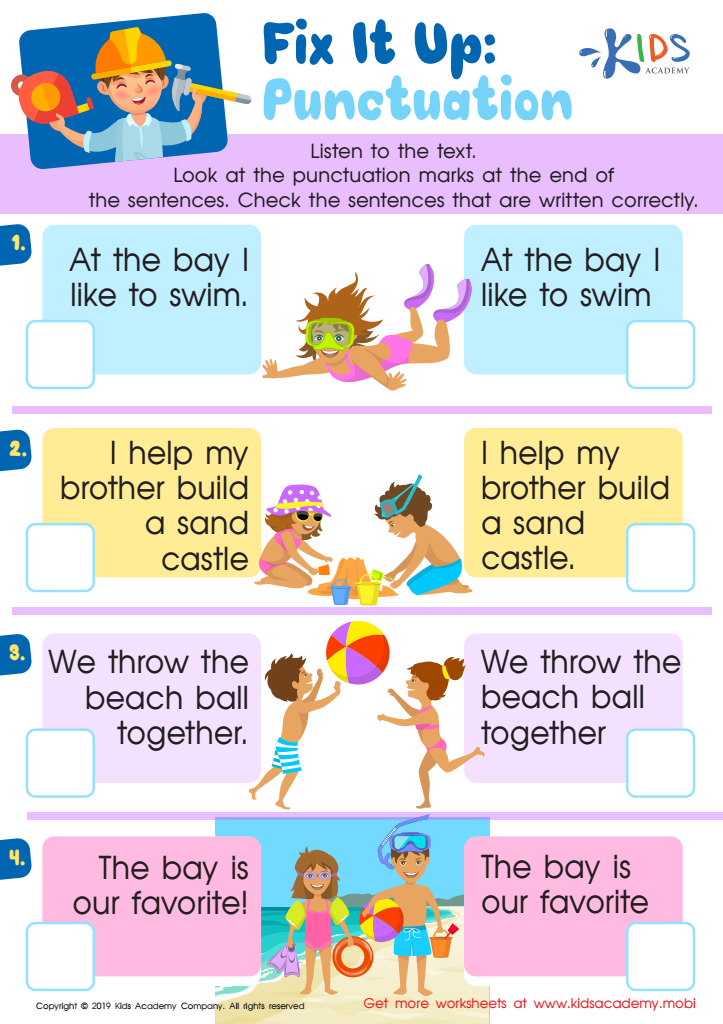
Fix Punctuation Worksheet








Punctuation is a fundamental component of writing that greatly influences a child's ability to communicate effectively. For children aged 4-6, understanding punctuation helps develop their early literacy skills, which are crucial for future learning. First, it aids in comprehension; punctuation marks like periods, question marks, and exclamation points indicate pauses and intonations that guide readers through a sentence. Understanding these cues allows young children to grasp the meaning behind what they read and write, enhancing their overall language development.
Additionally, teaching punctuation early nurtures good writing habits. As children explore writing their thoughts and stories, knowing how to structure sentences with the correct punctuation fosters clarity. This not only makes their writing more accessible to others but also instills a sense of pride and ownership in their work.
Moreover, early exposure to punctuation helps children recognize the importance of rules in language, contributing to a structured understanding of communication. It encourages them to express their emotions and thoughts more clearly, cultivating confidence in their abilities. For parents and teachers, nurturing a love for writing and an understanding of punctuation at an early age establishes a strong foundation for lifelong literacy skills. Thus, it is vital for them to prioritize this element in their educational approach.








