Understanding suffixes Writing Worksheets for Ages 4-6
3 filtered results
-
From - To
Help your little ones master the concept of suffixes with our engaging "Understanding Suffixes Writing Worksheets" designed specifically for ages 4-6. These worksheets introduce young learners to the exciting world of word endings, enhancing their vocabulary and writing skills. Through fun exercises, kids will explore how suffixes change the meanings of base words and develop their understanding of language structure. Each activity is crafted to be age-appropriate, ensuring that children build confidence in their writing capabilities. Give your child the tools they need to succeed in language arts with these informative and playful worksheets that make learning a blast!
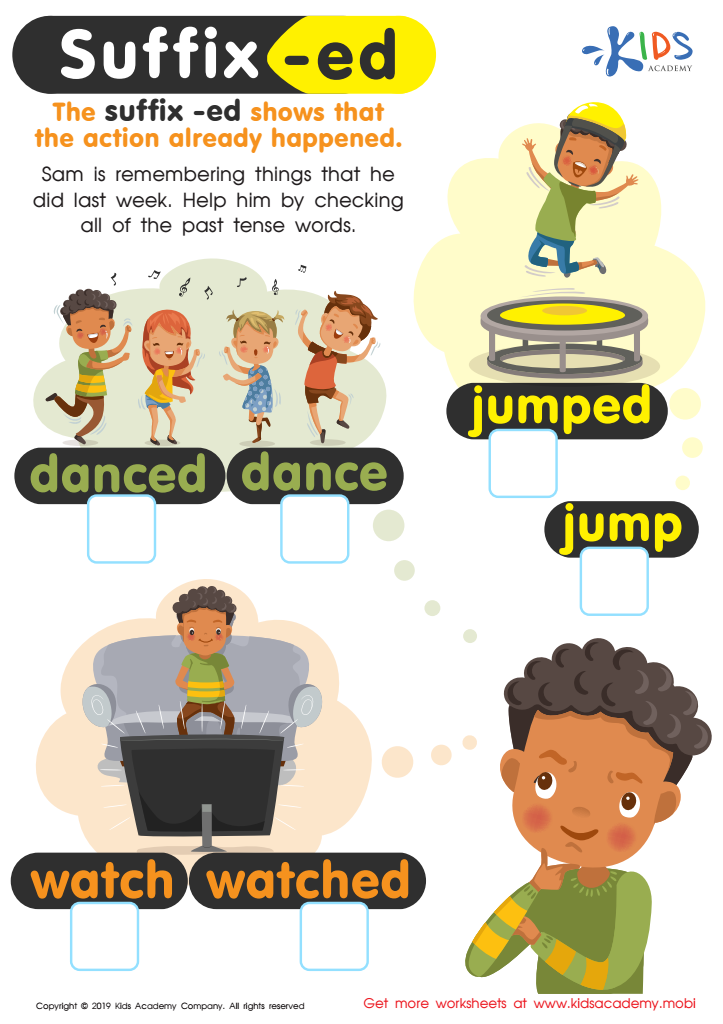
Suffix-ed Worksheet
 Assign to My Students
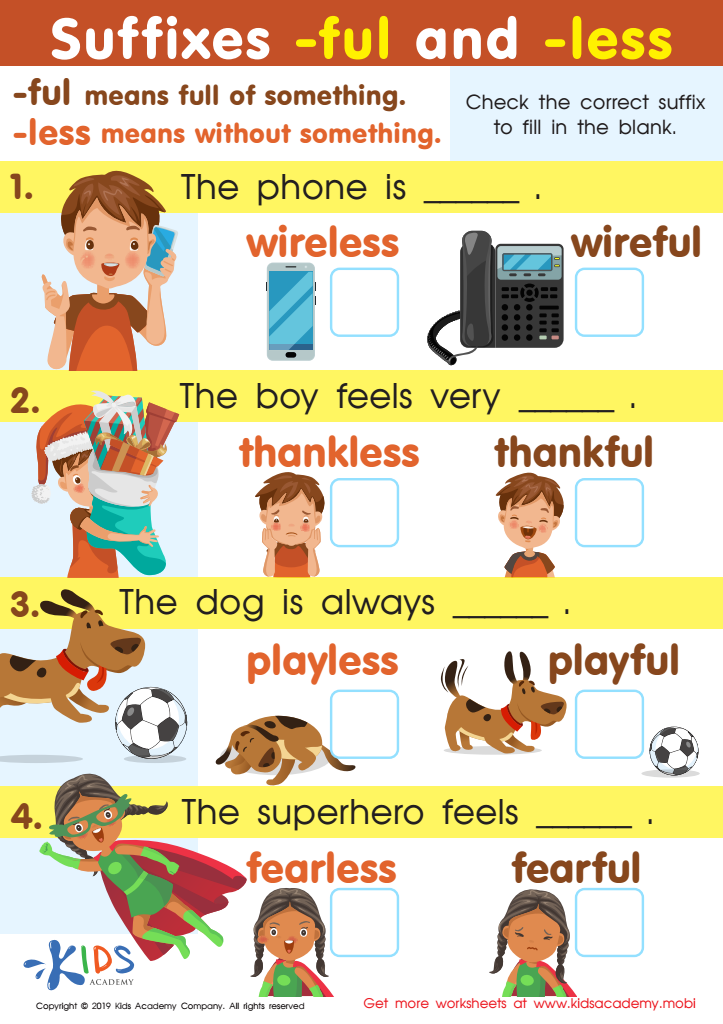
Suffixes –ful and –less Worksheet
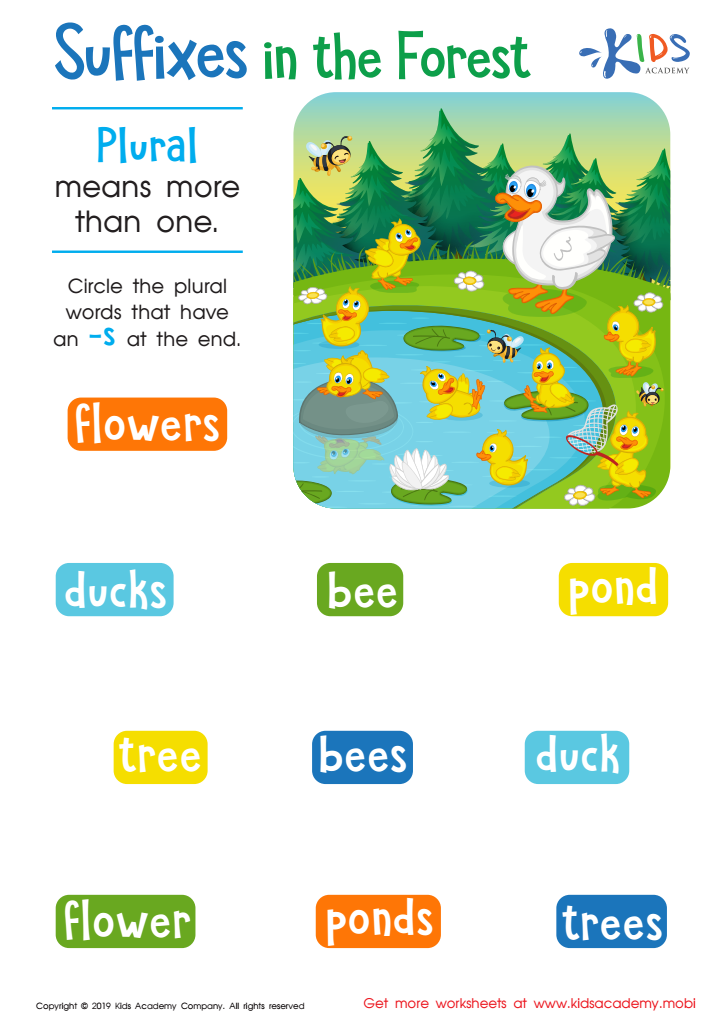
Suffixes in the Forest Worksheet








Understanding suffixes is crucial for young learners aged 4-6, as it fosters their early literacy skills and enhances their language development. Suffixes are added to the end of root words to modify their meaning and create new words, which enriches vocabulary and comprehension. For parents and teachers, emphasizing suffixes helps children understand the structure of words, making it easier for them to decode unfamiliar terms in reading and writing activities.
Moreover, mastering suffixes encourages creative expression, allowing children to explore different word forms and their meanings. For instance, by adding the suffix "-ing" to "play," children learn to connect with the action of playing, broadening their understanding of verb forms.
Incorporating suffixes into early education also supports phonetic awareness and improves spelling skills. By recognizing common suffixes, children can make educated guesses about a word's pronunciation and meaning, thus boosting their confidence in both speaking and writing.
Ultimately, by focusing on suffixes, parents and teachers lay the groundwork for literacy skills that will benefit children throughout their academic journey and help them communicate effectively. Encouraging these processes at an early age can instill a lifelong love for language and learning.








