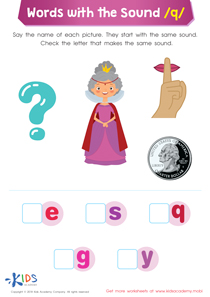
Reading comprehension Consonant Digraphs Worksheets for Ages 4-7
6 filtered results
-
From - To
Our Reading Comprehension Consonant Digraphs Worksheets for ages 4-7 are designed to support your child's reading journey. Featuring engaging activities focused on key digraphs like "ch," "sh," "th," and "wh," these worksheets help young learners identify, pronounce, and understand these essential sound combinations. Perfect for early readers, the exercises enhance phonetic skills and boost reading confidence through fun and interactive content. Ideal for classroom use or additional practice at home, these worksheets blend education and enjoyment to cultivate a love for reading. Download now to jumpstart your child's literacy development with targeted consonant digraph practice.
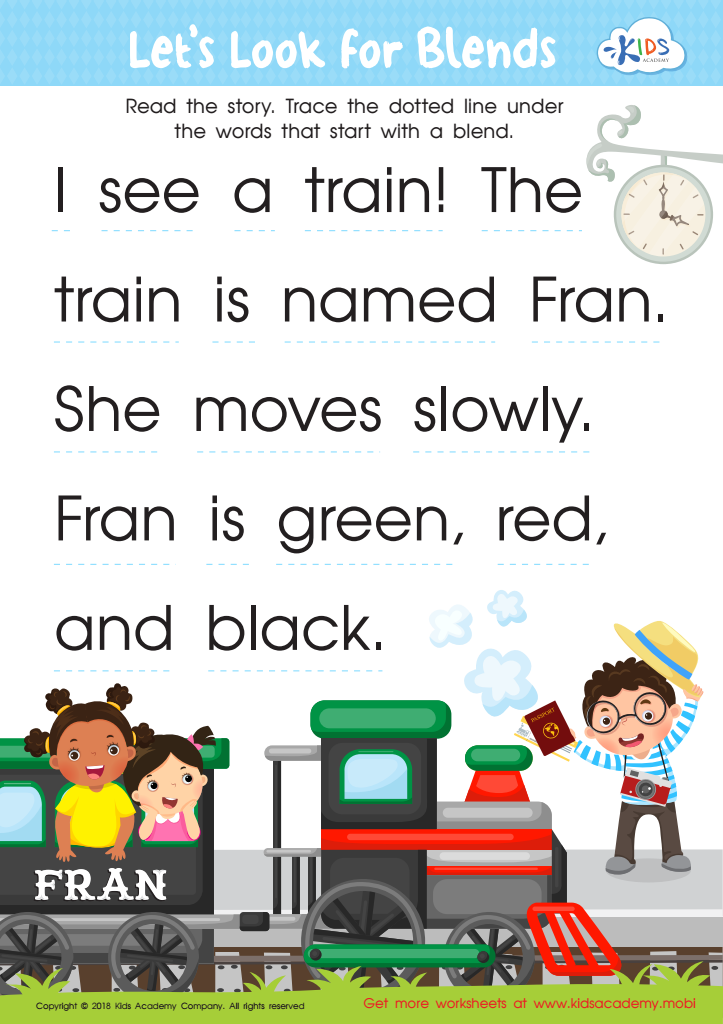
Let's Look for Blends Worksheet
 Assign to My Students
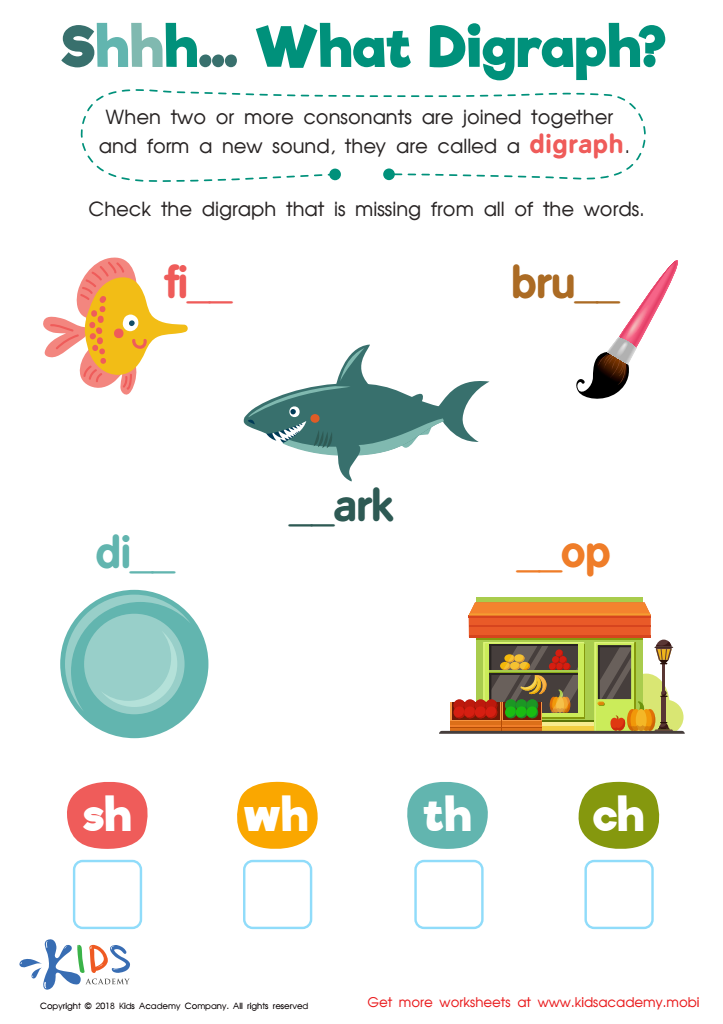
Shhh... What Digraph? Worksheet
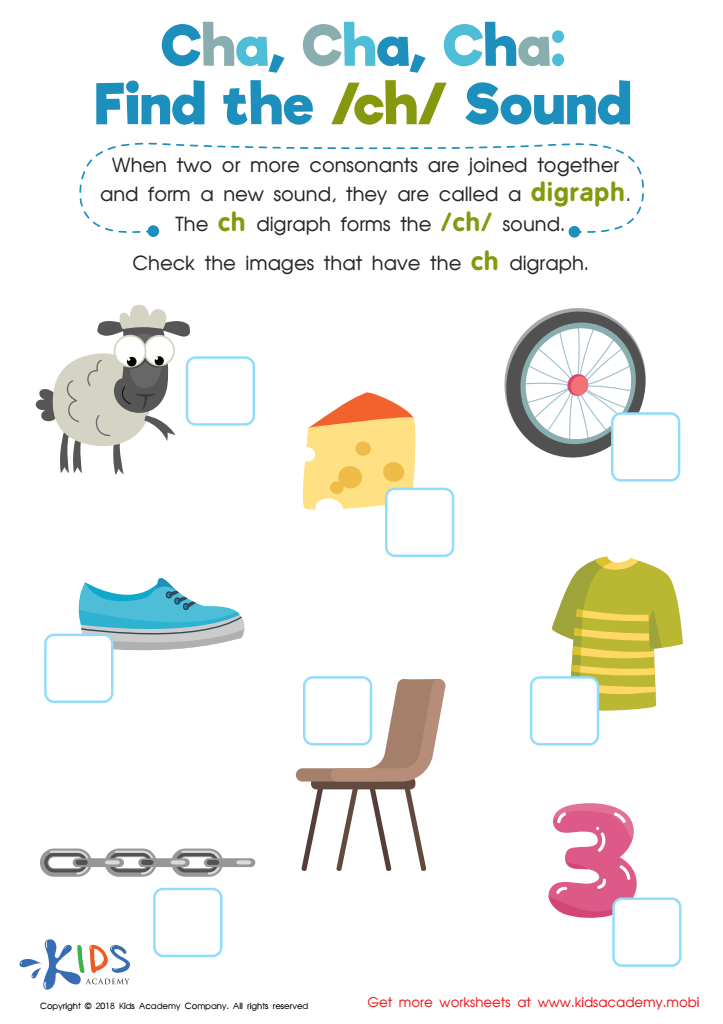
Cha, Cha, Cha: Find the /Ch/ Sound Worksheet
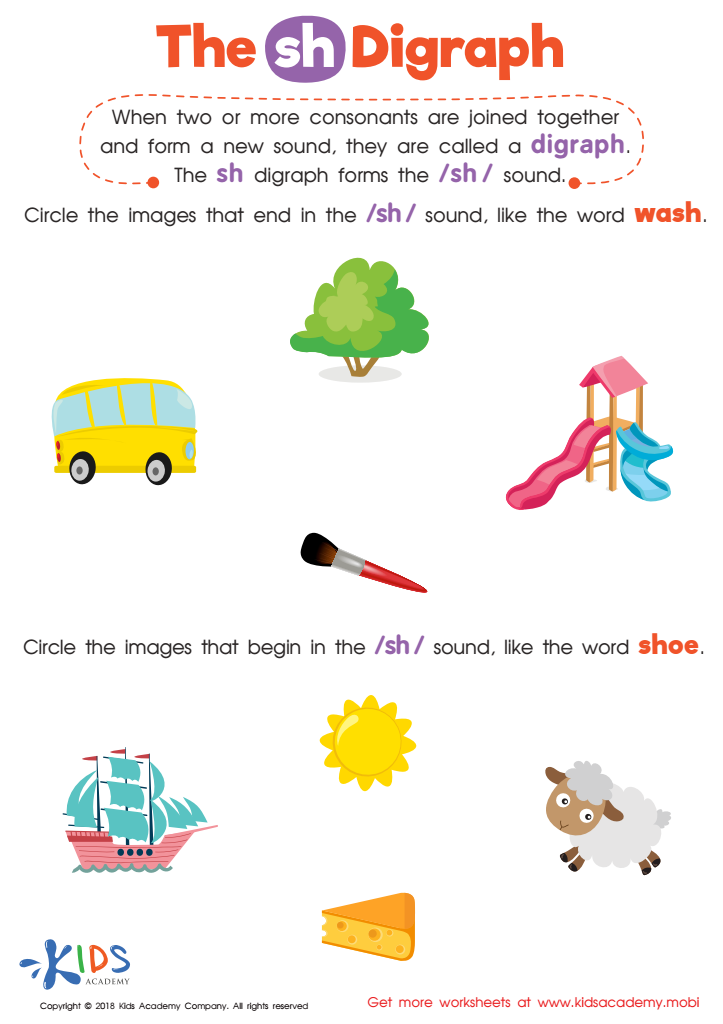
The SH Digraph Worksheet
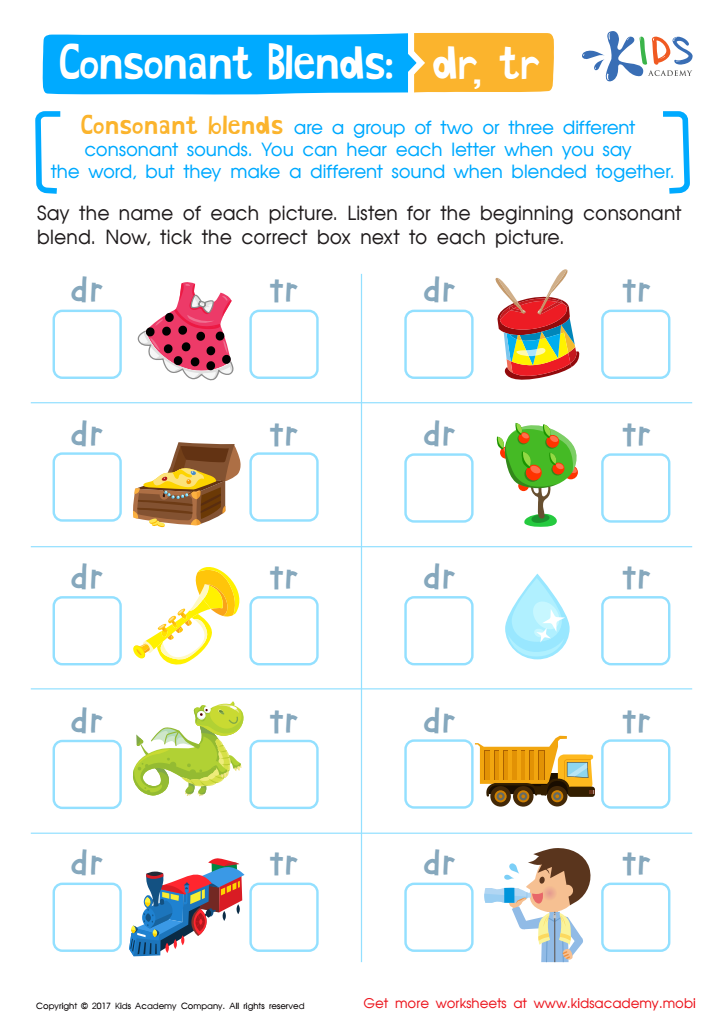
Consonant Blends: "Dr" and "Tr" Printable
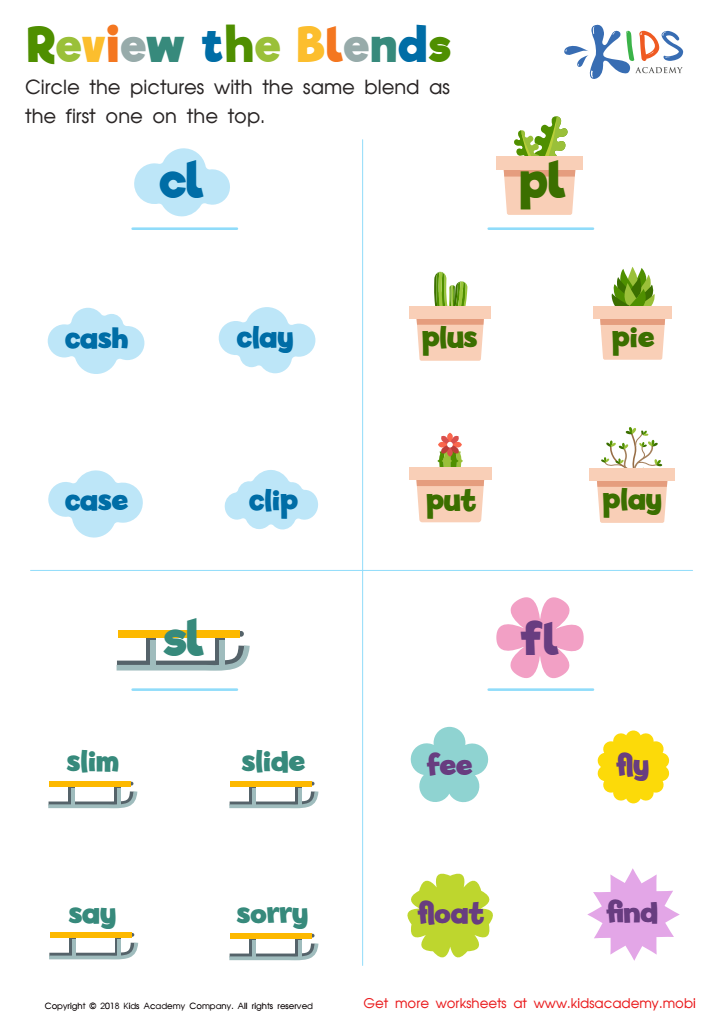
Review the Blends Worksheet


Reading comprehension skills in early childhood are crucial for academic success, and understanding consonant digraphs plays a vital role. Consonant digraphs are combinations of two consonants that together make a single sound, like "sh," "ch," "th," and "wh." For children aged 4-7, mastering these can significantly enhance their reading abilities and confidence.
At this developmental stage, children's brains are highly receptive to learning language. Grasping consonant digraphs helps them decode words more effectively, leading to improved reading fluency. When children can easily recognize and pronounce these digraphs, they don't have to stop and decode each sound laboriously, making reading smoother and more enjoyable.
Furthermore, early familiarity with consonant digraphs supports spelling skills. Understanding that "ph" sounds like "f," for example, allows children to spell words like "phone" correctly. This foundation aids in better writing as they progress academically.
Moreover, proficiency in reading boosts overall comprehension. When children decode words effortlessly, they focus more on understanding the text's meaning rather than struggling with phonics. Consequently, they enjoy reading more, which nurtures a lifelong love for learning.
In summary, parents and teachers should emphasize consonant digraphs for young children to ensure strong foundational reading skills, fostering academic confidence, spelling proficiency, and a deeper comprehension of texts.