
Letter recognition Elementary Phonics Worksheets for Ages 4-7
5 filtered results
Difficulty Level
Grade
Age
-
From - To
Subject
Activity
Standards
Boost your child's reading journey with our engaging "Letter Recognition Elementary Phonics Worksheets for Ages 4-7". Designed to capture young learners' attention, these worksheets offer fun and interactive activities that help children identify and differentiate letters. Perfect for Pre-K to Grade 1 students, the worksheets nurture foundational literacy skills through puzzles, tracing, and colorful exercises. By reinforcing letter recognition, these resources lay the groundwork for future reading and writing success. Ideal for classroom use or home practice, our phonics worksheets make learning an enjoyable adventure, setting the stage for a lifetime love of reading. Explore the variety and start learning today!
Favorites
With answer key
Interactive
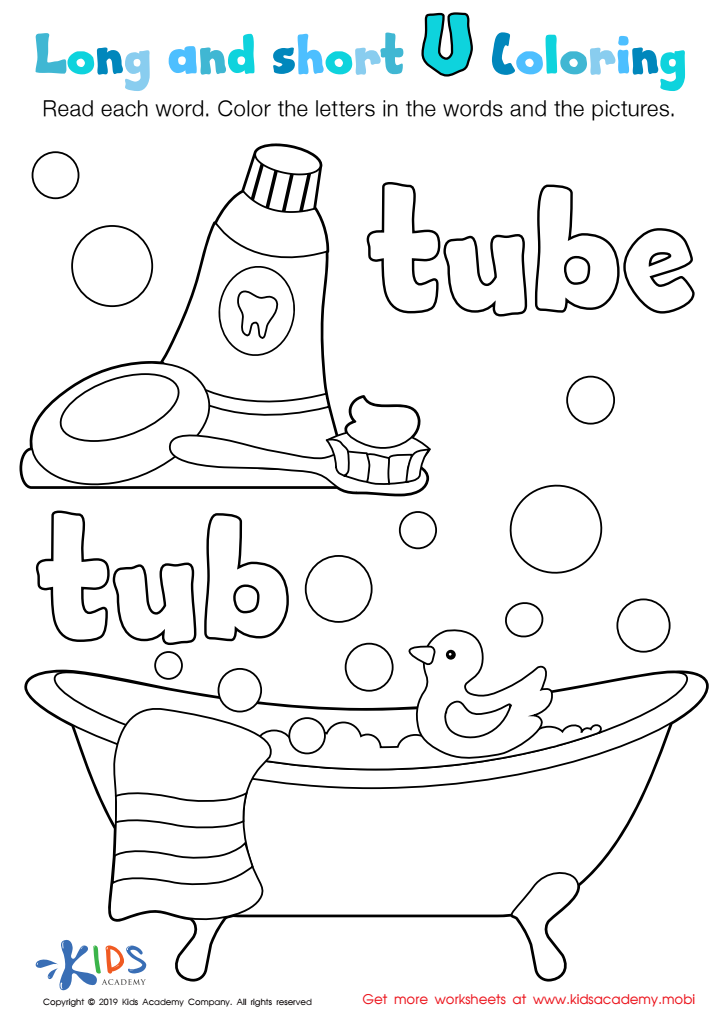
Long and Short U Worksheet
Revised: Spice up your lesson on long and short vowels with this fun printout! Kids read the words "tube" and "tub," then reinforce the sound by coloring in the words and pictures. It's a great way to make phonics class enjoyable!
Download (PDF)
 Assign to My Students
Assign to My Students
Long and Short U Worksheet
Worksheet
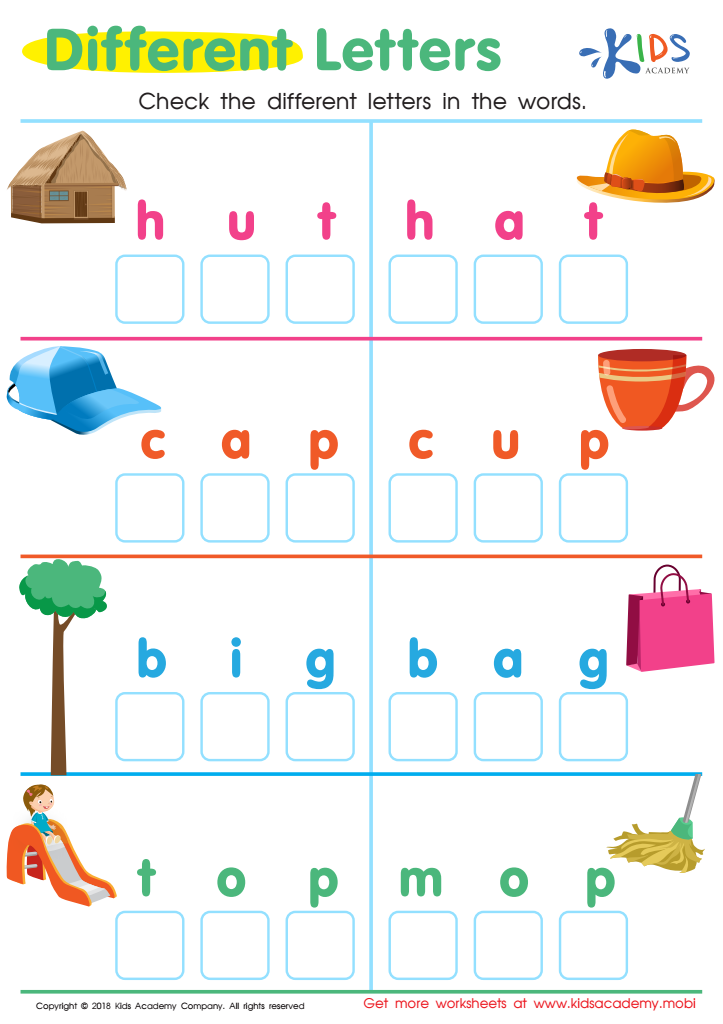
Different Letters Reading Worksheet
Download our phonics worksheet to help kids understand letter sounds. Have them sound out letters and join them to form words. Colorful pictures assist in recognition, making it perfect for kindergarteners. A great intro to phonics!
Different Letters Reading Worksheet
Worksheet
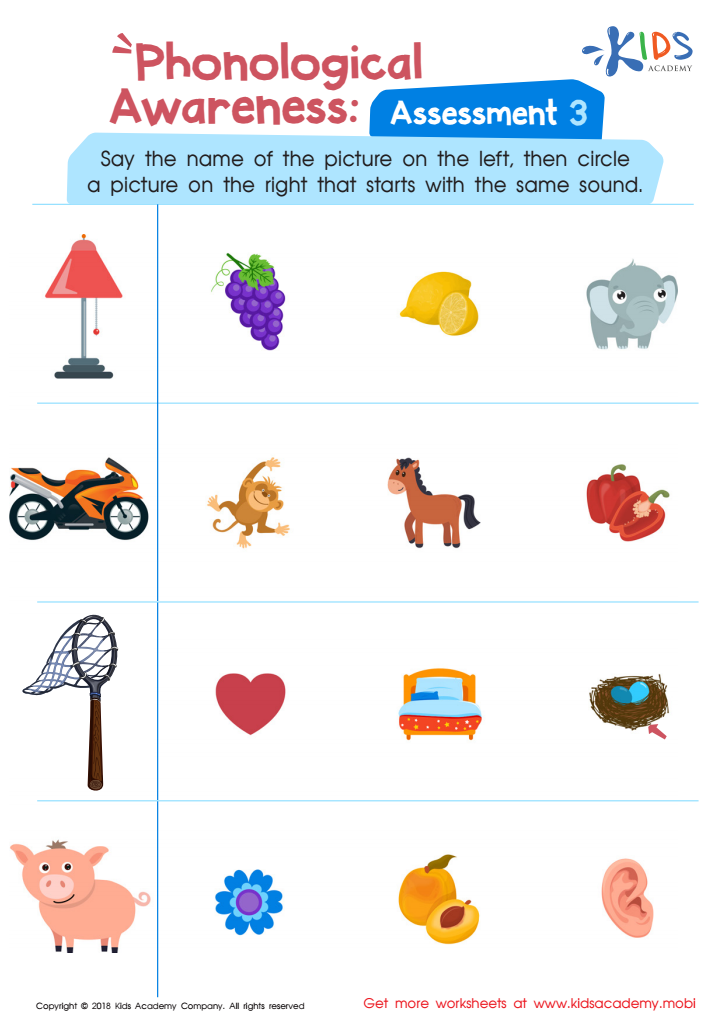
Phonological Awareness: Assessment 3 Worksheet
Test kids' reading readiness with a phonological awareness worksheet! With this PDF exercise, encourage children to name each picture aloud and match left to right. Help them learn to recognize word sounds at the start, middle and end of words. They'll be sure to remember that lamp doesn't sound like elephant!
Phonological Awareness: Assessment 3 Worksheet
Worksheet

Long and Short E Worksheet
This fun printout makes learning phonics enjoyable for Grade 3 students. Get them to read the words “tree” and “bed” to recognize the different sounds of the letter “E”. After hearing the words they can color the words and the pictures to understand differences between long and short vowels.
Download (PDF)
Assign to My Students
Assign to My Students
Long and Short E Worksheet
Worksheet
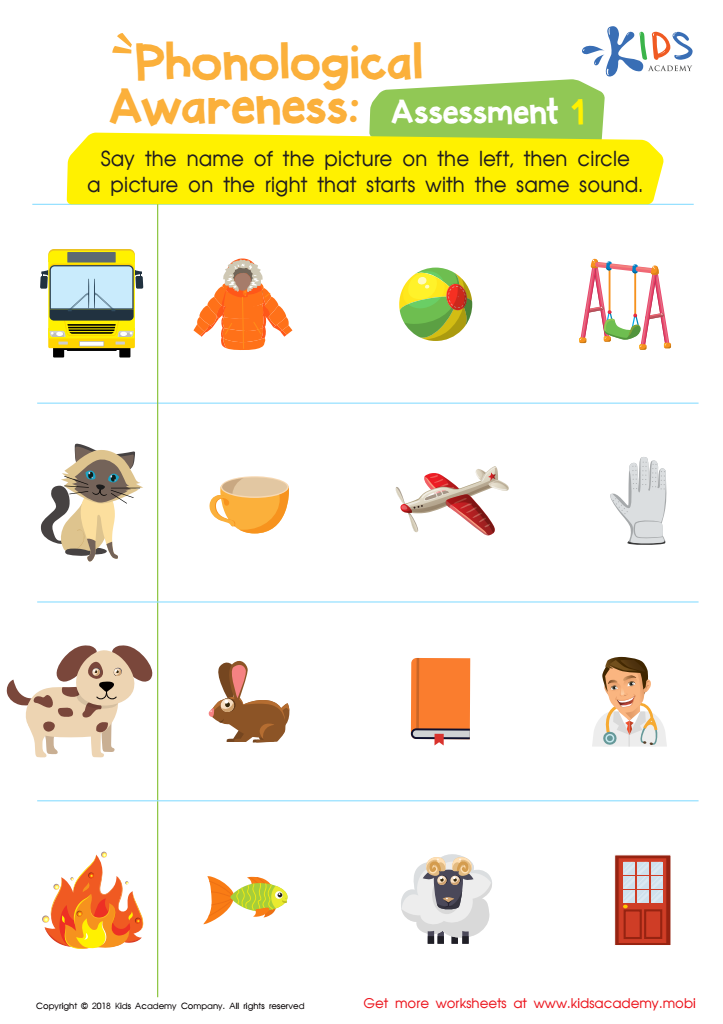
Phonological Awareness: Assessment 1 Worksheet
This worksheet helps kids build key phonics skills for pre-reading. They say each picture name aloud, focusing on the starting sound. Then, they match the sound with an image in the same row. Use as a checkpoint for kindergarten or grade 1 phonics readiness.
Phonological Awareness: Assessment 1 Worksheet
Worksheet
Join Kids Academy for Free
Who is primarily going to use this learning content?




Letter recognition and elementary phonics serve as the bedrock of a child's literacy development and are especially crucial for children aged 4-7. By familiarizing young learners with the alphabet, teachers and parents lay the groundwork for essential reading and writing skills. Letter recognition, the ability to identify and name letters, enables children to understand that letters symbolize sounds which combine to form words. This recognition is important because it paves the way for phonemic awareness, where children learn to distinguish, differentiate, and manipulate sounds.
Elementary phonics extend this foundation by teaching the relationship between letters and sounds, fostering skills in decoding words. Phonics instruction equips children with strategies to read unfamiliar words and improves their spelling abilities. Mastery in phonics contributes to reading fluency, boosting children's confidence and fostering a love for reading.
Early intervention in letter recognition and phonics is important because literacy skills form the foundation for academic success in all subjects. Active parental involvement and committed teaching can deter future reading difficulties, thus enhancing comprehension abilities and encouraging classroom engagement. By embedding these fundamental skills in the early years, parents, and teachers empower children to become capable, avid readers and effective communicators, benefiting their overall educational journey and long-term prospects.







