Phonological awareness Elementary Phonics Worksheets for Ages 4-7
8 filtered results
-
From - To
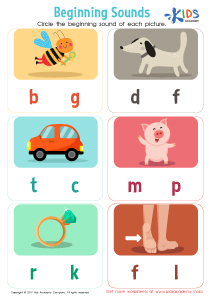
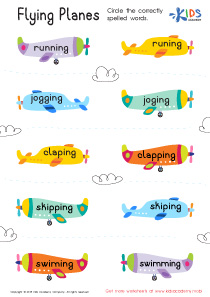
Boost your child's reading journey with our Phonological Awareness Elementary Phonics Worksheets, expertly designed for ages 4-7. These engaging, printable activities focus on essential early literacy skills, such as identifying sounds, rhyming, and segmenting words. Perfect for preschoolers and early elementary students, each worksheet combines fun visuals with effective phonics practice to spark a love for reading. Whether your child is just beginning to learn letters, or advancing in their phonics skills, these worksheets provide a solid foundation. Empower your young reader today with Kid's Academy’s expert-crafted phonological awareness resources.
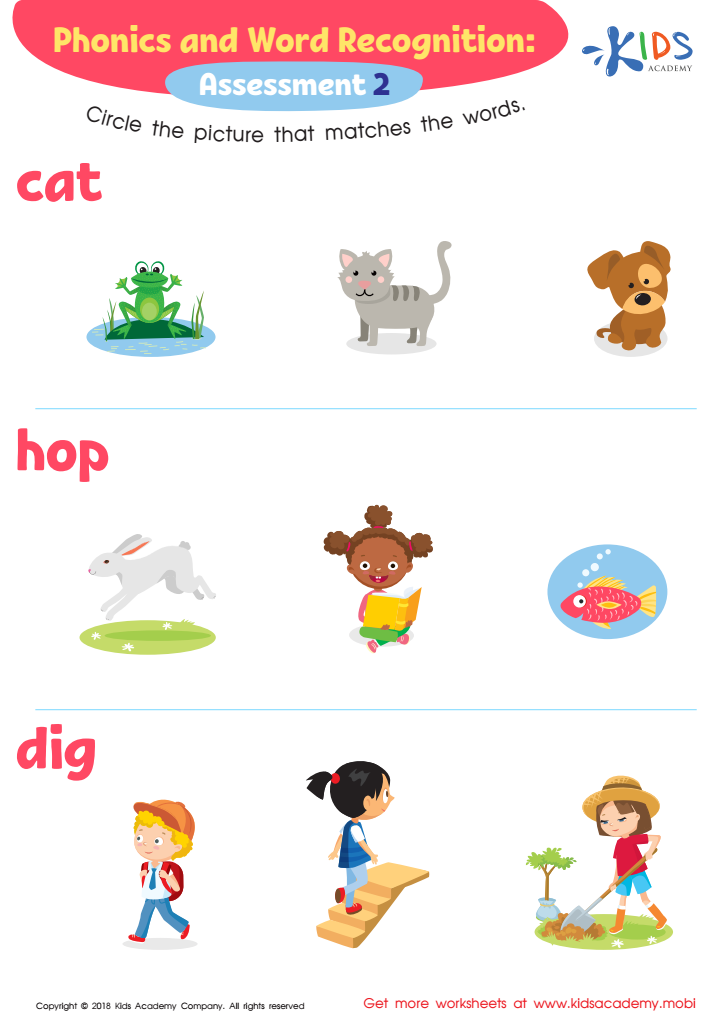
Phonological Awareness: Assessment 2 ELA Worksheet
 Assign to My Students
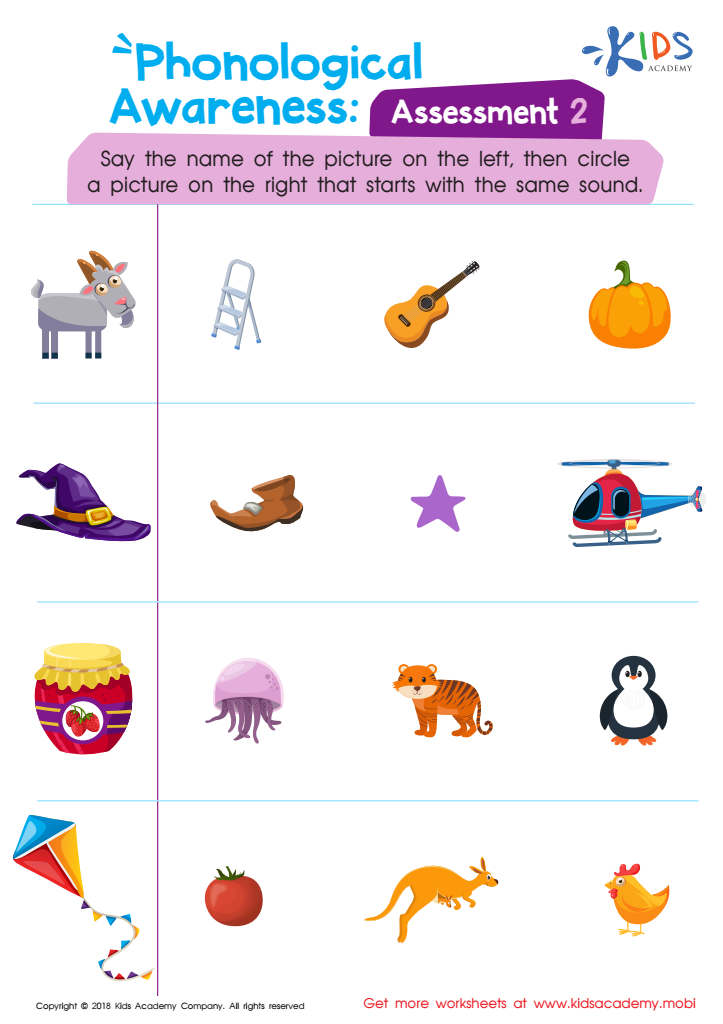
Phonological Awareness: Assessment 2 Worksheet
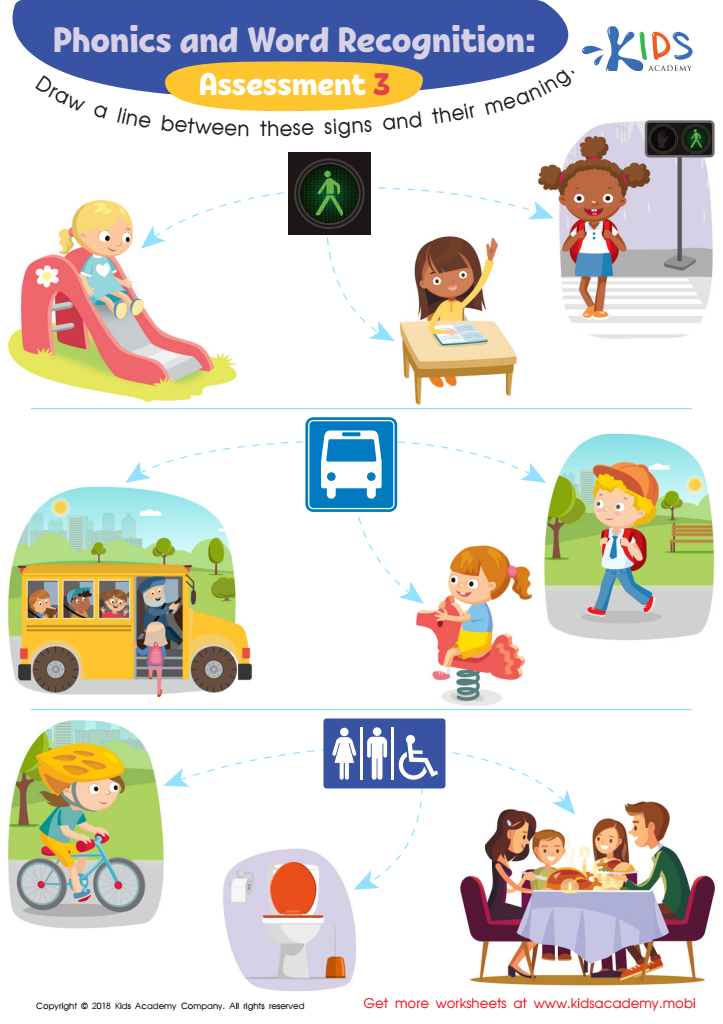
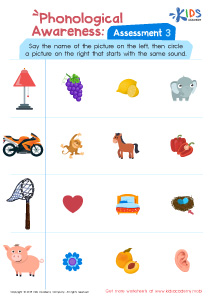
Phonological Awareness: Assessment 3 ELA Worksheet
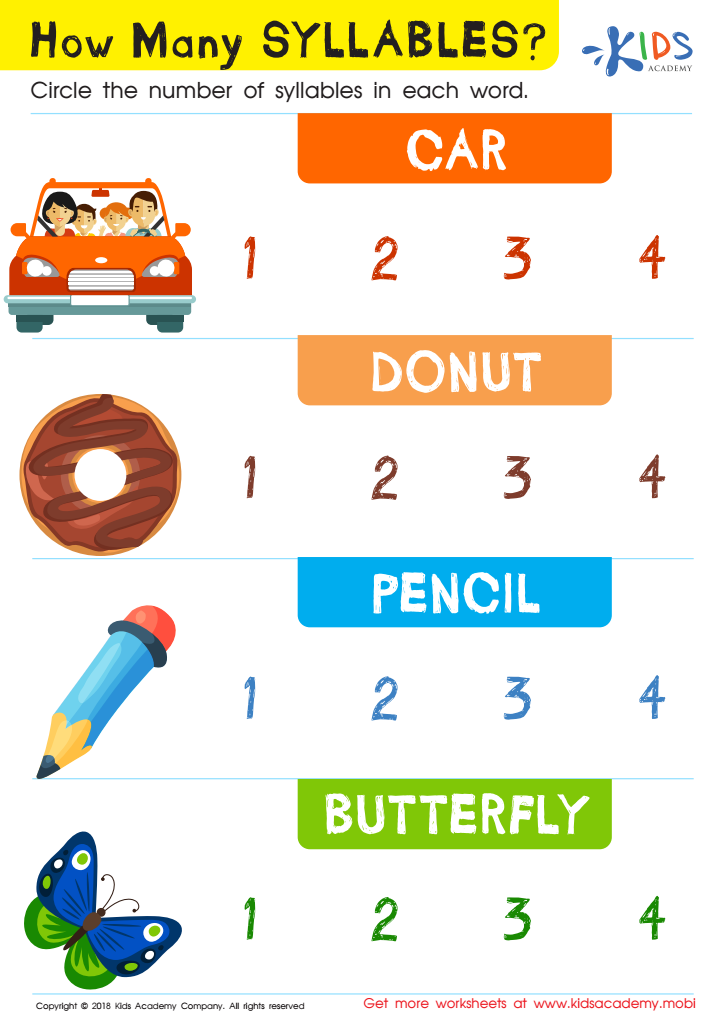
How Many Syllables? Worksheet
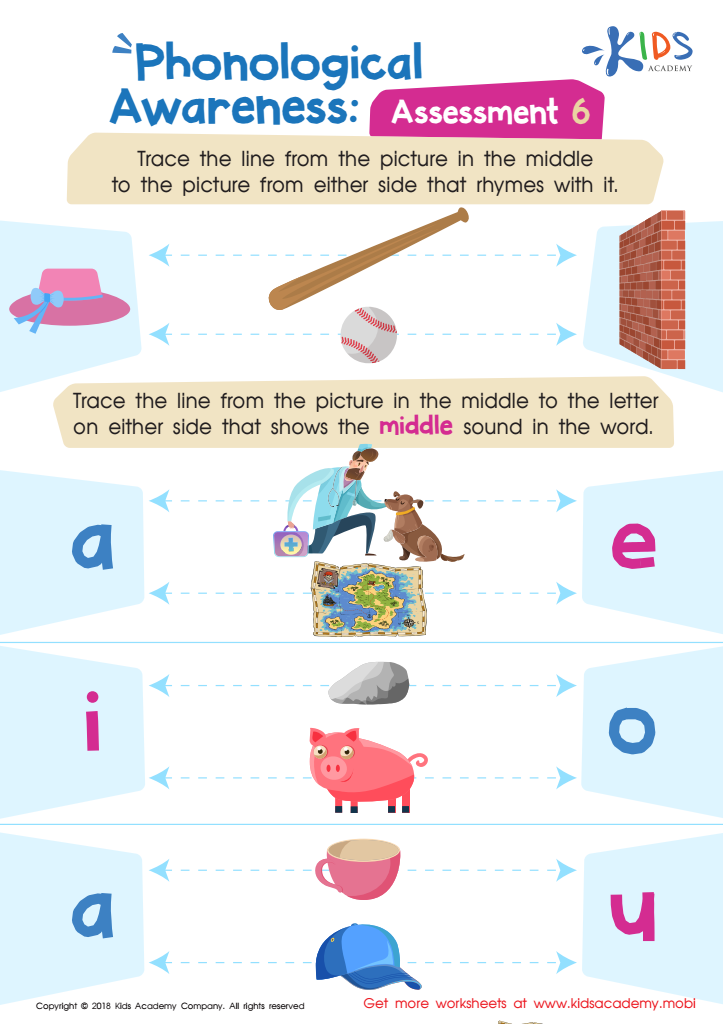
Phonological Awareness: Assessment 6 Worksheet
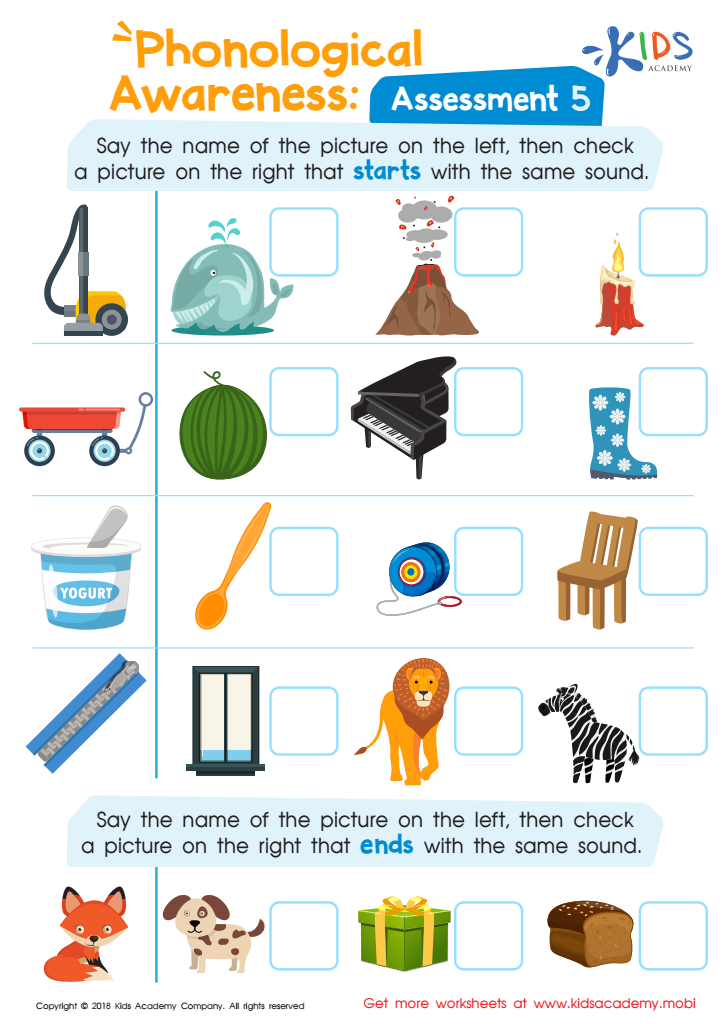
Phonological Awareness: Assessment 5 Worksheet
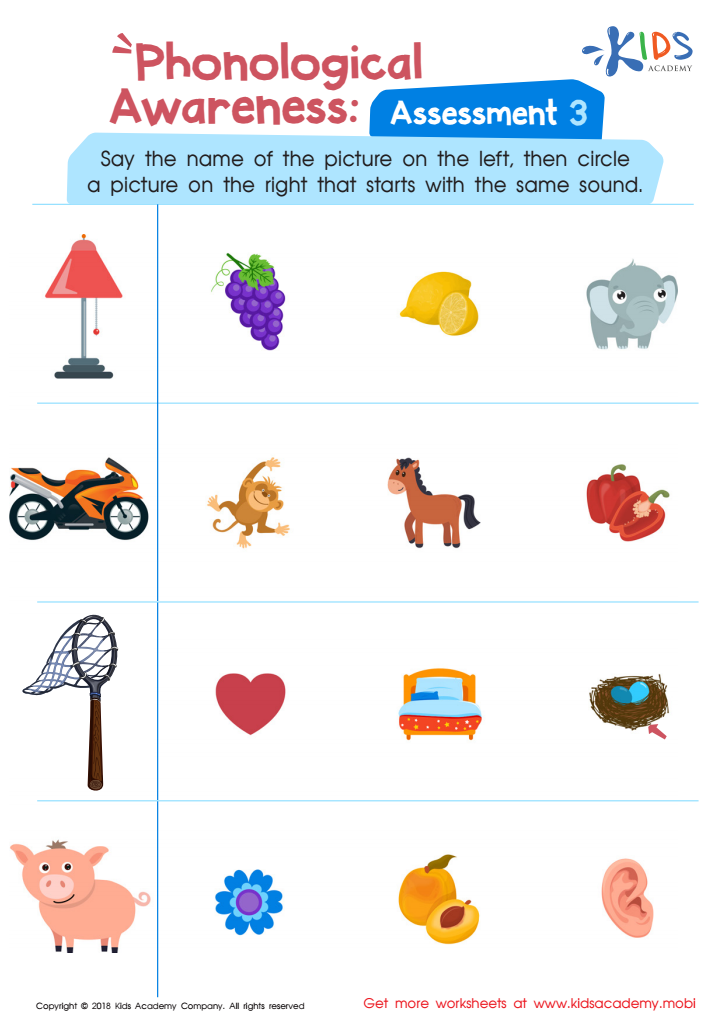
Phonological Awareness: Assessment 3 Worksheet
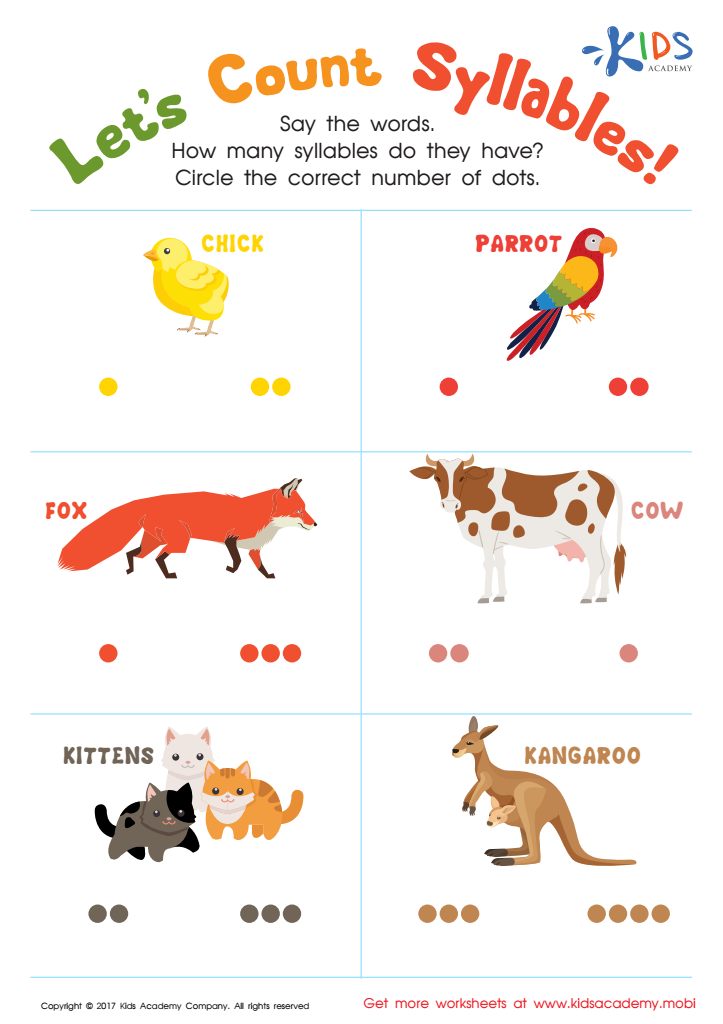
Lets Count Syllables Worksheet




Phonological awareness and elementary phonics for children ages 4-7 are foundational to reading success and overall literacy development. Parents and teachers should prioritize these skills because they form the bedrock upon which advanced reading and writing skills are built.
Phonological awareness involves the ability to recognize and manipulate sounds in spoken language, including identifying rhymes, syllables, and individual phonemes (sounds). This awareness is crucial because it directly supports a child's ability to decode, or sound out, words. Without a strong grasp of phonological components, children may struggle to connect sounds to letters, an essential early reading skill.
Elementary phonics, meanwhile, teaches the specific relationships between letters and sounds. Through systematic phonics instruction, children learn to read and write by understanding how letters combine to formwords. This fundamental skill set enables them to play with sounds, enhancing their ability to approach new words with confidence.
Early mastery of these skills translates to better reading fluency, comprehension, and a lifelong love of reading. Furthermore, research shows that early deficits in these areas can lead to long-term reading difficulties, so timely intervention is critical.
Thus, fostering phonological awareness and phonics is not just about academic success but also about empowering children to communicate effectively and develop cognitive skills that serve them throughout life.