Lowercase identification Letter Recognition Worksheets for Ages 4-7
5 filtered results
-
From - To
Boost your child's reading skills with our engaging Lowercase Identification Letter Recognition Worksheets for ages 4-7! Designed to develop essential literacy skills, these printable worksheets provide a fun and interactive way for young learners to recognize lowercase letters. Each worksheet features colorful illustrations, engaging activities, and a variety of exercises to keep children motivated. Perfect for preschool and kindergarten classrooms, our resources help ensure a strong foundation in letter recognition, phonics, and early reading. Download now to give your child the confidence they need to excel in literacy and make learning an exciting adventure!
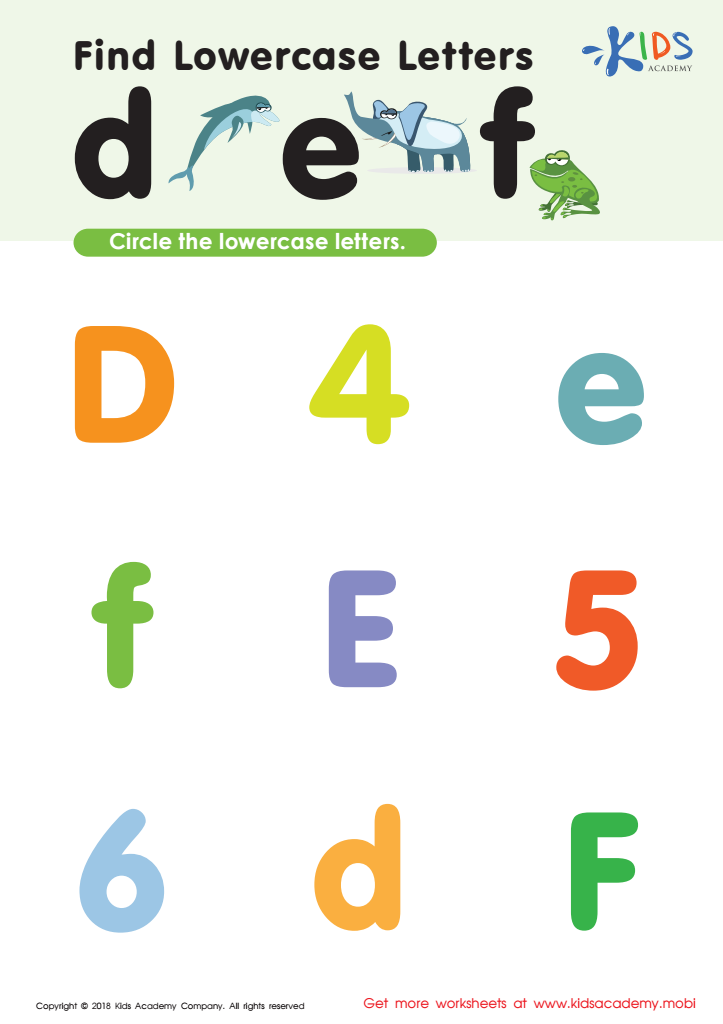
Find Lowercase Letters d e f Worksheet
 Assign to My Students
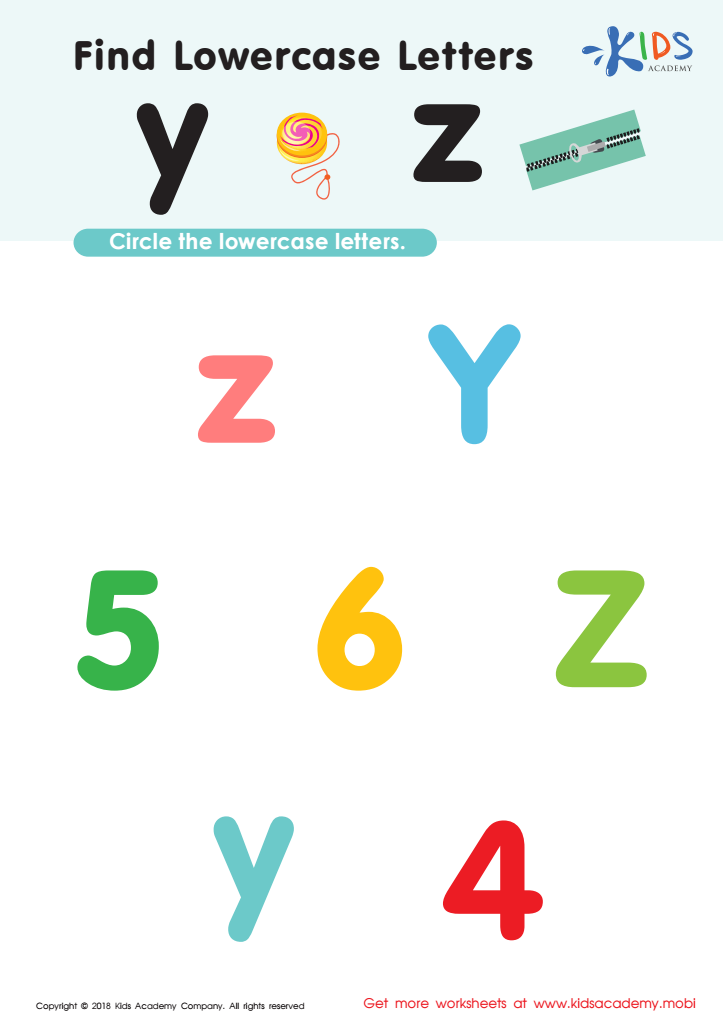
Find Lowercase Letters y z Worksheet
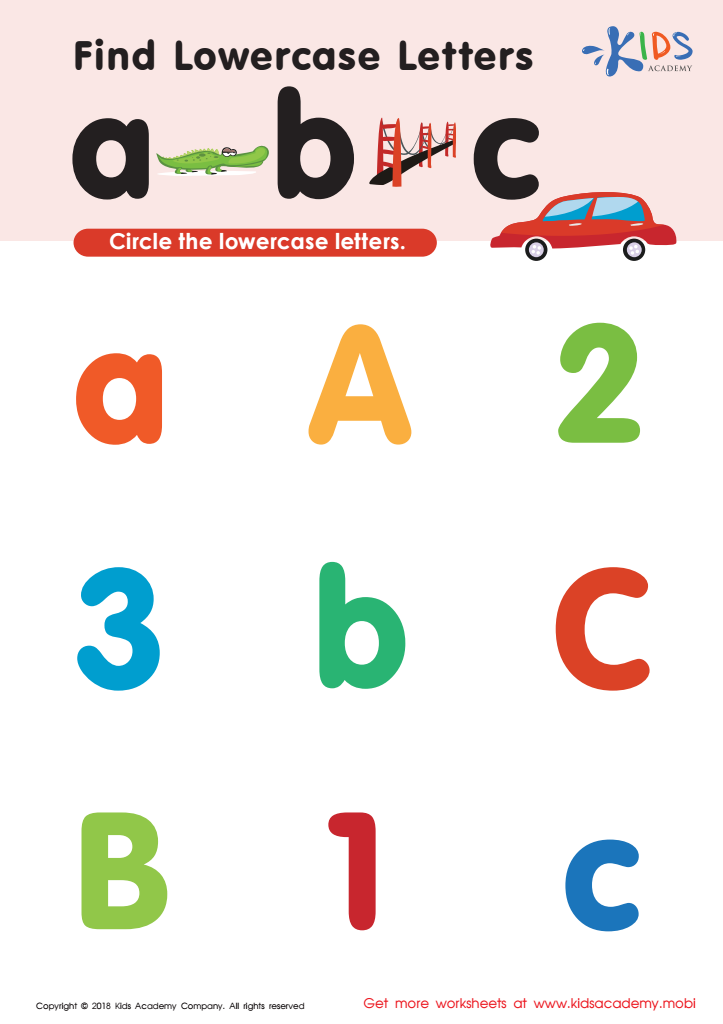
Find lowercase letters a b c Worksheet
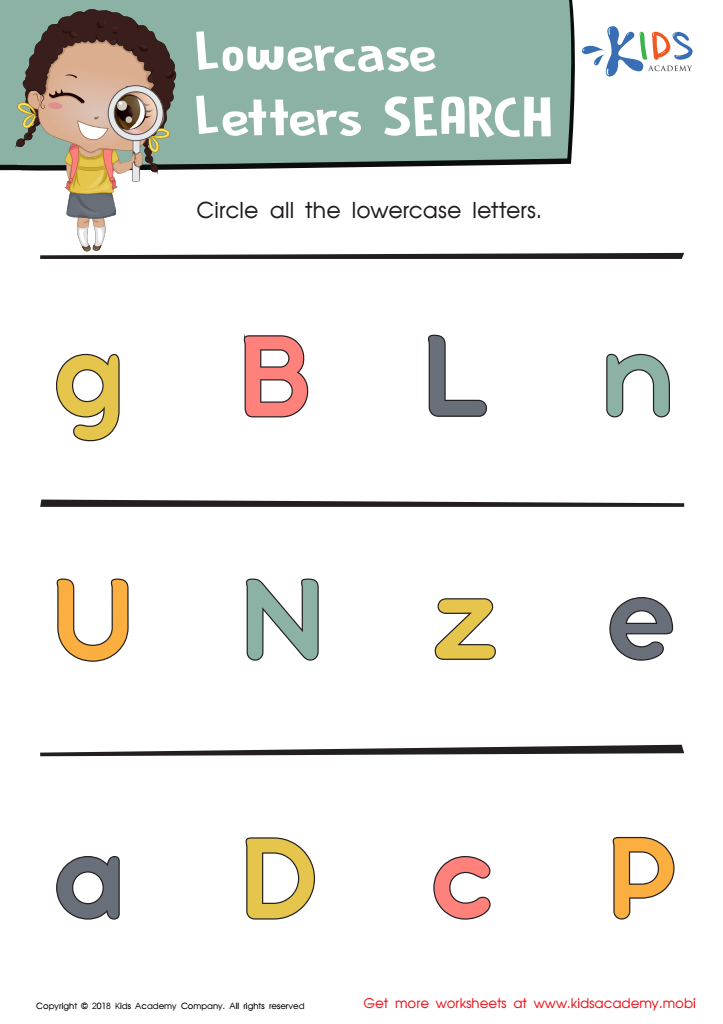
Lowercase Letters Search: Assessment Worksheet
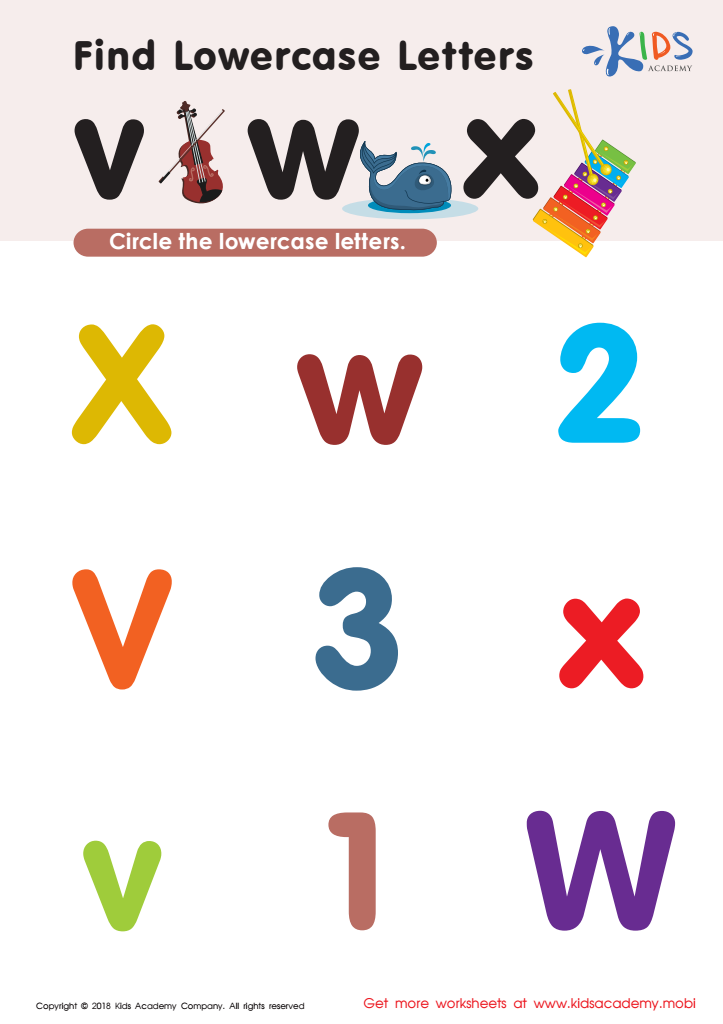
Find Lowercase Letters v w x Worksheet








Lowercase letter identification is a fundamental skill for children aged 4-7, serving as a building block for literacy development. At this crucial stage, children transition from learning the basics of letters to understanding how they form words, sentences, and ultimately, meaning. Mastery of lowercase letter recognition supports reading fluency and comprehension, as most written text predominantly uses lowercase letters.
Parents and teachers should care about this skill because it directly influences a child’s ability to succeed academically. Recognizing lowercase letters enhances phonemic awareness, which is essential for decoding words and spelling. This, in turn, fosters confidence and motivation as children feel capable of reading independently.
Moreover, establishing a strong foundation in lowercase recognition can have long-term benefits, reducing potential reading difficulties in later grades. Engaging children through playful and interactive activities—such as letter matching games, alphabet books, and creative writing—makes the learning process enjoyable and effective.
Finally, instilling a love for reading and writing at this early age can lead to a lifelong appreciation for literature, nurturing curiosity and critical thinking skills. In essence, lowercase letter identification is not just about letters; it’s about opening doors to learning and communication for young learners.







