
Vocabulary enhancement Letter Recognition Worksheets for Ages 4-7
4 filtered results
Difficulty Level
Grade
Age
-
From - To
Subject
Activity
Standards
Boost your child's language skills with our Vocabulary Enhancement Letter Recognition Worksheets designed for ages 4-7. These engaging worksheets help young learners develop essential letter recognition while enriching their vocabulary. Each activity encourages children to identify letters, associate them with words, and expand their language abilities in a fun, interactive way. With colorful illustrations and age-appropriate challenges, these worksheets make learning enjoyable and effective. Perfect for classrooms or at-home learning, our resources aim to foster a love for reading and writing from an early age. Help your child unlock their potential with these carefully crafted exercises tailored for early learners!
Favorites
With answer key
Interactive
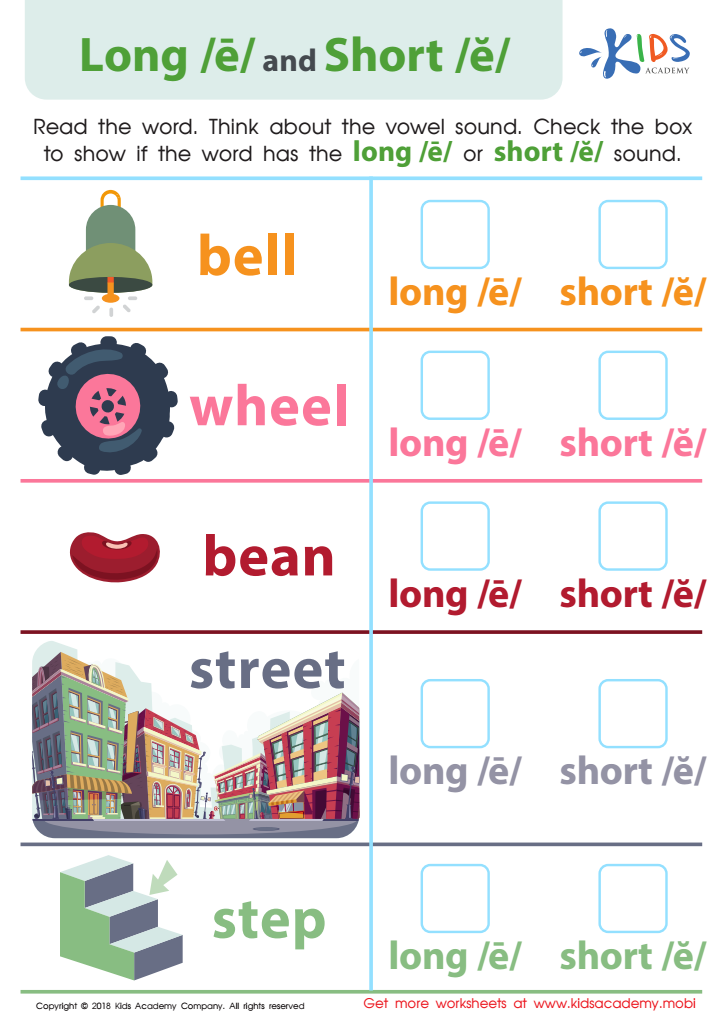
Reading: Long E and Short E Worksheet
Provide your students with valuable practice in distinguishing long and short E sounds with this worksheet. They'll look at pictures and read the words, then decide which sound is being used. It's an effective tool to help them master a difficult concept.
 Assign to My Students
Reading: Long E and Short E Worksheet
Worksheet
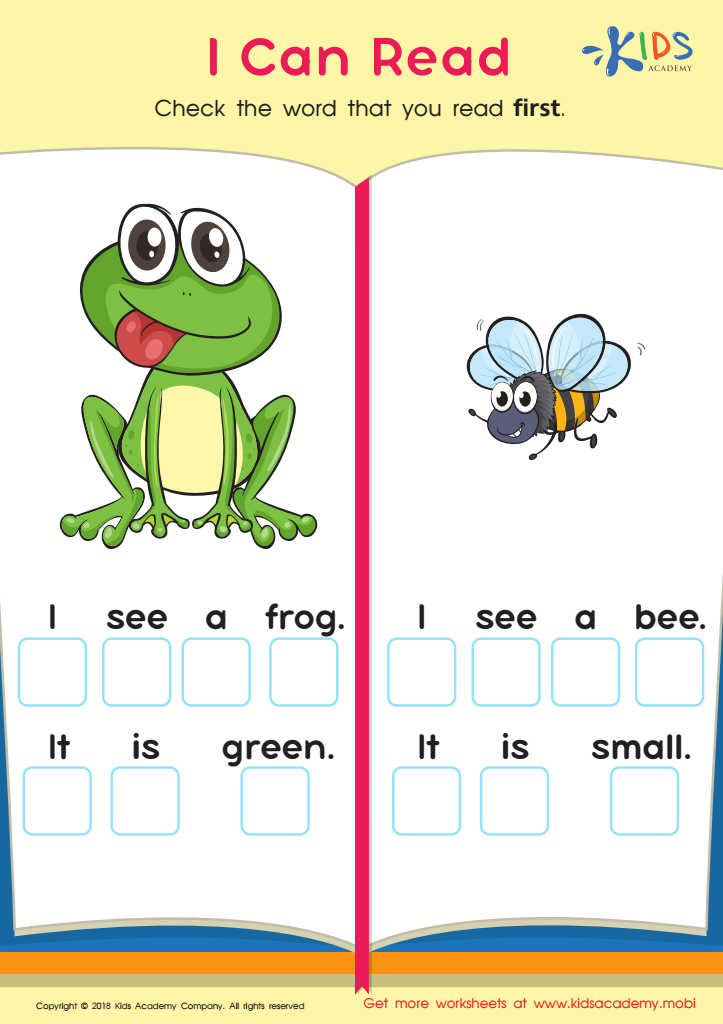
I Can Read Worksheet
Test your child's reading skills with this fun worksheet. See how well they know one-letter, two-letter, and five-letter words. Ask your little one to read the sentences and tick the word they identify first. It's a great way to track their progress and help them become more confident readers.
I Can Read Worksheet
Worksheet
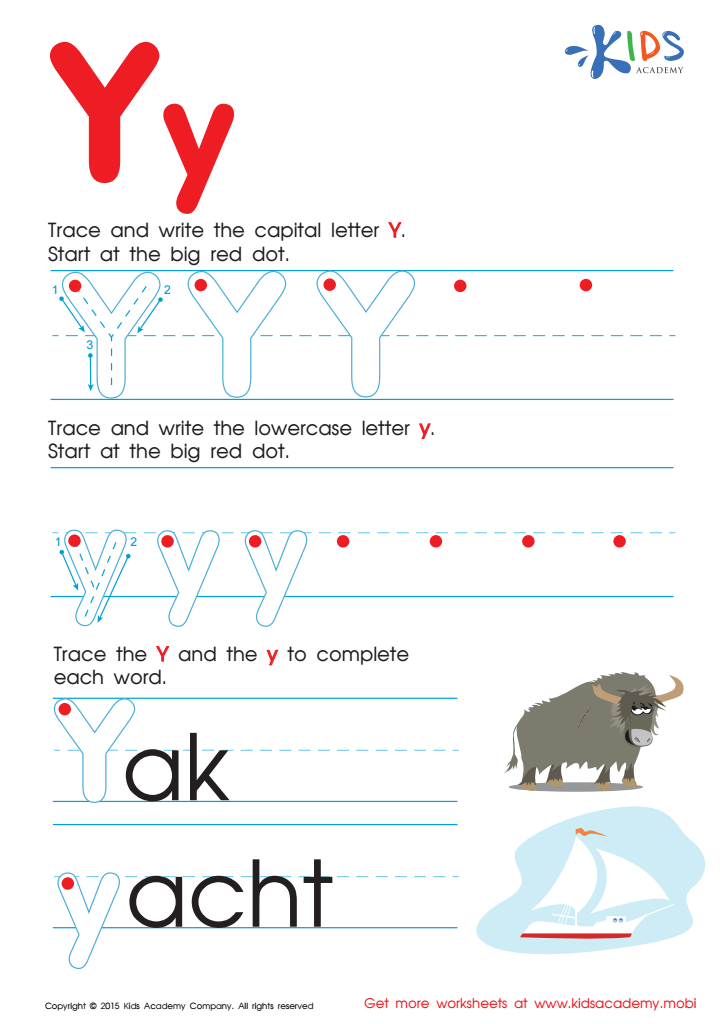
Letter Y Tracing Page
Trace the capital letter "Y" on the red dot, then trace and write the lowercase letter. Complete the words to help the Yak walk and the yacht swim. More worksheets at Kids Academy.
Letter Y Tracing Page
Worksheet
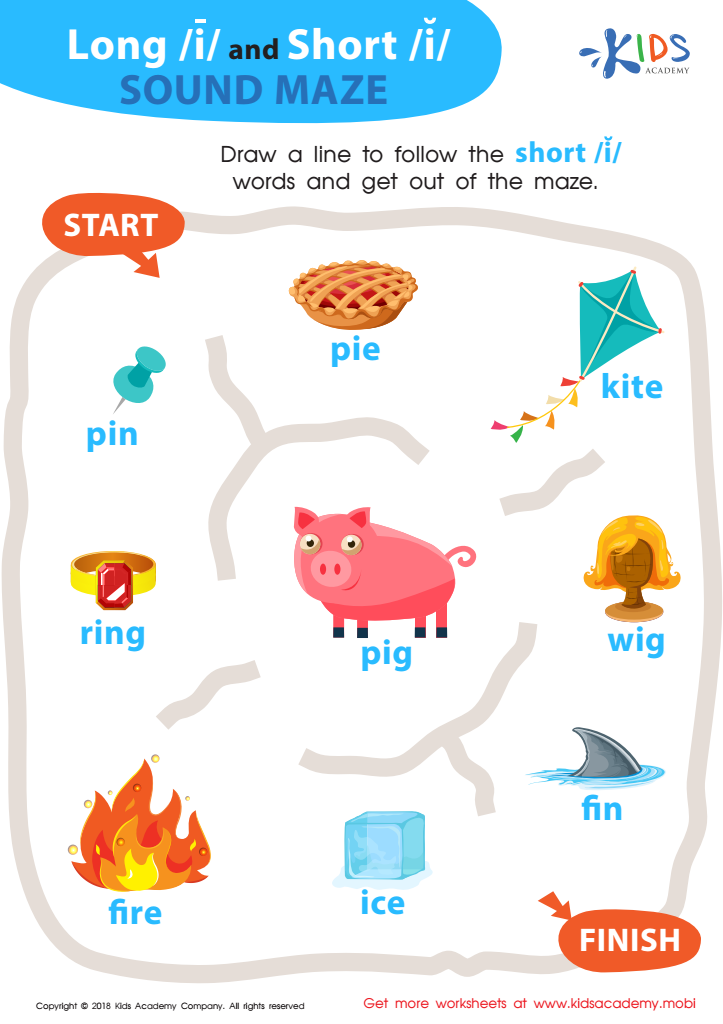
Reading: Long I and Short I Sound Maze Worksheet
Question your students if the worksheet is entertaining. They may respond negatively! Nonetheless, this activity will bring satisfaction while learning the distinction between a long and short I sound. Students read the words in the maze and only follow the words with the short I sound to finish the exercise. Grasping the difference between long and short vowels is demanding, but this worksheet helps students understand this reading skill.
Reading: Long I and Short I Sound Maze Worksheet
Worksheet
Join Kids Academy for Free
Who is primarily going to use this learning content?








Vocabulary enhancement and letter recognition are critical for children aged 4-7, as they lay the foundation for literacy and overall language development. At this stage, children's brains are remarkably receptive to language, making it the ideal time to foster strong vocabulary skills. A rich vocabulary not only enhances communication but also boosts comprehension and academic achievement. When children can articulate their thoughts and understand language nuances, they engage more effectively in conversations and learning activities.
Letter recognition serves as the cornerstone of reading and writing. Recognizing letters enables children to decode words, which is essential for reading fluency. Mastering the alphabet helps children make connections between sounds and letters, facilitating the development of phonics skills. As they gain confidence in reading, their enthusiasm for books and learning increases.
For parents and teachers, prioritizing vocabulary enrichment and letter recognition creates a supportive environment that cultivates lifelong learners. Engaging in playful activities, such as reading together, playing word games, or exploring new words in context, can significantly aid in this development. Ultimately, investing effort in these areas equips young children with the essential skills they need to navigate their academic journeys successfully, empowering them to become proficient readers and communicators.







