Filters

9 filtered results

Clear all filters
Favorites
With answer key
Interactive

9 filtered results

Difficulty Level

Grade


Unlock your child's potential with our engaging Phonics Skills Letter Sounds Worksheets, designed specifically for ages 4-7. These interactive resources foster essential literacy skills, helping young learners connect letters with their corresponding sounds in a fun and accessible way. Our worksheets incorporate colorful illustrations, playful activities, and a variety of exercises tailored to keep children motivated and excited about learning. By mastering phonics, kids will enhance their reading fluency and comprehension, laying a solid foundation for their educational journey. Explore our collection today and make learning enjoyable as your child embarks on their exciting path to reading success!

Check out this FREE Trial Lesson on Letter Sounds for age 4-7!

The Letter C Sound

Favorites
With answer key
Interactive
  • 4-7
  • Phonics Skills
  • Letter Sounds
Letter Q Sounds Worksheet

Letter Q Sounds Worksheet

Kids can get confused between "K" and "Q" sounds. Help them learn with this phonics worksheet. They'll name each image and read the word underneath. Point out that words with "Q" also have a "U" which affects how it sounds. Have them circle the matching pictures and watch as they learn this unique letter sound.
Letter Q Sounds Worksheet
Worksheet
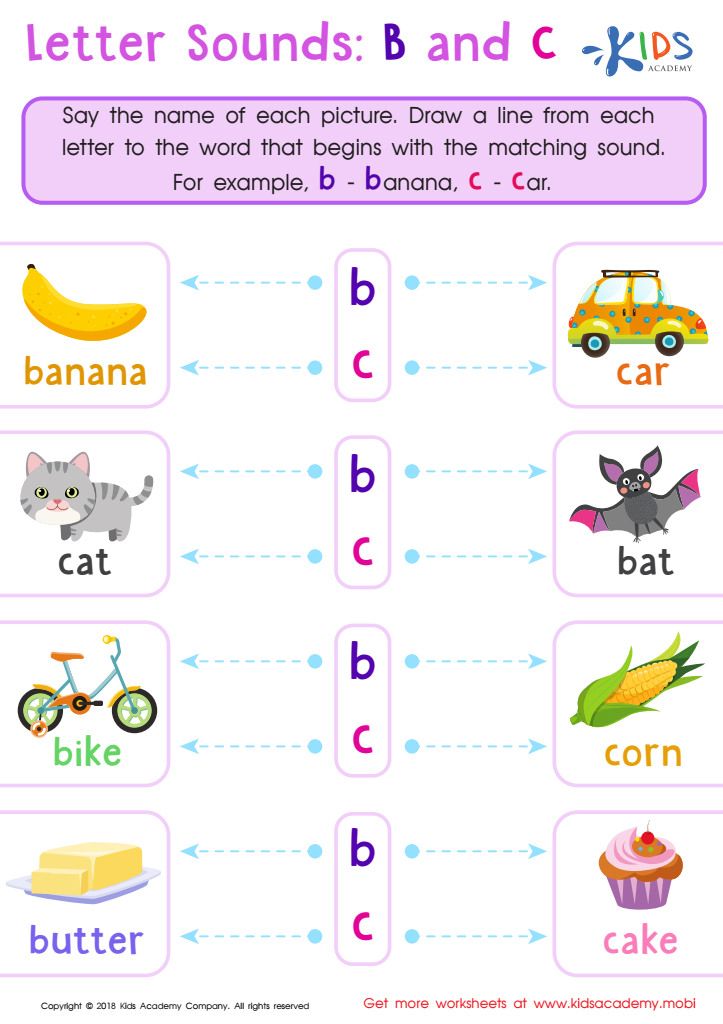
Letter B and C Sounds Worksheet

Letter B and C Sounds Worksheet

This fun worksheet offers bright, engaging pictures and helps kids learn to distinguish between the sounds of "B" and "C". With the use of pictures and familiar items, kids will trace lines to the correct initial consonant sound, while also developing fine-motor skills. It's a great way to build decoding ability!
Letter B and C Sounds Worksheet
Worksheet
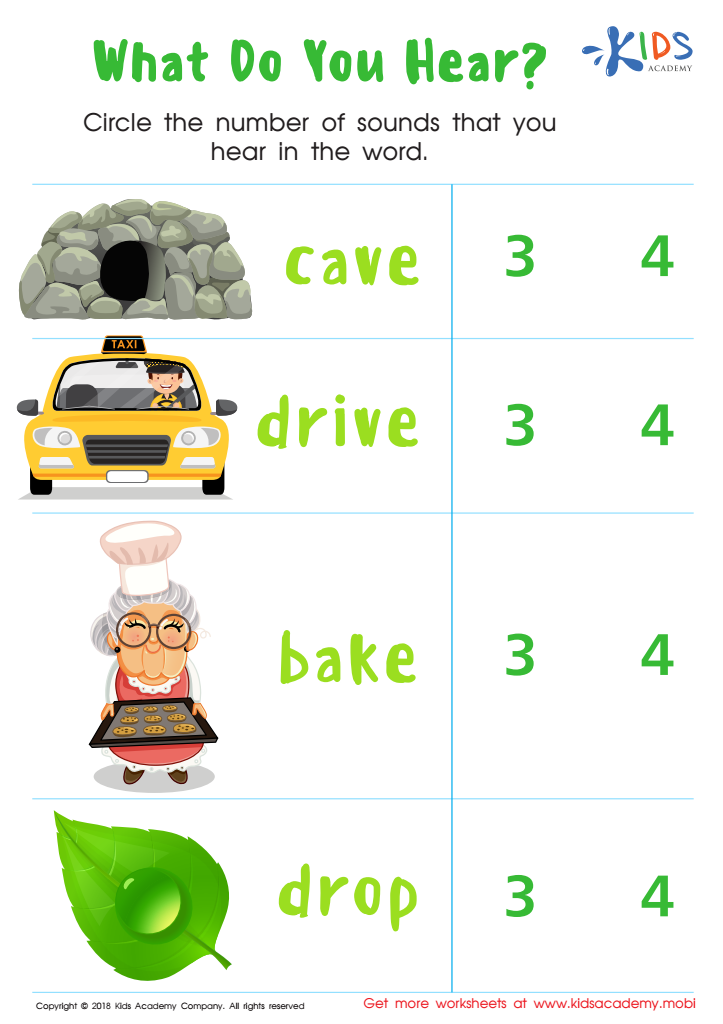
What Do You Hear? Worksheet
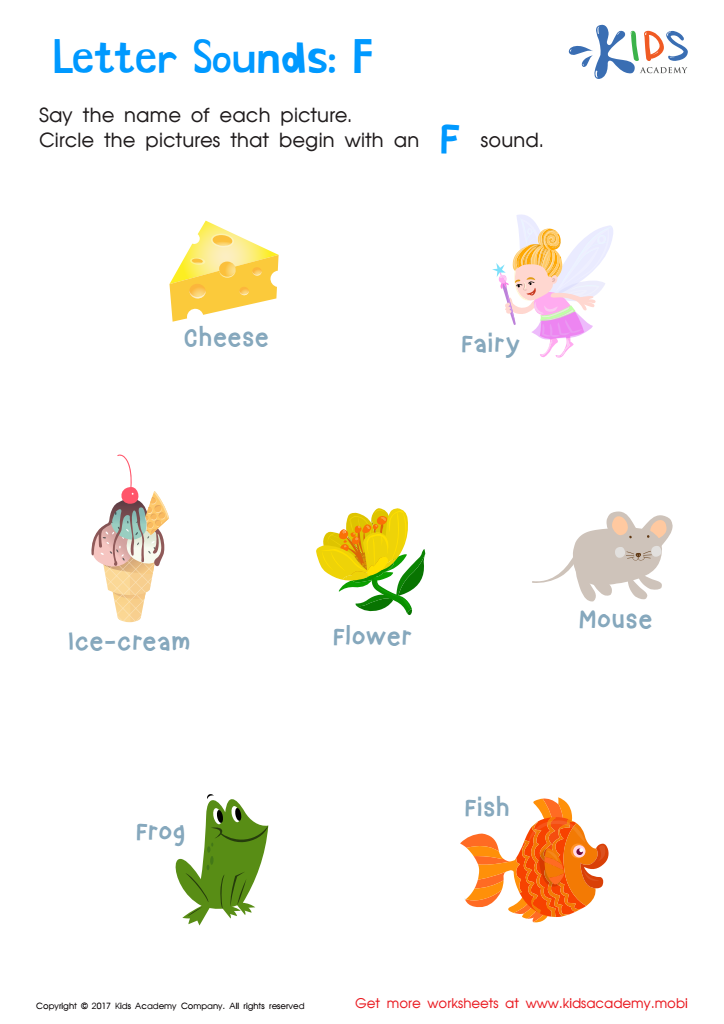

What Do You Hear? Worksheet

New readers can develop phonological awareness with this fun worksheet. They'll isolate sounds in words and count them, then circle the number of sounds heard. It'll help build their auditory discrimination and decoding skills, leading to more fluent reading. Without even knowing it, their reading skills are improving!
What Do You Hear? Worksheet
Worksheet
Letter f sounds worksheet

Letter F Sounds Worksheet

Kids will practice identifying 'f' words, tracing, and coloring the letter F for a great way to learn phonics. Help your child discover the wonders of the letter 'F' with this fun worksheet! Kids will practice identifying 'F' words, tracing and coloring the letter, and building early reading skills. Stimulate their learning and let them connect letter sounds to words they know. An enjoyable way to practice phonics!
Letter F Sounds Worksheet
Worksheet
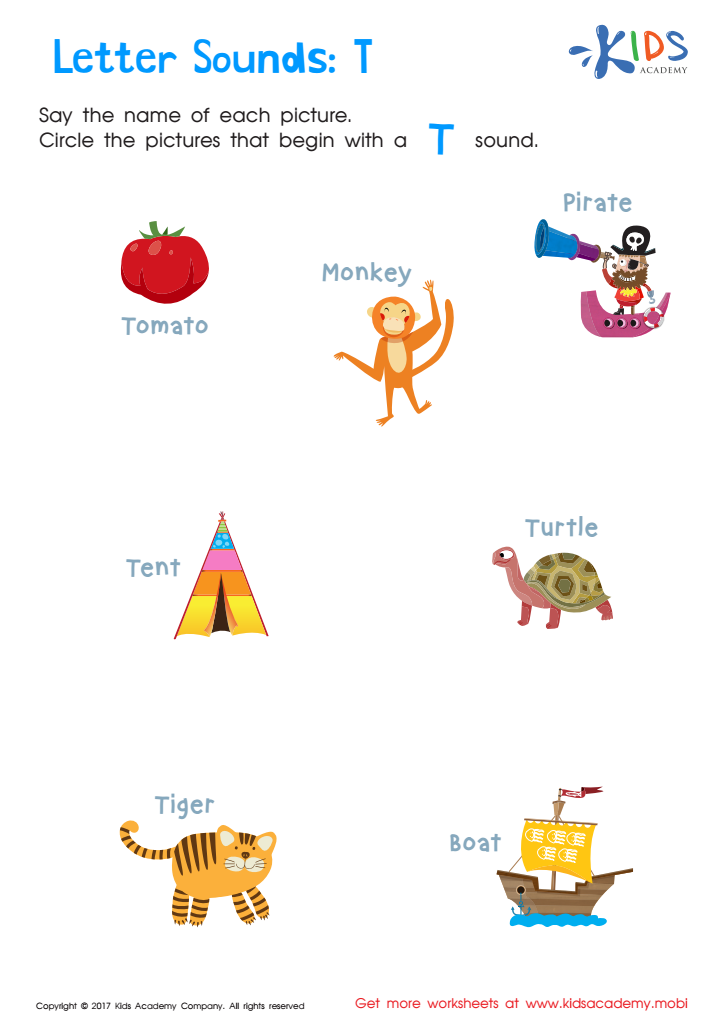
Letter t sounds worksheet

Letter T Sounds Worksheet

This worksheet is a fun way to help kids learn the t sound. It has familiar pictures and an easy-to-follow format, so kids can quickly recognize and learn the letter t.
Letter T Sounds Worksheet
Worksheet
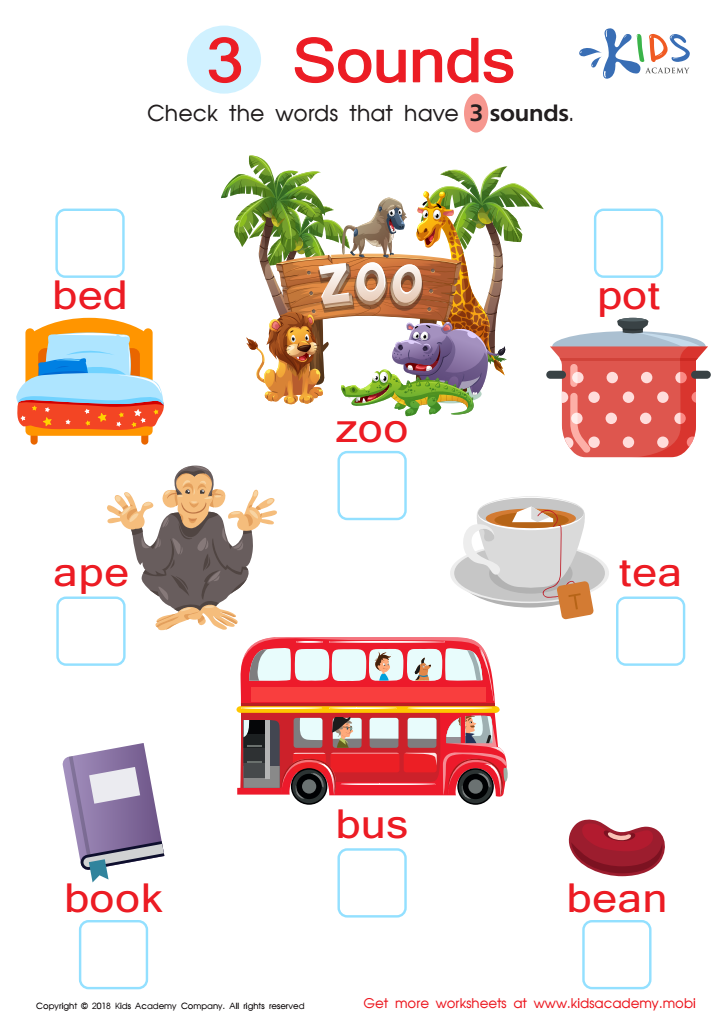
3 Sounds Worksheet
3 Sounds Worksheet

3 Sounds Worksheet

Kids will love learning with this free, colorful worksheet. It's full of familiar words they can name and sound out with three distinct sounds. This helps build decoding skills, plus they get to check off words they read. It's a fun way to teach children to identify and use sounds.
3 Sounds Worksheet
Worksheet
Letter X Sounds Worksheet
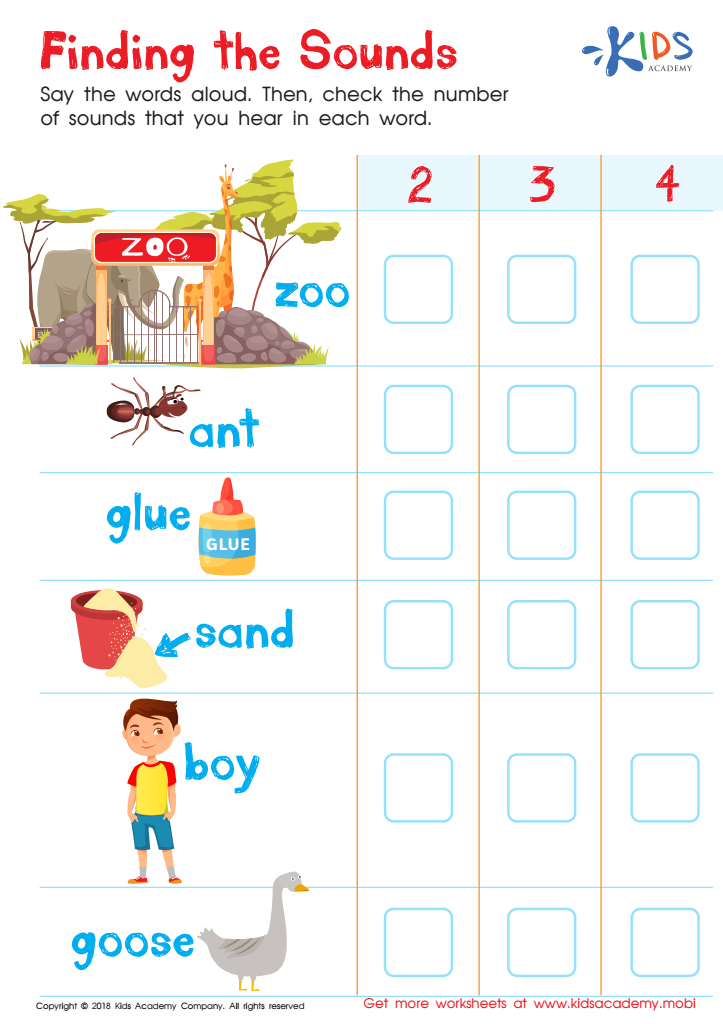
Letter X Sounds Worksheet

Help your early learner master the letter X sound with this fun, illustrated phonics worksheet. Have kids name the pictures, listening for the pronunciation of each. Have them circle only the pictures with the X sound, then double check by looking for the letter in the word below.
Letter X Sounds Worksheet
Worksheet
Finding the Sounds Worksheet

Finding the Sounds Worksheet

This free colorful worksheet assists children in learning words and breaking them down into sounds. It boosts auditory discrimination, phonological awareness and fine motor skills. Picture clues help them read confidently, and they can check the appropriate boxes to practice their reading skills.
Finding the Sounds Worksheet
Worksheet
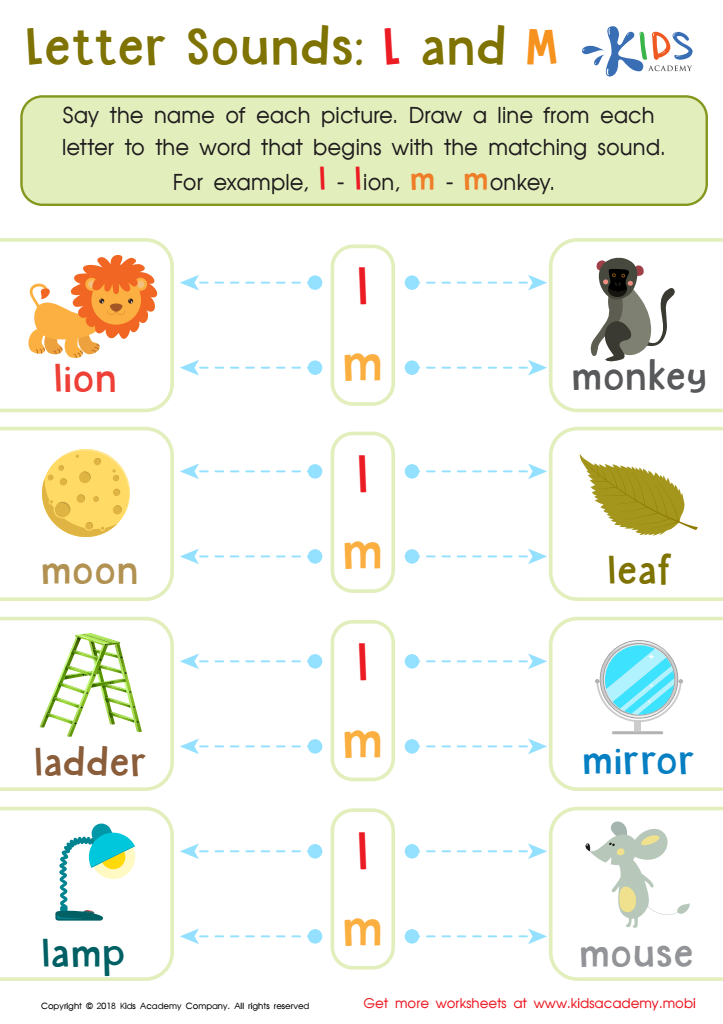
Letter l and M Sounds Worksheet


Letter l and M Sounds Worksheet

Our Kids Academy phonics practice pages give clear instructions and captivating pictures to pique children's interest. This fun worksheet helps kids identify a picture, then match its beginning sound. Listen and say each word - does it start with "L" or "M"? Trace the dotted line from the letter to the correct match and listen closely to the sound it makes.
Letter l and M Sounds Worksheet

Worksheet


Parents and teachers should prioritize phonics skills, specifically letter sounds, for children aged 4-7 because these foundational skills are crucial for reading development. Understanding letter sounds helps children decode words, making the transition from spoken language to reading more manageable. When children grasp the relationship between sounds and letters, they become more confident readers, enabling them to recognize familiar words and tackle new ones.

Moreover, mastering letter sounds enhances vocabulary acquisition and spelling proficiency. As children learn to blend sounds to form words, they develop a stronger understanding of language structure, which is vital for effective communication. Phonics instruction also fosters critical thinking skills; as children practice manipulated phonemes, they learn to recognize patterns and solve problems within text.

Early phonics skills are linked to future academic success. Studies show that children who receive effective phonics instruction tend to excel in reading comprehension and literacy skills later in life. Therefore, by concentrating on phonics skills and letter sounds, parents and teachers can empower children to become enthusiastic learners, reduce future reading difficulties, and lay the groundwork for lifelong literacy. Investing time in these skills is key to fostering a love for reading and learning in young children.