Word identification Long Vowels Worksheets for Ages 4-7
3 filtered results
-
From - To
Discover our interactive and engaging "Word Identification Long Vowels Worksheets" designed for children aged 4-7. These educational resources enhance your child's reading and literacy skills by focusing on long vowel sounds (A, E, I, O, U). Through colorful illustrations and fun activities, kids will identify, read, and write words containing long vowels. Ideal for early learners, these worksheets provide essential practice to boost phonemic awareness and confidence in word recognition. Perfect for both classroom and at-home learning, our expertly-crafted worksheets support a strong foundation for future reading success. Explore our collection and watch your child's reading abilities soar!
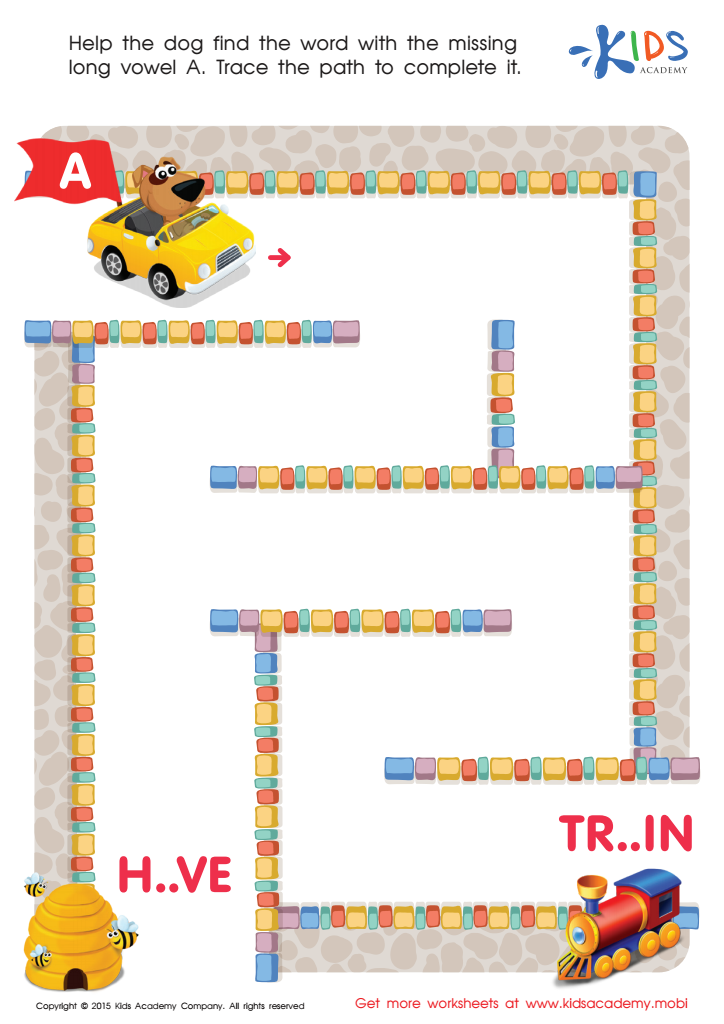
Long Vowel Sound A Worksheet
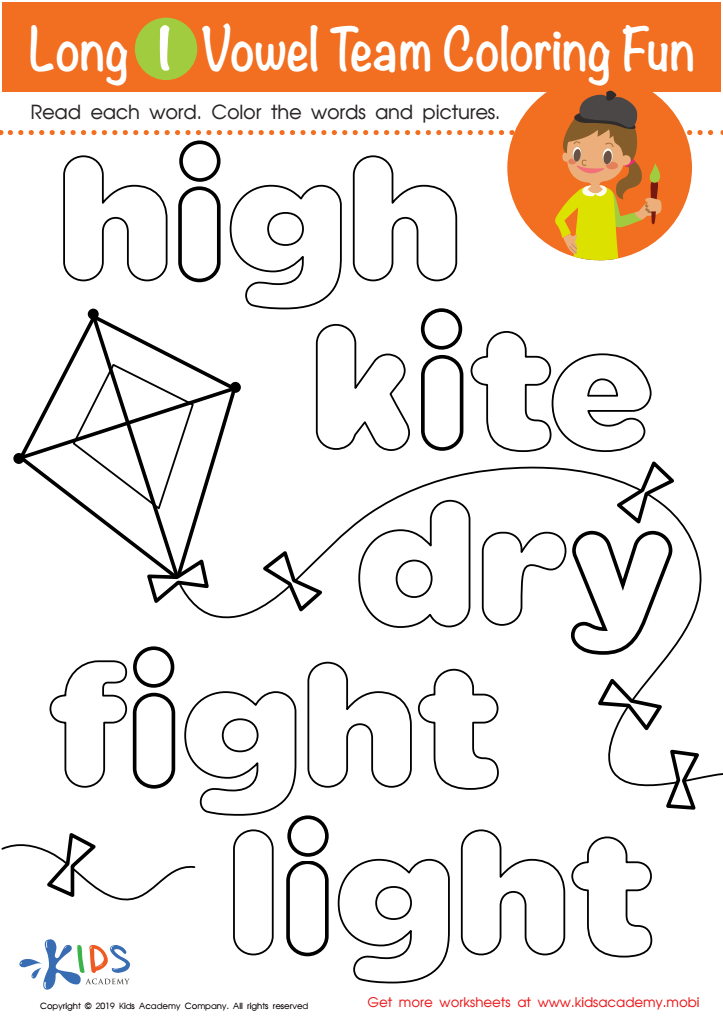
Long I Vowel Team Coloring Worksheet
 Assign to My Students
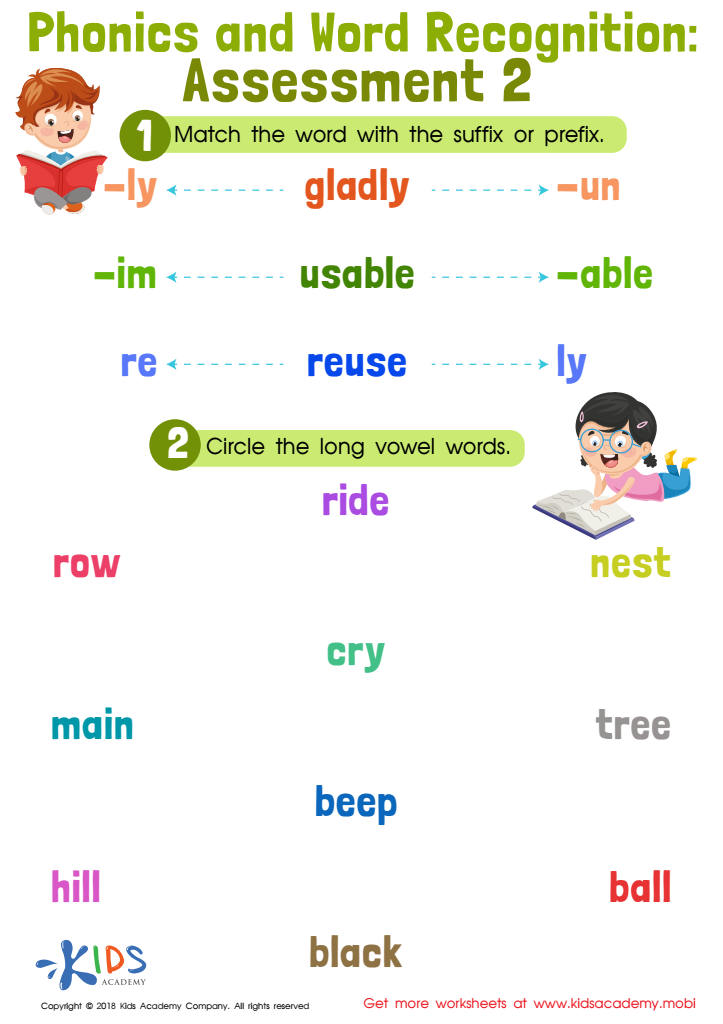
Phonics and Word Recognition: Assessment 2



Understanding word identification and long vowels is criticial for children ages 4-7 as it lays the groundwork for literacy. This stage, commonly referred to as early literacy, focuses on recognizing letters, sounds, and simple words, which collectively enhance reading confidence and accuracy.
Long vowels play a significant role because they help children know that vowels can make different sounds based on their placement in a word. Teaching long vowels gives kids an early exposure to commonly seen patterns like CVCe (consonant-vowel-consonant-silent 'e') which aids in decoding more complex words later. For instance, recognizing that the 'a' in "cake" sounds different than in "cat” is understanding a foundational rule of English pronunciation.
Word identification they aids comprehension. Without solid word identification skills, children might struggle to grasp the meaning of what they read, hindering their ability to enjoy books and other written materials. Identifying words correctly ensures they can piece together sentences more fluidly, reducing frustration and encouraging a love for reading.
Essentially, focusing on these areas in early childhood sets a robust foundation for future academic learning. It also enhances children's overall cognitive development, improves communication skills, and builds confidence in their ability to overcome learning challenges.