
Reading fluency Phonics Worksheets for Ages 4-7
7 filtered results
Difficulty Level
Grade
Age
-
From - To
Subject
Activity
Standards
Enhance your child's reading journey with our engaging Reading Fluency Phonics Worksheets designed specifically for ages 4-7! These carefully crafted worksheets focus on building essential phonics skills and boosting reading fluency through fun and interactive activities. Young learners will explore letter blends, sight words, and sound recognition while reinforcing their comprehension abilities. Our resources include vibrant illustrations and enjoyable practice exercises that keep children engaged and motivated. Ideal for classroom use or at-home learning, these worksheets promote a love for reading and support early literacy development. Discover the joy of reading with our phonics worksheets for budding readers today!
Favorites
With answer key
Interactive
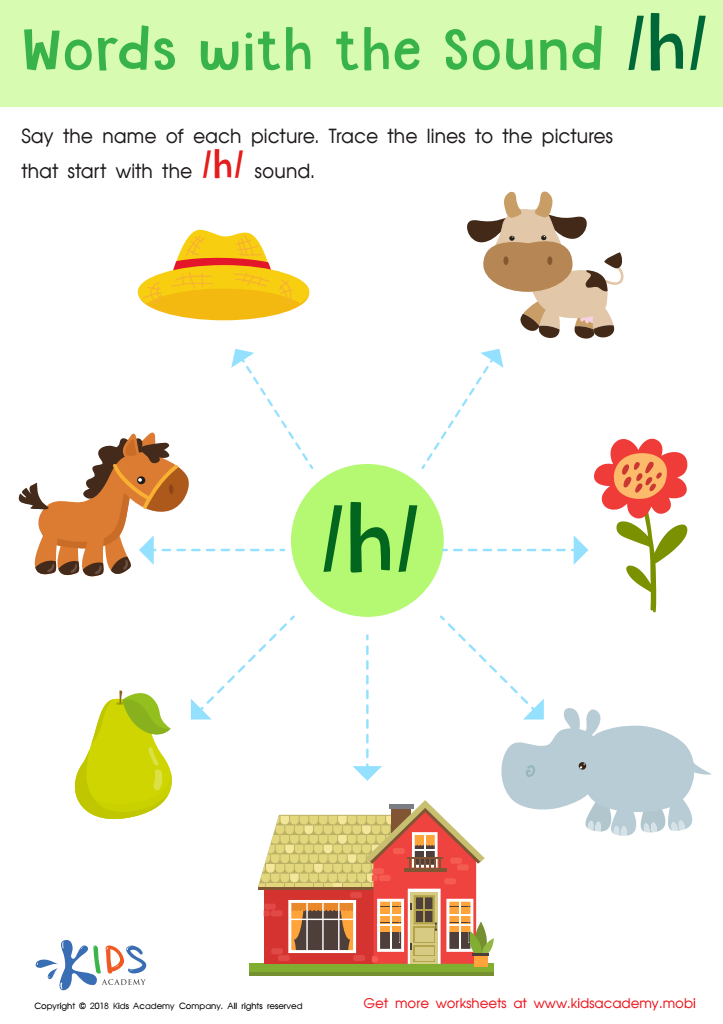
Words with sound h Reading Worksheet
The letter H can often be heard in words! Check your child's knowledge with an engaging worksheet from Kids Academy. Ask them to go around a circle and name each image aloud. Listen for the starting sound and trace the line from the middle letter to the images with the sound. This is a great way to practice phonics!
 Assign to My Students
Words with sound h Reading Worksheet
Worksheet
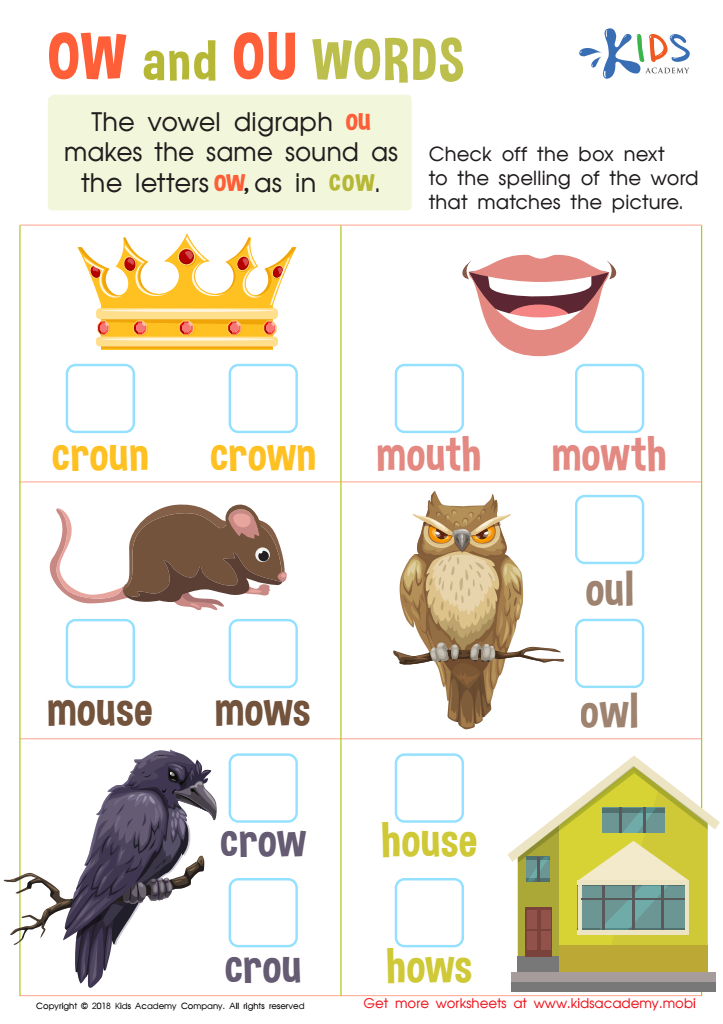
Reading: OW and OU Words Worksheet
Help your kids learn phonetics! Explain the different sounds and long/short variations. Emphasize that some vowel sounds are the same, e.g. ou = ow in cow. For practice, have them read aloud the words in the worksheet and check the box next to the spelling that matches the picture.
Reading: OW and OU Words Worksheet
Worksheet
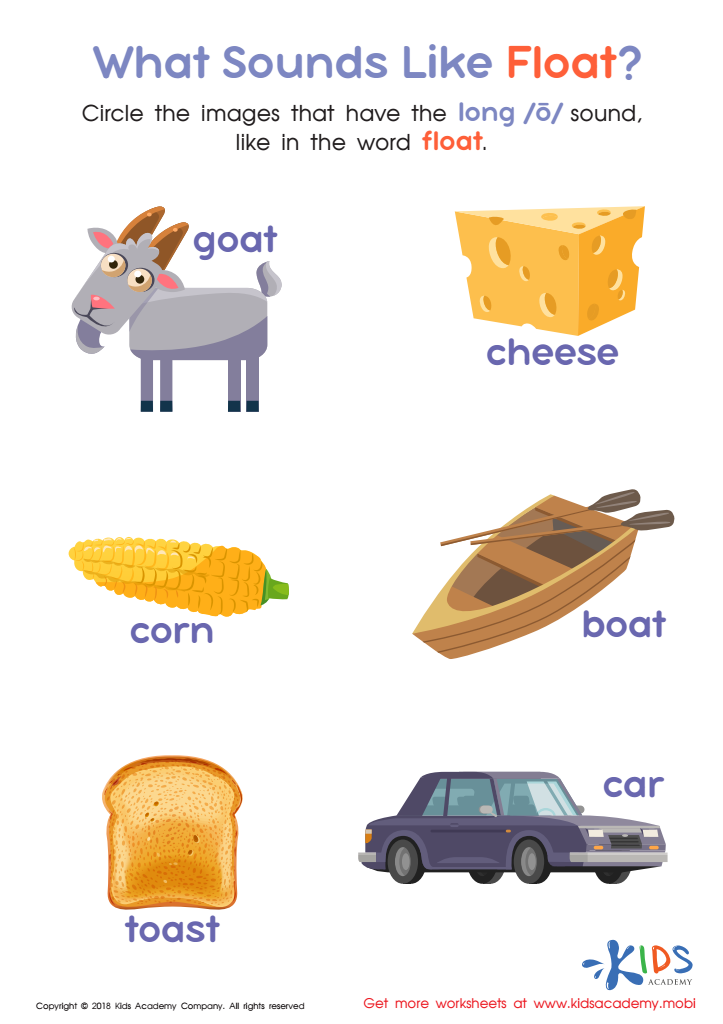
What Sounds Like Float? Worksheet
Help your kids practice the long /o/ sound with words such as 'boat', 'goat' and 'float'. Ask them to identify and circle the images in the worksheet that have the same sound. Award bonus points if they come up with more words with 'oa' spelling!
What Sounds Like Float? Worksheet
Worksheet
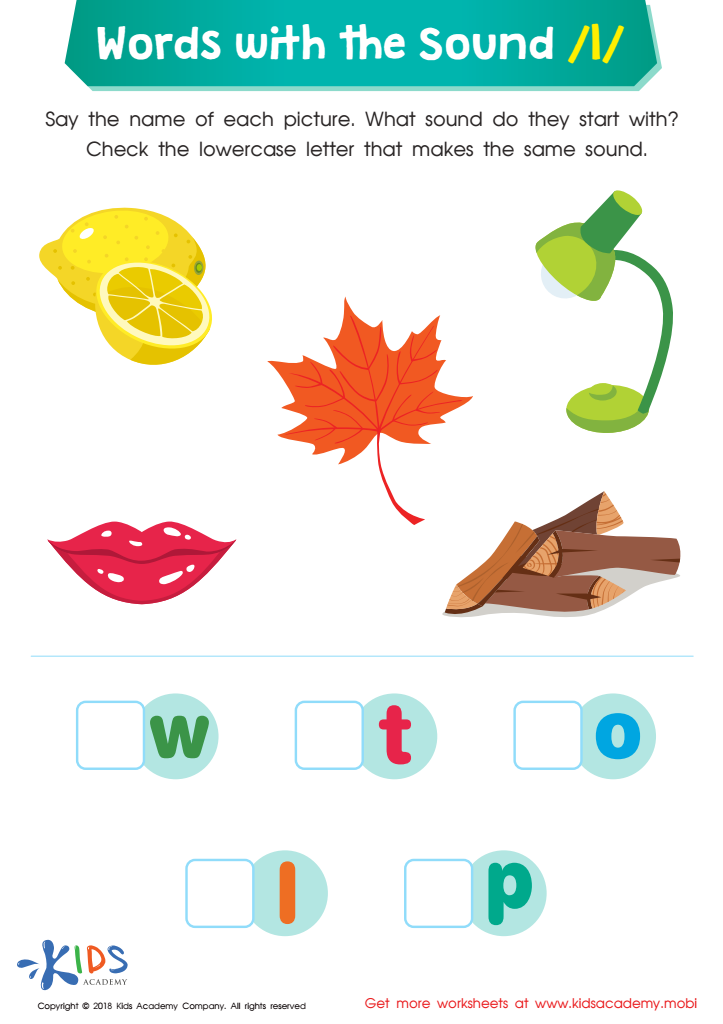
Words with Sound L Reading Worksheet
This PDF worksheet is great for helping emerging readers isolate initial sounds. Kids name familiar pictures, then identify the correct letter for the "l" sound. This worksheet strengthens fine motor skills, plus builds visual discernment. It's fun and colorful too!
Words with Sound L Reading Worksheet
Worksheet
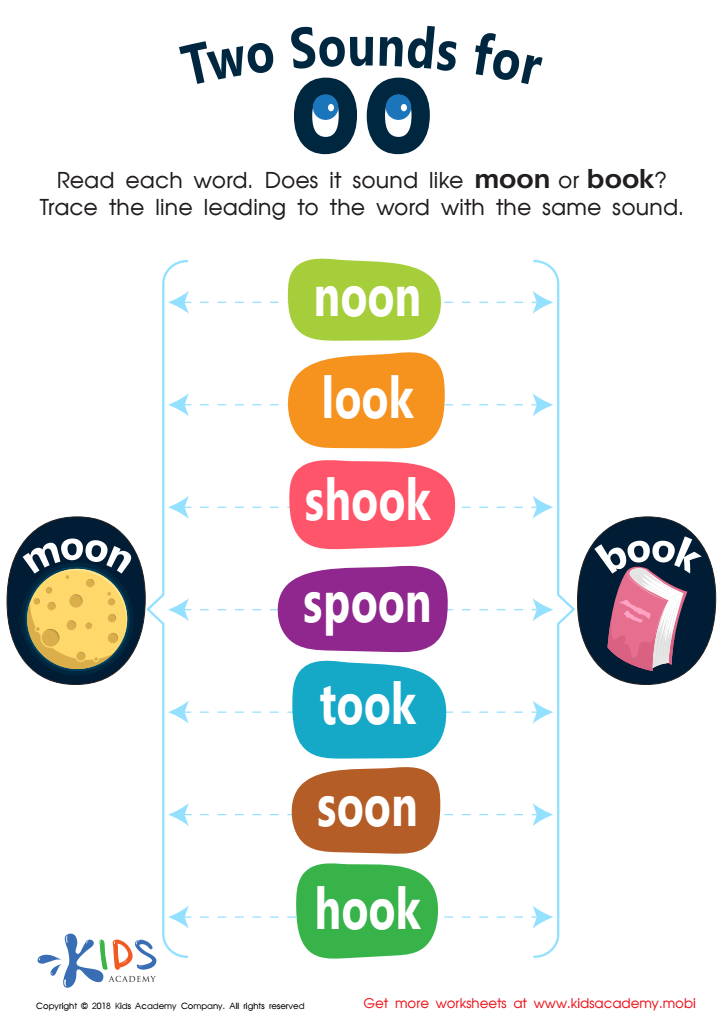
Two Sounds for OO Worksheet
This worksheet helps kids learn the different sounds of the -oo digraph. They match words based on whether they sound like moon or book, plus practice fine motor skills tracing lines. Fun and educational!
Two Sounds for OO Worksheet
Worksheet
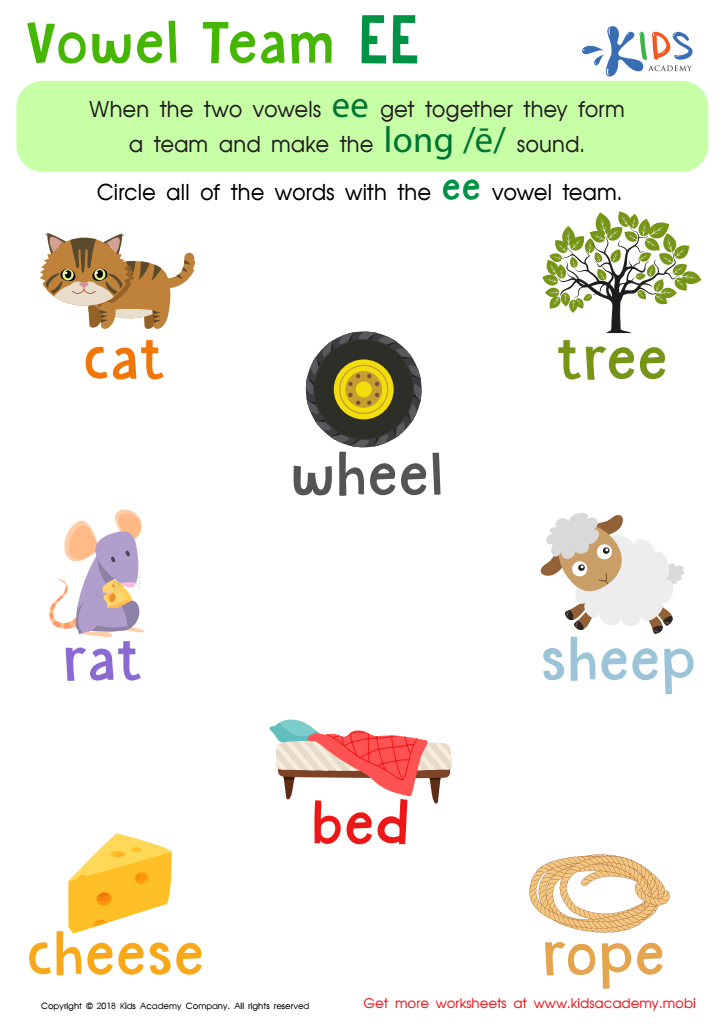
Reading: Vowel Team EE Worksheet
This worksheet is perfect for helping young learners master the /ee/ vowel team. It shows the first vowel with a long sound and the second vowel silent. It also provides pictures for unfamiliar words for readers of all levels. It's an ideal resource for teaching phonics skills.
Reading: Vowel Team EE Worksheet
Worksheet
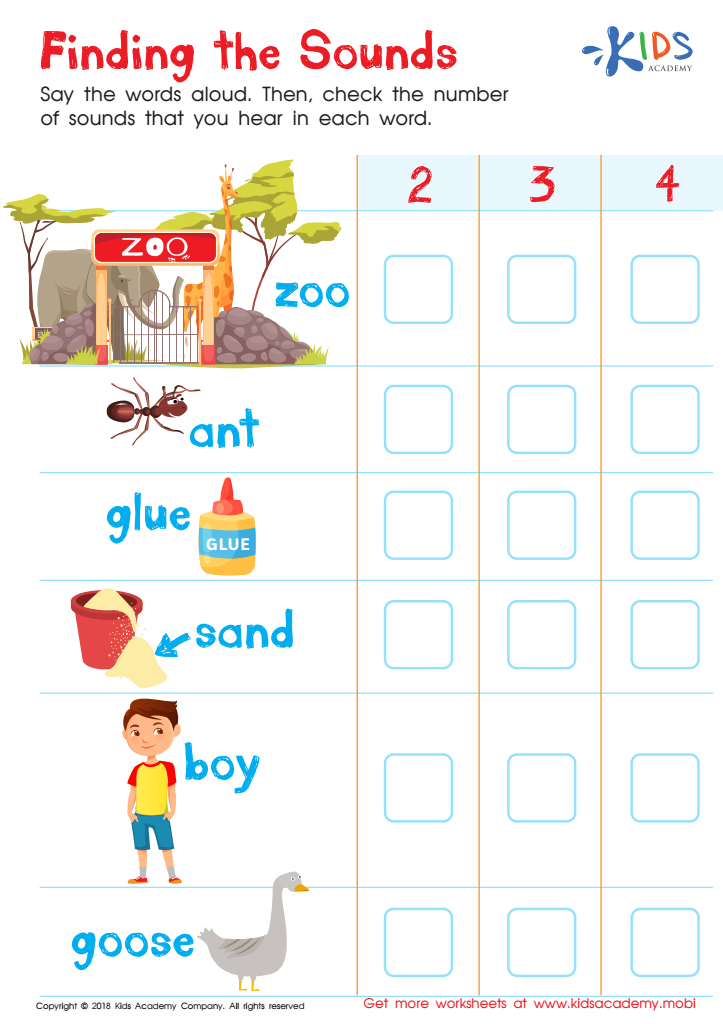
Finding the Sounds Worksheet
This free colorful worksheet assists children in learning words and breaking them down into sounds. It boosts auditory discrimination, phonological awareness and fine motor skills. Picture clues help them read confidently, and they can check the appropriate boxes to practice their reading skills.
Finding the Sounds Worksheet
Worksheet
Join Kids Academy for Free
Who is primarily going to use this learning content?








Reading fluency and phonics are crucial skills for children ages 4-7, and both parents and teachers play a vital role in nurturing these skills. Early reading fluency—defined as the ability to read smoothly and accurately—is essential for comprehension. When children read fluently, they can focus on understanding the text rather than getting bogged down by decoding individual words. This lays a strong foundation for critical thinking and vocabulary acquisition.
Phonics, the relationship between sounds and their corresponding letters, equips children with the tools they need to decode words independently. Mastering phonics helps young learners recognize patterns, which accelerates their reading development and instills confidence.
Furthermore, establishing a solid base in reading fluency and phonics promotes a lifelong love for reading. Children who are comfortable with reading often explore literature more deeply, yielding benefits across all areas of learning.
Parents and teachers should prioritize these skills to enhance overall literacy development, which significantly influences academic success and social-emotional growth. They can advocate for engaging reading activities and utilize educational resources to support phonics instruction, paving the way for successful readers in the future. By nurturing these foundational skills, adults empower children to thrive both in and out of the classroom.







