Sound identification Phonics Worksheets for Ages 4-7
4 filtered results
-
From - To
Enhance your child's early reading skills with our engaging Sound Identification Phonics Worksheets designed for ages 4-7! These interactive worksheets provide a fun and effective way for young learners to recognize and master different sounds associated with letters. By incorporating captivating visuals and stimulating activities, children will develop essential phonemic awareness that lays the foundation for fluent reading. Our easy-to-use worksheets encourage independent work and can be printed for home or classroom use. Foster a love for learning while building confidence in your child's reading abilities with our comprehensive, expertly crafted phonics resources today! Discover the magic of sound identification today!
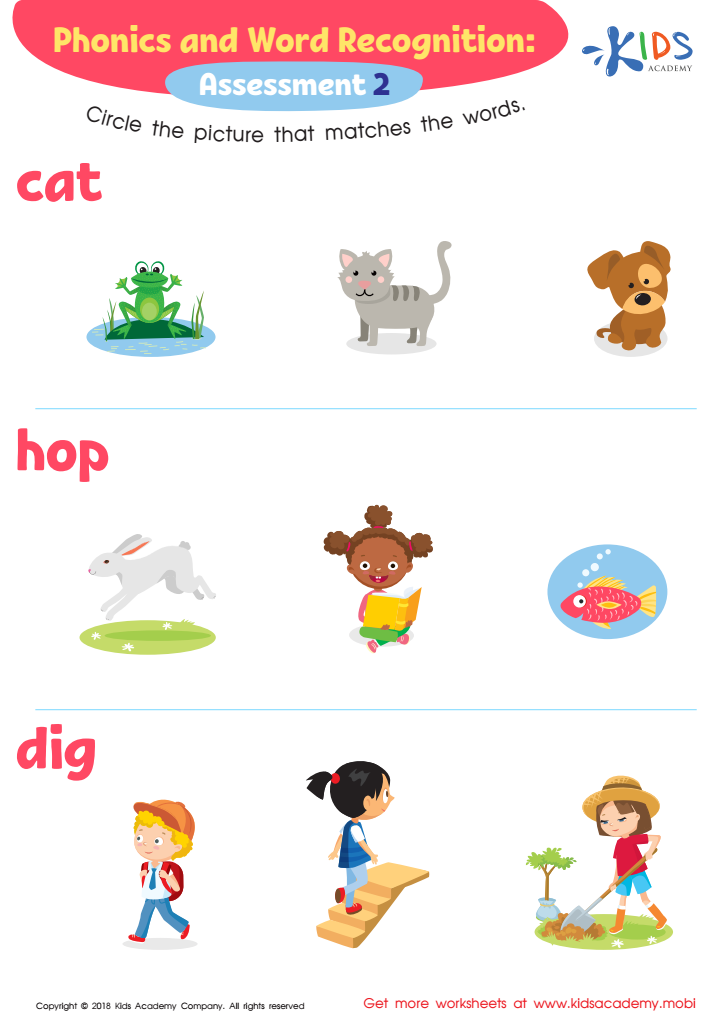
Phonological Awareness: Assessment 2 ELA Worksheet
 Assign to My Students
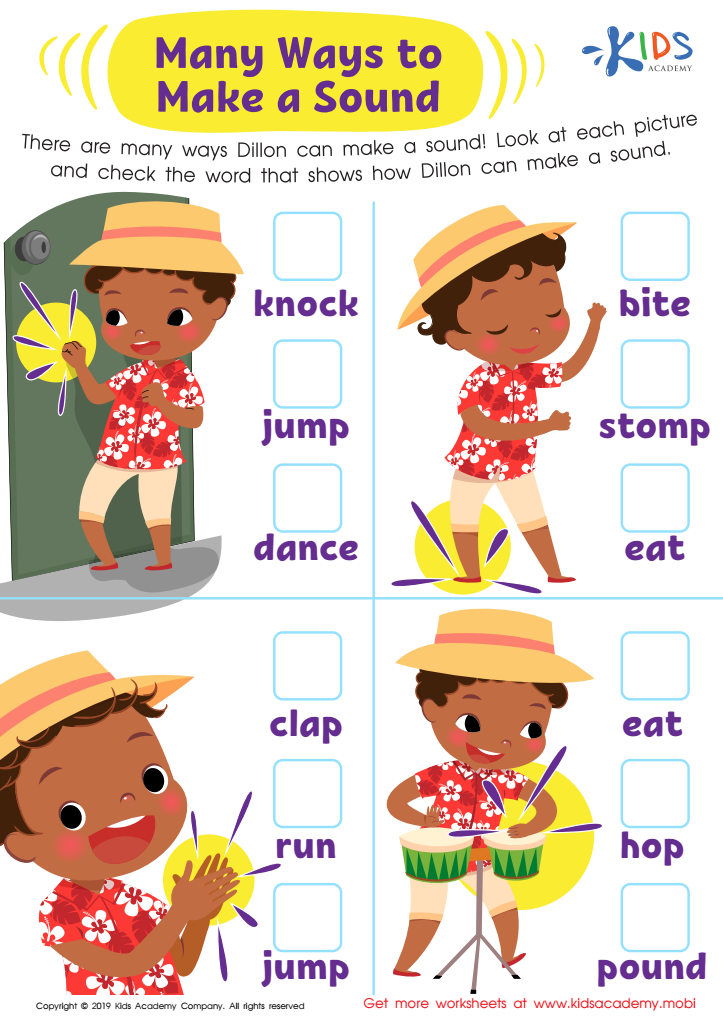
Many Ways to Make a Sound Worksheet
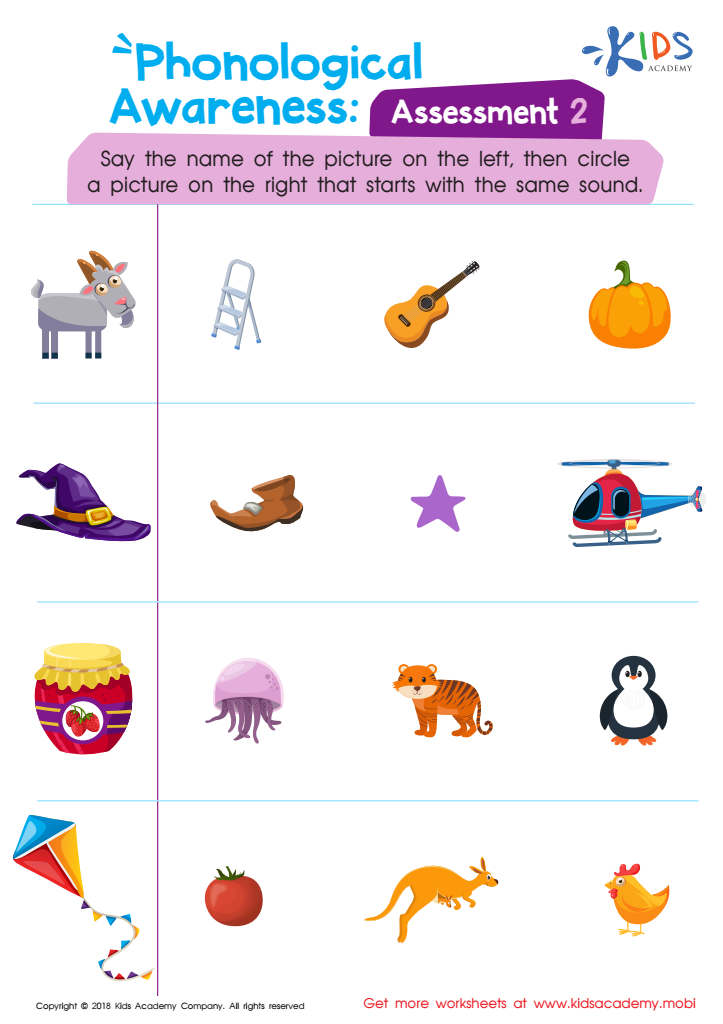
Phonological Awareness: Assessment 2 Worksheet
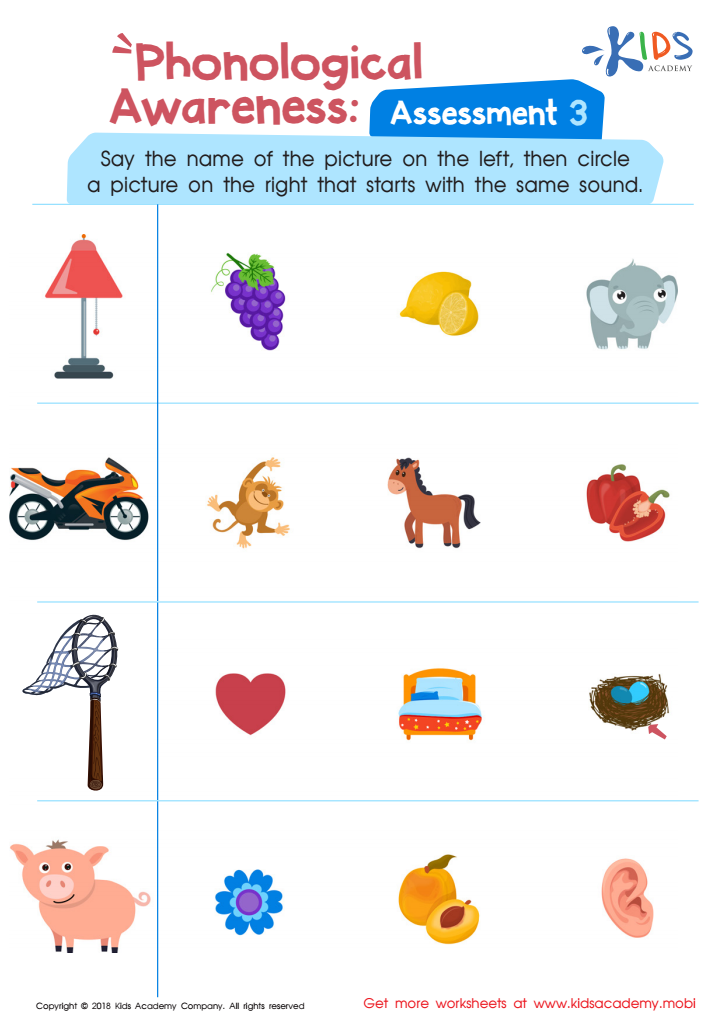
Phonological Awareness: Assessment 3 Worksheet








Sound identification phonics is crucial for children aged 4-7 as it lays the foundation for literacy development. During these formative years, children learn to associate sounds with letters, enabling them to decode words. It fosters essential pre-reading skills that influence their ability to read fluently and comprehend texts later on.
For parents and teachers, mastering sound identification phonics helps children develop strong reading skills, which are directly linked to other academic areas. Children who can identify sounds tend to become more confident readers, boosting their self-esteem and fostering a positive attitude towards learning. Additionally, phonics instruction supports language development, which enhances vocabulary acquisition and communication skills.
Furthermore, as children progress in their learning, a solid understanding of phonics allows for smoother transitions to more complex reading tasks. Teachers who emphasize sound identification can better tailor instruction to meet diverse learning needs, providing interventions when necessary.
Ultimately, investing time in phonics during early education not only improves reading abilities but also promotes critical thinking, problem-solving skills, and a lifelong love for reading. Ensuring that children receive quality phonics instruction paves the way for academic success in the years to come.







