Chess strategy understanding Chess Worksheets for Ages 4-7
15 filtered results
-
From - To
Unlock young minds with our "Chess Strategy Understanding" worksheets, designed for ages 4-7. At Kids Academy, our printable activities introduce basic chess strategies in a fun and engaging way, promoting critical thinking and problem-solving skills. Each worksheet simplifies complex chess concepts into easy-to-follow exercises, perfect for early learners. Parents and teachers can use these resources to foster a child's strategic thinking, patience, and concentration. Join us to make chess an enjoyable learning adventure for beginners. Enhance your child's cognitive abilities with our expertly crafted chess worksheets! Visit Kids Academy today to start your young learner on this exciting journey.
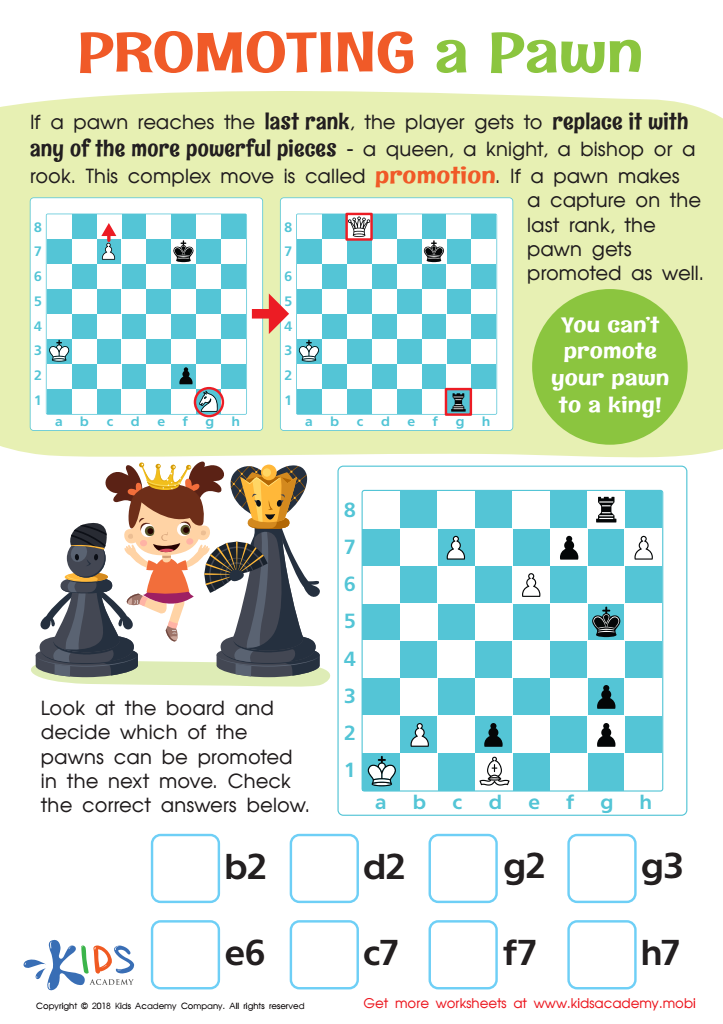
Promoting a Pawn Worksheet
 Assign to My Students
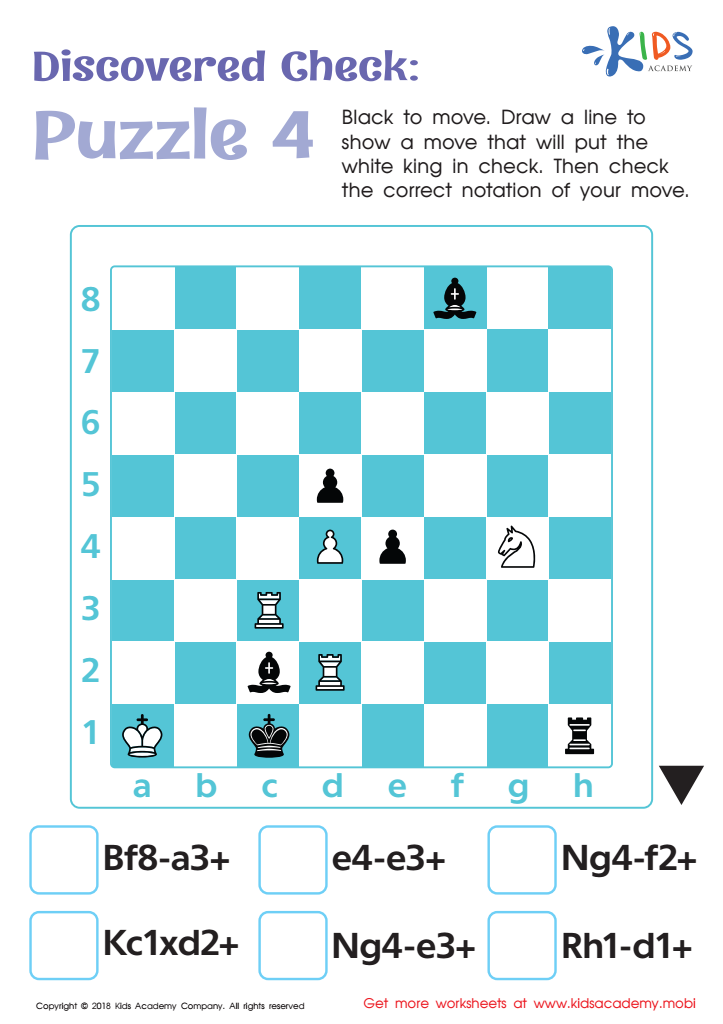
Discovered Check: Puzzle 4 Worksheet
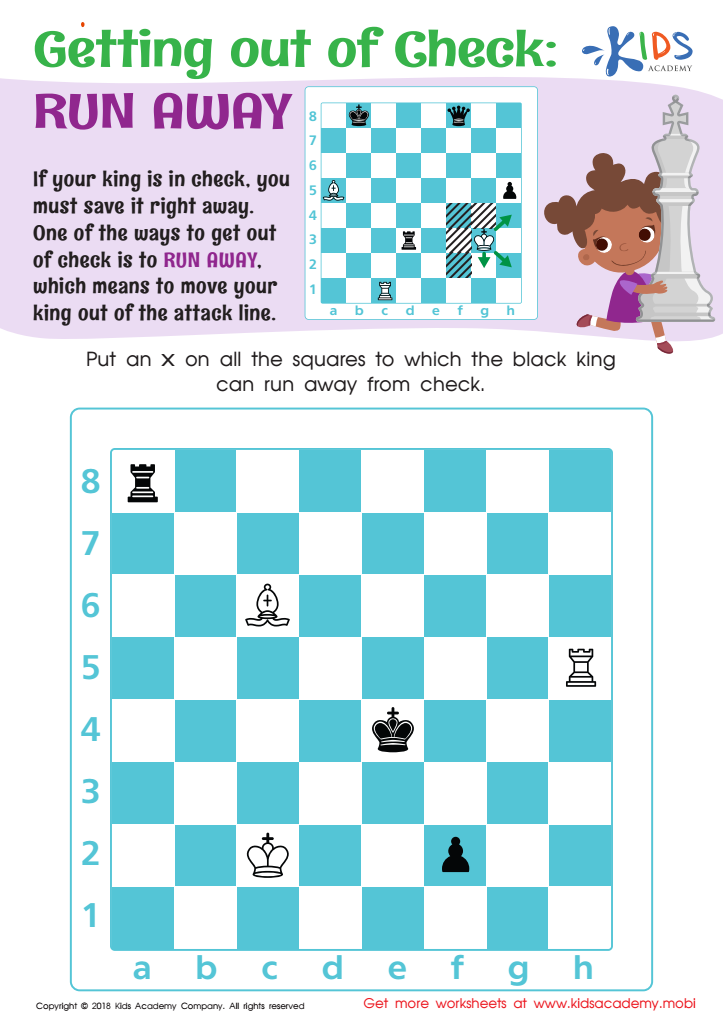
Getting out of Check: Run Away Worksheet
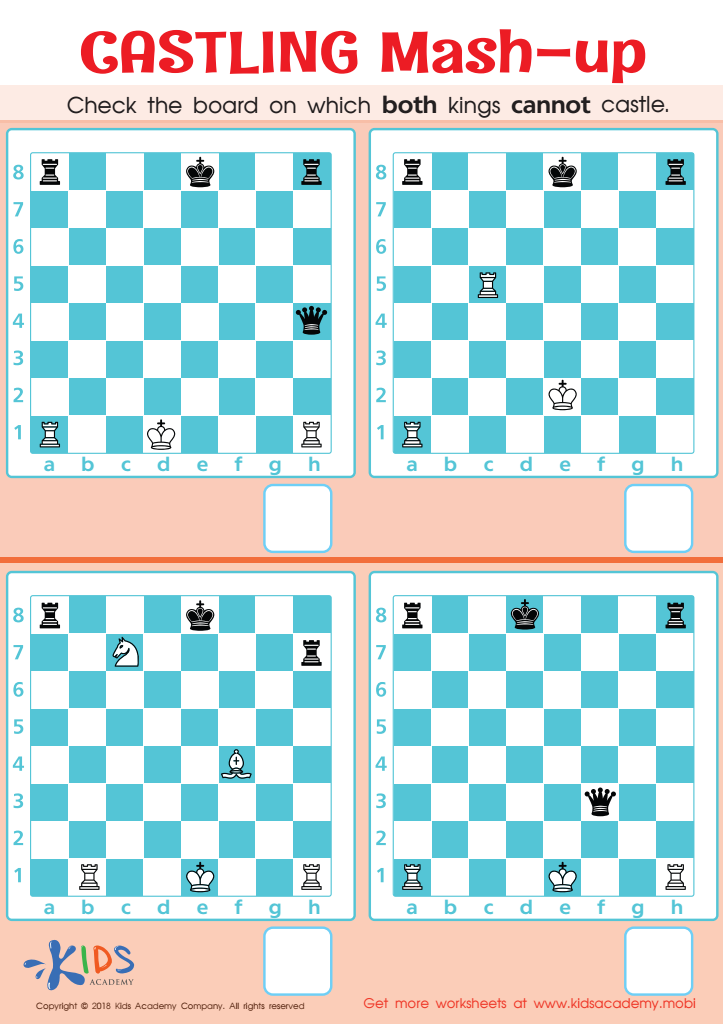
Castling Mash–up Worksheet
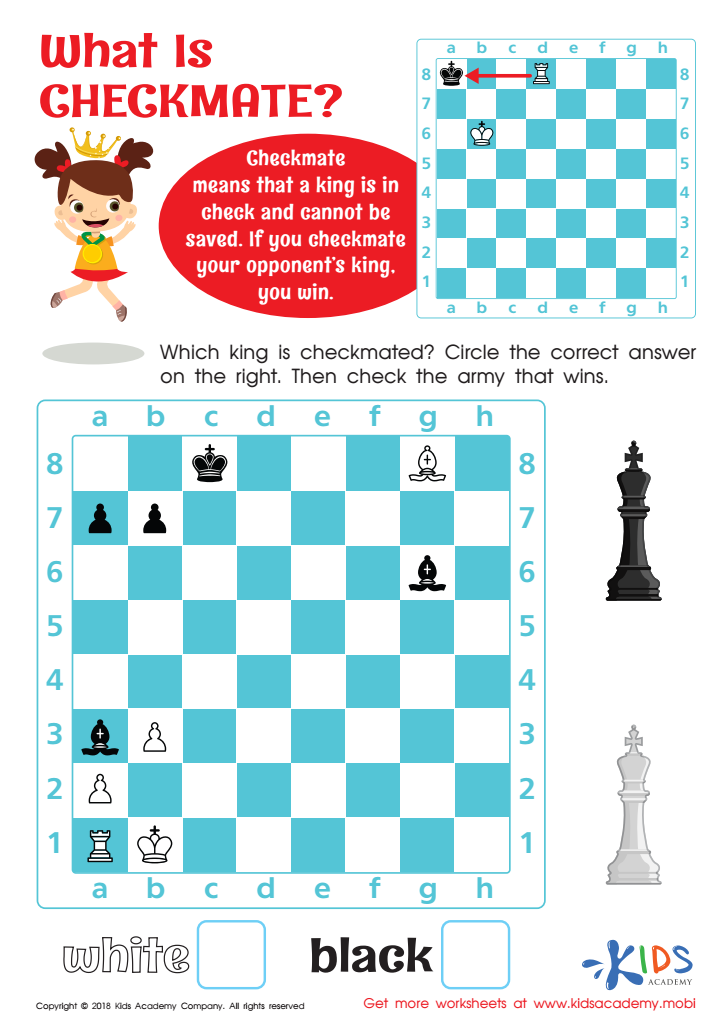
What is Checkmate? Worksheet
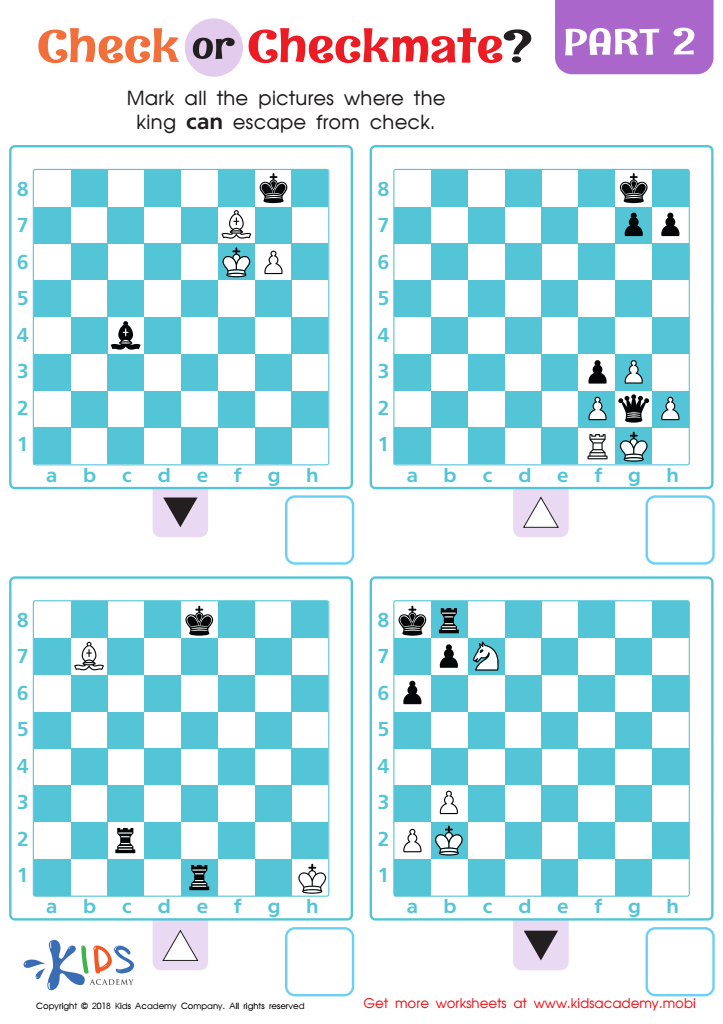
Check or Checkmate: Part 2 Worksheet
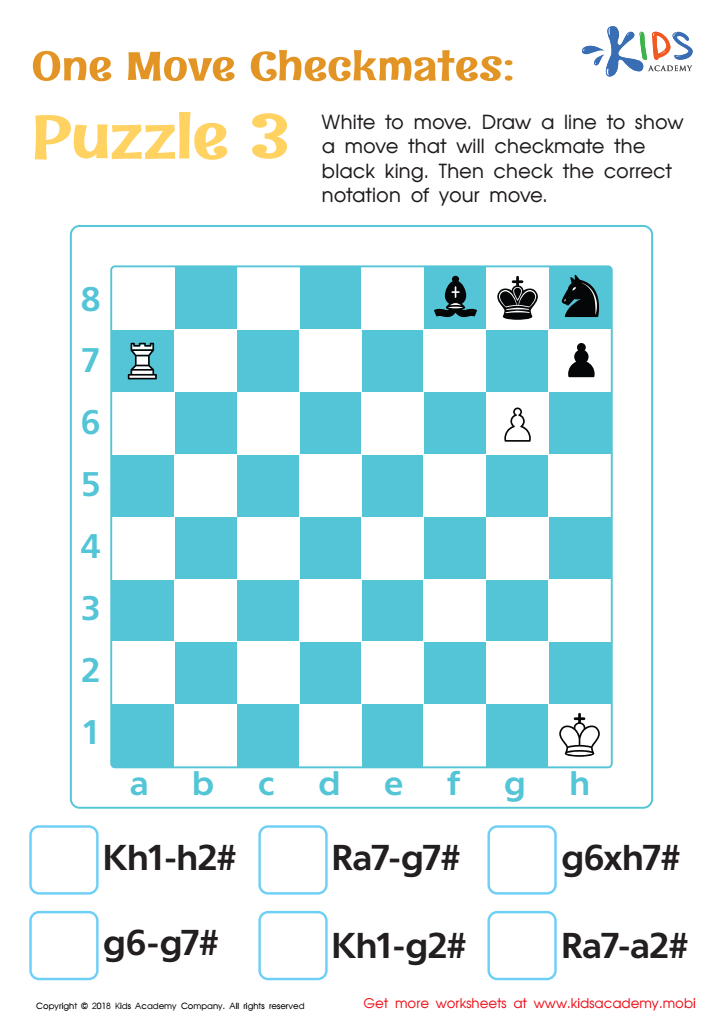
One Move Checkmates: Puzzle 3 Worksheet
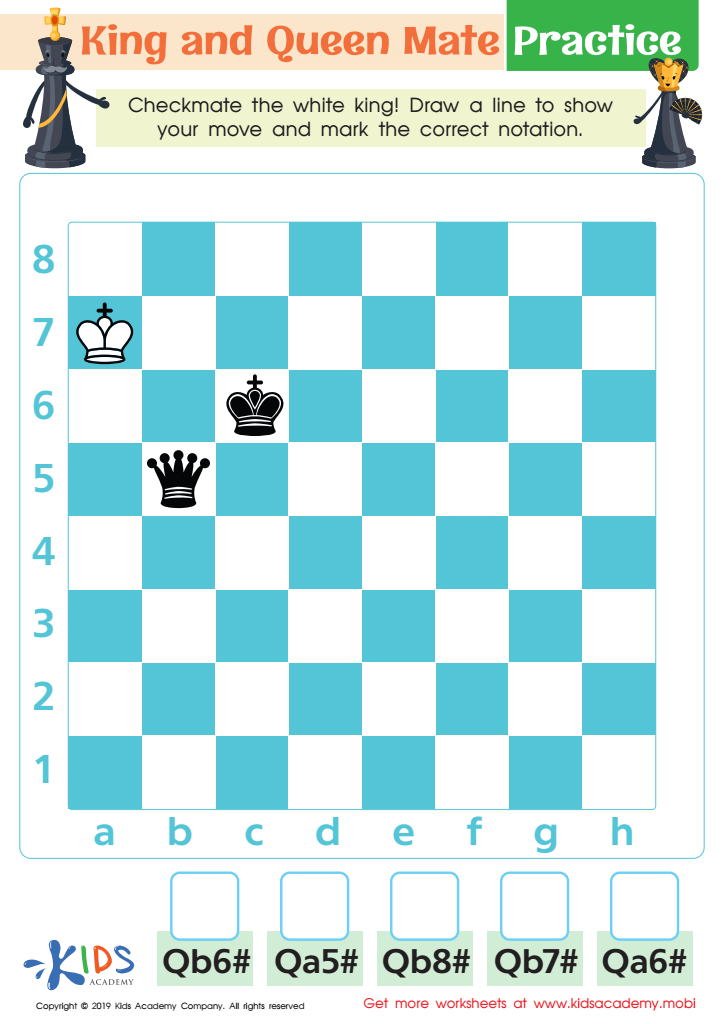
King and Queen Mate Practice Worksheet

Discovered Check: Puzzle 2 Worksheet
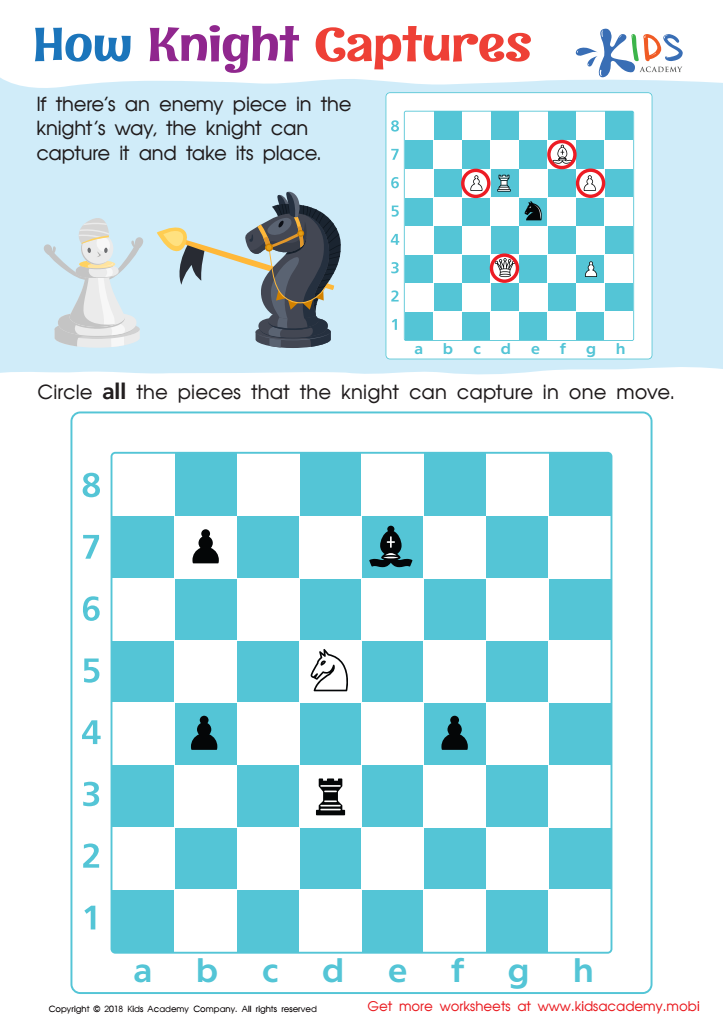
How Knight Captures Worksheet
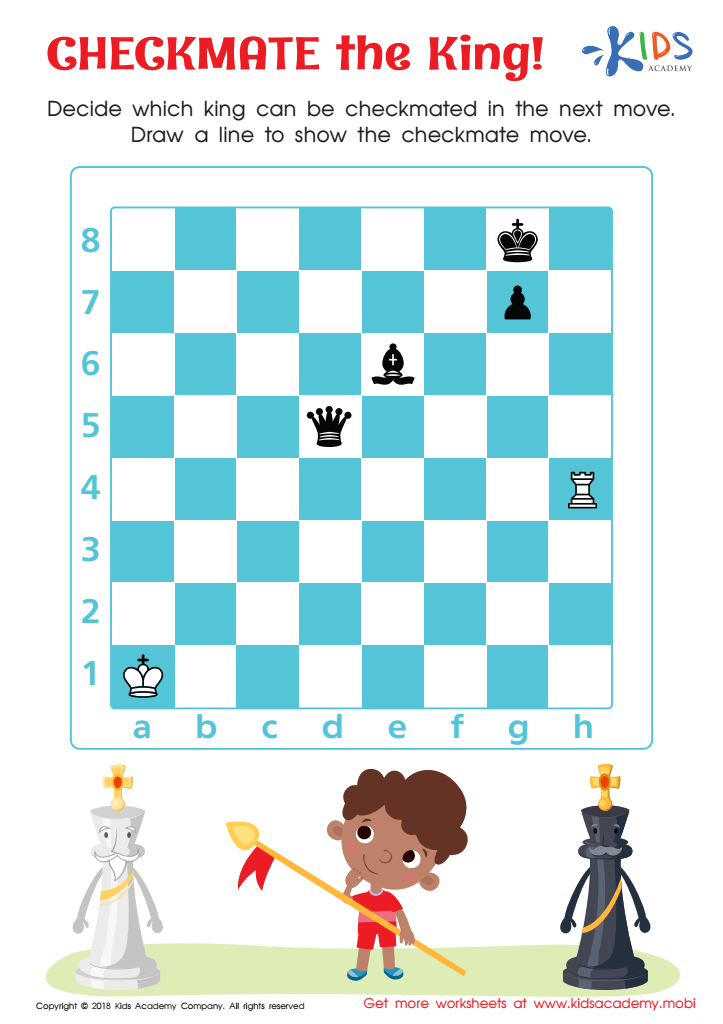
Checkmate the King Worksheet
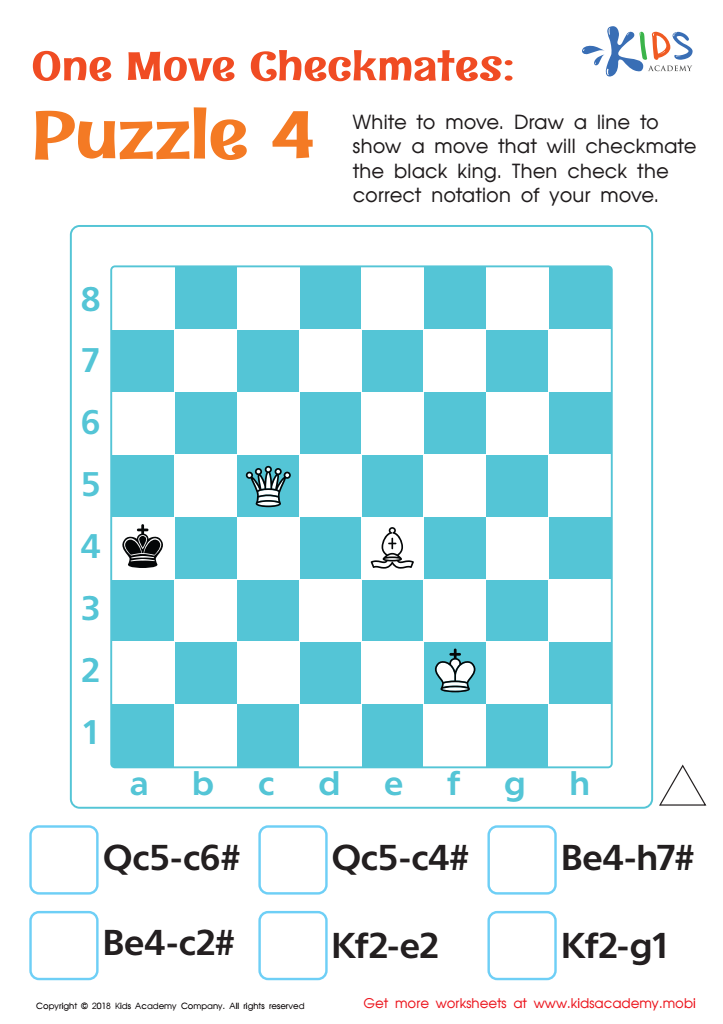
One Move Checkmates: Puzzle 4 Worksheet
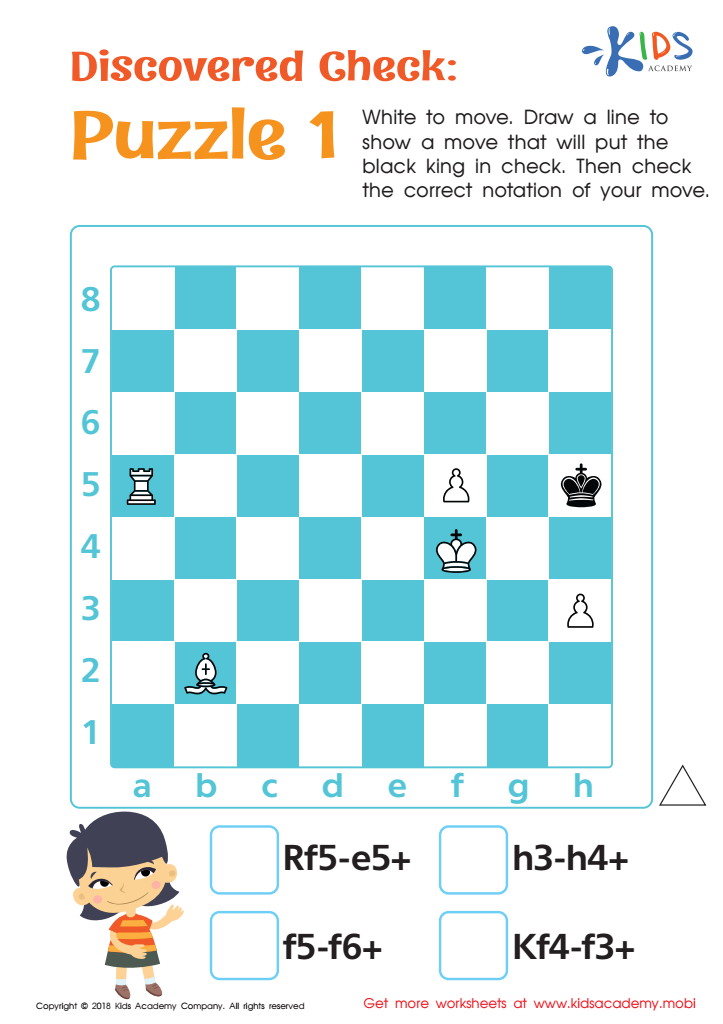
Discovered Check: Puzzle 1 Worksheet
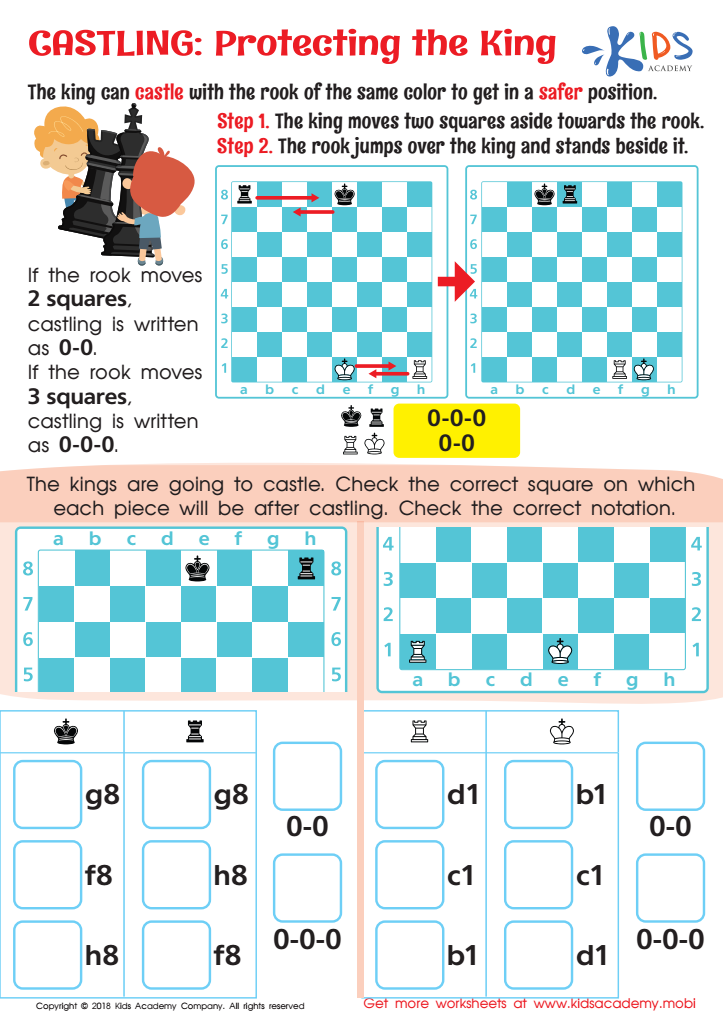
Castling: Protecting the King Worksheet
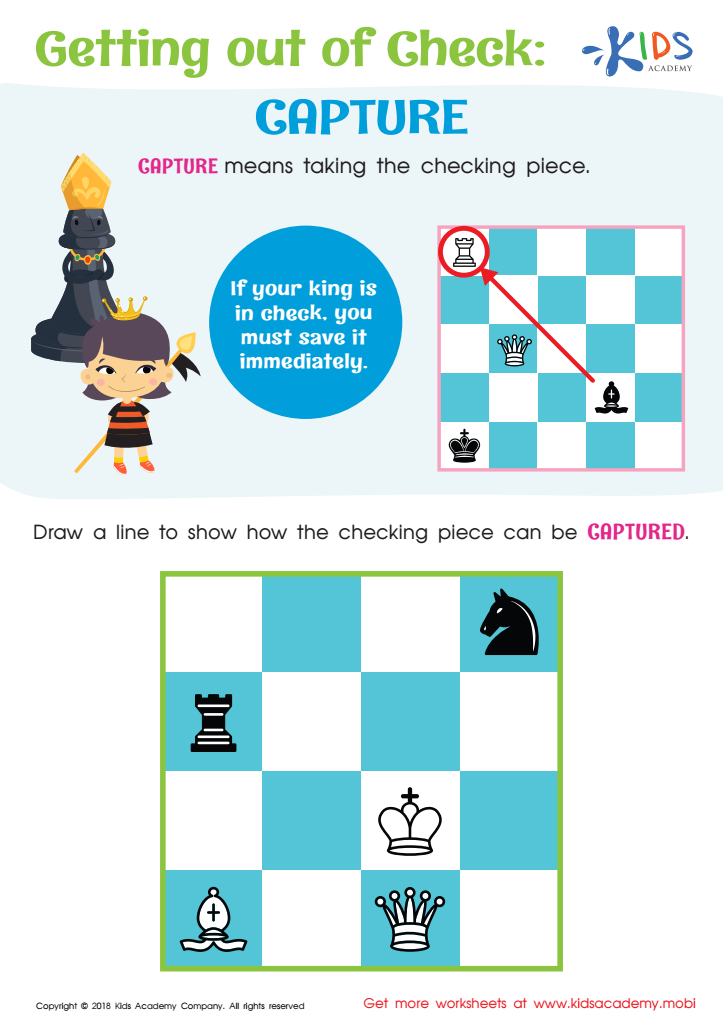
Getting out of Check: Capture



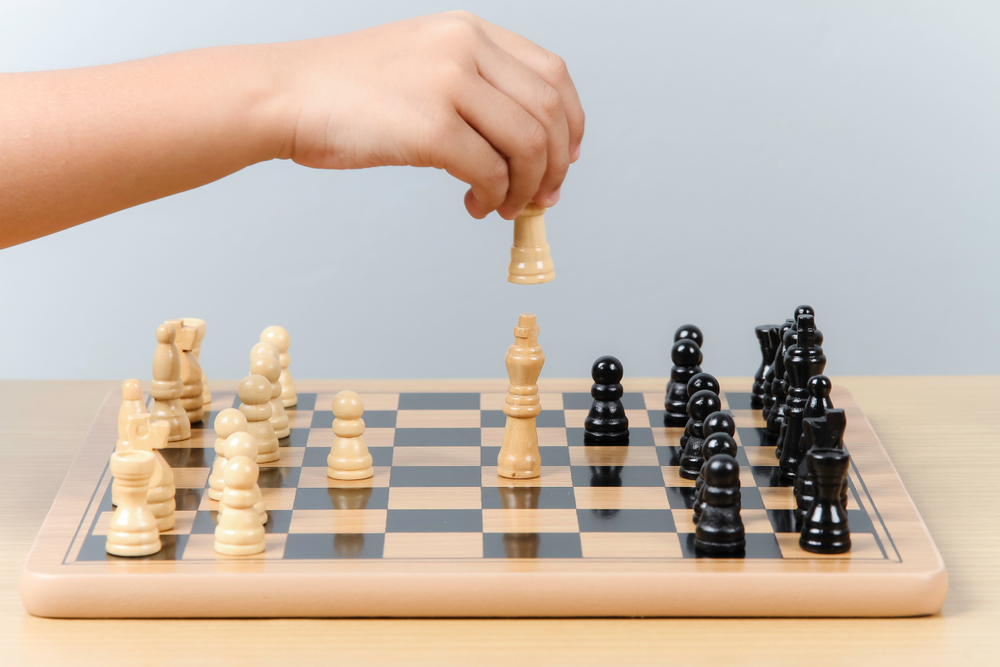



Introducing chess to children aged 4-7 offers numerous educational and developmental benefits that extend beyond mastering the game. Parents and teachers should care about chess strategies because they play a crucial role in fostering early cognitive development, problem-solving abilities, and critical thinking skills. When children learn how to plan and anticipate their opponent's moves, they enhance their ability to think logically and strategically. These skills are transferrable to academic subjects such as mathematics and reading comprehension.
Moreover, chess teaches patience, focus, and perseverance. Young children learn to concentrate on the game for extended periods, improving their attention span. As they encounter challenging situations on the chessboard, they also learn the value of patience and the importance of a methodical approach to problem-solving. Dealing gracefully with winning and losing helps build emotional intelligence and sportsmanship, which are essential life skills.
Furthermore, understanding chess promotes social interaction and cooperation. Playing chess with peers or adults encourages communication and etiquette. Additionally, the game can serve as a bonding activity between parents and children or among classmates, building stronger relationships and fostering a sense of community.
By encouraging early exposure to chess, parents and teachers set the foundation for well-rounded development, instilling skills and values that will benefit children throughout their lives.