Understanding chess rules Chess Worksheets for Ages 4-7
7 filtered results
Difficulty Level
Grade
Age
-
From - To
Subject
Activity
Standards
Introduce your young learner to the world of chess with our "Understanding Chess Rules" worksheets, designed specifically for ages 4-7. These engaging and colorful worksheets simplify key chess rules, enabling children to grasp the basics of this classic game. With fun activities, illustrations, and easy-to-follow instructions, kids will learn about pieces, movement, and gameplay while developing essential cognitive skills like problem-solving and critical thinking. Whether used in the classroom or at home, these worksheets provide a playful approach to discovering chess. Inspire creativity and strategic thinking in your little ones as they embark on their chess journey today!
Favorites
With answer key
Interactive
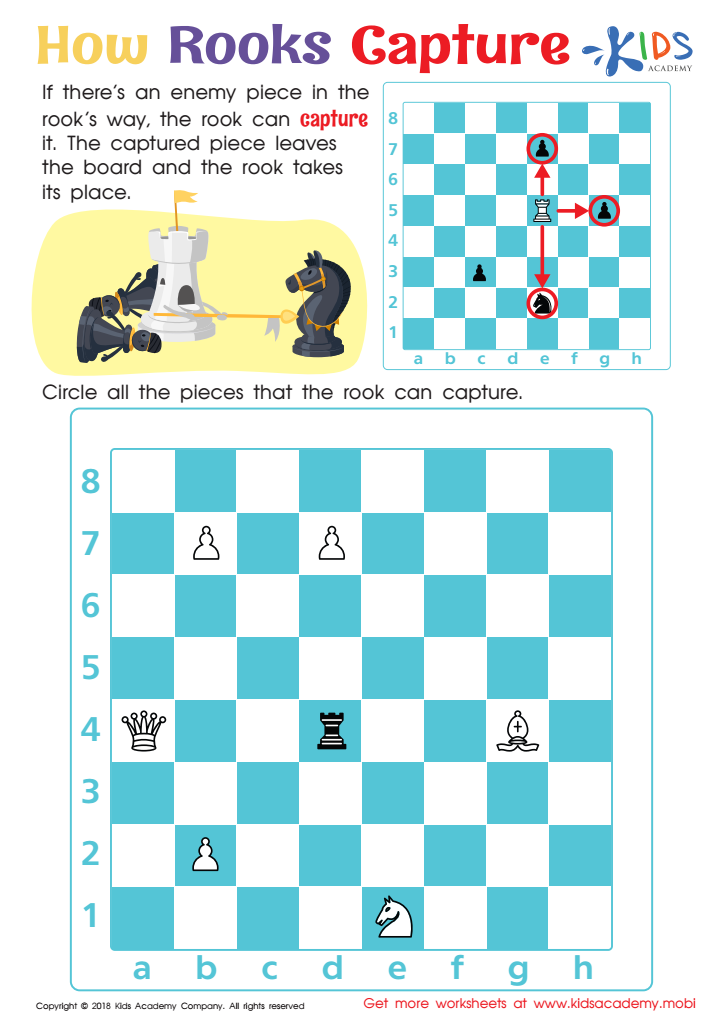
How Rooks Capture Worksheet
Chess is a game that requires skill, concentration and planning. Players must move their chess pieces strategically to capture pieces from their opponent. Do your kids know how to use the rook to capture pieces? Go through the worksheet with them and circle the pieces the rook can capture.
How Rooks Capture Worksheet
Worksheet
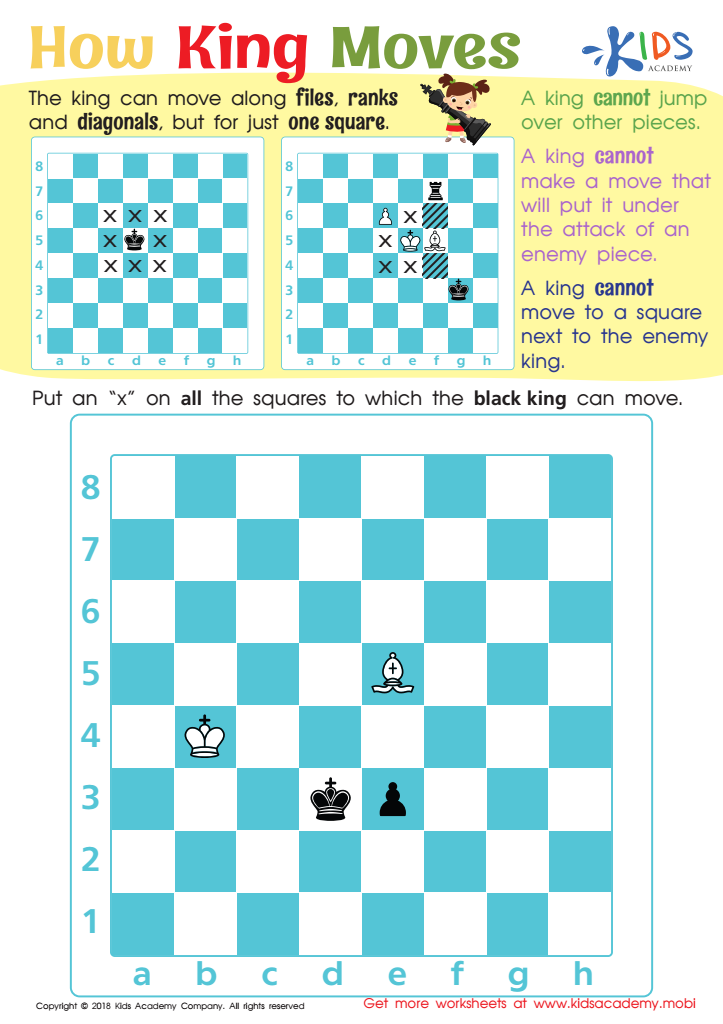
How King Moves Worksheet
Teach your kids the fundamentals of chess with this worksheet! The goal is to checkmate the opponent's king, so it must be protected at all times. The king moves along files, ranks, and diagonals (except one square at a time), and cannot move to a square next to the enemy king. Your kids will soon master the art of checkmate!
 Assign to My Students
How King Moves Worksheet
Worksheet
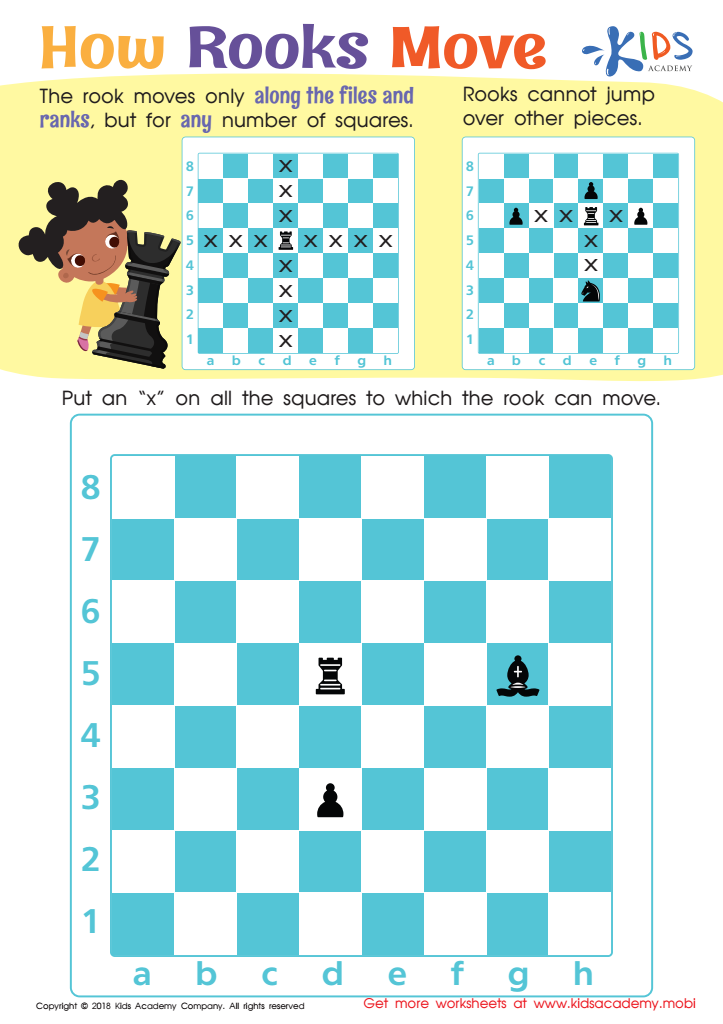
How Rooks Move Worksheet
Help your kids master chess with this worksheet! Explain how rook pieces move along ranks and files, and have them mark the squares it can move to. Note that it can't jump over other pieces. With your guidance, they'll soon understand the game they love.
How Rooks Move Worksheet
Worksheet
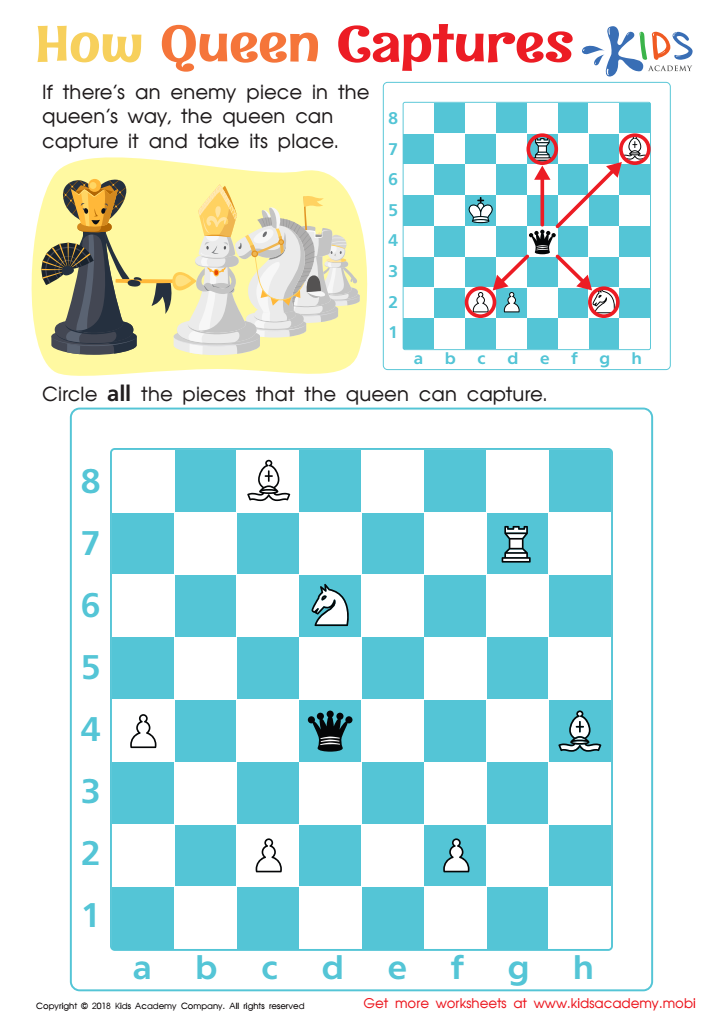
How Queen Captures Worksheet
Chess is a great game for sharpening math skills, strategic thinking, and knowledge of how each piece moves. If your child is interested, introduce them with this worksheet. It demonstrates how the queen can capture opposing pieces, such as another queen, and take their place.
How Queen Captures Worksheet
Worksheet
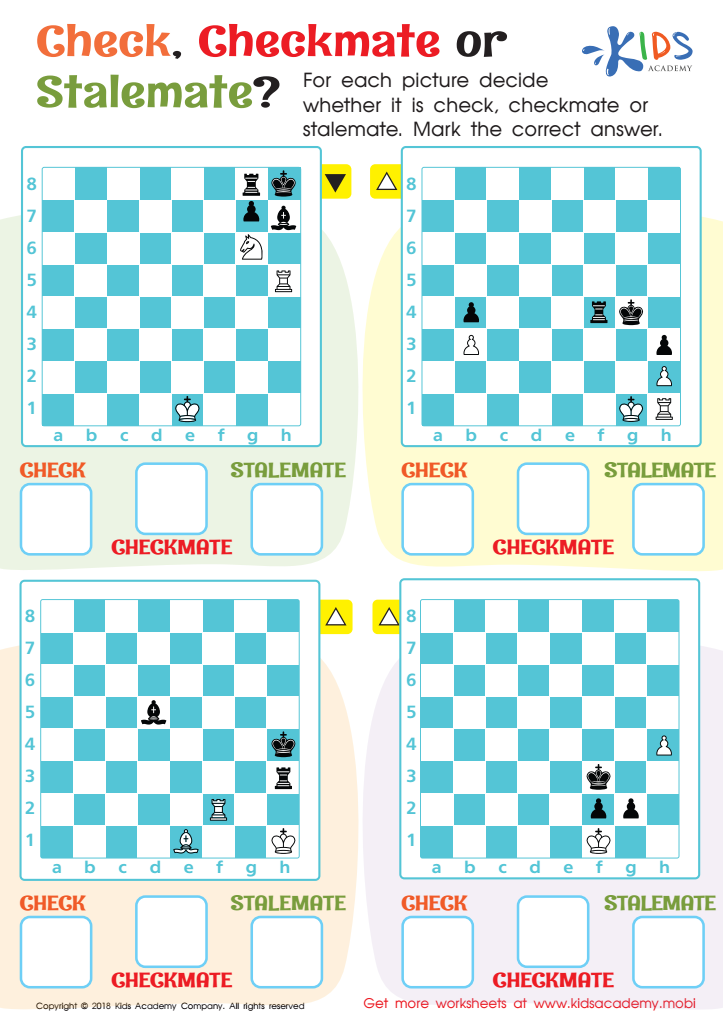
Check. Checkmate or Stalemate? Worksheet
Chess teaches critical thinking, reasoning, and logic skills in a fun way. With this downloadable worksheet, kids can look at chess boards and decide if the sides are in check, checkmate, or stalemate. Win or lose, a stalemate can be a great outcome, and kids can learn and build skills with each move!
Check. Checkmate or Stalemate? Worksheet
Worksheet
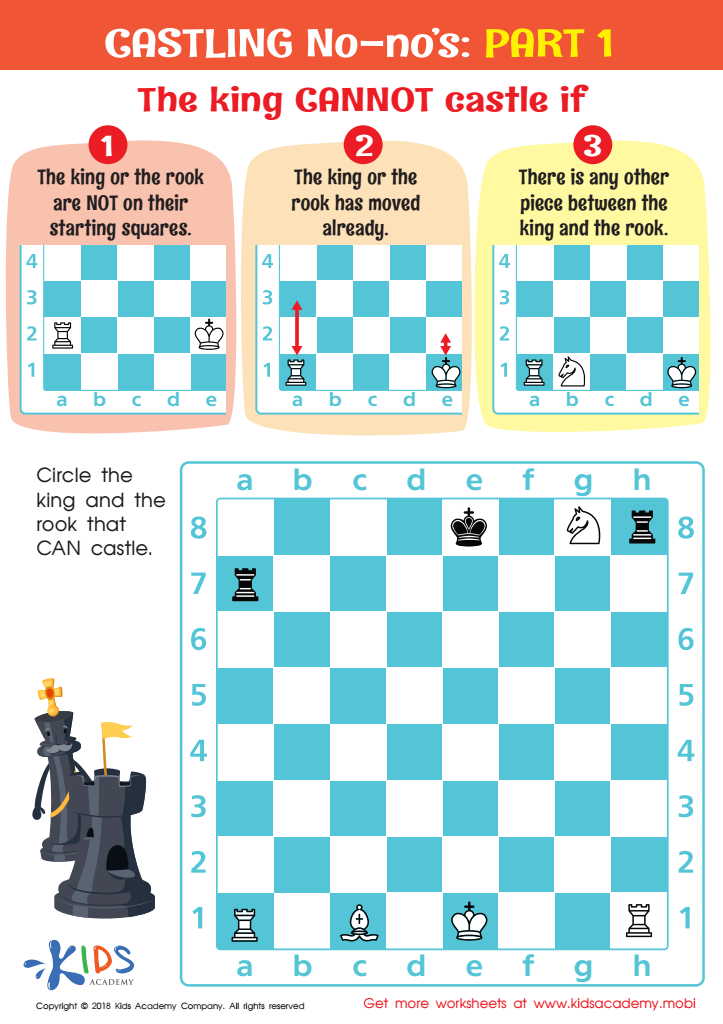
Castling No–no's: Part 1 Worksheet
Help your child learn how to play chess by using this worksheet. Ask them to circle the king and rook that can castle in the picture. Explain that a king cannot castle if the king or rook has moved, or if there is any other piece between them. Knowing these rules will make playing a lot easier!
Castling No–no's: Part 1 Worksheet
Worksheet
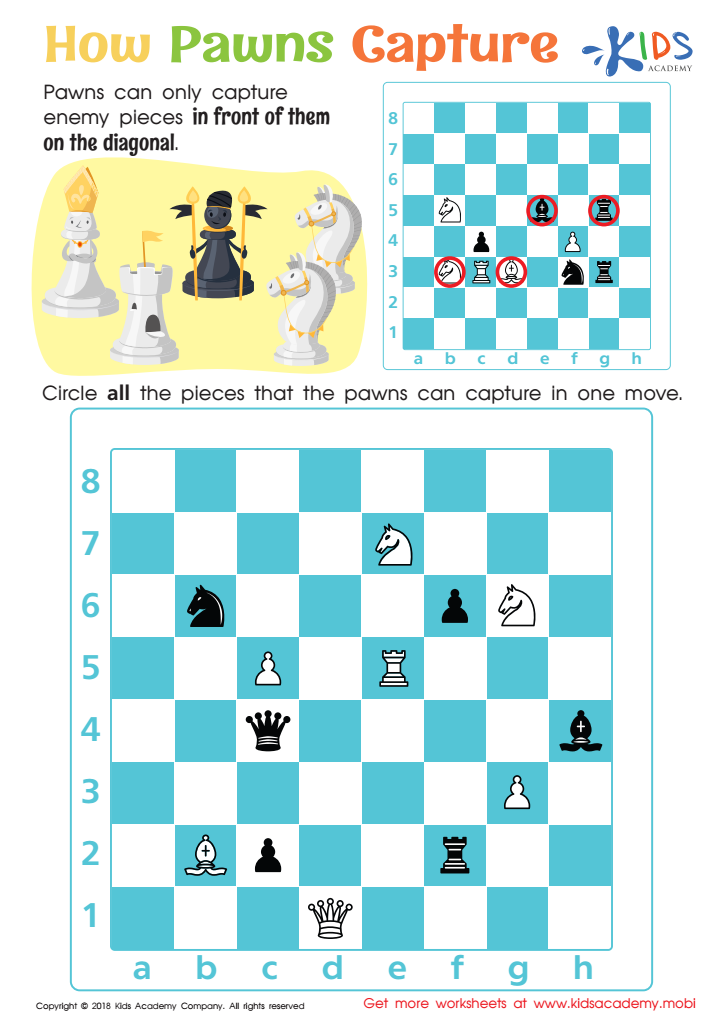
How Pawns Capture Worksheet
Ask your child to circle all the places a pawn can capture in one move on the diagonal. Pawns are limited in the moves they can make, but can still capture enemy pieces. This worksheet will help brush up on their knowledge of the rules of chess.
How Pawns Capture Worksheet
Worksheet
Join Kids Academy for Free
Who is primarily going to use this learning content?







Understanding chess rules for children aged 4-7 is vital for several reasons. Firstly, it promotes critical thinking and problem-solving skills. Chess requires players to strategize, anticipate their opponent's moves, and develop plans, fostering cognitive development in young learners.
Secondly, chess teaches important life skills such as perseverance, patience, and sportsmanship. Children learn to handle wins and losses gracefully, building resilience and emotional intelligence—a skill crucial for their overall well-being.
Moreover, introducing chess at an early age encourages focus and concentration. The game's complexities require sustained attention, helping young minds enhance their ability to concentrate, which can positively impact their performance in other subjects.
Additionally, chess is an inclusive activity that enriches social interactions. It provides opportunities for children to engage with peers, promoting teamwork and communication.
Lastly, understanding chess rules at a young age helps nurture creativity. Each game is a unique experience, encouraging children to think outside the box and approach challenges innovatively.
In essence, incorporating chess into early childhood education supports holistic development, laying a strong foundation for academic success and personal growth. Thus, both parents and teachers should advocate for children to learn the rules of chess.