
Chess strategy understanding Worksheets for Ages 4-7
15 filtered results
Difficulty Level
Grade
Age
-
From - To
Subject
Activity
Standards
Nurture young minds with our engaging Chess Strategy Understanding Worksheets for ages 4-7! Our expertly designed printable resources introduce children to basic chess strategies through fun and interactive activities. Enhance critical thinking, problem-solving, and decision-making skills in a playful manner. Ideal for beginners, these worksheets feature colorful illustrations and step-by-step instructions, making it easy for kids to grasp essential concepts. Unlock your child's potential with our age-appropriate worksheets, and turn learning into an enjoyable adventure. Perfect for home or classroom use, these worksheets lay the foundation for a lifelong love of chess. Visit Kids Academy to get started!
Favorites
With answer key
Interactive
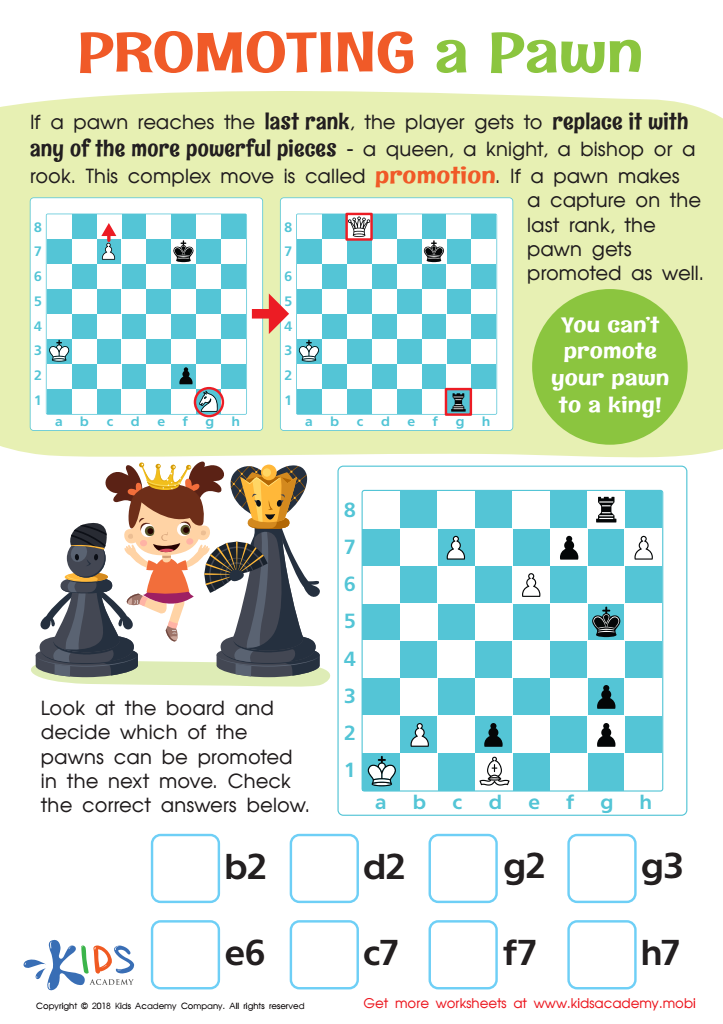
Promoting a Pawn Worksheet
Teach your kids all about pawns with this fun worksheet! Pawns may seem restricted, but experienced players can guide them across the board. If a pawn reaches the last rank, the player can upgrade it to a more powerful piece (e.g. queen, knight), or promote it if it captures an enemy piece. Give them the tools to master the game!
 Assign to My Students
Promoting a Pawn Worksheet
Worksheet
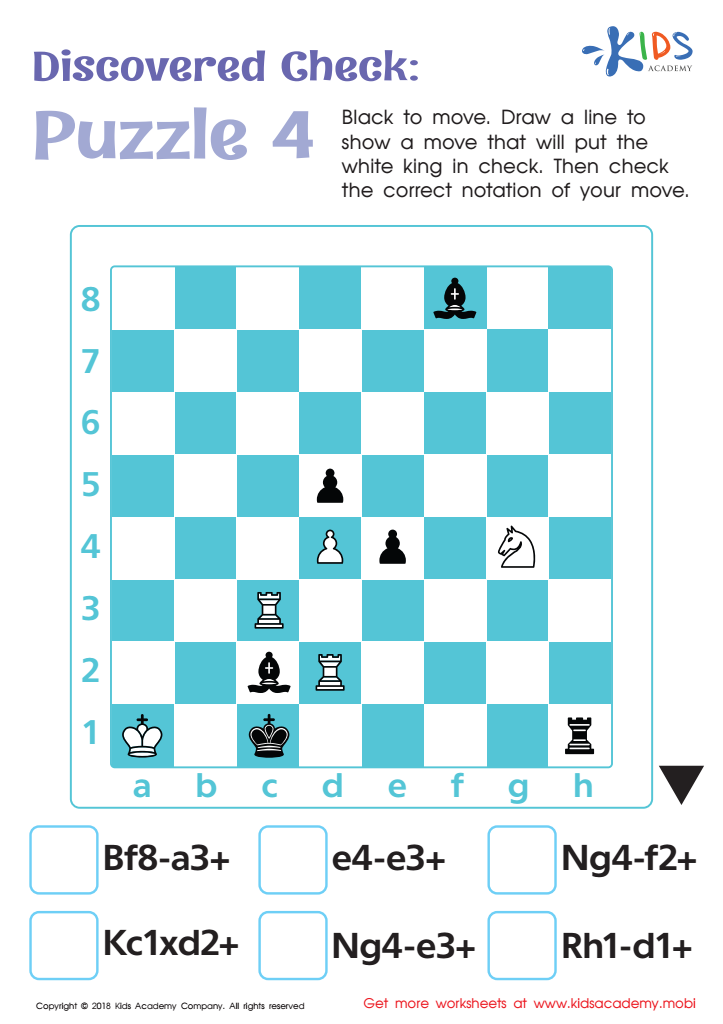
Discovered Check: Puzzle 4 Worksheet
Let your child test their chess skills with this easy worksheet. Have them take control of the black pieces and try to put the white king in checkmate. Ask them to draw a line from their chess piece to the white king, showing the move they'll make, then check the correct answer.
Discovered Check: Puzzle 4 Worksheet
Worksheet
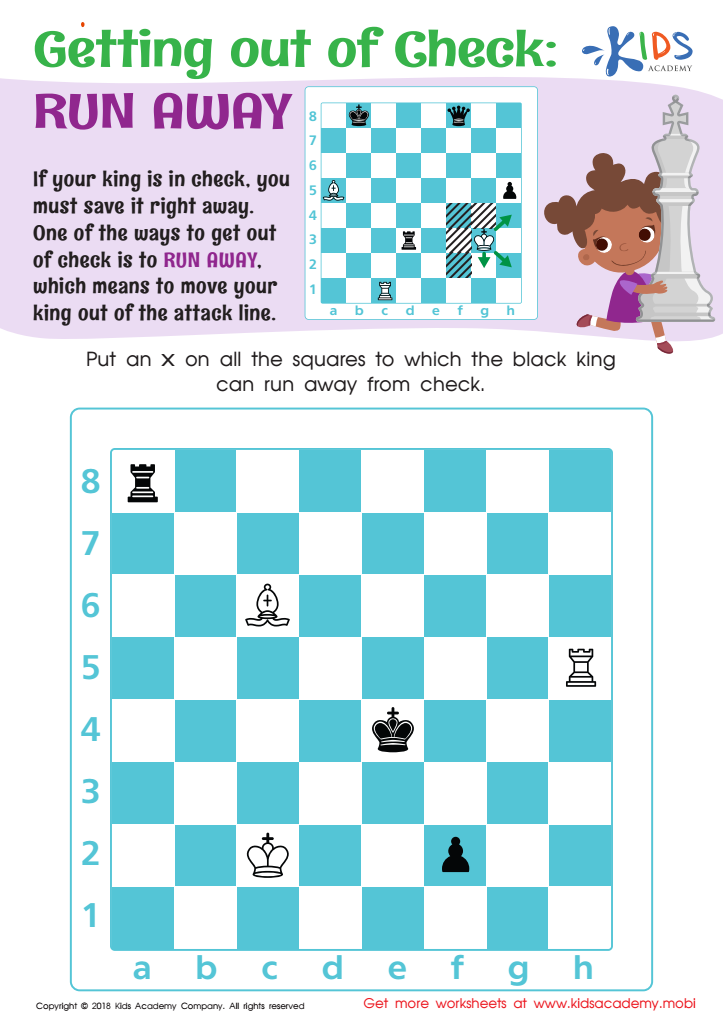
Getting out of Check: Run Away Worksheet
Playing chess boosts your children's brainpower and this worksheet helps them out of sticky situations. It teaches them how to flee with their king to avoid checkmate, as well as how to initiate their own strategic moves on the board. Get your kids on the road to success with this helpful PDF.
Getting out of Check: Run Away Worksheet
Worksheet
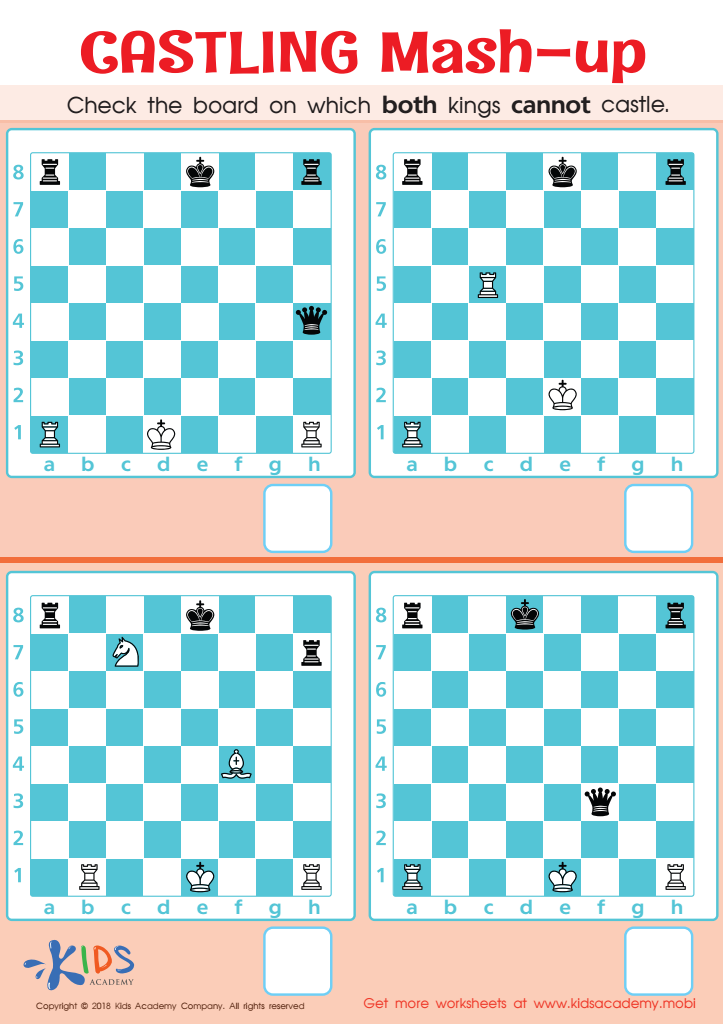
Castling Mash–up Worksheet
Before starting the worksheet, ensure your child understands castling in chess. If not, take time to explain it. Once they have a clear grasp of the rules, help them complete the exercise. Check the board to ensure that neither king can castle.
Castling Mash–up Worksheet
Worksheet
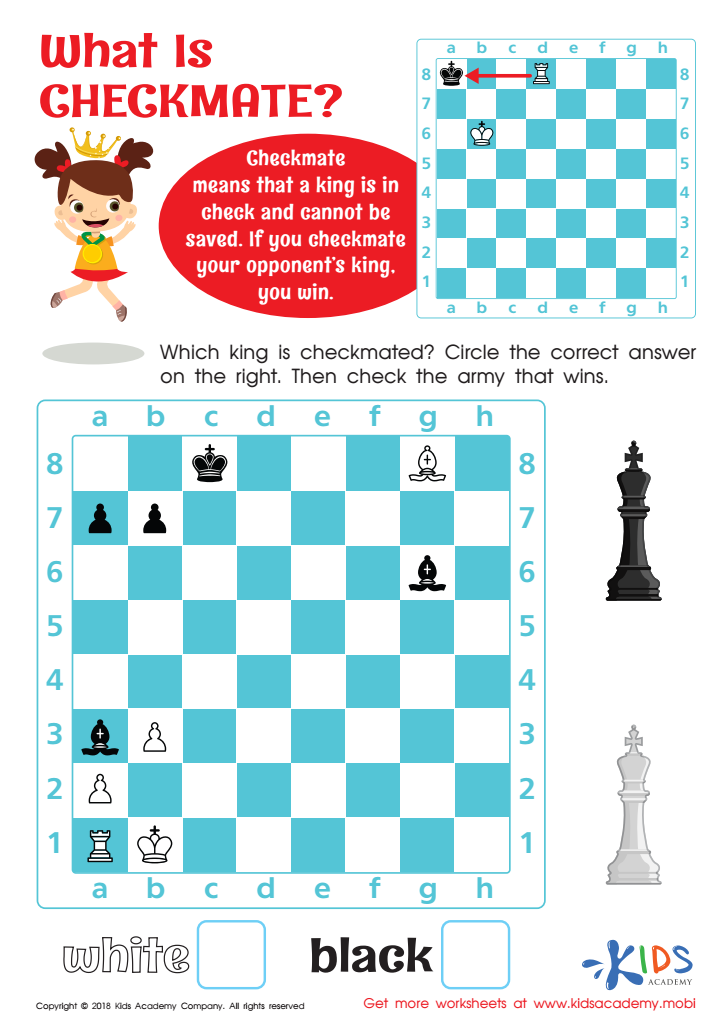
What is Checkmate? Worksheet
This downloadable PDF worksheet lets your child practice identifying when a king is checkmated and how it looks on a chessboard. Checkmate is the best move and with this colorful worksheet, they'll learn that it means their opponent's king is in check and cannot be saved, so they can win!
What is Checkmate? Worksheet
Worksheet
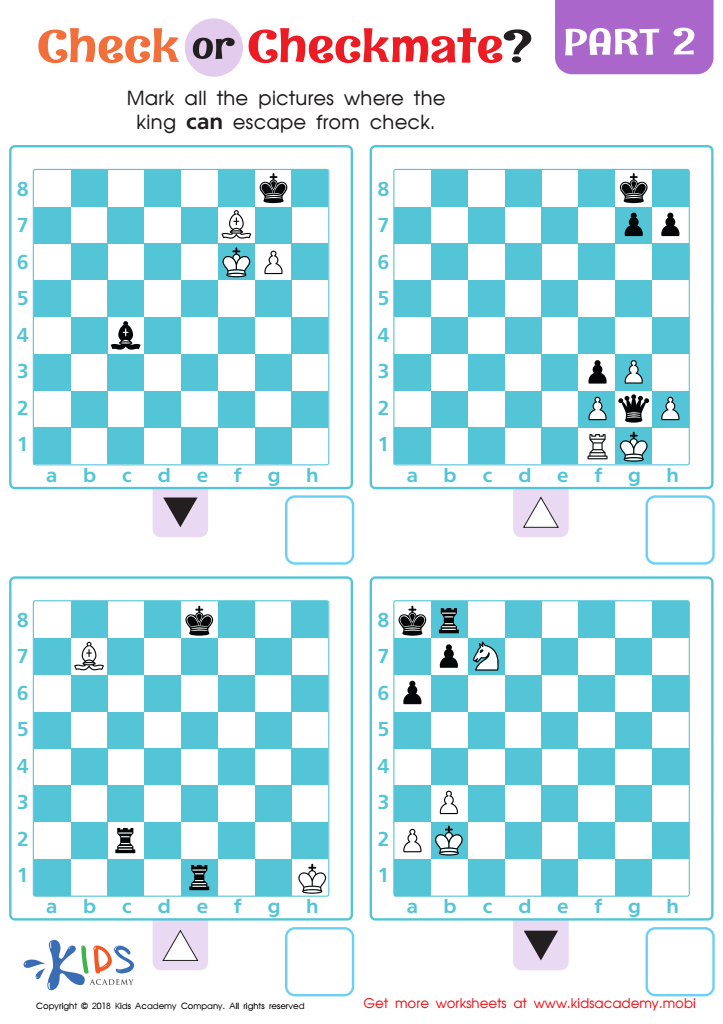
Check or Checkmate: Part 2 Worksheet
Chess is a fun and competitive way for your child to practice strategic thinking, problem-solving and critical reasoning. This free PDF will help them sharpen their skills, by analyzing boards and marking ones where the king can escape check. An invaluable skill when playing on real boards.
Check or Checkmate: Part 2 Worksheet
Worksheet
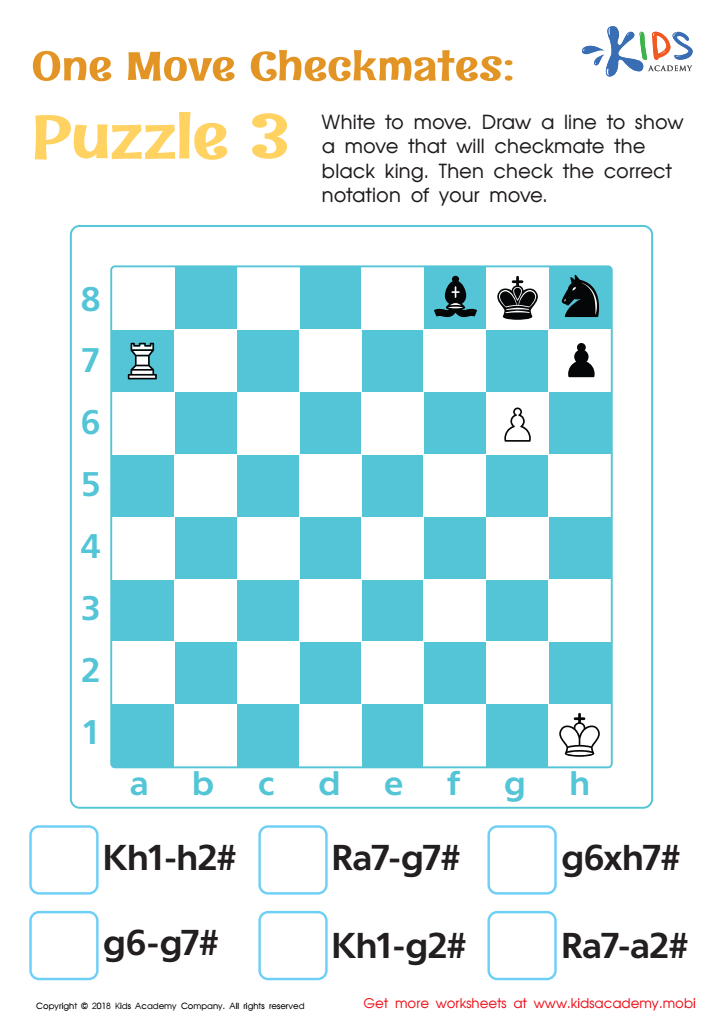
One Move Checkmates: Puzzle 3 Worksheet
Boost your child's critical thinking and strategy skills with this fun puzzle activity. They'll use their logical thinking to plot ways to checkmate the black king, and then check their answer with the given choices. A great way to improve their skills and have a blast doing it!
One Move Checkmates: Puzzle 3 Worksheet
Worksheet
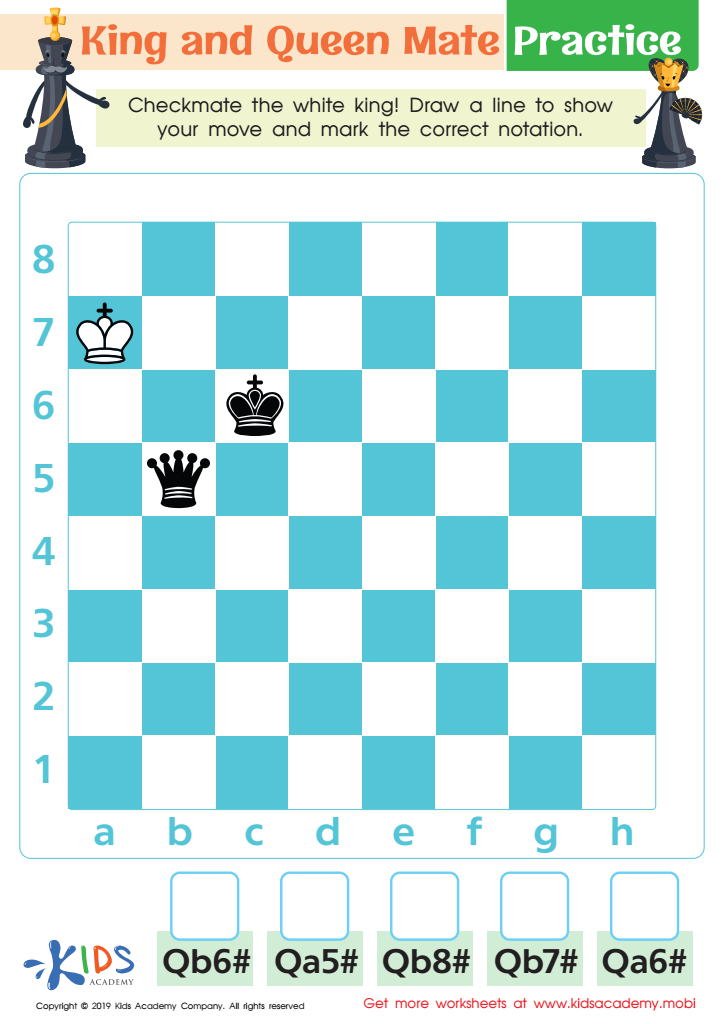
King and Queen Mate Practice Worksheet
Learning chess can open up a world of strategy, problem-solving and reasoning for your child! Our free worksheet gives them the opportunity to practice checkmating with their king and queen pieces. It also helps them develop fine-motor skills, as they draw lines to show the right moves and check off the correct notation. All without screens!
King and Queen Mate Practice Worksheet
Worksheet

Discovered Check: Puzzle 2 Worksheet
This worksheet exercise will stimulate your child's thinking and let them show off their chess skills. Ask them to use the white pieces and draw a line, pointing to the move that will put the black king in checkmate. Then they should check the correct option. Challenge your child and help them learn more about chess with this fun and educative activity.
Discovered Check: Puzzle 2 Worksheet
Worksheet
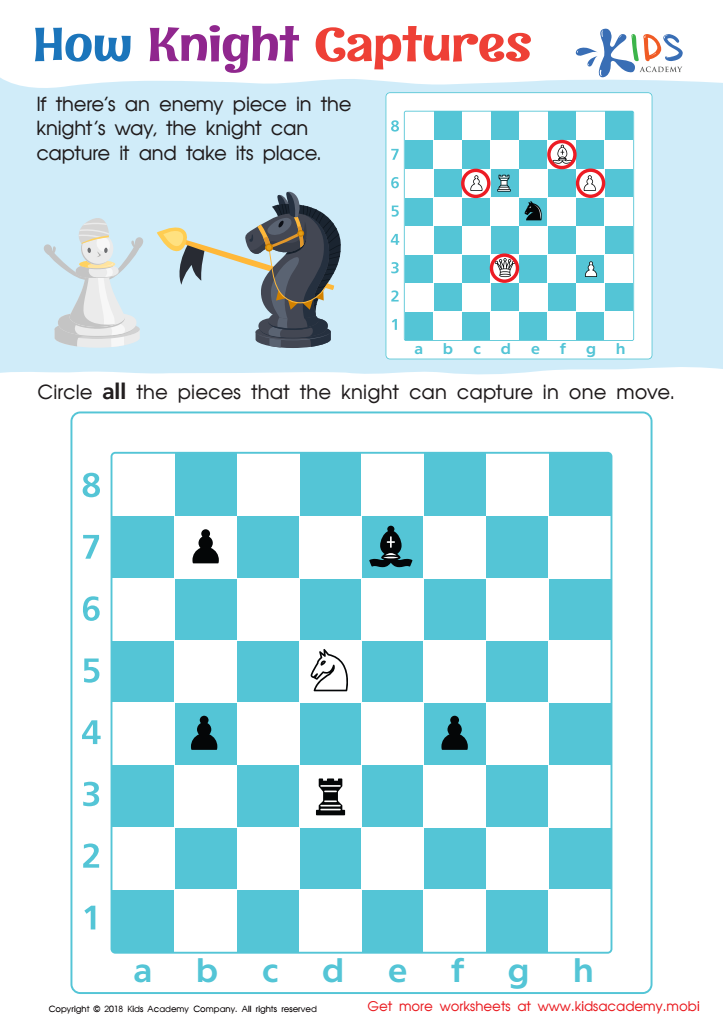
How Knight Captures Worksheet
Test your child's knowledge of chess pieces by asking them to identify the knight. It is shaped like a horse and its goal is to capture the enemy king in order to win the game. The knight has the advantage of being able to jump over other pieces, taking them out and taking their place. See how many pieces the knight can capture in one move with this worksheet.
How Knight Captures Worksheet
Worksheet
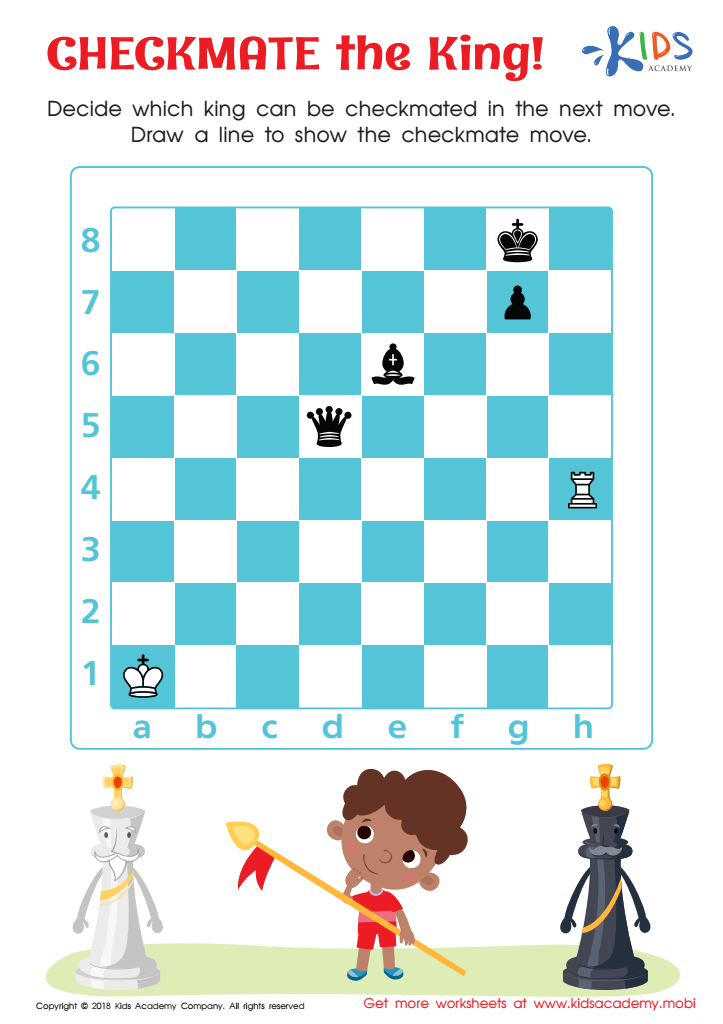
Checkmate the King Worksheet
Chess is great for growing problem-solving and critical thinking skills in children, and it's even better if they have fun winning! This worksheet will help kids practice checkmating their opponent's king. They can use the sample board to draw the line of their winning move. Who doesn't love being a winner?!
Checkmate the King Worksheet
Worksheet
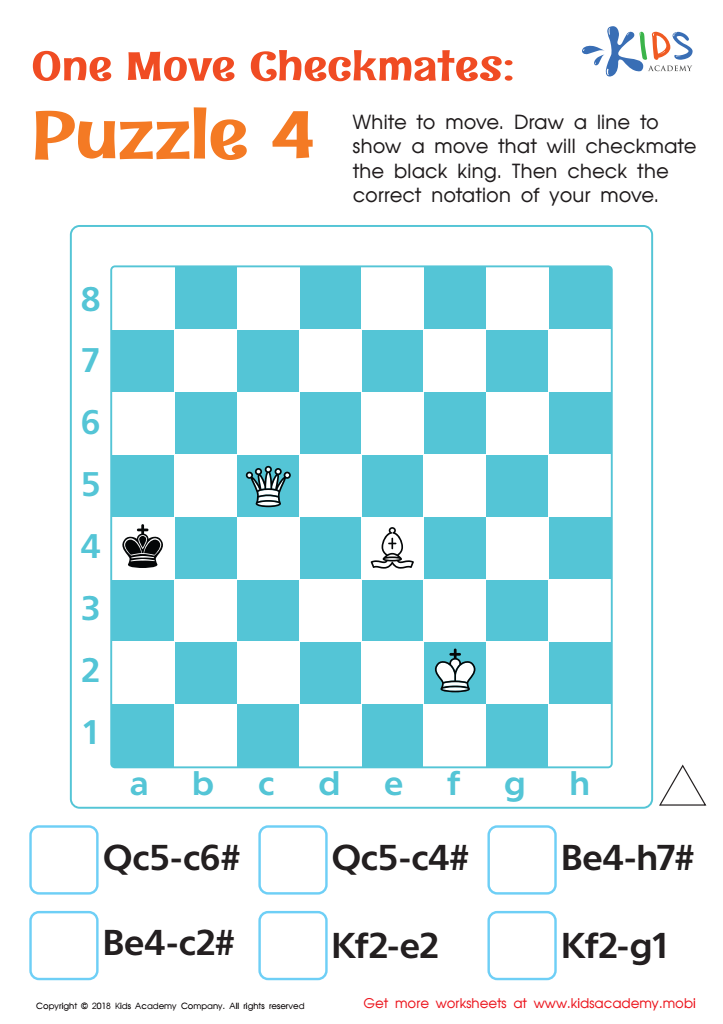
One Move Checkmates: Puzzle 4 Worksheet
Want to challenge your logistician? This engaging PDF worksheet tests their critical thinking, strategy and visual-spatial skills. They must plot to overtake and checkmate the king and use the answer choices to check if they've strategized correctly. It's a fun way to build problem-solving skills needed for higher-level math.
One Move Checkmates: Puzzle 4 Worksheet
Worksheet
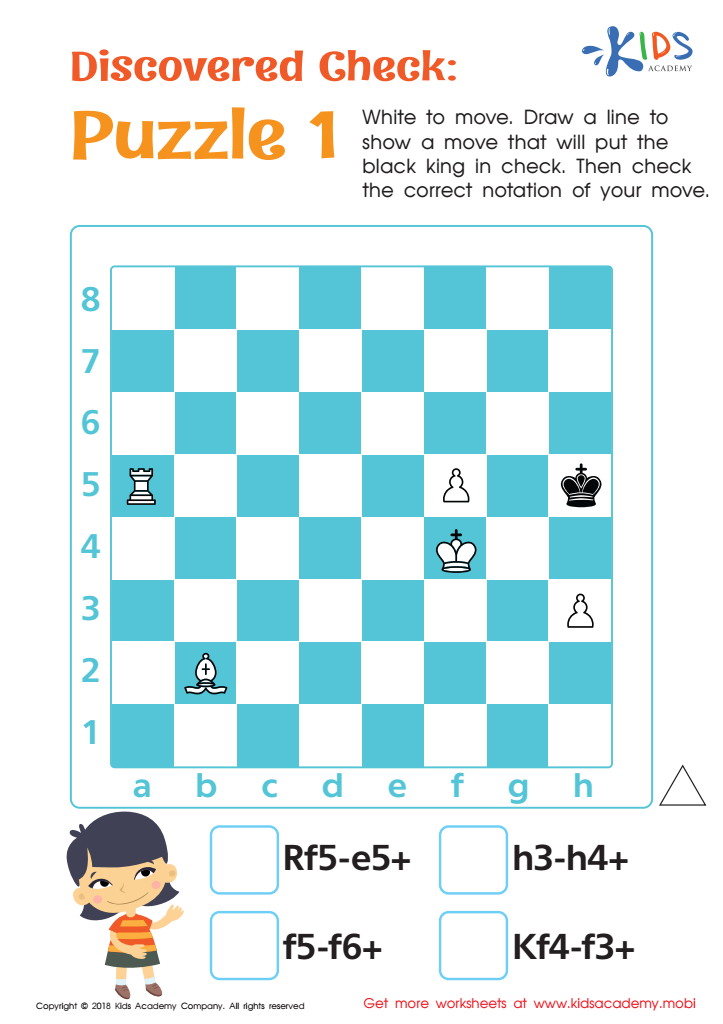
Discovered Check: Puzzle 1 Worksheet
Chess is an excellent way to engage your kids' brains and strengthen thinking skills. This worksheet is ideal for inspiring and growing their interest in the game. Have your child take the white pieces and move them to checkmate the black king. Compare their move against the provided notations to check accuracy.
Discovered Check: Puzzle 1 Worksheet
Worksheet
Castling: Protecting the King Worksheet
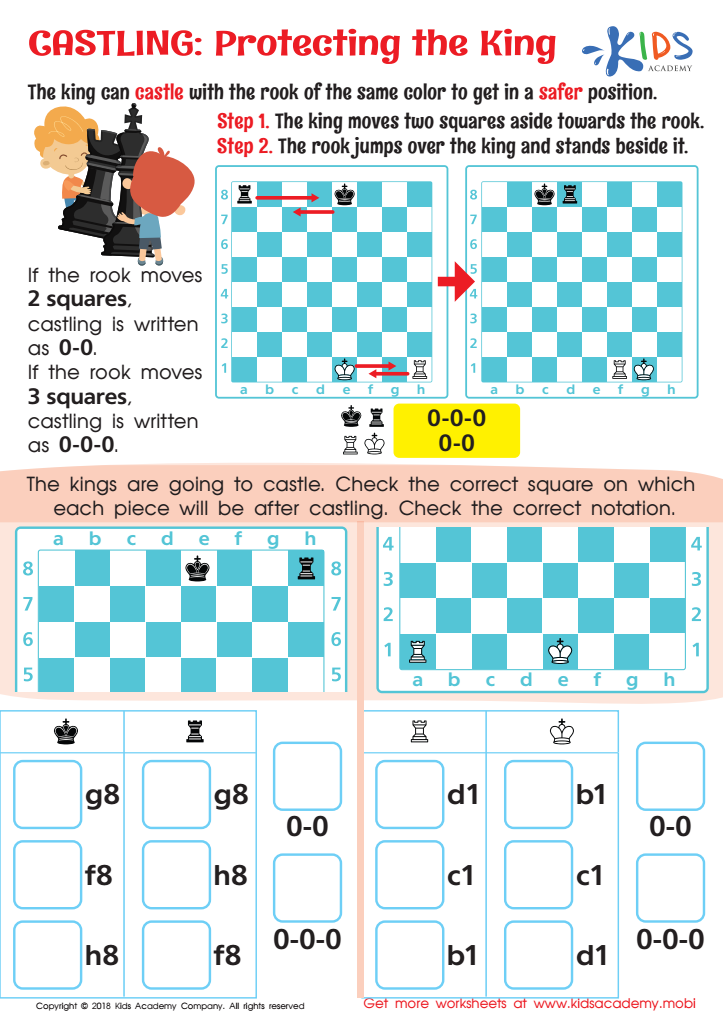
Castle your king with the rook to get into a safer position! Write 0-0 for a two-square move, or 0-0-0 for a three-square move. Look at the worksheet with your child; on the first chessboard, the king has moved two squares and the rook is beside it. On the second, the rook has jumped over the king. Let your child use their castling knowledge to answer the questions in the easy pdf.
Castling: Protecting the King Worksheet
Worksheet
Getting out of Check: Capture
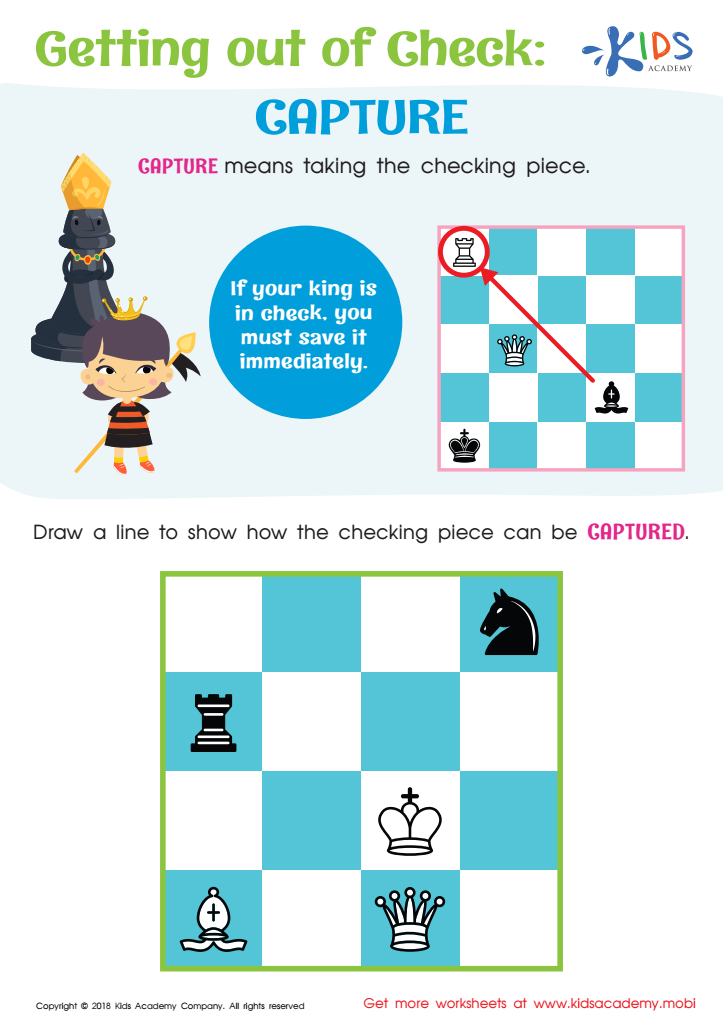
Kids love chess because it combines strategy and the thrill of outwitting their opponents! This free chess strategy worksheet teaches kids how to protect and capture the threatening piece when their king is in danger. The downloadable includes sample boards to practice with. Get it today and have your chess whiz mastering the game in no time!
Getting out of Check: Capture
Worksheet
Join Kids Academy for Free
Who is primarily going to use this learning content?







Parents and teachers should consider introducing chess strategy to children aged 4-7 because it offers a multitude of developmental benefits. First and foremost, chess enhances cognitive abilities—it demands critical thinking, problem-solving, and long-term planning, thereby giving young minds a mental workout. These cognitive skills are fundamental building blocks for academic success.
Moreover, chess fosters patience and focus. Young children often struggle with attention, but the game's requirement to think several steps ahead encourages sustained concentration on complex tasks. This, in turn, can improve their performance in academic settings and other areas that require dedicated attention.
Additionally, chess can improve emotional intelligence. When children learn to win gracefully and lose with dignity, they develop resilience and emotional control. It teaches them the value of hard work and perseverance, as success generally requires effort and practice.
Socially, chess offers a platform for children to interact with peers in a structured yet engaging environment, promoting turn-taking, respecting others, and collaborative problem-solving. Altogether, an early introduction to chess equips children with a balanced head start both academically and socially, preparing them well for the multifaceted challenges of life. These early lessons also nurture a lifelong appreciation for this intellectually enriching game.








