
Constellation identification Worksheets for Ages 4-7
3 filtered results
Difficulty Level
Grade
Age
-
From - To
Subject
Activity
Standards
Discover our engaging Constellation Identification Worksheets designed specifically for children ages 4-7! These fun, age-appropriate printables encourage young learners to explore the night sky and develop essential observational skills. Each worksheet introduces popular constellations through colorful illustrations and interactive activities that promote creativity and critical thinking. Whether your child is learning to trace shapes or identifying star patterns, these worksheets offer a delightful way to learn about astronomy within a curriculum-focused framework. Perfect for both classroom and home settings, our resources aim to spark curiosity and instill a love of learning about the universe. Download and get started today!
Favorites
With answer key
Interactive
 Assign to My Students
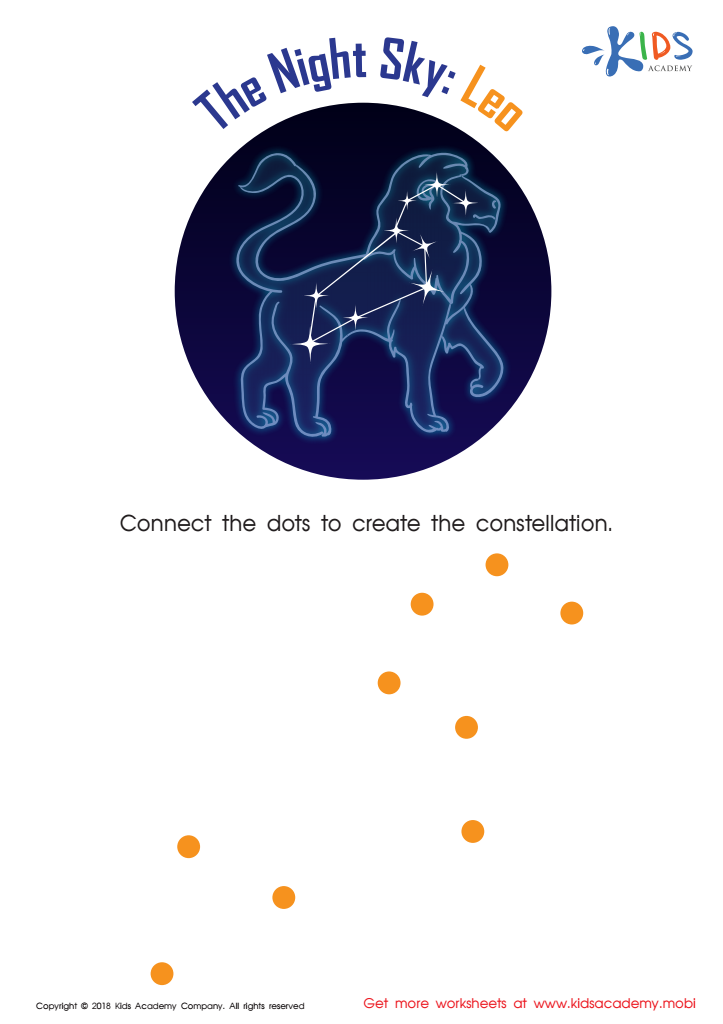
The Night Sky: Leo Worksheet
Let your kids explore the wonders of the stars with this fun worksheet! They'll connect the dots to create the constellation Leo. Night gazing instruments, a telescope or this printout can help your kids learn about constellations and horoscopes. Download the worksheet and let the star watching begin!
The Night Sky: Leo Worksheet
Worksheet
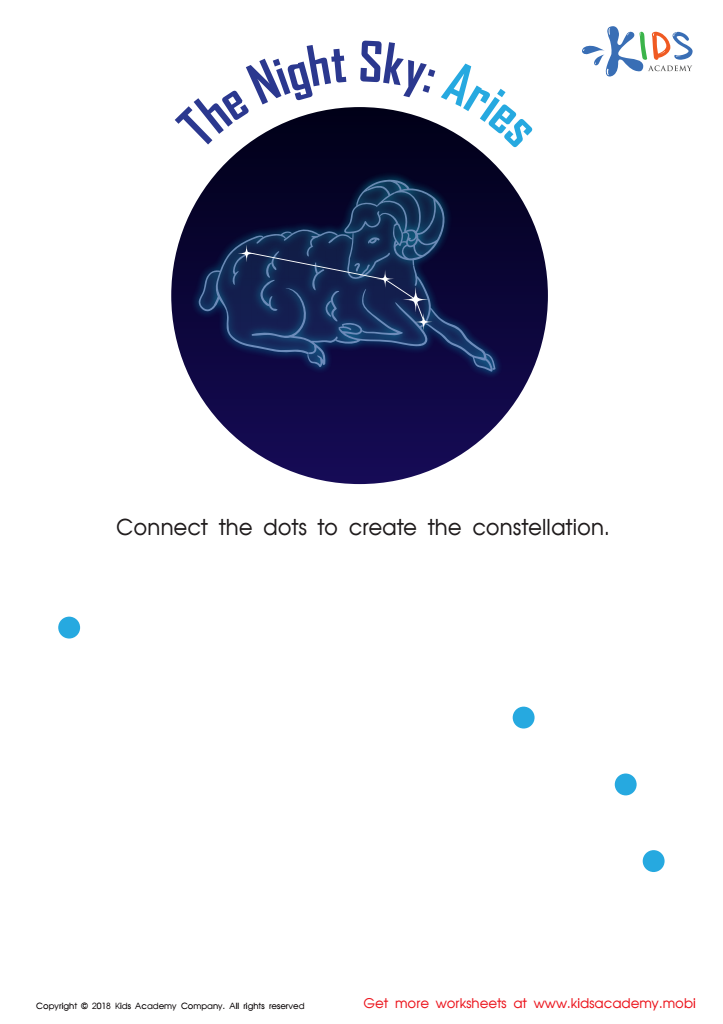
The Night Sky: Aries Worksheet
Does your child know constellations and horoscope? If you've got them interested in horoscope readings and star gazing, the Aries constellation in the pdf should be familiar. Have them look at the picture and identify it. If they can't, tell them it's Aries. Then, help them connect the dots to form the constellation.
The Night Sky: Aries Worksheet
Worksheet
Join Kids Academy for Free
Who is primarily going to use this learning content?







Constellation identification is an engaging educational activity that offers numerous benefits for children aged 4-7. Firstly, it fosters curiosity about the universe, encouraging children to ask questions about stars, planets, and the cosmos. By exploring constellations, children develop an early appreciation for astronomy and science, laying the groundwork for future learning.
Additionally, identifying constellations promotes critical thinking and observational skills. Children learn to distinguish between different stars and their patterns, enhancing their ability to recognize shapes and details in their environment. This skill set can be applied across various subjects, from mathematics to art.
Moreover, constellation identification can strengthen social skills. Activities such as stargazing with peers or family foster teamwork and collaboration, encouraging children to share findings and insights. It also serves as a gateway for discussions about mythology and cultural stories tied to specific constellations, enriching children's cultural literacy and creativity.
Lastly, in an increasingly digital world, connecting with nature through stargazing helps promote mindfulness and imagination in young learners. By caring about constellation identification, parents and teachers contribute not only to children's educational development but also to their emotional and social growth, making the activity valuable and impactful.








