Developing problem-solving skills Worksheets for Ages 4-7
9 filtered results
-
From - To
Our "Developing Problem-Solving Skills Worksheets for Ages 4-7" are expertly designed to nurture critical thinking in young learners. These engaging activities promote cognitive development and enhance reasoning abilities through fun and interactive tasks. Each worksheet focuses on building foundational skills such as pattern recognition, sequencing, and logical reasoning, making learning enjoyable and effective. Perfect for both classroom and home use, our worksheets guide children through exciting problem-solving challenges, helping them gain confidence and proficiency. Give your child a head start in lifelong learning with our quality resources that make mastering problem-solving an adventure! Explore our collection today at Kids Academy.
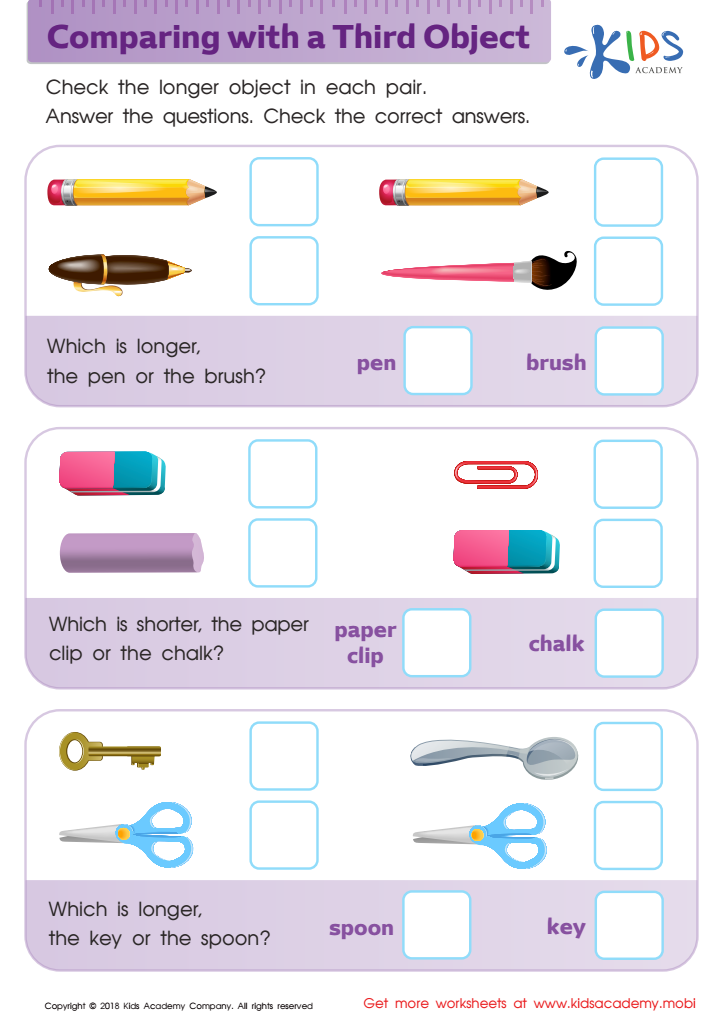
Comparing with a Third Object Worksheet
 Assign to My Students
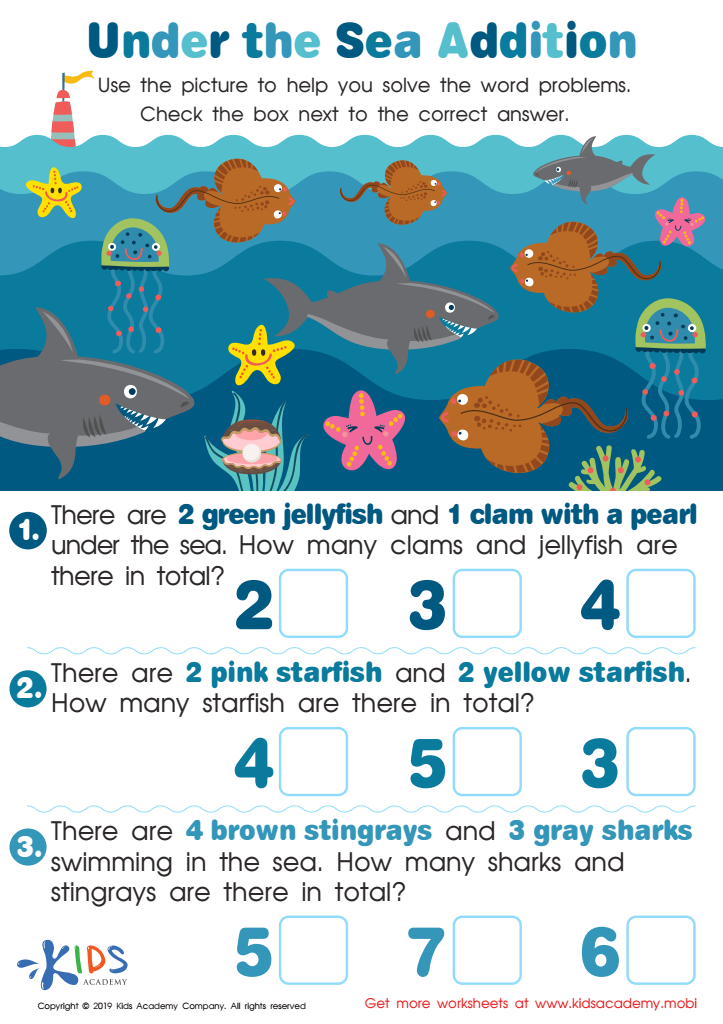
Under the Sea Addition Worksheet
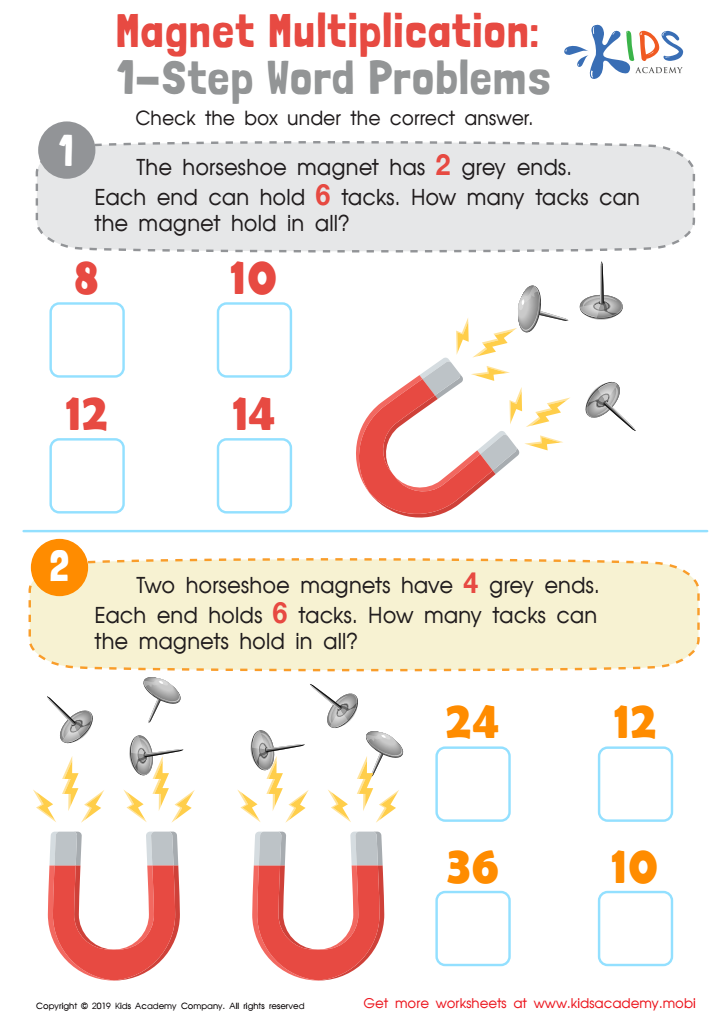
Magnet Multiplication: 1-Step Word Problems Worksheet







Developing problem-solving skills in children aged 4-7 is crucial for their cognitive, emotional, and social growth. At this stage, children's brains are rapidly developing and are highly adaptable, making it the perfect time to nurture key skills that form the foundation for future learning and life challenges.
For one, problem-solving enhances critical thinking and creativity. When children encounter a problem, they learn to think independently, evaluate different solutions, and try out their ideas, which fosters creativity and intellectual flexibility. These skills are essential for academic success, as they enable children to understand and apply concepts in reading, mathematics, science, and beyond.
Emotionally, knowing how to solve problems builds resilience and self-confidence. When children solve problems on their own, they experience a sense of accomplishment, which boosts their self-esteem and motivates them to take on new challenges. This resilience is vital for their well-being and future ability to handle stress and setbacks.
Socially, problem-solving skills lead to better peer relationships. Children who can negotiate, compromise, and find solutions in social situations are more likely to build positive interactions and friendships. They learn empathy, as they need to consider others' perspectives and feelings while finding solutions.
In short, cultivating problem-solving skills in young children lays the groundwork for academic achievements, emotional strength, and healthy social interactions, equipping them for a successful and balanced life.








