History knowledge Worksheets for Ages 4-7
4 filtered results
-
From - To
Discover engaging History Knowledge Worksheets for Ages 4-7 from Kids Academy! Our expertly designed printable worksheets make learning history fun and interactive for young minds. Covering fundamental topics like key historical figures, events, and cultures, these worksheets aim to cultivate early historical awareness and curiosity. Activities such as coloring pages, matching exercises, and simple timelines make complex subjects accessible and enjoyable. Perfect for classrooms or home learning, our resources help children develop critical thinking and observational skills. Embrace a structured yet playful approach to history education, setting the foundation for a lifelong love of learning. Start building young historians today!
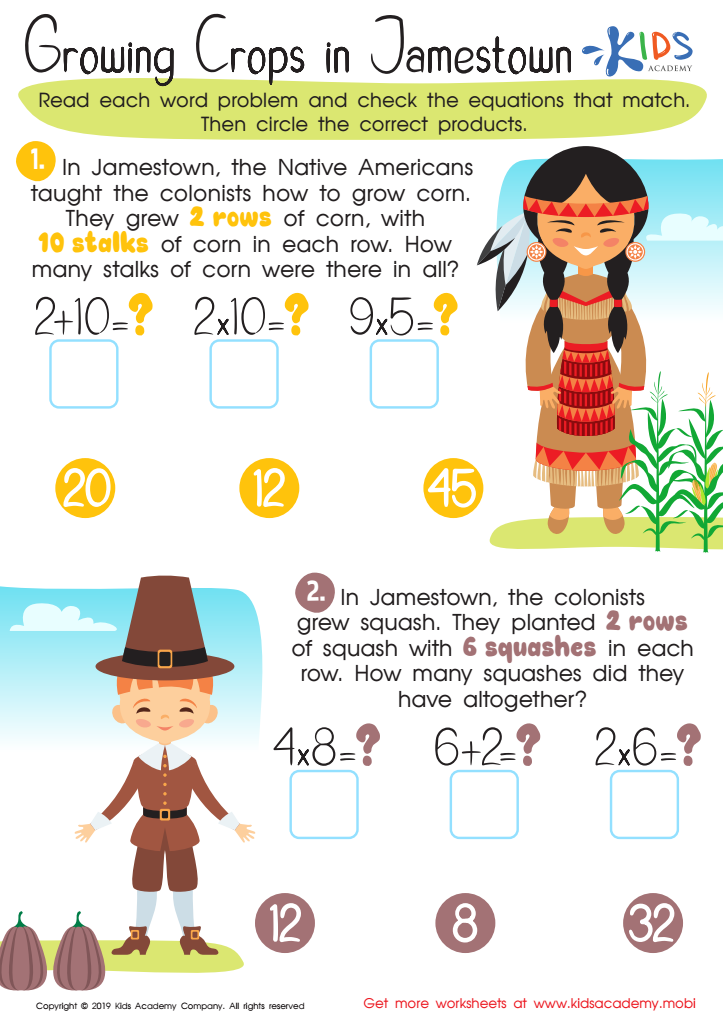
Growing Jamestown Worksheet
 Assign to My Students








History knowledge is essential for young children aged 4-7 for several key reasons that significantly influence their development and future learning. First, history provides foundational stories that cultivate a sense of identity and belonging. Children learn about their own family's past, community traditions, and cultural heritage, fostering pride and a deeper connection to their roots.
Secondly, history encourages important cognitive and social skills. Listening to historical narratives enhances children's listening abilities, memory, vocabulary, and comprehension. Stories about diverse people and events also promote empathy, as children begin to understand different perspectives and experiences.
Moreover, understanding history at an early age sets the stage for critical thinking. Children learn to ask questions, make connections between past and present, and recognize cause-and-effect relationships. These analytical skills are vital across all areas of learning and life.
Historical knowledge also contributes to a child's sense of time, helping them understand concepts of change and continuity. This chronological awareness aids their ability to sequence events, an important skill in storytelling, organizing thoughts, and even understanding basic math and science concepts.
In conclusion, integrating history into early education enriches a child's comprehension of the world, builds essential skills, and lays a positive foundation for lifelong learning and responsible citizenship. It's a vital investment in their holistic growth.








