Learning addition Worksheets for Ages 4-7
7 filtered results
-
From - To
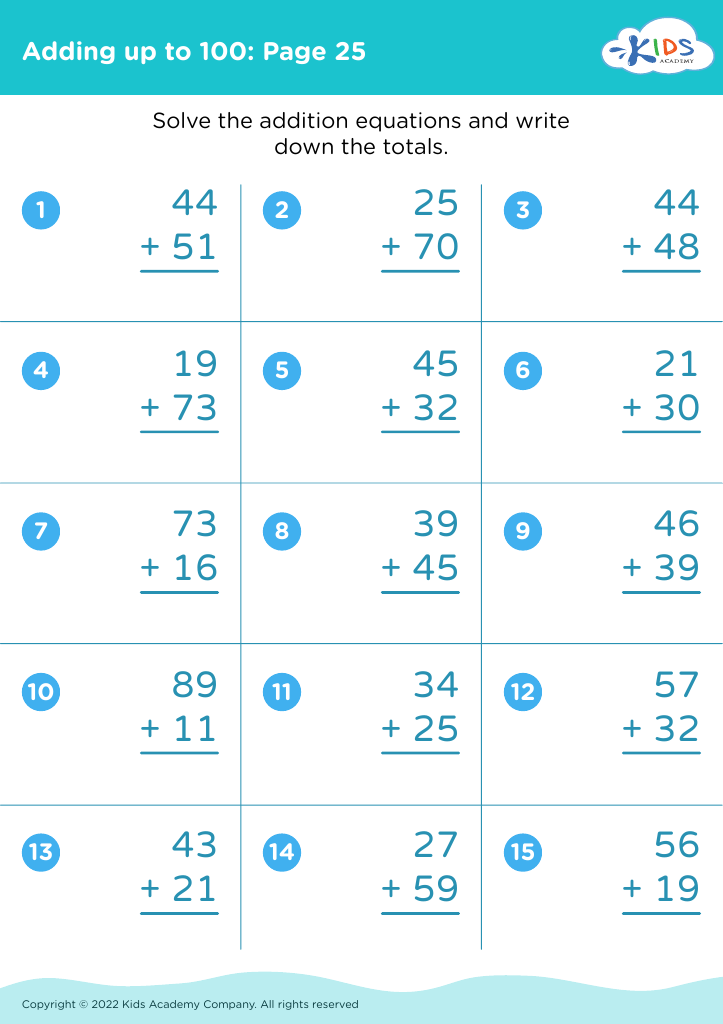
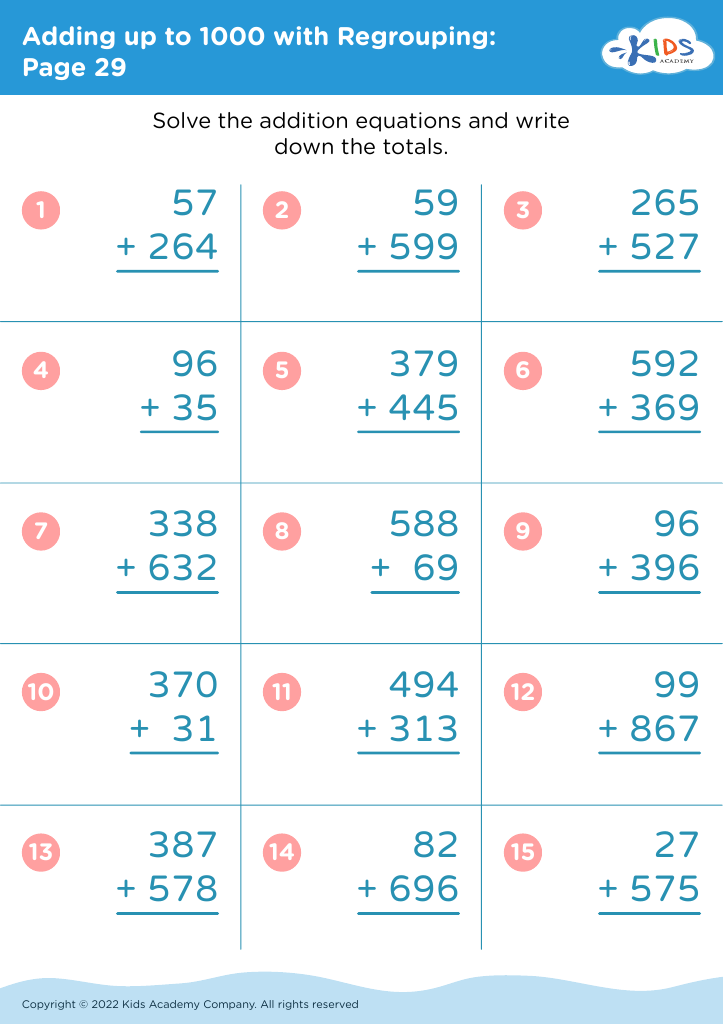
Discover our engaging Learning Addition Worksheets for children aged 4-7, designed to make math fun! These worksheets feature colorful illustrations and interactive activities that help young learners grasp basic addition concepts. Each worksheet focuses on building foundational skills, such as counting, number recognition, and problem-solving. Perfect for home practice or classroom use, our resources support a variety of learning styles. Encourage your child's confidence in mathematics with exercises that gradually increase in challenge. Start your little one's journey to math mastery with our thoughtfully crafted addition worksheets, ensuring a solid understanding while fostering a love for learning!
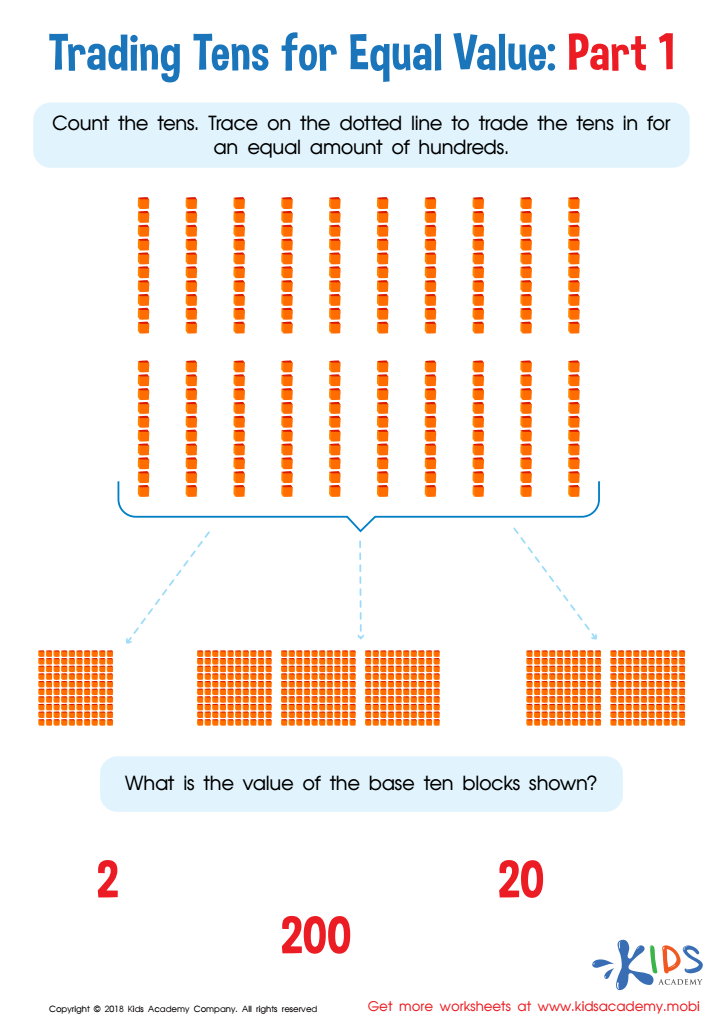
Trading Tens for Equal Value Worksheet: Part 1
 Assign to My Students
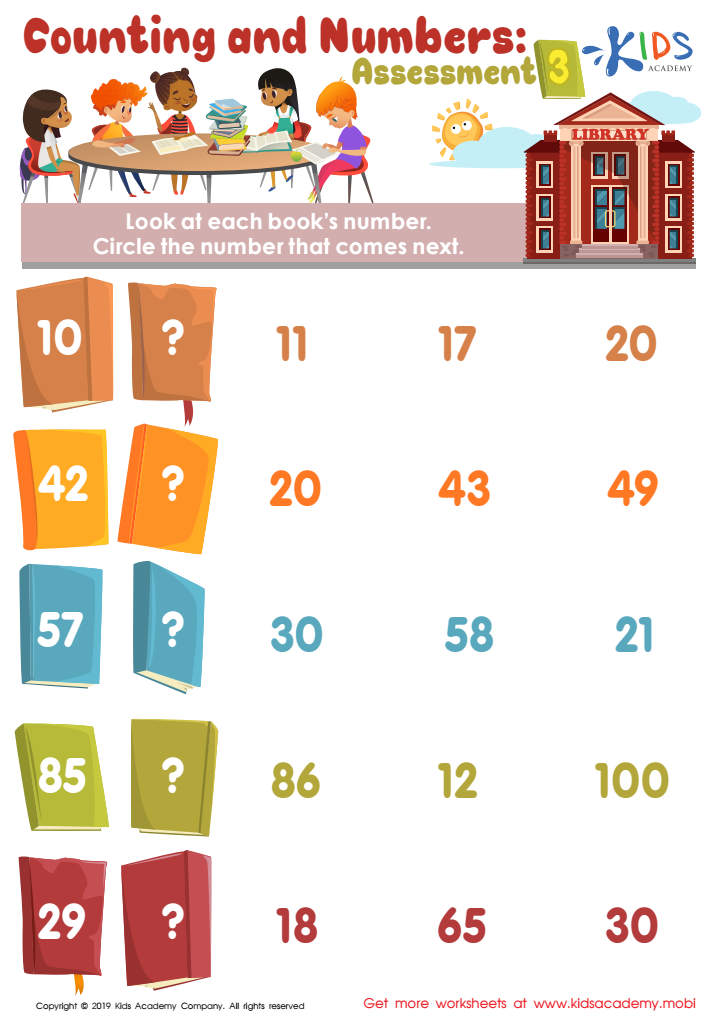
Counting and Numbers: Assessment Worksheet
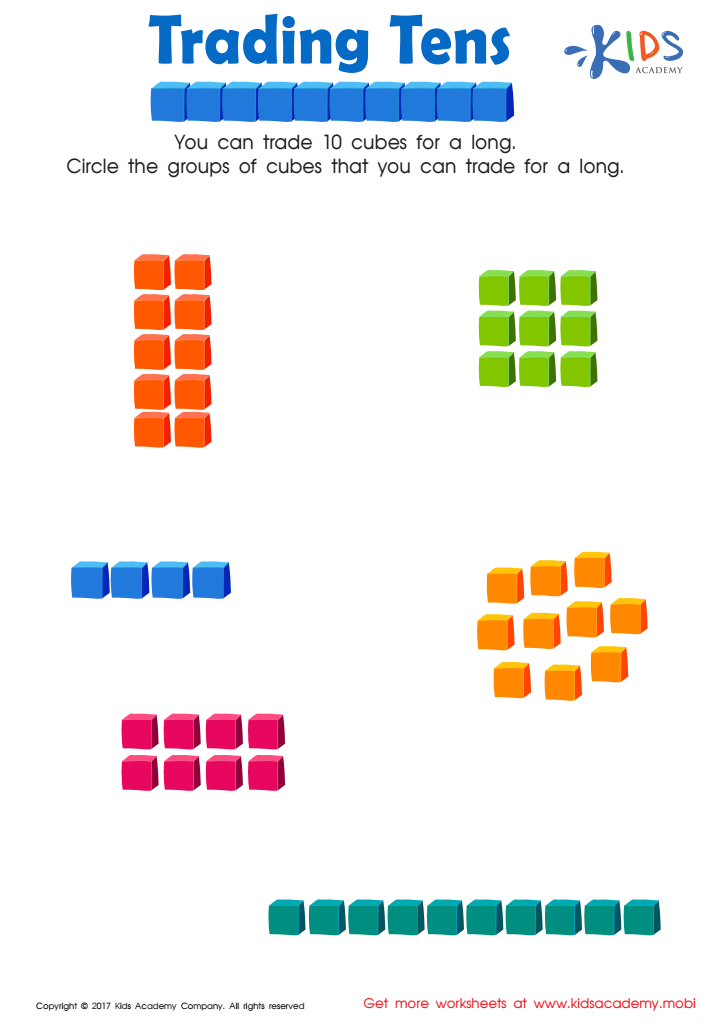
Trading Tens Worksheet
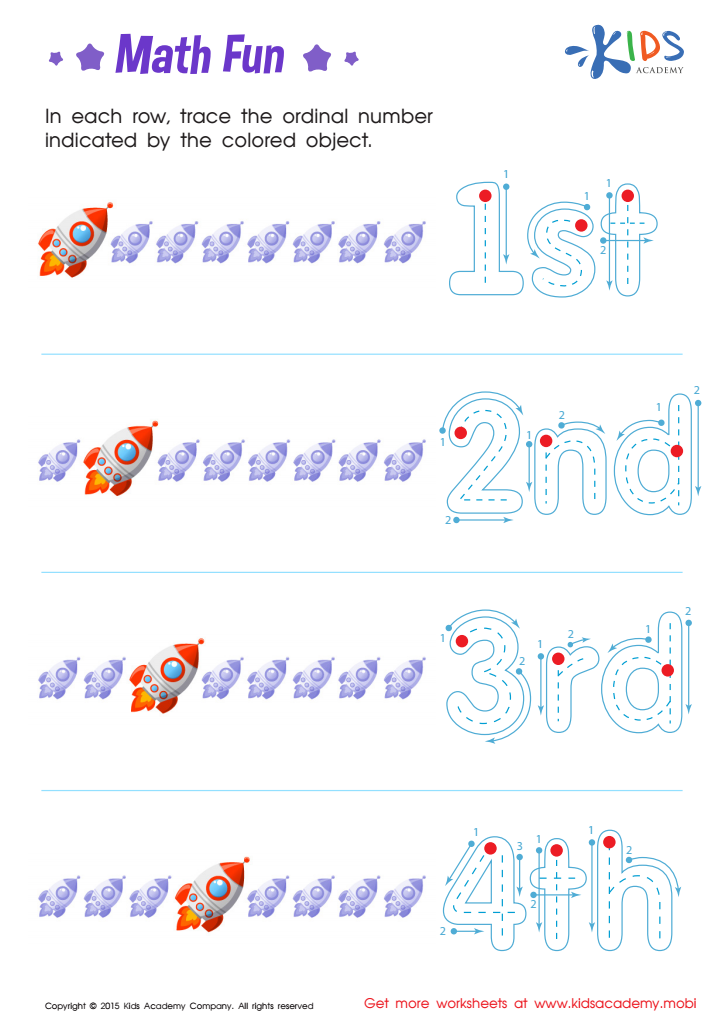
Ordinal Numbers: Math Fun Worksheet
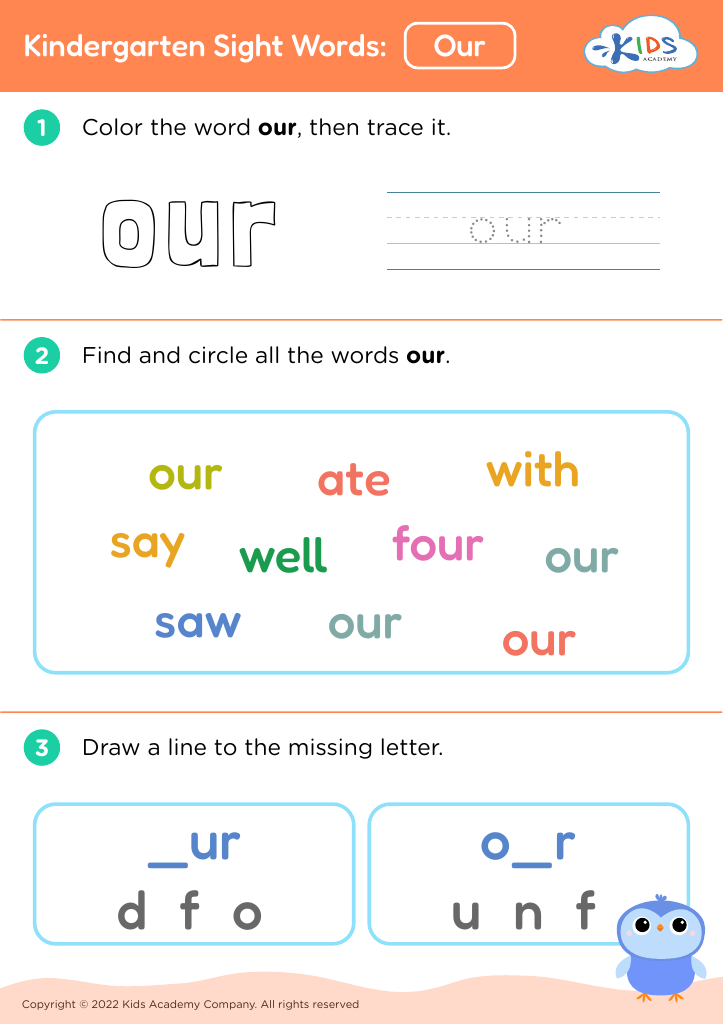







Learning addition is a fundamental skill for children aged 4-7, making it crucial for parents and teachers to prioritize this subject. During these formative years, children develop cognitive abilities and critical thinking skills. Addition serves as the foundation for more complex mathematical concepts, such as subtraction, multiplication, and division. Mastering addition not only enhances mathematical fluency but also helps build confidence in problem-solving.
Additionally, learning addition has real-world applications that foster daily life skills. Children use adding in scenarios such as counting objects, sharing, and understanding money, which promotes independence and social development. Moreover, engaging in addition activities can stimulate children's curiosity and encourage a lifelong love of learning.
Supporting these foundational skills can also improve attention span and patience as children practice and overcome challenges. When parents and teachers collaborate to reinforce addition concepts through games, storytelling, and hands-on activities, they create a supportive learning environment that nurtures children's enthusiasm for math.
In summary, learning addition is vital not only for academic success but also for personal growth and practical life applications, making it a priority for parents and teachers alike during the early years of education.








