Mathematical problem-solving Worksheets for Ages 4-7
7 filtered results
-
From - To
Unlock your child's mathematical potential with our engaging Mathematical Problem-Solving Worksheets designed specifically for ages 4-7! These worksheets provide a fun and interactive way for young learners to develop critical thinking and problem-solving skills. Filled with colorful illustrations and age-appropriate challenges, students will explore basic addition, subtraction, and pattern recognition through exciting activities. Our thoughtfully crafted exercises promote creativity and encourage a love for math, all while improving essential numeracy skills. Perfect for preschool and early elementary classrooms or home learning, these worksheets foster independent learning and pave the way for academic success. Start your child's math journey today!
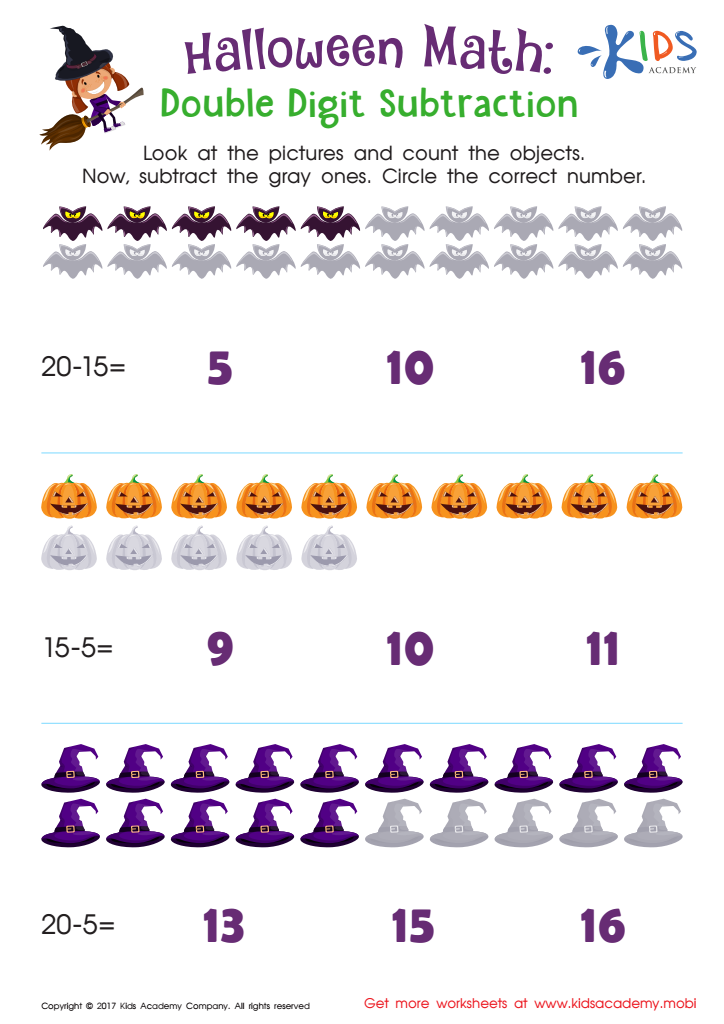
Halloween Math Subtraction Worksheet
 Assign to My Students
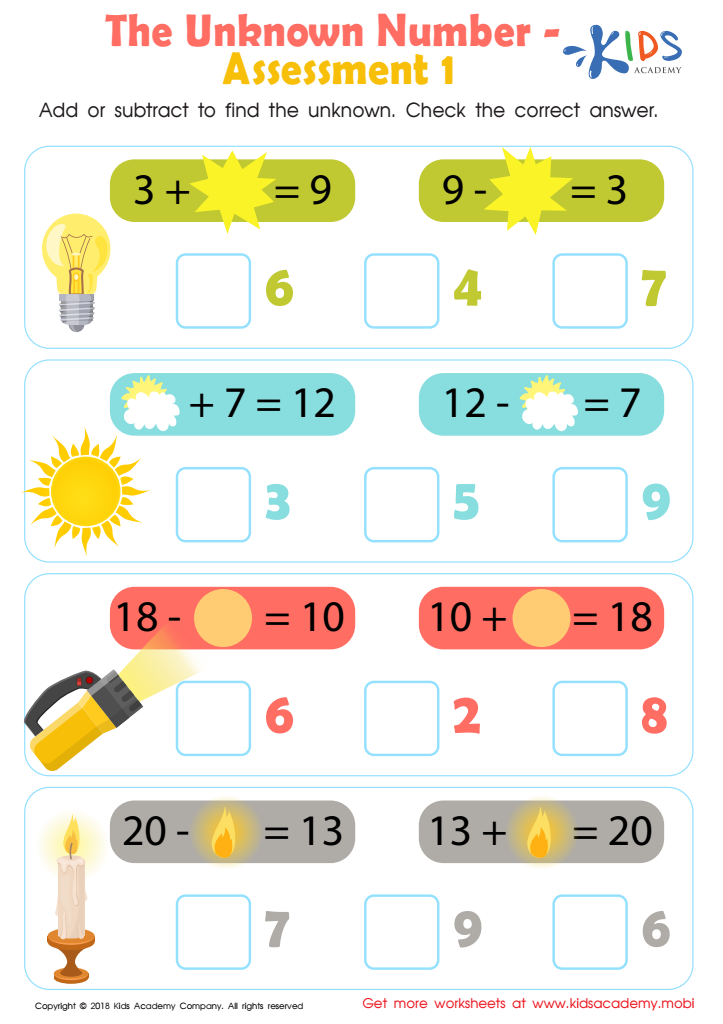
The Unknown Number: Assessment 1 Worksheet
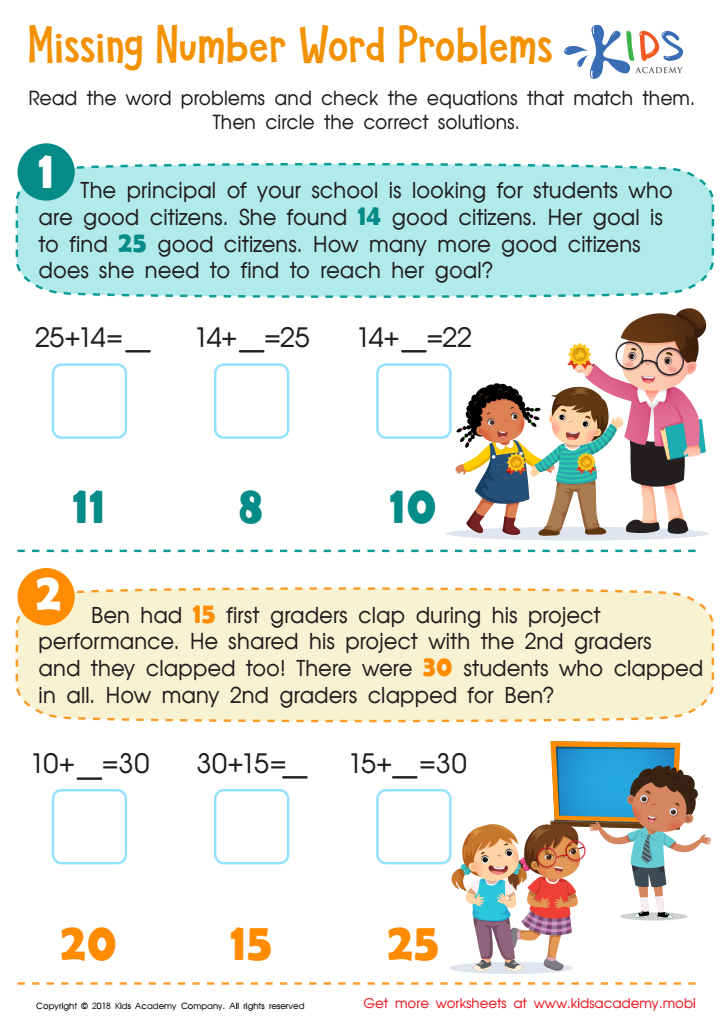
Missing Number Word Problems Worksheet
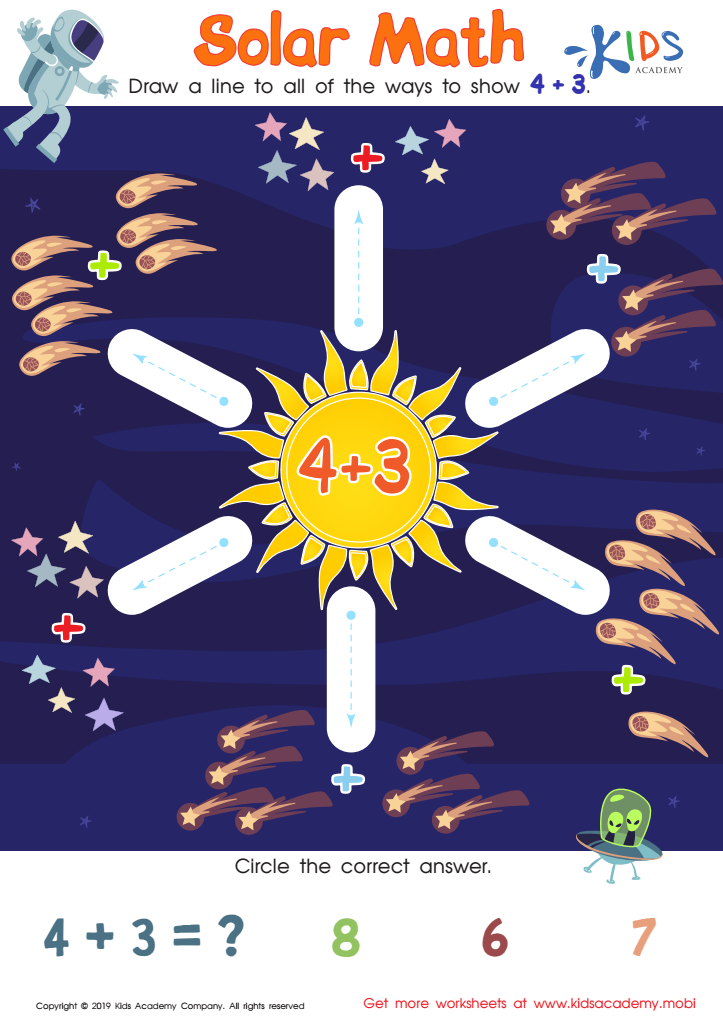
Solar Math Worksheet
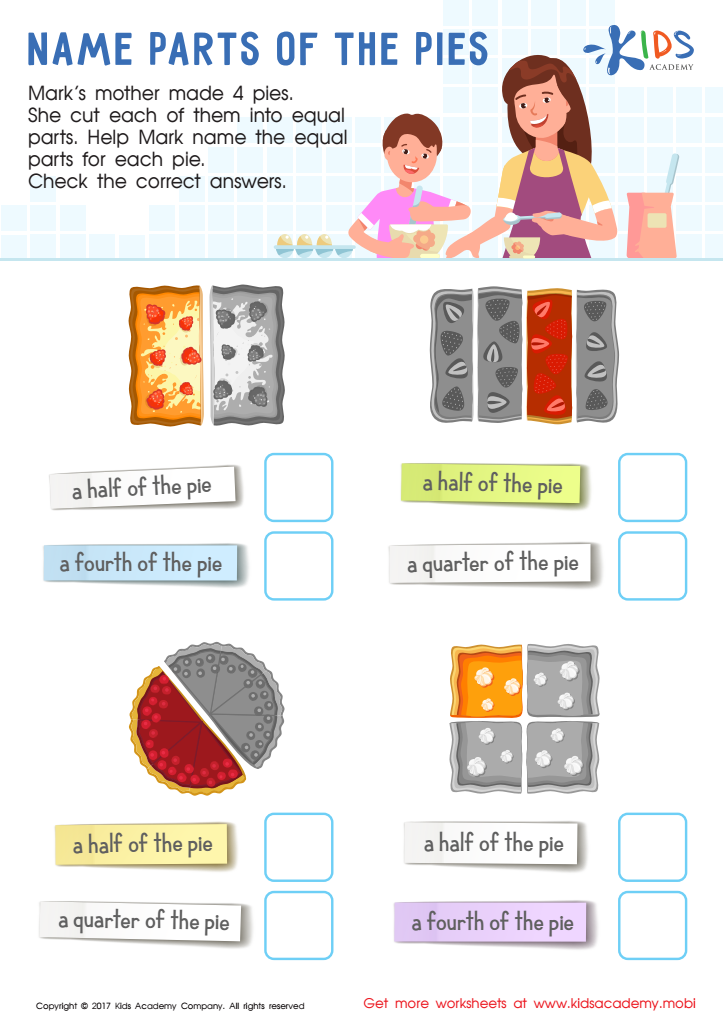
Name Parts of the Pies Worksheet
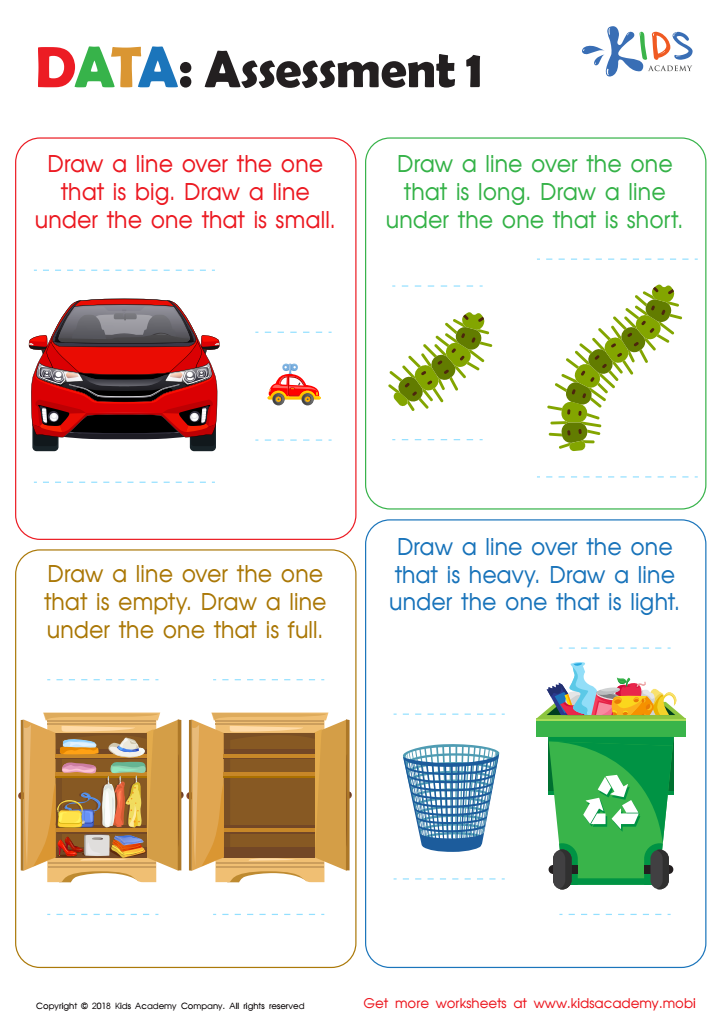
Data: Assessment 1 Worksheet
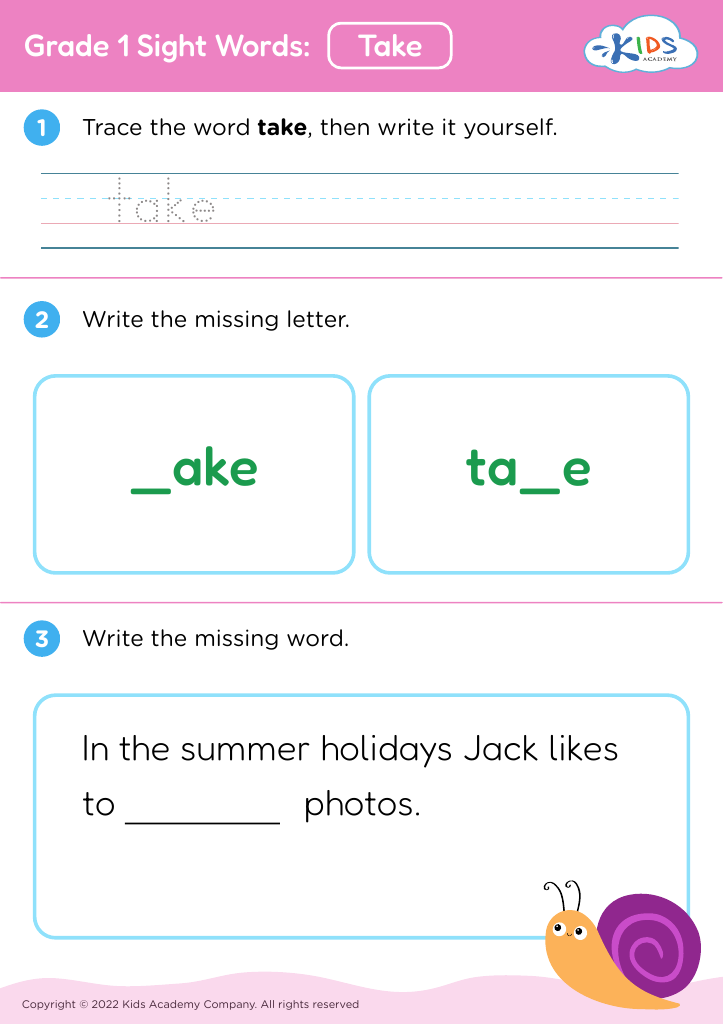







Mathematical problem-solving is crucial for children aged 4-7 as it lays the foundation for critical thinking and analytical skills. At this early age, children are naturally curious and eager to explore their environment, making it the perfect time to introduce problem-solving concepts. Engaging in mathematical problem-solving helps children develop essential cognitive skills such as reasoning, pattern recognition, and spatial awareness.
Parents and teachers play a vital role in nurturing these skills. By supporting children in solving problems, they encourage perseverance and resilience, qualities that are invaluable throughout life. Problem-solving activities can also enhance language development, as discussing strategies and solutions requires communication and vocabulary expansion.
Moreover, mathematical problem-solving contributes to a child’s confidence and independence. When they successfully navigate challenges, they gain a sense of accomplishment that motivates them to take on new tasks. This self-assuredness not only enhances their math abilities but also translates to other subject areas and social interactions.
Finally, cultivating mathematical problem-solving skills aligns with current educational standards that emphasize a deeper understanding of concepts, making it essential for parents and teachers to prioritize these activities in early education. By doing so, they help children build a strong mathematical foundation that supports future learning.








