
Number sequence recognition Worksheets for Ages 4-7
3 filtered results
Difficulty Level
Grade
Age
-
From - To
Subject
Activity
Standards
Discover our engaging Number Sequence Recognition Worksheets designed specifically for children ages 4-7. These printable resources help young learners master fundamental counting skills by recognizing and completing number patterns. Each worksheet features colorful illustrations and fun activities to keep kids motivated and excited about learning. Suitable for both classroom and home use, these worksheets foster a strong foundation in numeracy while enhancing problem-solving abilities. As children work through various challenges, they develop critical thinking skills and gain confidence in their math abilities. Perfect for early grade teachers and parents looking to support their child’s mathematical journey!
Favorites
With answer key
Interactive
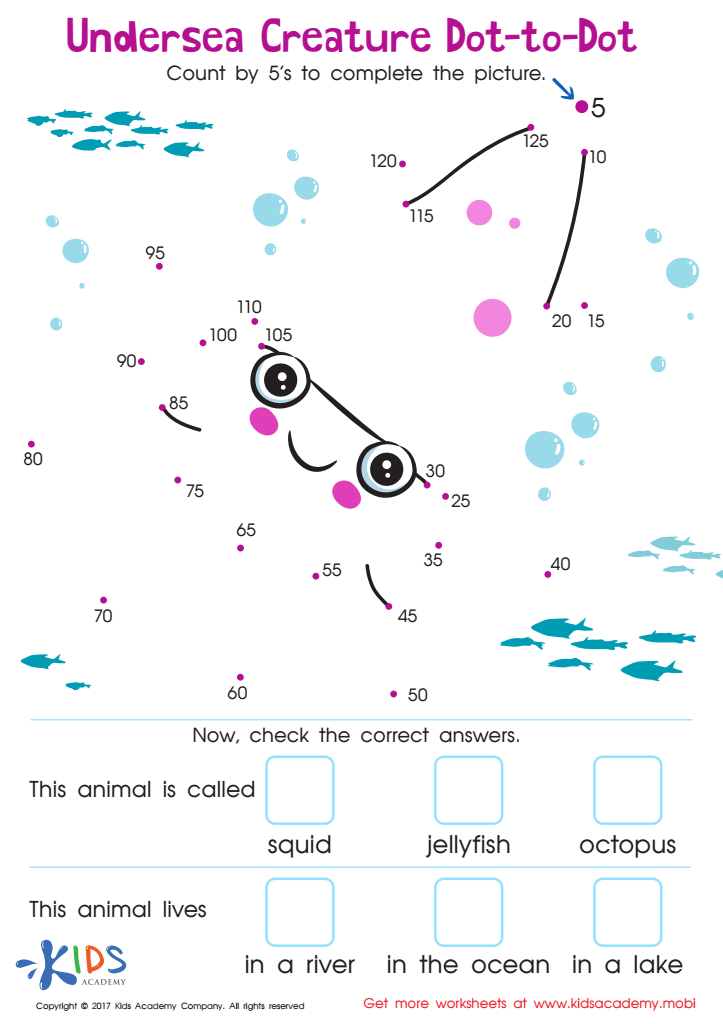
Undersea: Dot To Dot Worksheet
This dot-to-dot worksheet is a great way to teach kids about the undersea world while having fun. Kids will love connecting the dots and counting in 5s. Then they can check their answers.
 Assign to My Students
Undersea: Dot To Dot Worksheet
Worksheet
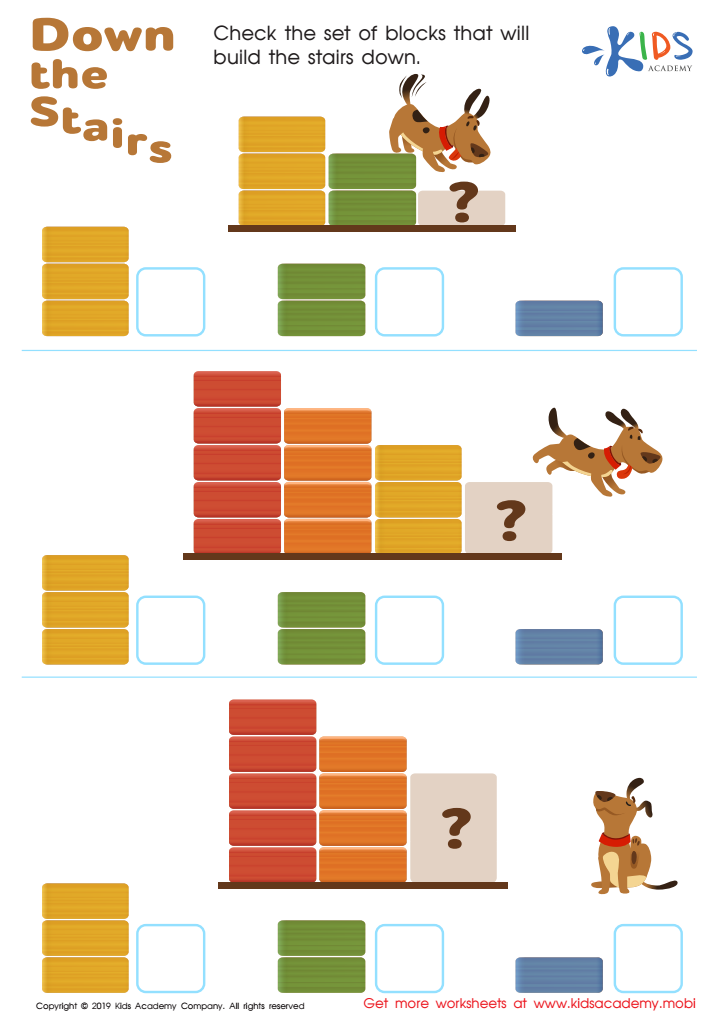
Down the Stairs Worksheet
Let your kids' imaginations run wild with this worksheet featuring a cute and friendly dog! Ask them to point out the dog in the printout, then help count the blocks in each set. Aim to stack them in descending order and build stairs for the pup to get down. Count each block and check the set - it's that easy!
Down the Stairs Worksheet
Worksheet
Join Kids Academy for Free
Who is primarily going to use this learning content?








Number sequence recognition is a crucial foundational skill for children aged 4 to 7, as it forms the basis for more complex mathematical concepts. Understanding number sequences helps children grasp the concept of order, enables them to recognize patterns, and strengthens their critical thinking abilities. This skill is vital not only in mathematics but also in everyday situations, from understanding the time to managing money.
Parents and teachers should care about number sequence recognition because it supports overall cognitive development. Early mastery of counting and sequencing enhances learning in various subjects and prepares children for future academic success. When children can recognize and extend number sequences, they develop confidence in their abilities, which fosters a positive attitude towards learning.
Furthermore, promoting this skill at home or in the classroom can make math more engaging and enjoyable. Simple games and activities, such as counting objects or singing songs with numbers, can reinforce this skill. Encouraging cooperative play allows children to learn from one another, making the learning process both social and dynamic. Ultimately, by prioritizing number sequence recognition, adults can equip children with essential tools that form the backbone of their educational journey and everyday problem-solving in the future.








