
Number tracing Worksheets for Ages 4-7
4 filtered results
Difficulty Level
Grade
Age
-
From - To
Subject
Activity
Standards
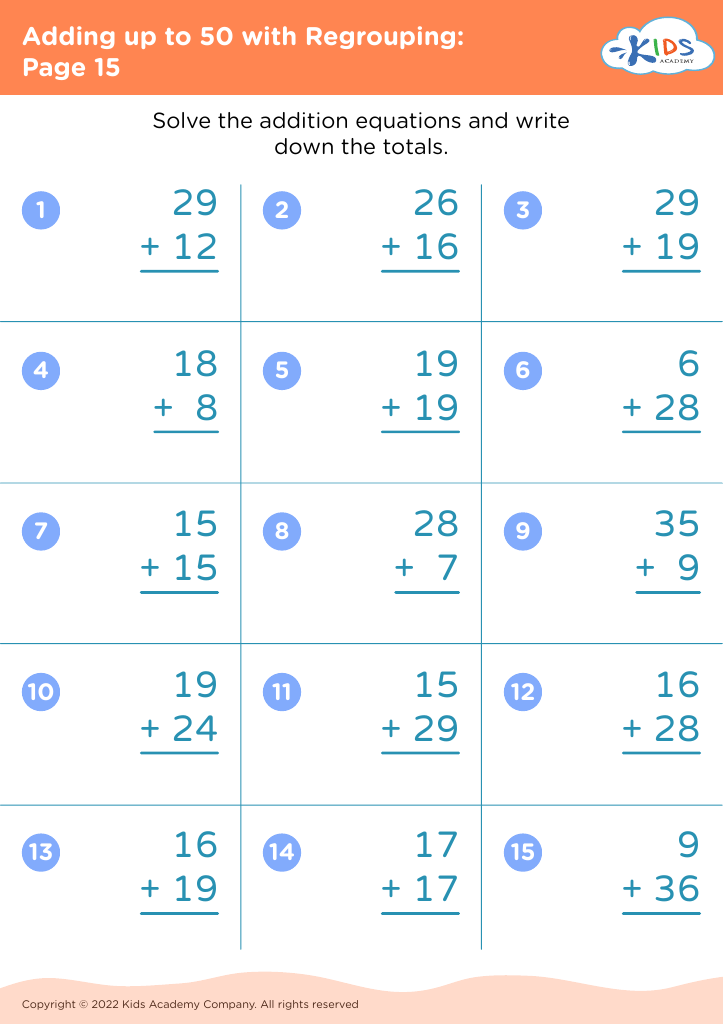
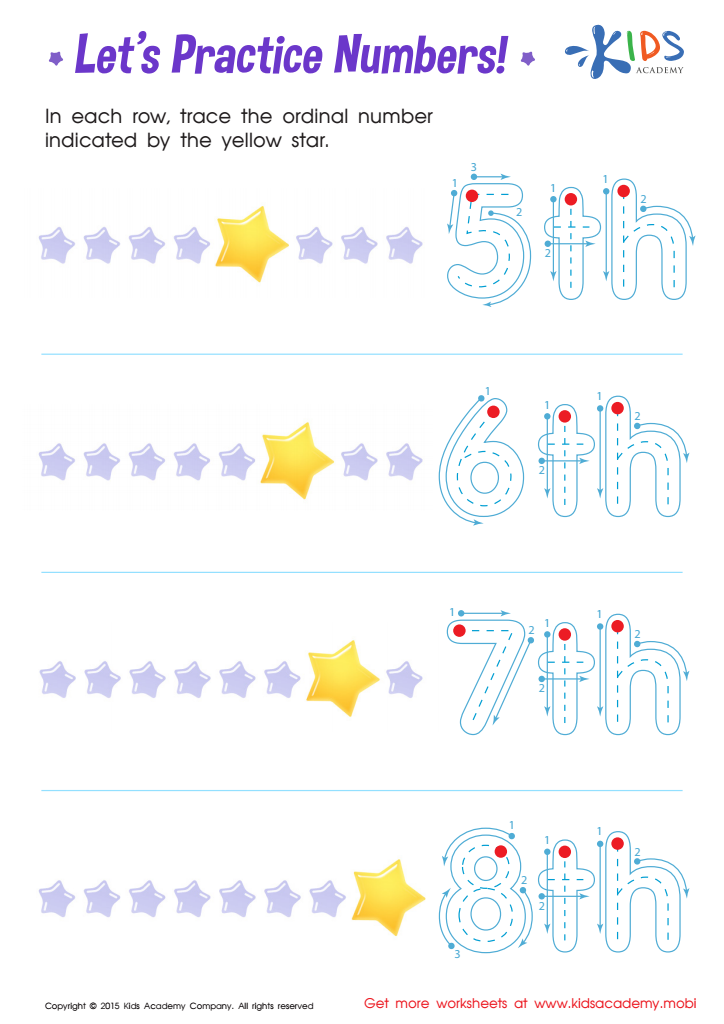
Discover our engaging Number Tracing Worksheets for Ages 4-7, designed to help young learners master essential numerical skills. These worksheets offer fun and interactive tracing activities that develop fine motor skills, hand-eye coordination, and number recognition. With colorful designs and simple instructions, children will enjoy practicing numbers from 0 to 20. Ideal for both classroom and home use, our printable resources ensure your child gains confidence in writing numbers while laying a strong foundation for future math success. Boost your child’s learning journey with our expertly crafted Number Tracing Worksheets today!
Favorites
With answer key
Interactive
 Assign to My Students
Ordinal Numbers: Let's Practice Numbers Printable
Worksheet

Count the Apples and Trace the Number 5 Printable
Count the juicy apples in each box, find the one with 5 and trace the number 5 following the arrows. Practice makes perfect! Print and get your little mathematician counting.
Count the Apples and Trace the Number 5 Printable
Worksheet
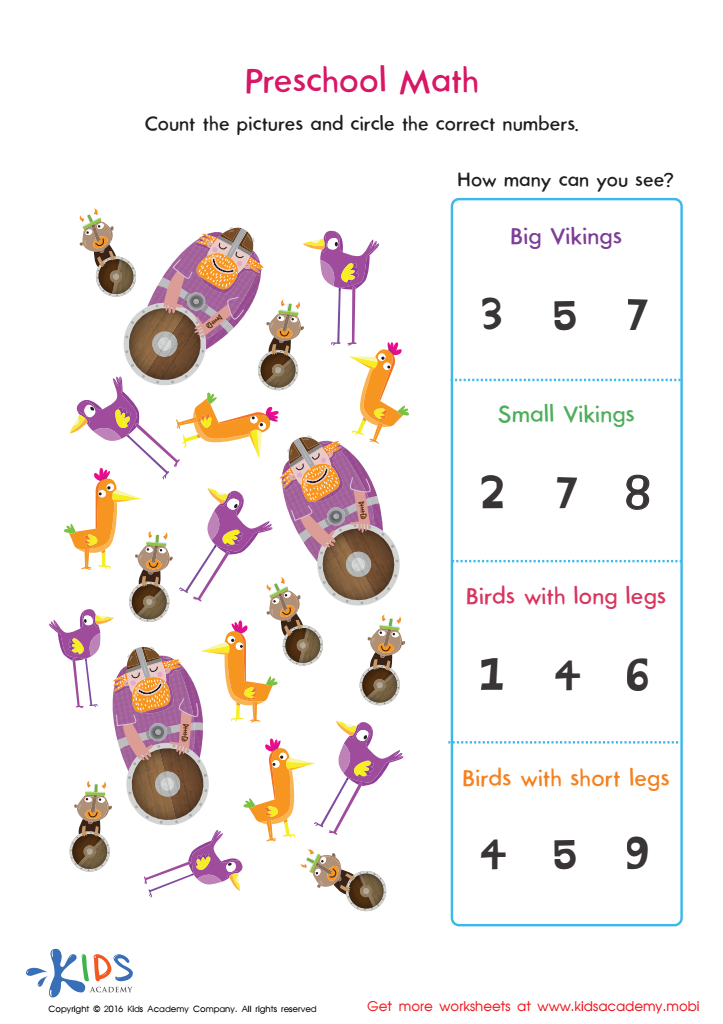
Counting Worksheet: Preschool Math
Worksheet
Join Kids Academy for Free
Who is primarily going to use this learning content?





.jpg)

Number tracing for ages 4-7 holds significant importance in early childhood education and development, and both parents and teachers should care deeply about this activity. Firstly, number tracing helps young children develop fine motor skills. When kids carefully trace numbers, they practice controlling their hand movements, which leads to better handwriting and stronger hand-eye coordination. These are fundamental skills not just for writing, but for a wide range of daily activities.
Moreover, number tracing reinforces number recognition and formation. By repeatedly outlining numbers, children become familiar with their shapes and can quickly identify them. This automatic recognition is crucial as it forms the foundation for more complex mathematical concepts, such as addition, subtraction, and eventually higher-level math.
In addition, number tracing assists in cognitive development. The act of tracing numbers involves focus, concentration, and patience. It can also be accompanied by counting aloud, which strengthens verbal and memory skills.
Parent and teacher involvement in this activity offers young learners encouragement and immediate feedback, nurturing a child’s confidence and enthusiasm to learn more. This positive reinforcement and personal attention optimize learning outcomes and help foster a lifelong appreciation for numeracy and education overall. Therefore, incorporating number tracing into early childhood education is essential for a well-rounded developmental foundation.








