Practicing subtraction Worksheets for Ages 4-7
4 filtered results
-
From - To
Welcome to our "Practicing Subtraction Worksheets" page for ages 4-7! Our engaging worksheets are designed to make learning subtraction fun and effective for young learners. With vibrant visuals and age-appropriate challenges, children will build a solid foundation in math skills while enhancing their number sense. Each worksheet focuses on simple subtraction concepts, encouraging kids to practice independently or with parental guidance. Perfect for homeschooling, classroom use, or extra practice at home, our printable resources are easily accessible and printable. Help your child become confident in subtraction as they explore the world of numbers through engaging activities and colorful illustrations!
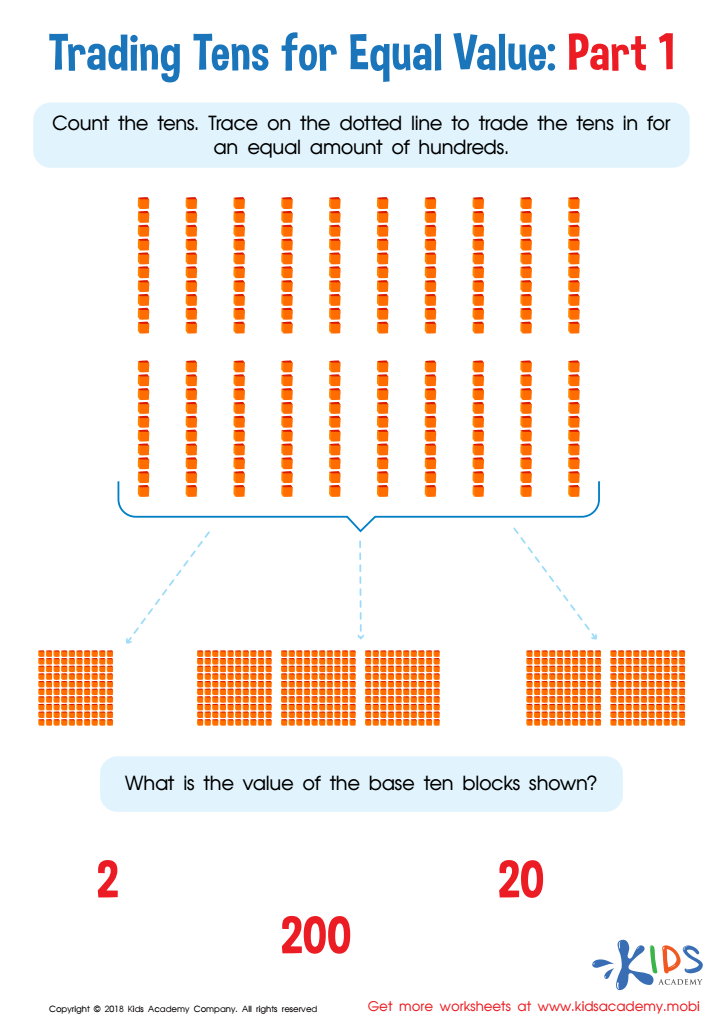
Trading Tens for Equal Value Worksheet: Part 1
 Assign to My Students
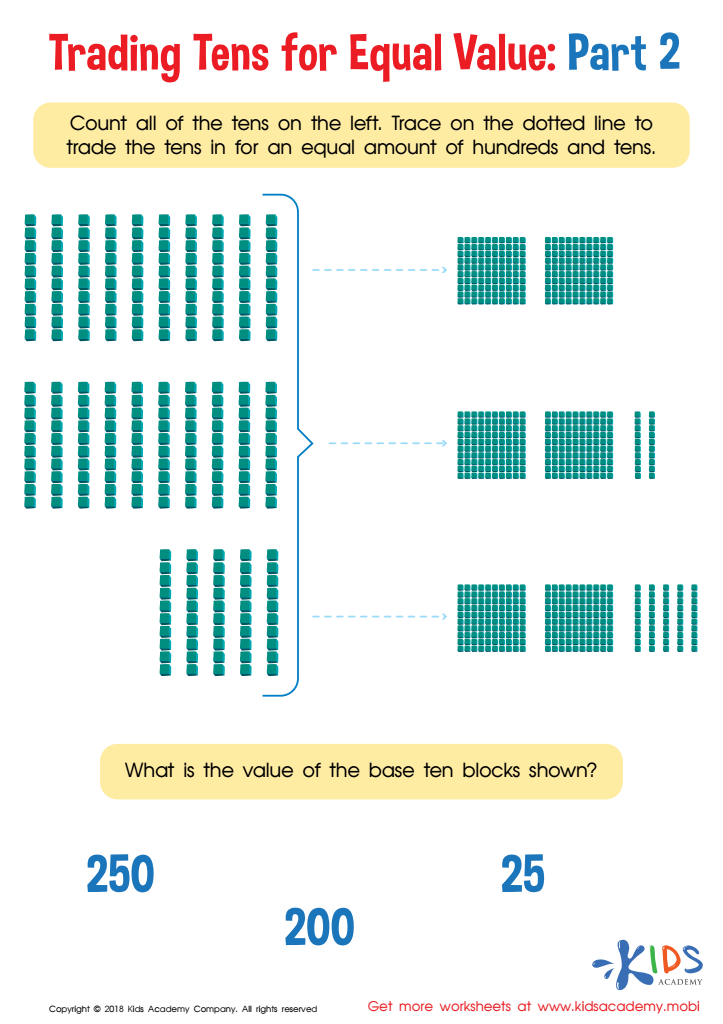
Trading Tens for Equal Value Worksheet: Part 2
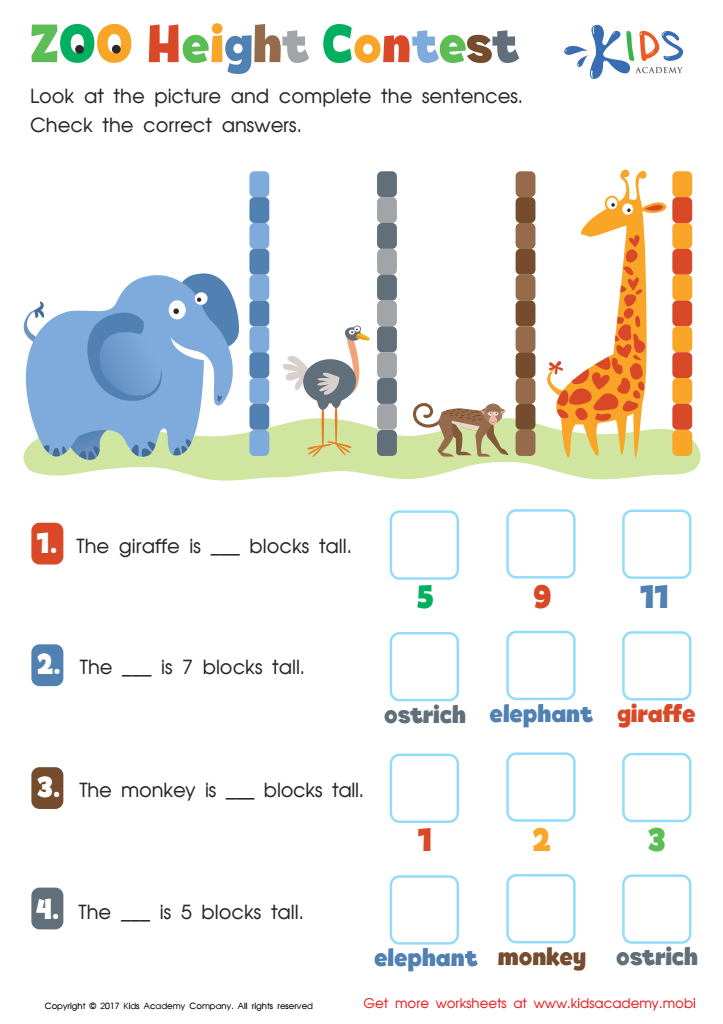
Zoo Height Contest Worksheet
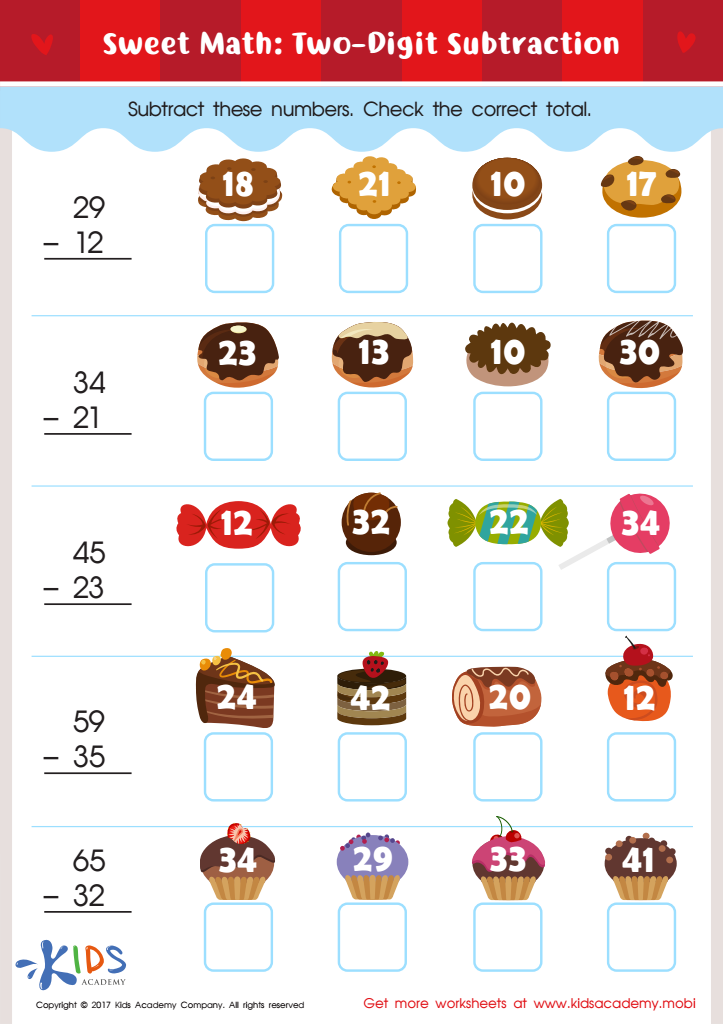
Two Digit Subtraction Worksheet





Practicing subtraction for children aged 4 to 7 is essential for several developmental reasons. First, mastering subtraction builds a strong foundation for mathematics, a critical skill in daily life and future learning. During this stage, children develop number sense, which includes understanding quantities, recognizing patterns, and discovering relationships between numbers.
Additionally, engaging in subtraction activities fosters critical thinking and problem-solving abilities. Children learn to analyze situations, make decisions, and strategize their approaches to finding solutions. This cognitive engagement promotes a deeper understanding of mathematical concepts beyond mere calculation.
Moreover, practicing subtraction helps strengthen fine motor skills through hands-on activities, such as using manipulatives like blocks or beads. This physical engagement supports overall cognitive development while making learning interactive and fun.
Foundational skills acquired through subtraction practice also enhance children's confidence in their mathematical capabilities. A positive attitude toward math at a young age often leads to improved performance as they progress to more complex concepts. Thus, both parents and teachers play a vital role in consistently integrating subtraction practice into everyday routines, ensuring children are not just capable learners but excited and confident individuals in their mathematical journey.








