Reading analog clocks Worksheets for Ages 4-7
9 filtered results
-
From - To
Discover our engaging "Reading Analog Clocks Worksheets for Ages 4-7," designed to introduce young learners to essential time-telling skills. Our worksheets provide a fun and interactive way for children to familiarize themselves with analog clocks, featuring a variety of activities such as matching times, drawing hands, and coloring clock faces. Each worksheet is age-appropriate and aims to build confidence in reading hours and half-hours. Perfect for home or classroom use, these resources encourage independent learning and reinforce fundamental math concepts. Help your child develop a solid foundation in time-telling with our thoughtfully constructed worksheets that make learning enjoyable!
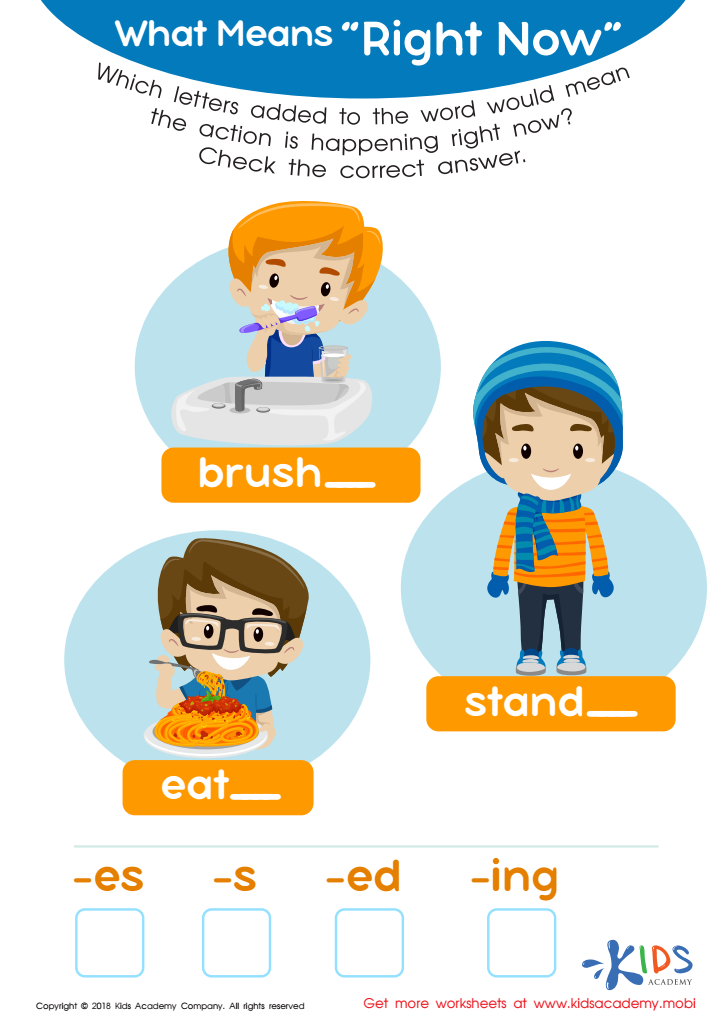
What Means "Right Now" Worksheet
 Assign to My Students
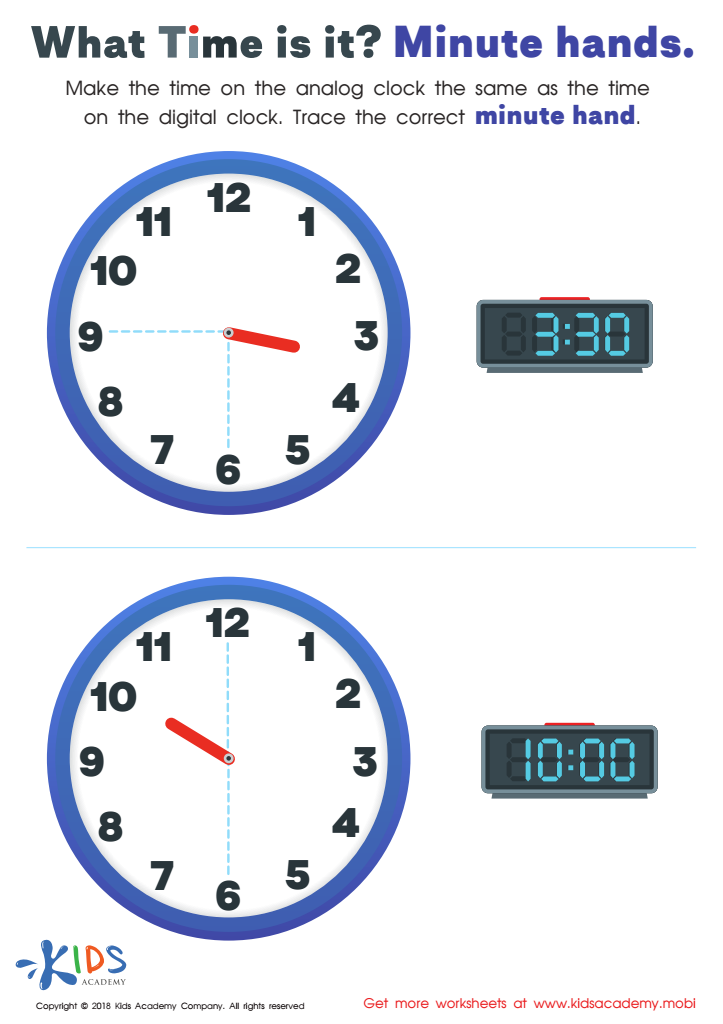
What Time Is it? Minute Hands Worksheet
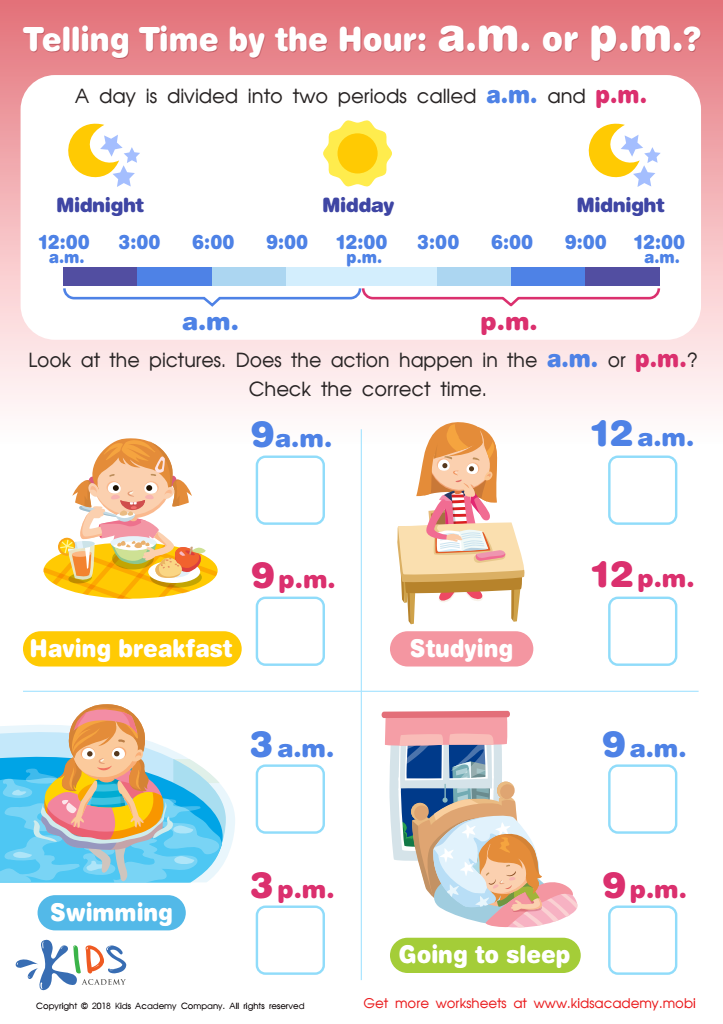
Tilling Time by the Hour: a.m. or p.m.? Worksheet
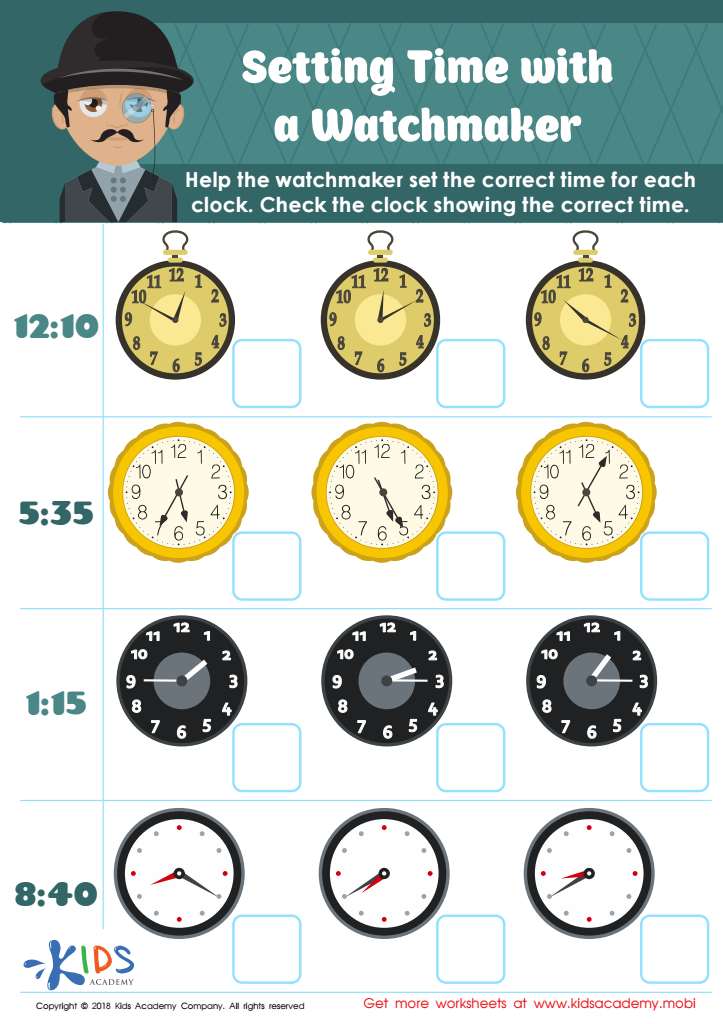
Setting Time with Watchmaker Worksheet

Telling Time by the Half Hour Worksheet







Reading analog clocks is an essential skill for children ages 4-7 as it lays the foundation for understanding time and its significance in daily life. Developing proficiency in this area not only enhances their cognitive abilities but also fosters organizational skills critical for their future.
For parents and teachers, it's crucial because time management influences a child's ability to follow routines, which is vital in both home and school settings. Understanding how to read an analog clock helps children to grasp the concept of time intervals, aiding them in planning their activities, from playtime to homework and bedtime.
Moreover, analog clocks present a visual and tactile learning experience. Children can engage in hands-on activities, creating a connection between mathematics and real-world applications. This exposure cultivates problem-solving skills, as they learn to calculate time differences and schedule their daily activities effectively.
Encouraging children to read analog clocks also cultivates a sense of independence and responsibility. As they gain confidence in reading time, they become more aware of their surroundings and understand the value of punctuality, a skill that benefits them as they progress through life. Therefore, nurturing this skill is an investment in a child’s academic and personal growth.








