Solving word problems Worksheets for Ages 4-7
5 filtered results
-
From - To
Discover our Solving Word Problems Worksheets designed for ages 4-7 at Kids Academy! These engaging and educational worksheets help young learners enhance their math skills by tackling real-life scenarios. Each worksheet encourages critical thinking, logical reasoning, and the application of basic arithmetic concepts such as addition, subtraction, and counting. Carefully crafted to be both fun and challenging, these printables build foundational problem-solving abilities in an interactive way. Give your child the tools they need to succeed in math and grow their confidence as they navigate through delightful, age-appropriate word problems. Download today and start your learning journey!
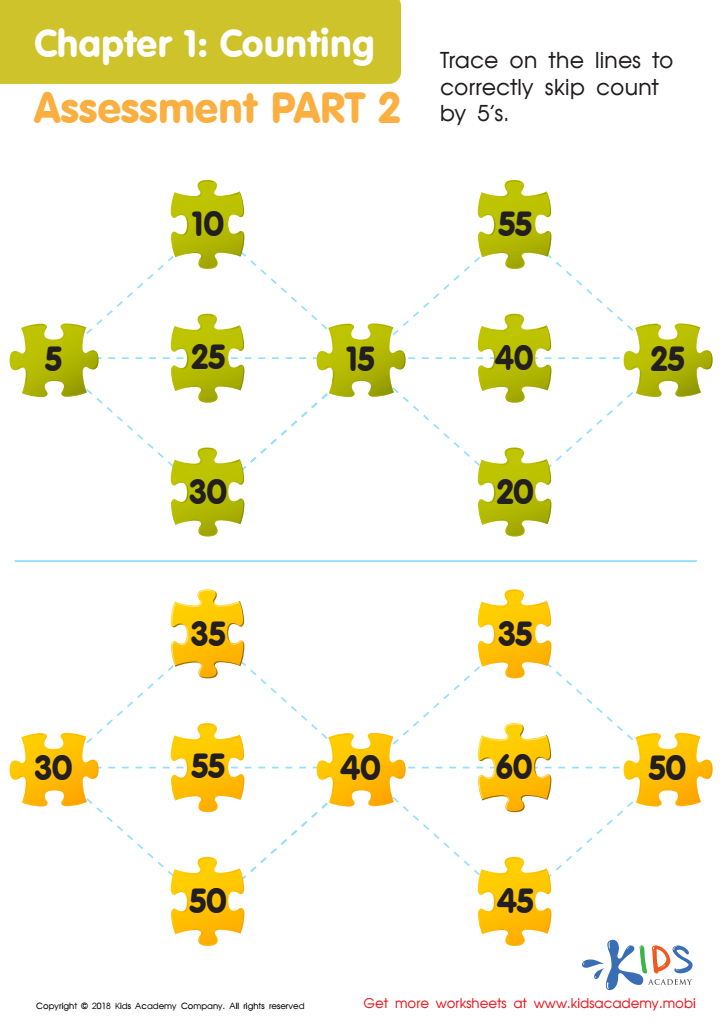
Counting: Assessment 2 Worksheet
 Assign to My Students
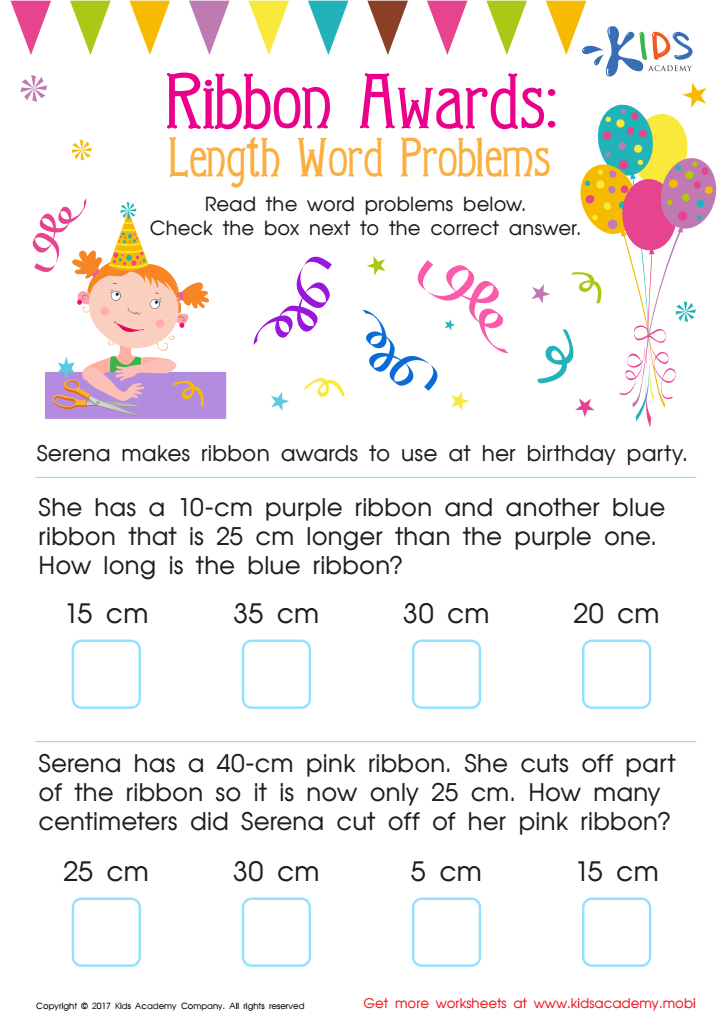
Length Word Problems Worksheet
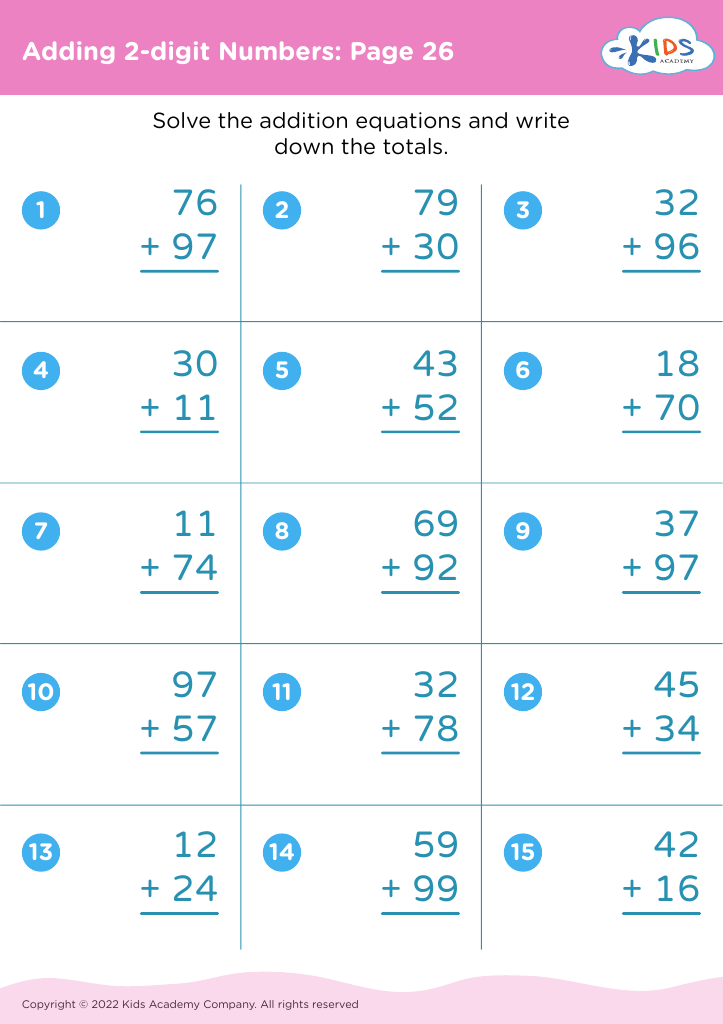
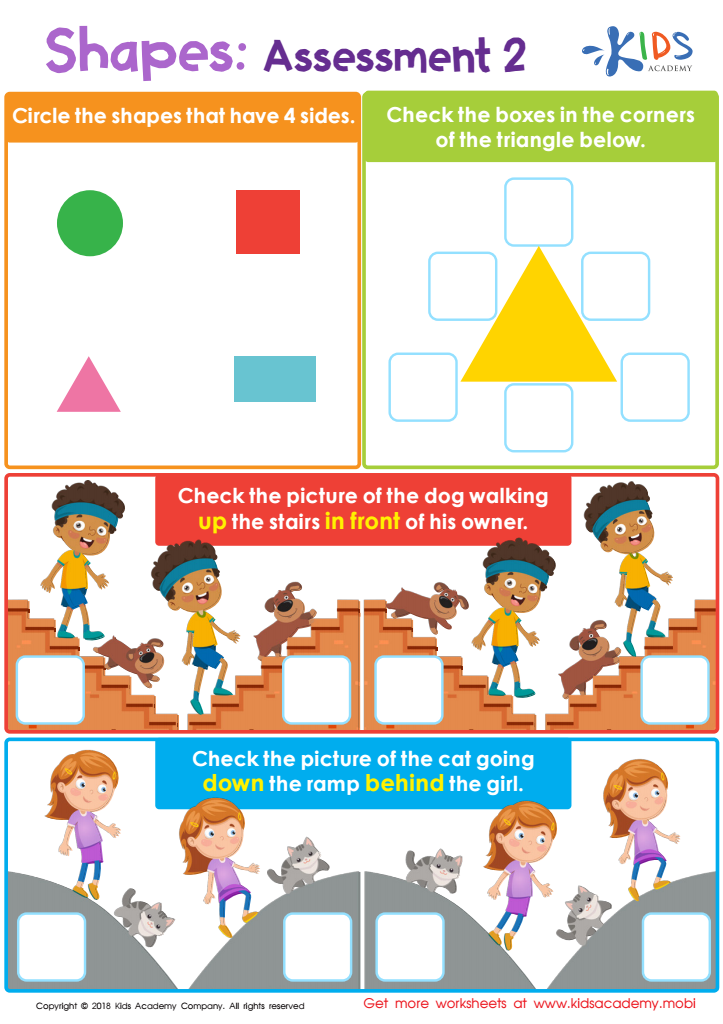
Shapes: Assessment 2 Worksheet
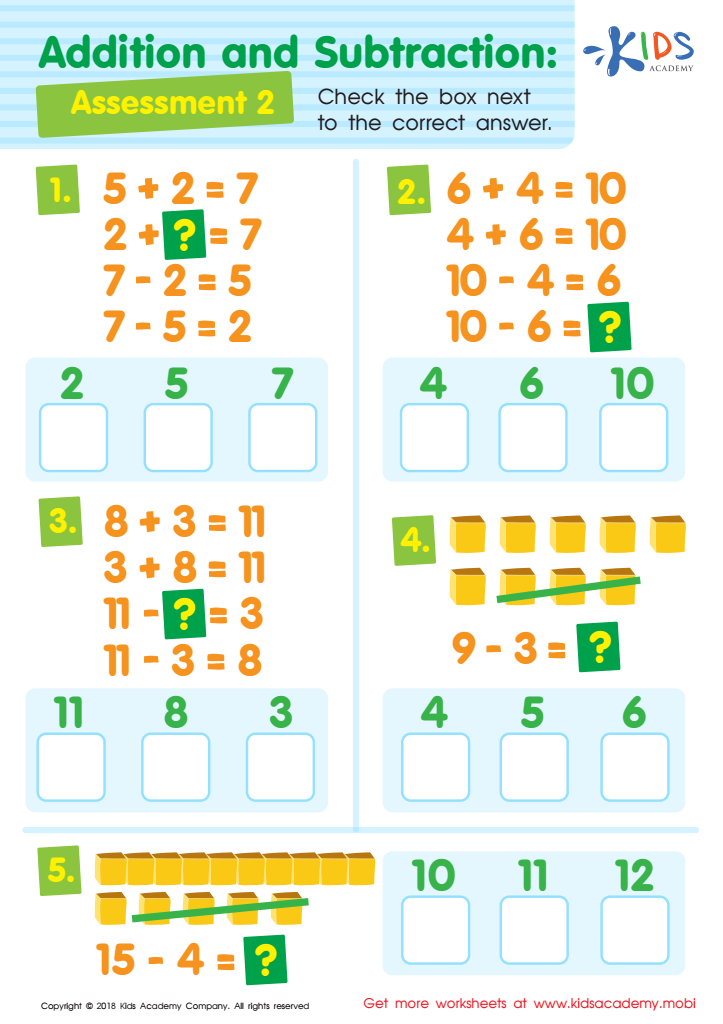
Addition and Subtraction Assessment 2 Worksheet







Solving word problems for children aged 4-7 is vital for several compelling reasons. It goes beyond mere arithmetic and dives into comprehensive cognitive development. First, these problems help young minds apply math to real-life situations, making abstract numbers more understandable and relevant. This fostered connection can ignite a love for math early on.
Second, word problems enhance critical thinking and comprehension skills. Kids learn to break down a problem, understand its elements, and devise a plan to solve it. This step-by-step problem-solving nurtures logical thinking and perseverance, essential skills for academic and life success.
Third, improving vocabulary and reading comprehension occurs as children read and interpret what the problem is asking. They become adept at following instructions and extracting crucial information, a capability that transcends math and aids all learning areas.
Moreover, collaborative problem-solving encourages social interaction and teamwork, essential aspects of emotional development. It helps children learn patience, communication, and cooperation as they often solve these problems in a group setting.
In essence, solving word problems is an integrated skill set that engages mathematical thinking, reading, cognitive development, and social skills. Thus, parents and teachers should prioritize these exercises to build a strong, well-rounded foundation for a child's future learning journey.








