Spatial Orientation Worksheets for Ages 4-7
6 filtered results
-
From - To
Welcome to our Spatial Orientation Worksheets for ages 4-7, designed to boost your child's understanding of space and position! Our engaging worksheets focus on essential skills like recognizing directions, sequencing, and spatial relationships through fun activities and colorful illustrations. Perfect for early learners, these worksheets help develop critical thinking and problem-solving skills while enhancing motor abilities. Easy-to-follow instructions empower both parents and teachers to facilitate learning at home or in the classroom. Explore our collection to unlock your child's potential and make spatial awareness a delightful adventure! Start building a strong foundation for future learning today!
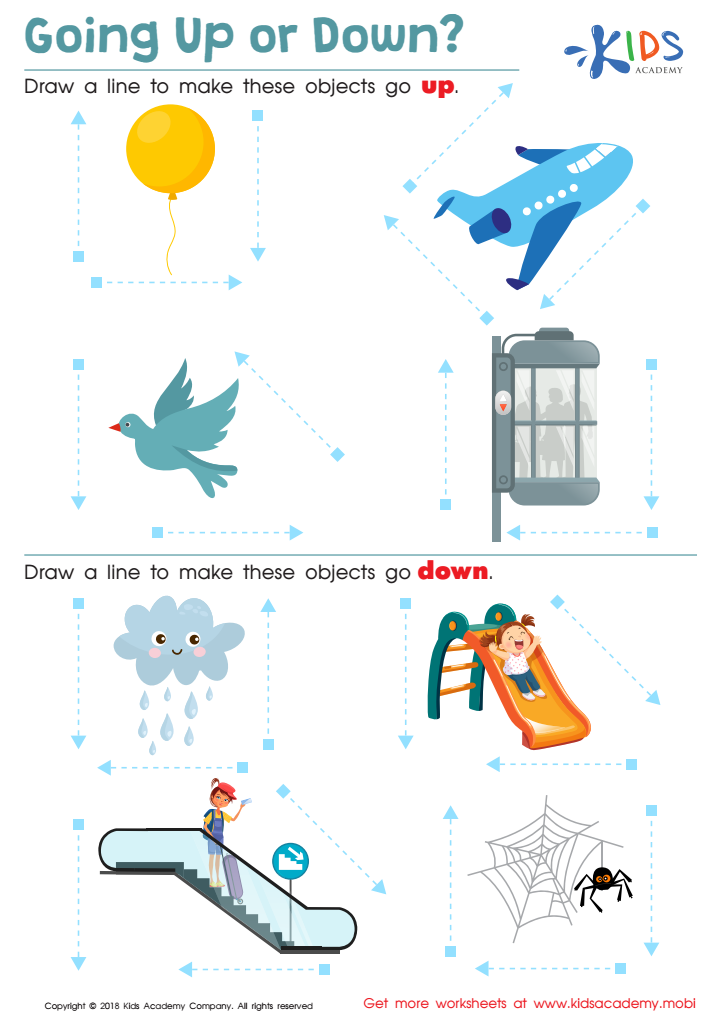
Going up or Down? Worksheet
 Assign to My Students
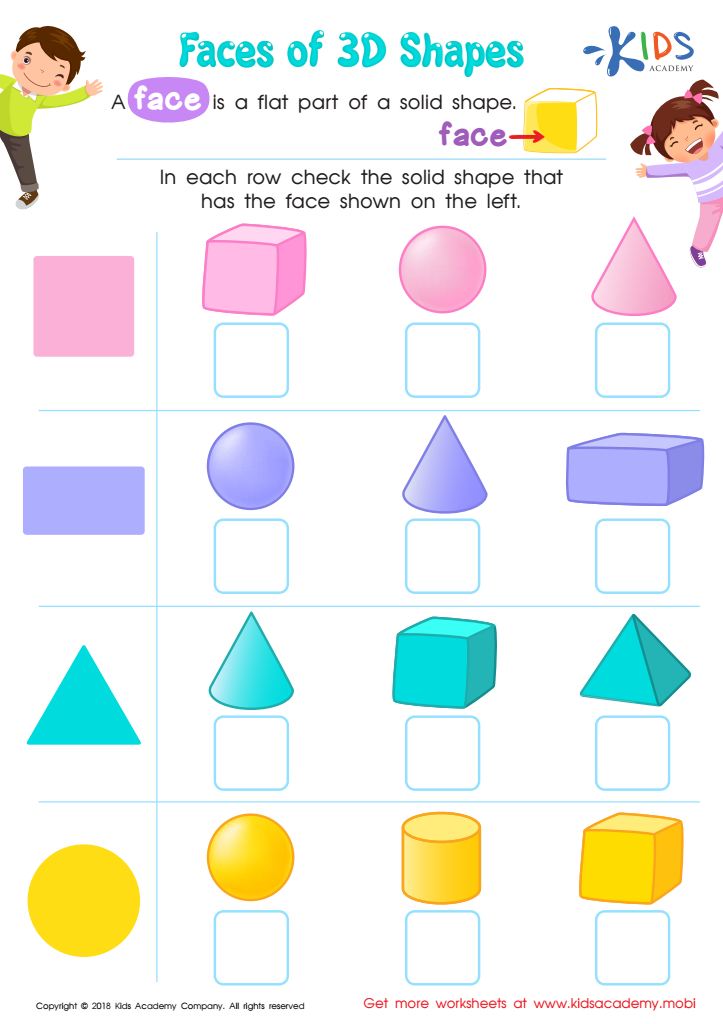
Faces of 3D Shapes Worksheet
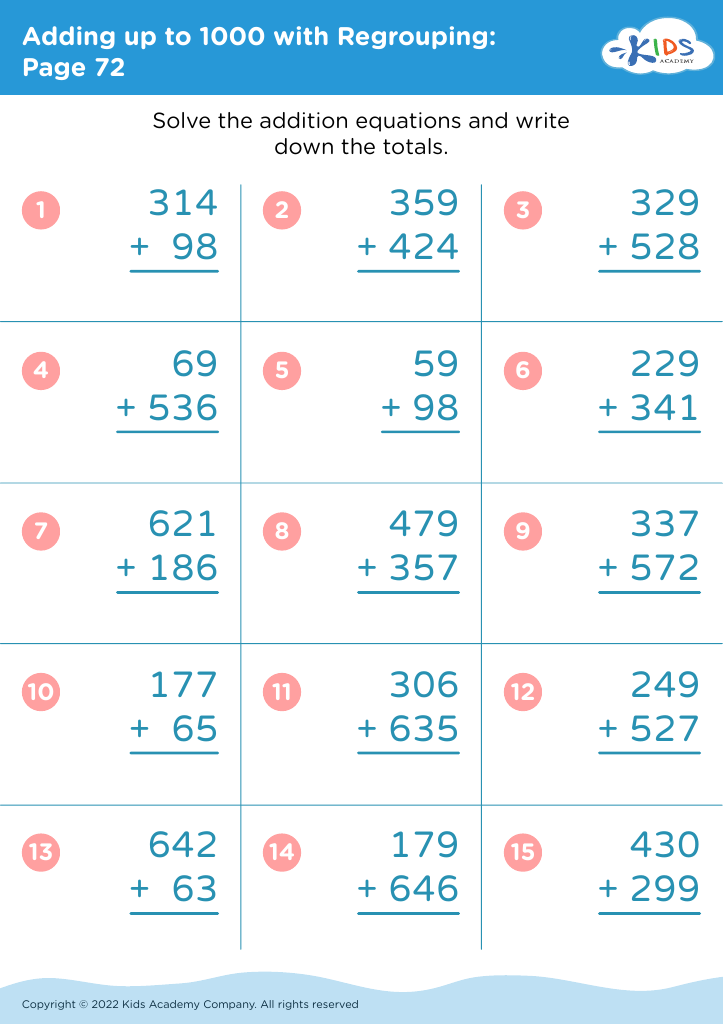
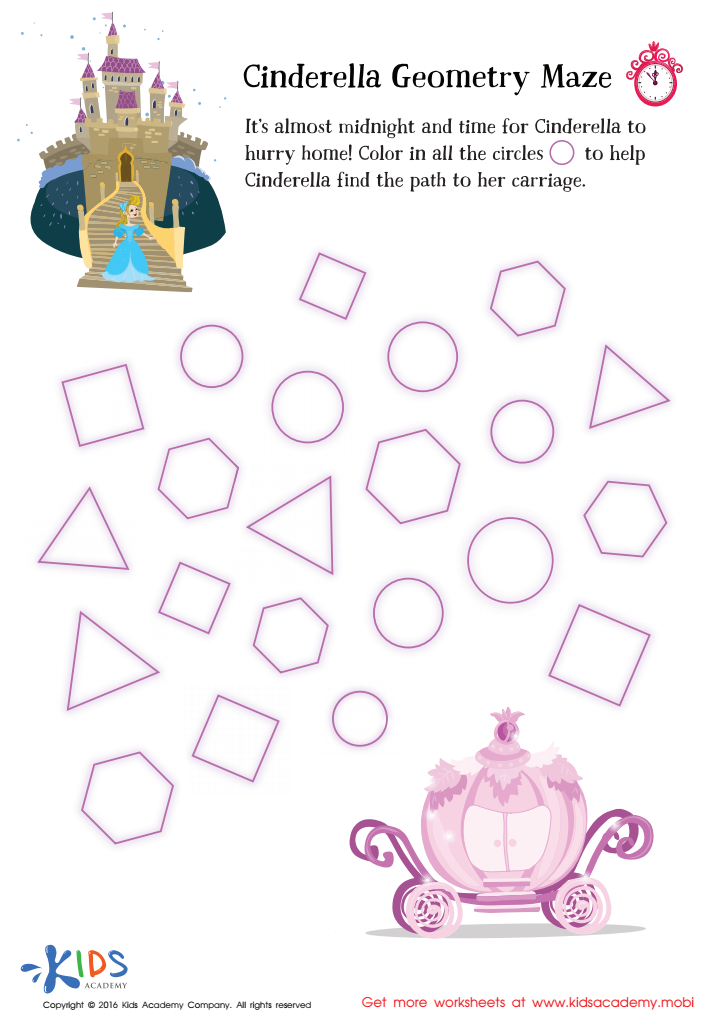
Cinderella Geometry Maze Worksheet
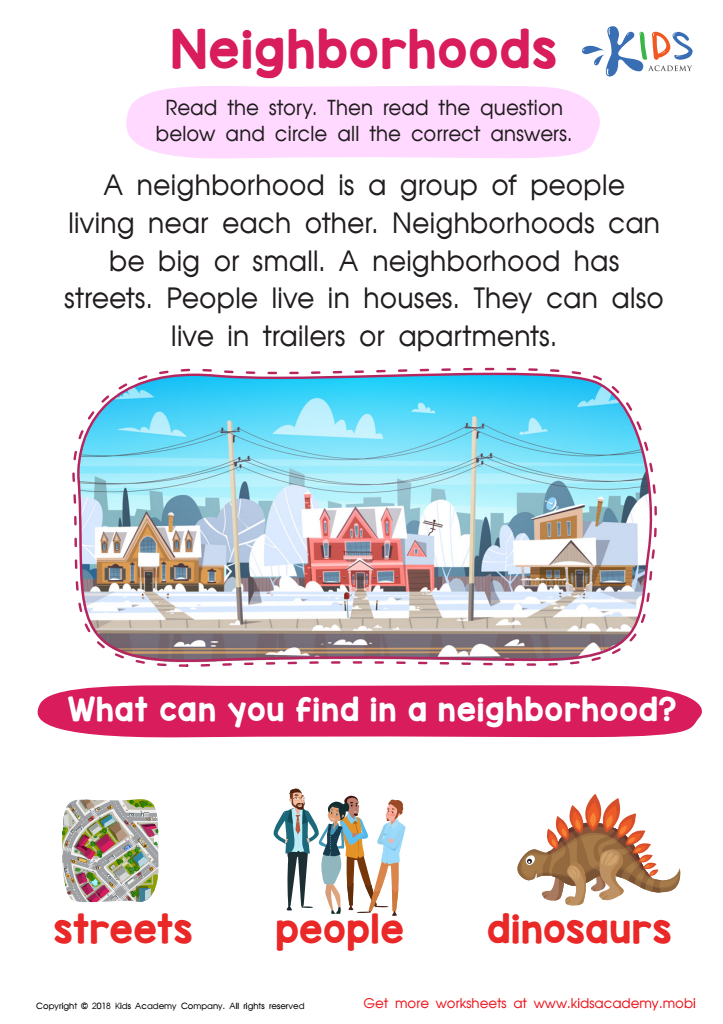
Neighborhoods Worksheet
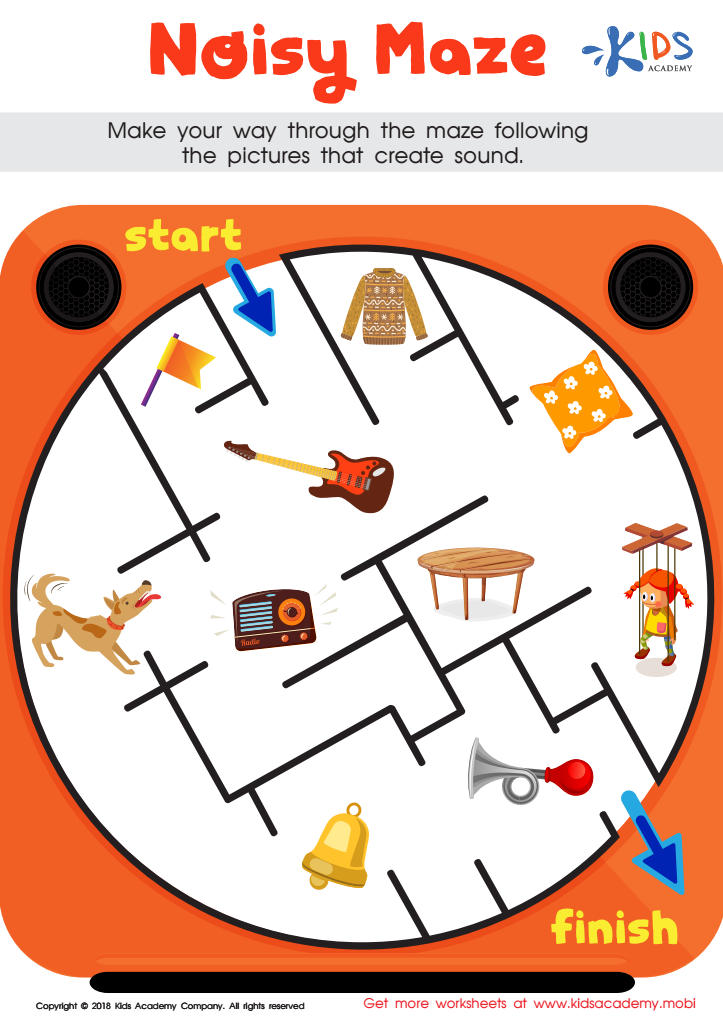
Noisy Maze Worksheet






Spatial orientation, the ability to understand and relate to one's position in space, is crucial for children aged 4-7 as it forms the foundation for numerous cognitive and practical skills. Parents and teachers should prioritize spatial orientation for several reasons. Firstly, it is essential for developing gross and fine motor skills. Activities like jumping, climbing, and drawing enhance coordination and help children navigate their environment safely.
Secondly, spatial orientation is closely linked to academic success in subjects such as math and science. Understanding concepts like geometry, measurement, and even time relies on a solid spatial awareness. Early exposure can make complex ideas more graspable in later years.
Furthermore, spatial skills enhance problem-solving abilities and creativity. Engaging in play that involves puzzles, building blocks, or map reading encourages imaginative thinking and logical structuring.
Socially, strong spatial awareness aids in collaborative play, helping children understand personal boundaries and cooperative games, fostering better social interaction.
In conclusion, fostering spatial orientation through play and activities is essential not just for immediate development but for a child's overall success in various life domains, making it a vital focus for educators and parents alike.








