Story sequencing Worksheets for Ages 4-7 - Page 2
29 filtered results
-
From - To
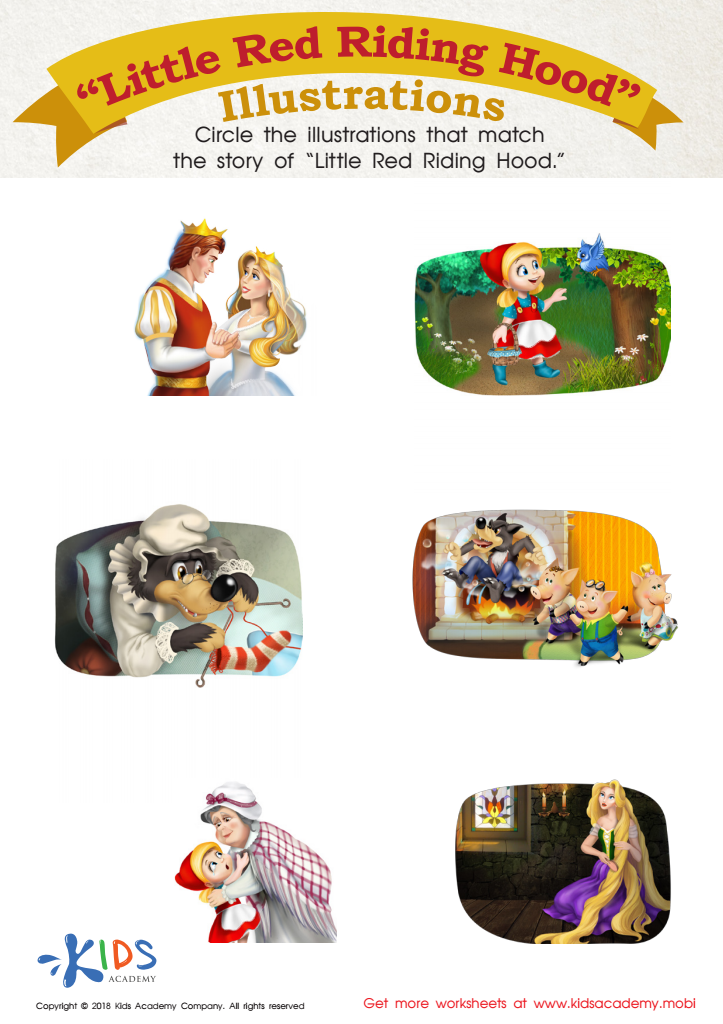
Little Red Riding Hood: Illustrations Worksheet
 Assign to My Students
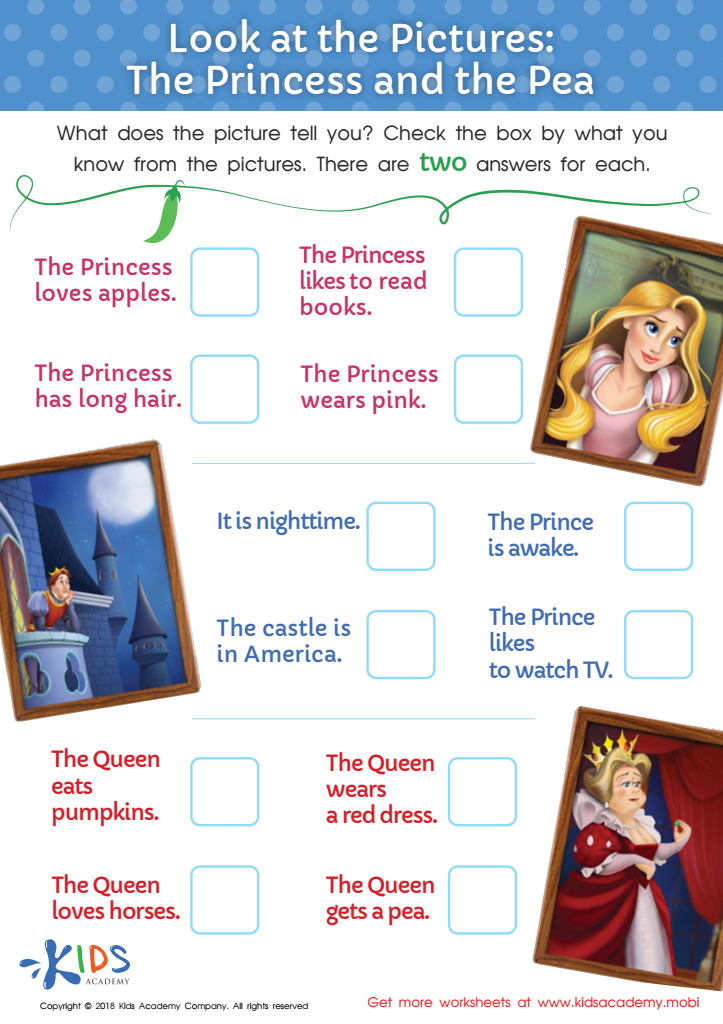
Look at the Pictures: The Princess and the Pea Worksheet
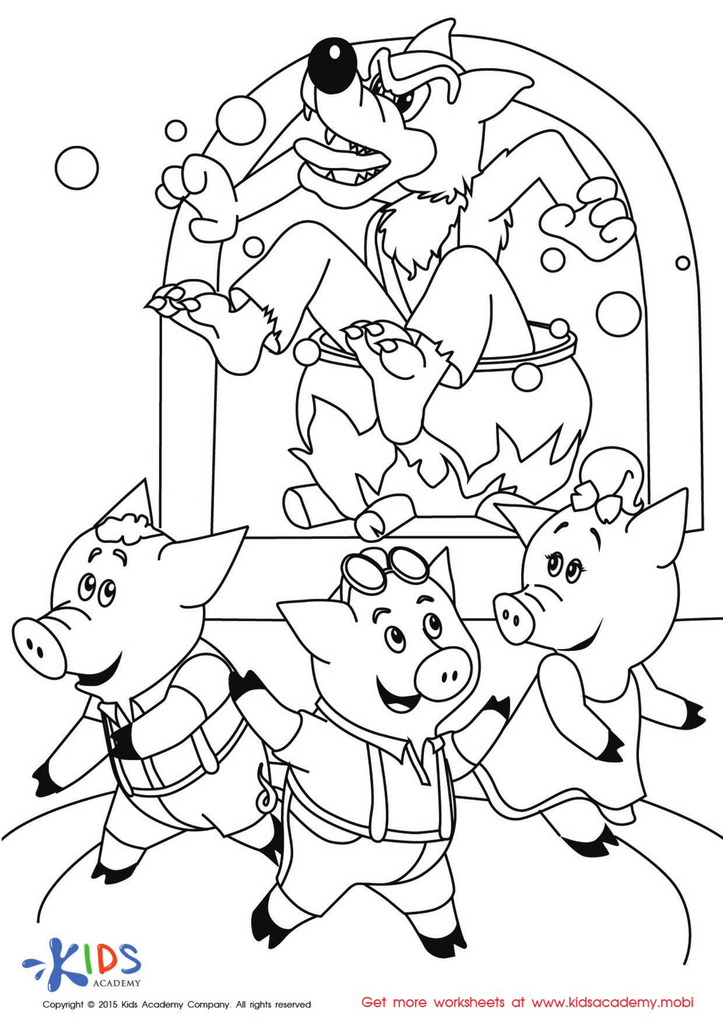
The Three Little Pigs and The Big Bad Wolf Printable
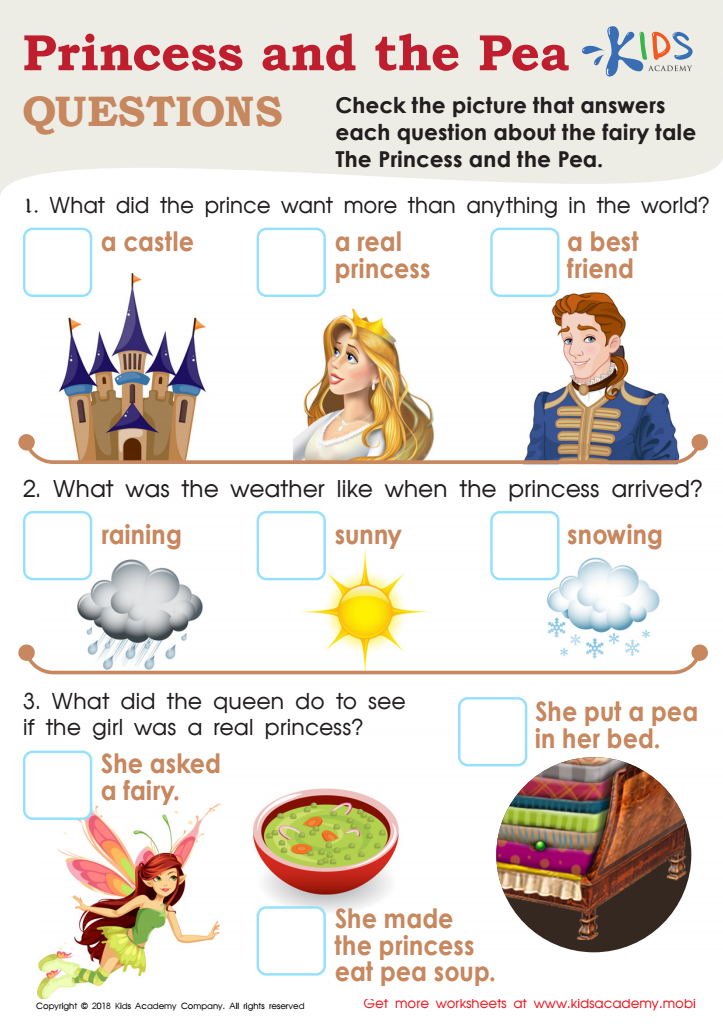
Princess and the Pea Questions Worksheet
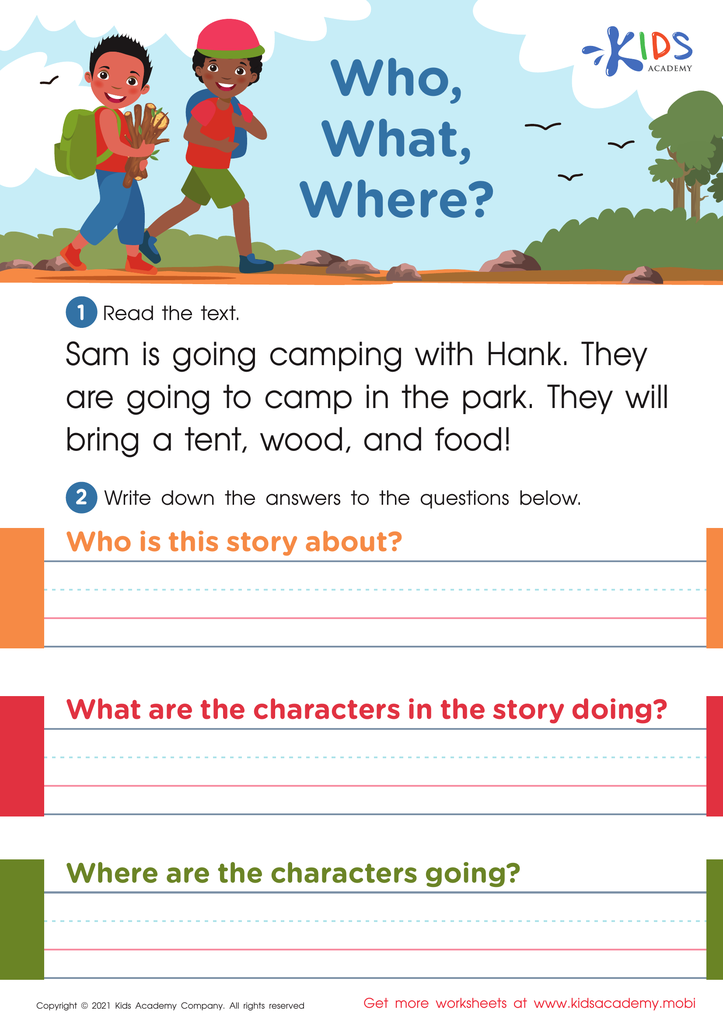
Who, What, Where? Worksheet






.jpg)

Story sequencing is a crucial skill for children aged 4-7 as it plays a fundamental role in their cognitive, linguistic, and social development. At this young age, children are just beginning to understand the world around them, and story sequencing helps in organizing thoughts and ideas logically. It encourages children to understand the order of events, which enhances comprehension and retelling skills—essential components of reading proficiency. By practicing sequencing, children can better grasp cause-and-effect relationships and understand how actions lead to outcomes.
Additionally, story sequencing aids language development by expanding vocabulary and improving sentence structure. As children recount stories, they use connective words like "first," "then," and "finally," which enrich their language skills. This ability also puts them on a promising path toward writing coherent and structured narratives in later years.
Socially, being able to sequence stories enables children to connect with peers. When children discuss and collaborate on sequencing activities, they practice turn-taking, attentive listening, and collective problem-solving. Furthermore, teachers and parents can use story sequencing as an opportunity to assess comprehension levels and provide targeted support where needed.
Altogether, mastering story sequencing lays a strong foundation for academic achievement, effective communication, and robust social interactions, making it a significant area of focus for parents and teachers alike.








