Subtraction skills Worksheets for Ages 4-7 - Page 2
27 filtered results
-
From - To
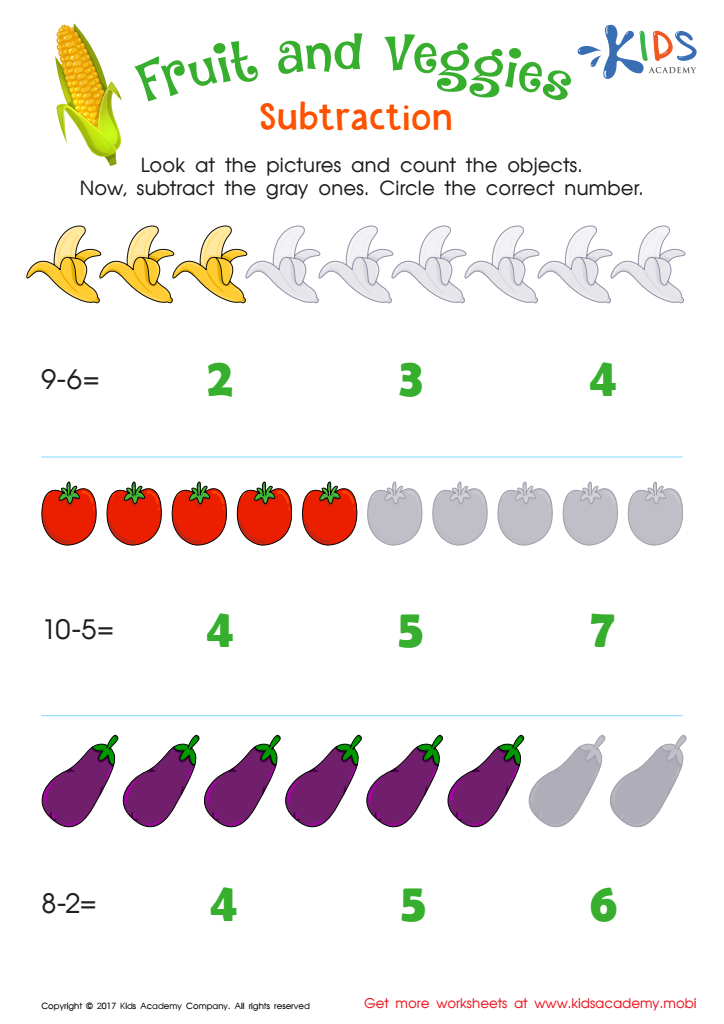
Fruit and Veggies Subtraction Worksheet
 Assign to My Students
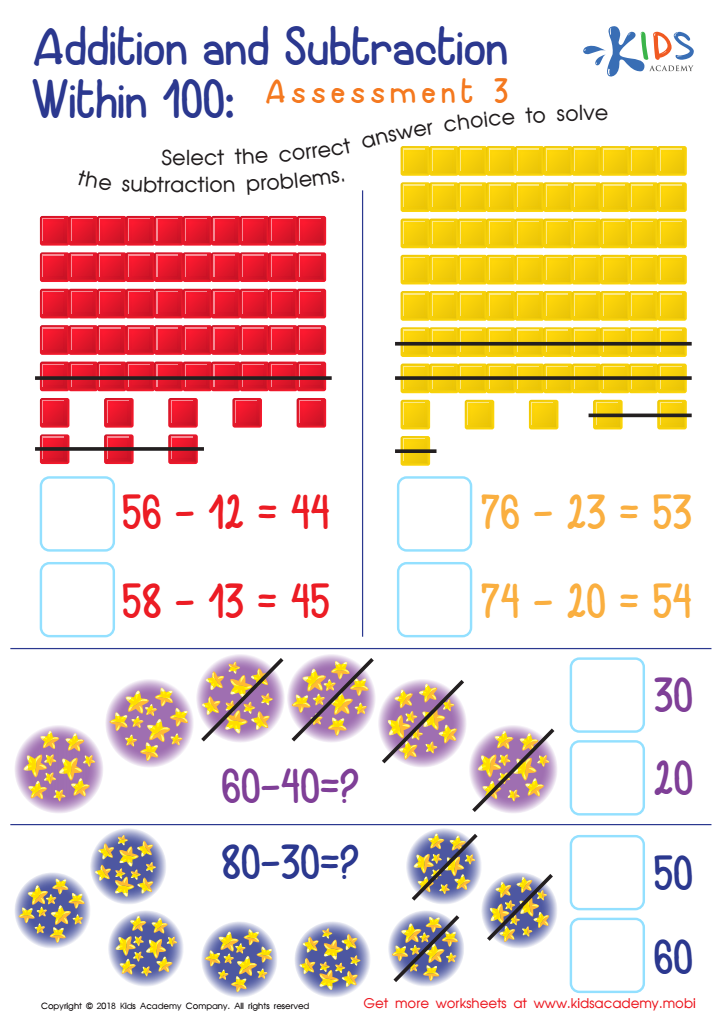
Addition and Subtraction Within 1: Assessment 3 Worksheet


%20(1).jpg)



.jpg)

Subtraction skills are crucial for children aged 4 to 7 because they form the foundation for more advanced mathematical concepts. At this stage, children are developing their number sense and understanding of how numbers interact. Subtraction, as one of the basic operations, helps them grasp the concept of 'taking away' and the relationship between addition and subtraction.
Strong subtraction skills enhance problem-solving abilities and critical thinking. As children learn to subtract, they engage in reasoning and begin to see relationships among numbers, fostering overall mathematical literacy. This skill also builds confidence; children who master subtraction are more likely to participate actively in class discussions, overcoming math anxiety.
Moreover, subtraction is frequently encountered in daily life, such as sharing objects, determining quantities after giving some away, or understanding changes in wealth. Early familiarity with subtraction can help children contextualize their learning, making math more relatable.
Finally, supporting subtraction skills aligns with school curricula, helping children prepare for assessments and success in later grades. Parents and teachers together can create a rich learning environment that emphasizes the significance of these foundational skills, setting the stage for future academic achievement.








