Enhance your child’s understanding of time with our engaging Time-telling Skills Worksheets, designed for ages 4 to 7. These fun, interactive resources help young learners grasp the concept of telling time using both digital and analog clocks. With vibrant illustrations and age-appropriate exercises, children will develop essential skills such as recognizing hour and minute hands, identifying key time vocabulary, and practicing time-reading strategies. Our worksheets are perfect for classroom or home use, making learning fun and effective. Give your child the gift of time mastery as they grow in confidence and independence! Start exploring today and make learning a delightful journey!

Check out this FREE "Time-telling skills" Trial Lesson for age 4-7!

Cut Circles into Equal Parts and Name them as Fractions Halves and Wholes

Favorites
With answer key
Interactive
  • 4-7
  • Time-telling skills
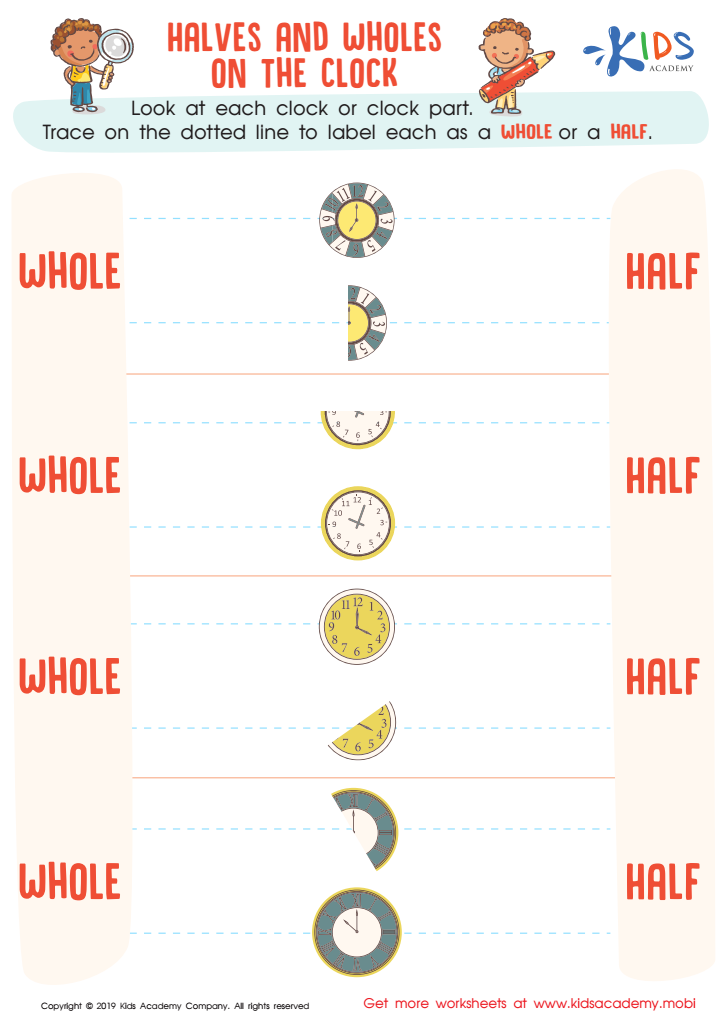
Halves and Wholes on the Clock Worksheet

Halves and Wholes on the Clock Worksheet

Ask your kids if they know the difference between a whole and a half. If not, explain it's when a whole is divided into two equal parts. Show them the worksheet with clocks and clock parts, and help them label each shape as a whole or a half by tracing on the dotted line.
Halves and Wholes on the Clock Worksheet
Worksheet
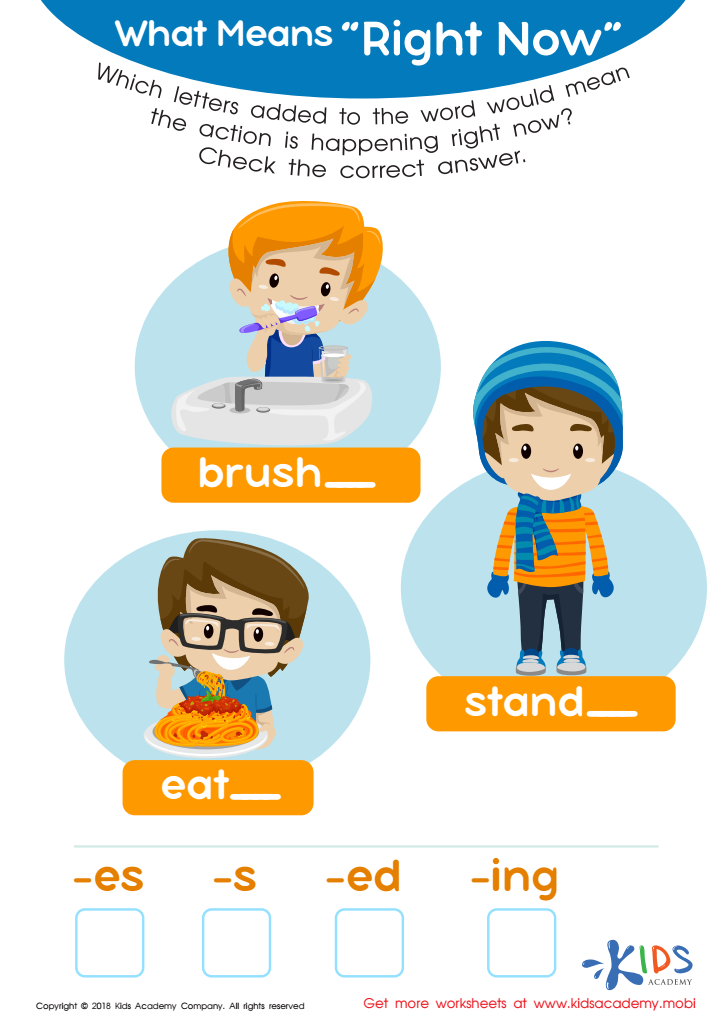
What Means "Right Now" Worksheet

What Means "Right Now" Worksheet

Explain present/past tense verbs to your kids, giving them simple examples. Ask which letters make a verb present tense; read the words aloud and help them check the correct answers.
What Means "Right Now" Worksheet
Worksheet
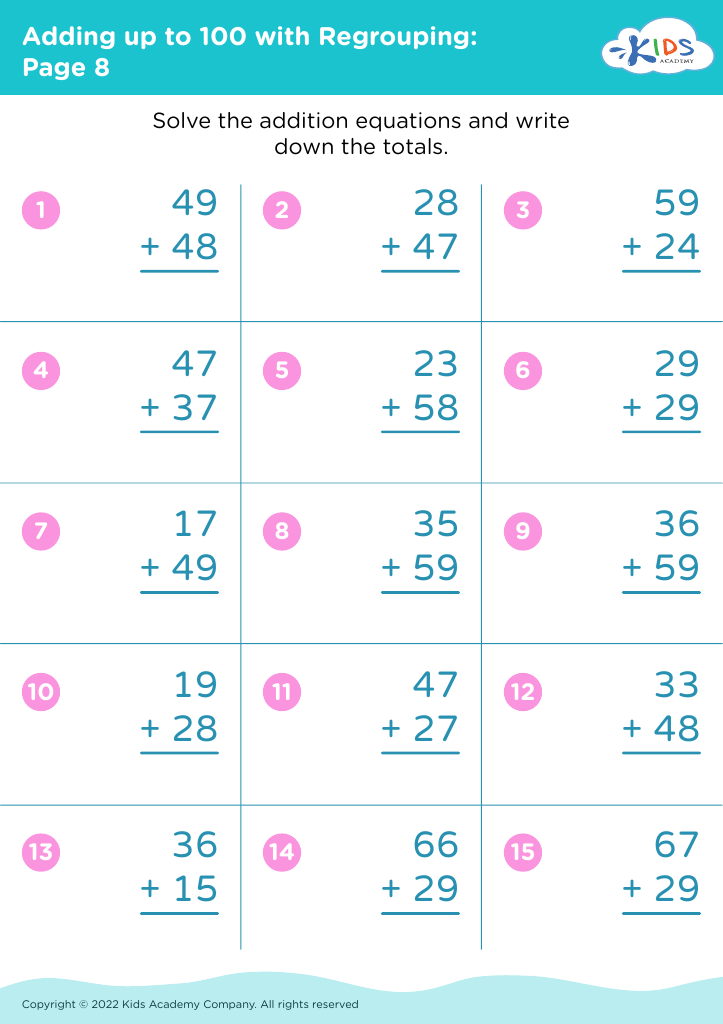
Adding up to 100 with Regrouping: Page 8
Worksheet
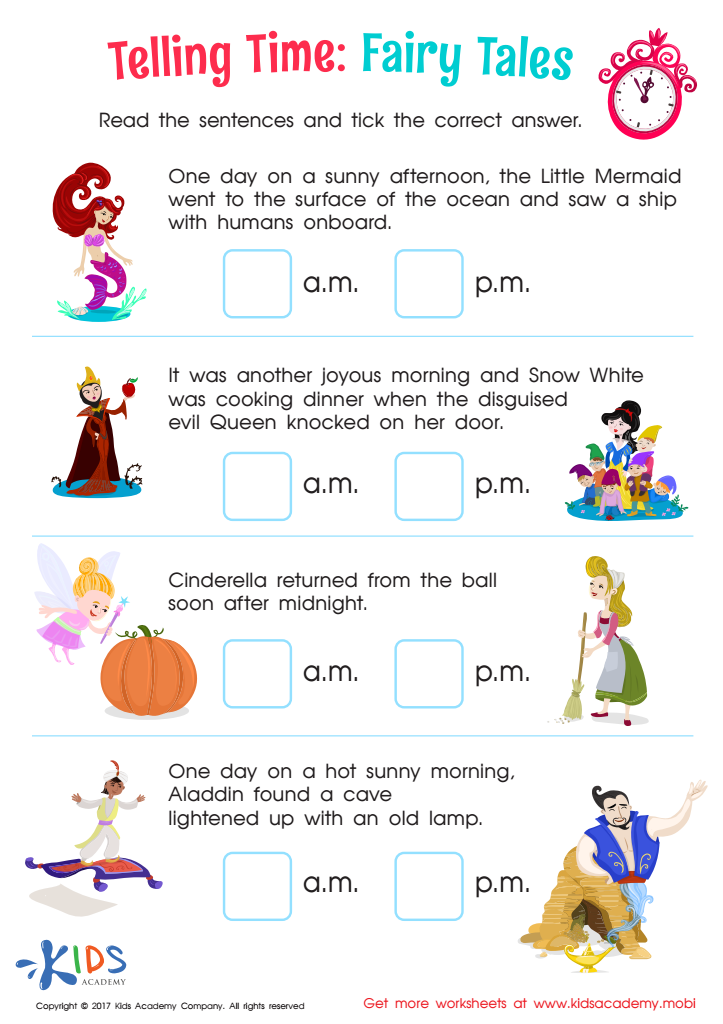
Telling time worksheet: fairy tales

Telling Time: Fairy Tales Worksheet

Bring your child's imagination to life with classic fairy tales! This colorful telling time worksheet has it all: The Little Mermaid, Cinderella, and more! Plus, your child will have fun learning to distinguish a.m. from p.m. with this charming worksheet.
Telling Time: Fairy Tales Worksheet
Worksheet
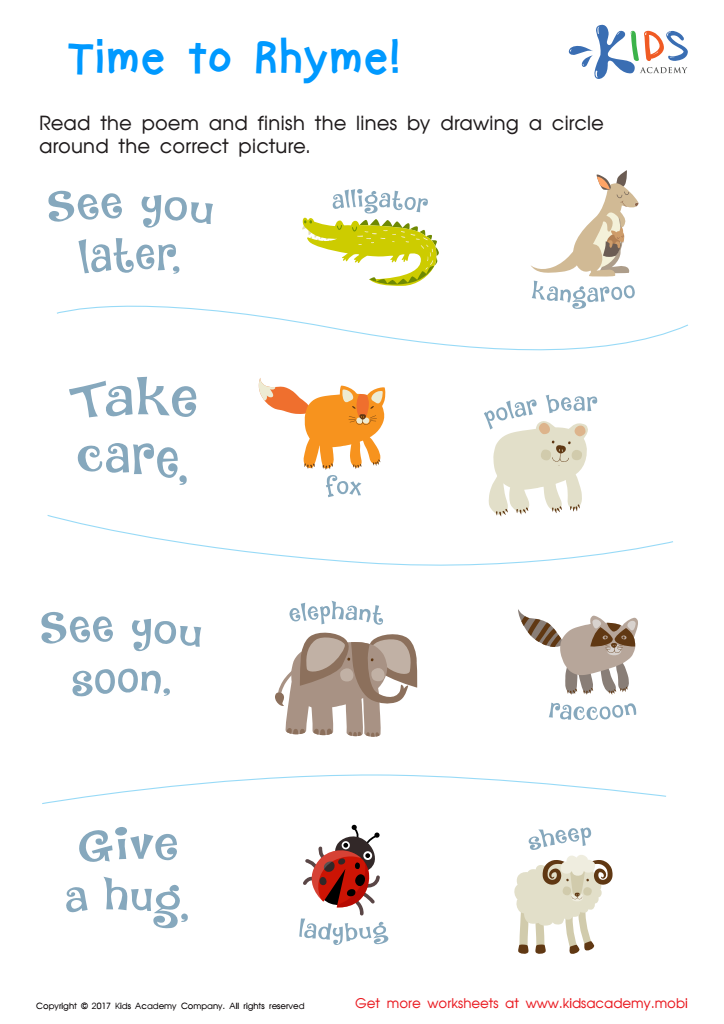
Rhyming Words Worksheet for Kindergarten

Time to Rhyme Rhyming Worksheet

This worksheet helps kids learn catchy sayings with rhymes, notice words and sounds that rhyme, and use problem solving to solve expressions. By using these expressions in everyday talk, kids gain the repetition needed to internalize the skills they've learned. Check out our nursery rhymes to further support them!
Time to Rhyme Rhyming Worksheet
Worksheet
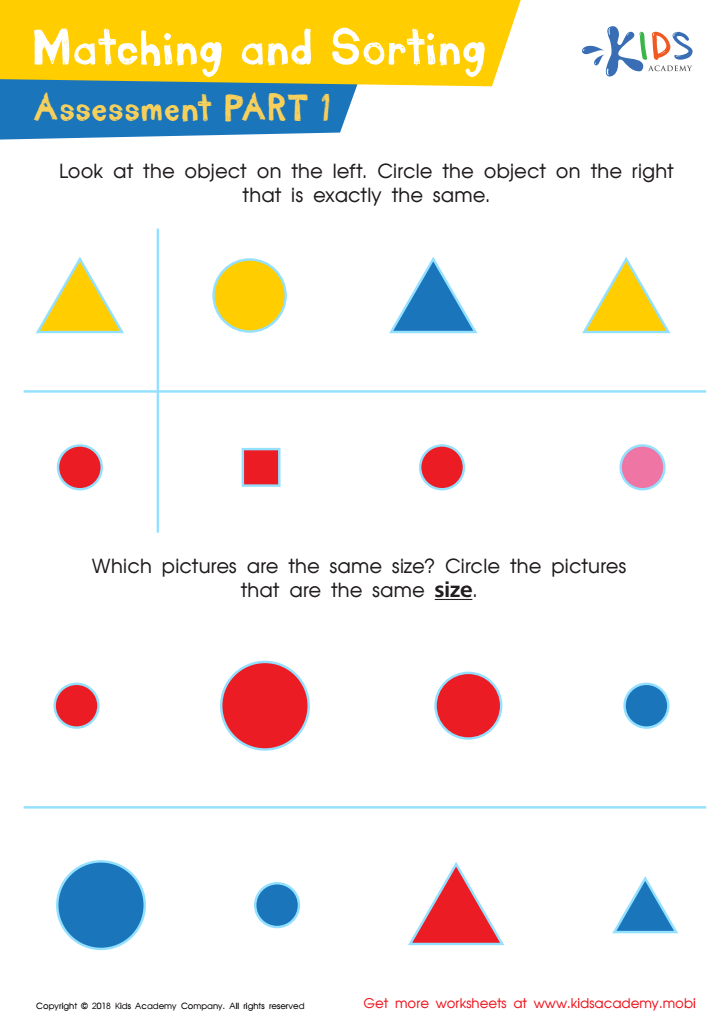
Matching and Sorting for Kindergarten: Assessment 1 Worksheet

Matching and Sorting for Kindergarten: Assessment 1 Worksheet

Kids can sharpen their visual discrimination skills and analyze properties of shapes with this free downloadable worksheet. They'll identify color, size, shape, and symmetry, working with bright primary colors. This helps build a strong geometric foundation, learning to identify shape attributes.
Matching and Sorting for Kindergarten: Assessment 1 Worksheet
Worksheet
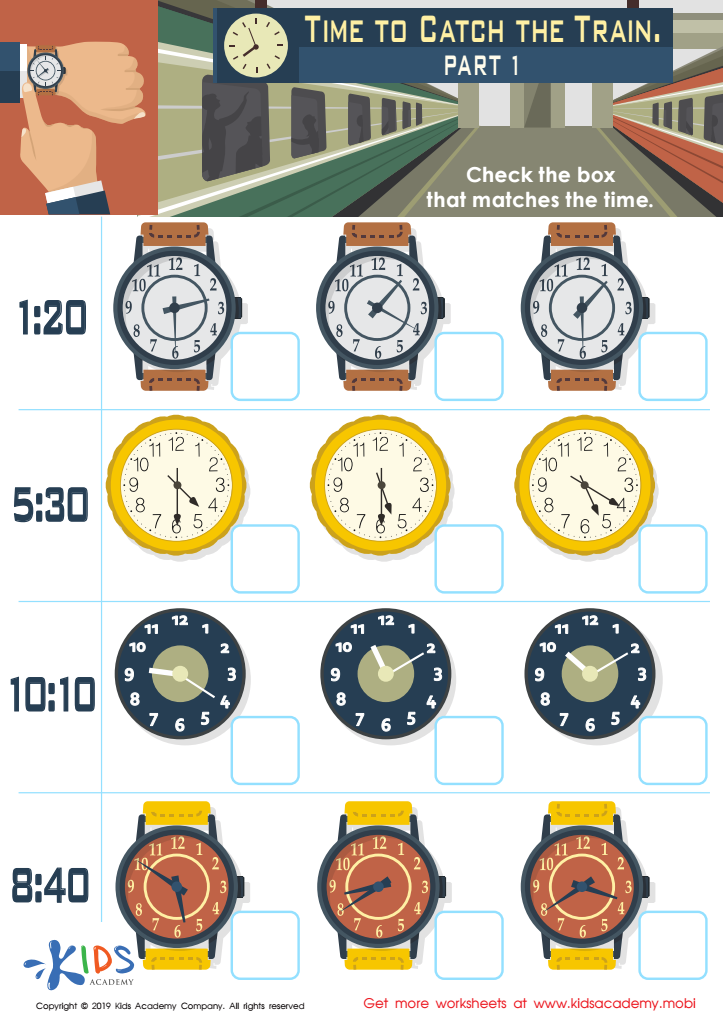
Time to Catch the Train Part 1 Worksheet

Time to Catch the Train Part 1 Worksheet

Time is essential for us; it lets us know when to do various things. Your kids likely wake up at a specified hour and prepare for the school bus. Demonstrate to them that time-telling is vital, and show them there are multiple ways to show time. Point to the time written on the left and the watches in the picture. Assist your children to check the box that corresponds to the time.
Time to Catch the Train Part 1 Worksheet

Worksheet
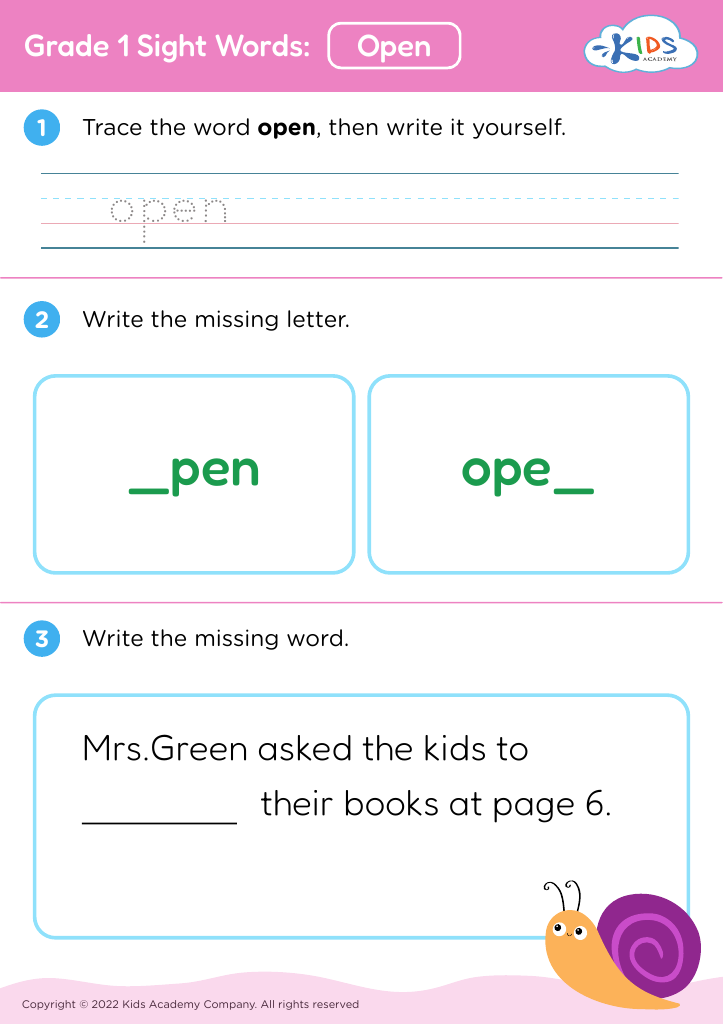
Grade 1 Sight Words: Open

Grade 1 Sight Words: Open

Grade 1 Sight Words: Open
Worksheet


Time-telling skills, especially for children aged 4-7, are fundamental for promoting independence and fostering responsibility. Parents and teachers should care about developing these skills because they lay the groundwork for effective time management and organization as children grow. Understanding the concept of time helps children navigate their daily routines, including school schedules, playtime, and chores. It empowers them to manage their activities, enhancing decision-making abilities and self-regulation.

Moreover, time-telling is an invaluable life skill that promotes math literacy through numerical recognition, sequencing, and counting skills. It encourages children to connect abstract concepts with real-world applications, enriching their learning experiences. Moreover, familiarizing children with both digital and analog clocks helps them appreciate the passing of time in varied formats, preparing them for diverse situations they might encounter in modern life.

Additionally, when children learn to tell time, they become more engaged and responsible members of their community, often helping others in group settings. For these reasons, instilling time-telling skills during formative years should be a priority for parents and educators, serving as an essential tool for lifelong personal and academic success.