Understanding number patterns Worksheets for Ages 4-7
5 filtered results
-
From - To
Discover our engaging "Understanding Number Patterns Worksheets" designed specifically for children aged 4-7. These worksheets introduce young learners to the essential concepts of number patterns through fun and interactive activities. By exploring sequences, simple addition, and subtraction, children will develop crucial mathematical skills while enhancing their critical thinking. Our accessible worksheets cater to different learning styles, making it easy for parents and teachers to incorporate them into everyday learning. Foster a love for math in your child with our colorful, age-appropriate printables that spark curiosity and enjoyment. Help your children master number patterns today and watch their confidence grow!
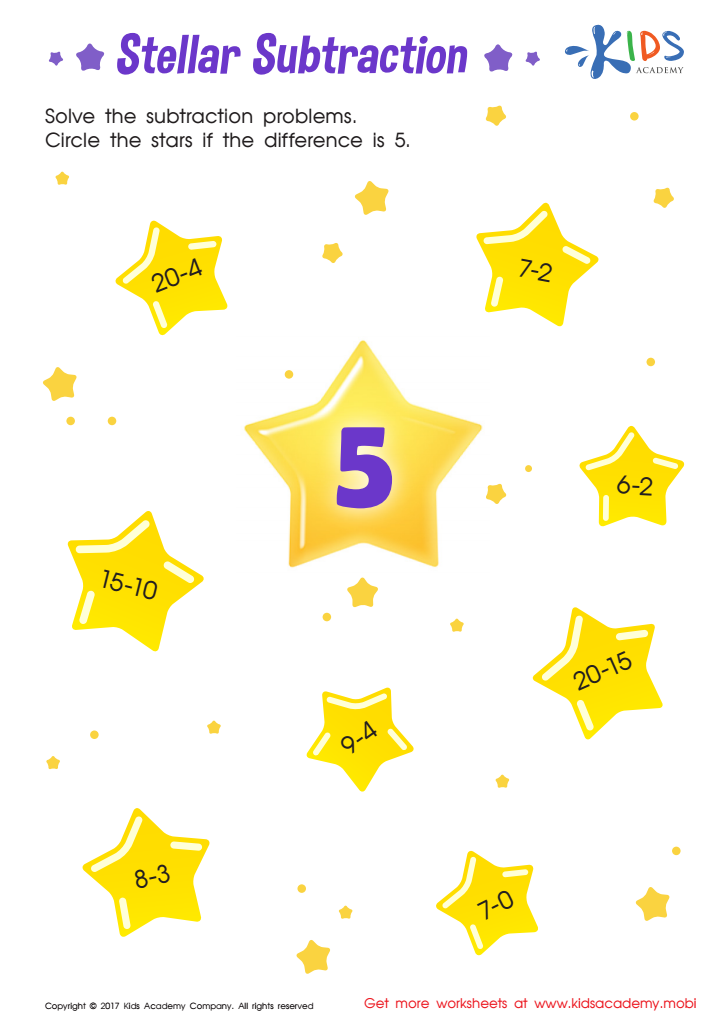
 Assign to My Students
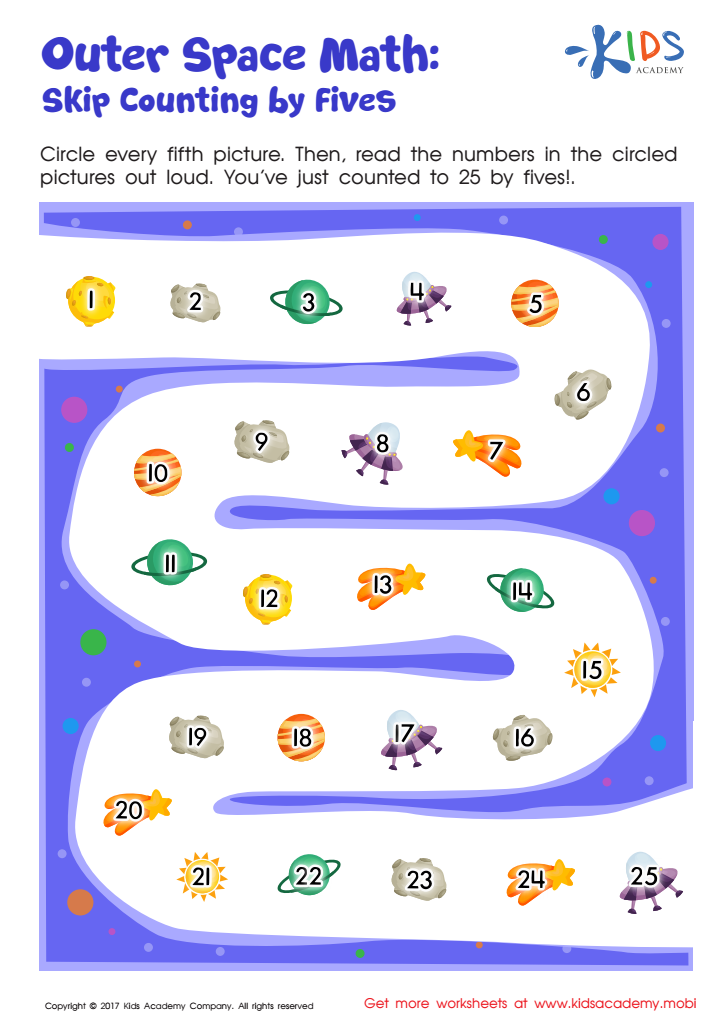
Skip Counting by 5s: Outer Space Math Printable
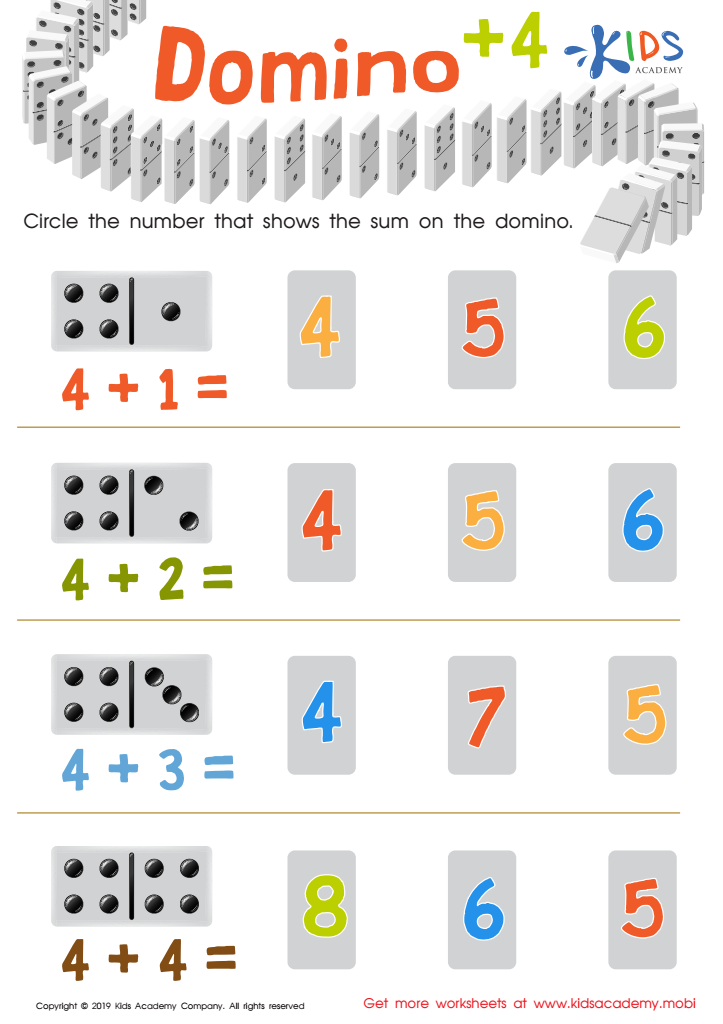
Domino +4 Worksheet
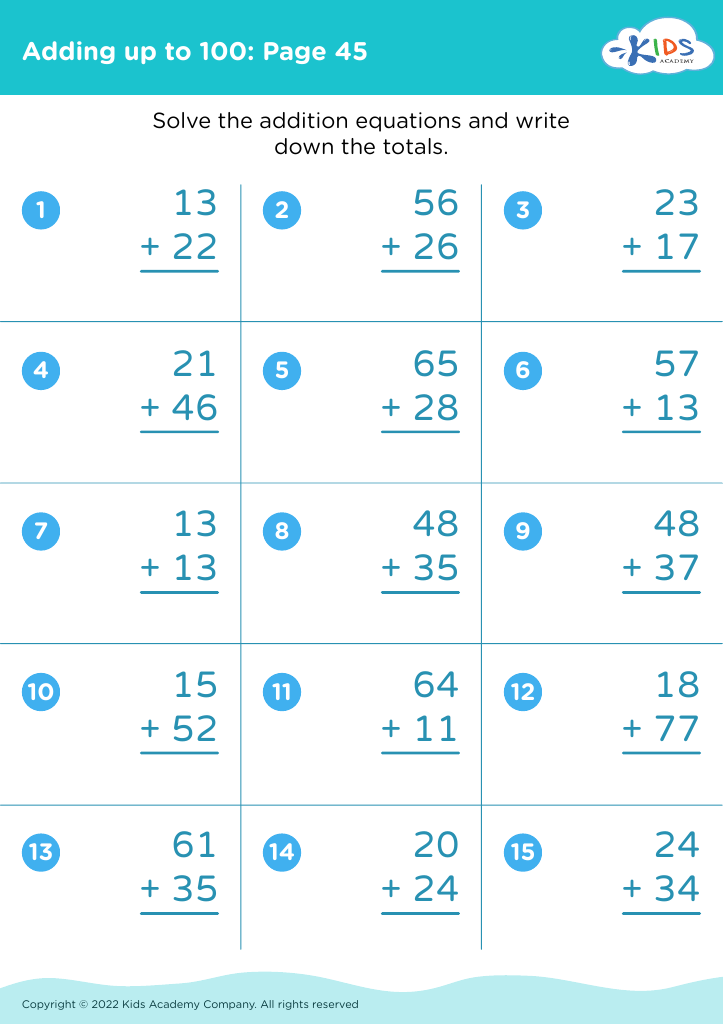
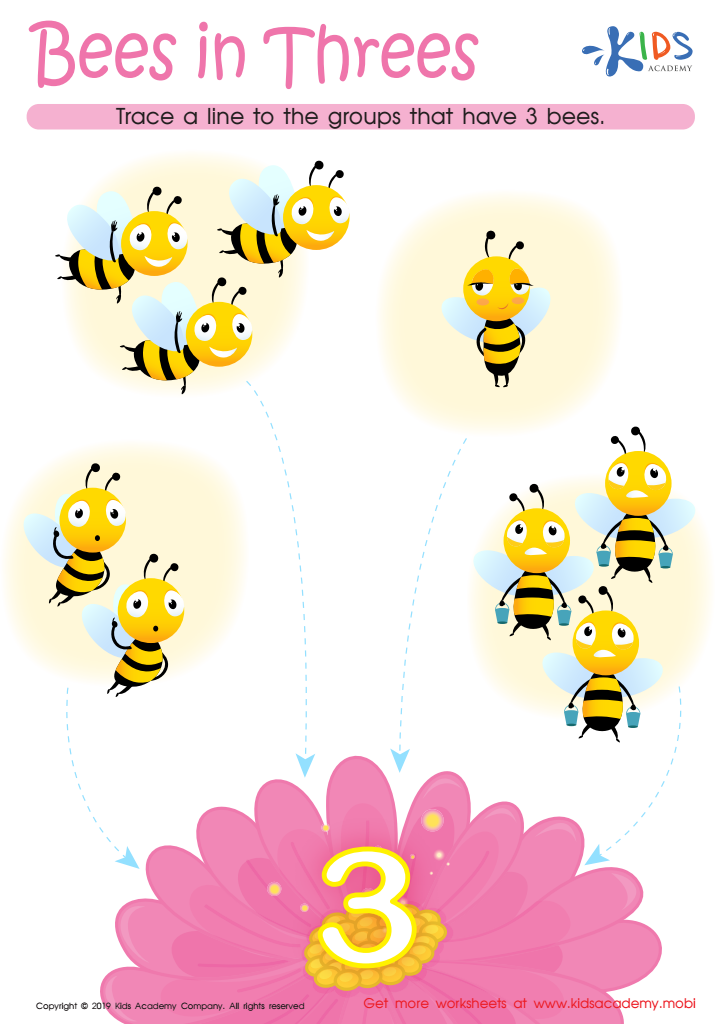
Bees in Threes Worksheet






Understanding number patterns is essential for children aged 4-7 for several reasons. First, number patterns help develop foundational math skills. Recognizing patterns strengthens students' ability to count, add, and subtract as they learn to see relationships between numbers. This cognitive skill forms the groundwork for future mathematical concepts.
Secondly, pattern recognition boosts problem-solving skills and critical thinking. When children learn to identify and predict patterns, they enhance their ability to analyze and interpret data, which is vital in today’s data-driven world. It cultivates a sense of logic that goes beyond mathematics, nurturing analytical skills applicable in various subjects.
Moreover, engaging with number patterns supports emotional growth by building confidence. When children successfully recognize and extend patterns, they feel a sense of achievement, encouraging a positive attitude towards learning.
Finally, parental and teacher involvement in this learning process reinforces the importance of collaboration in education. By interacting with children—through games, discussions, or everyday activities—adults can make learning about number patterns enjoyable and meaningful.
In summary, understanding number patterns equips young learners with crucial mathematical abilities, boosts confidence, and fosters critical thinking skills essential for their overall development and later academic success.








