Introduce young learners to the concept of sequences with our engaging worksheets designed for ages 4-7. These carefully crafted activities on Kids Academy help children understand patterns and order using fun illustrations and relatable themes. Our engaging worksheets promote critical thinking, boost problem-solving skills, and foster early math proficiency. Your child will enjoy piecing together sequences through vibrant visuals while mastering foundational skills effectively. Perfect for home or classroom use, these worksheets make learning sequences both enjoyable and educational. Equip your child with essential skills for future success in math and beyond with our exclusive collection of sequence worksheets.
Check out this FREE "Understanding Sequences" Trial Lesson for age 4-7!

Count Forward Starting From Any Number

Favorites
With answer key
Interactive
  • 4-7
  • Understanding Sequences
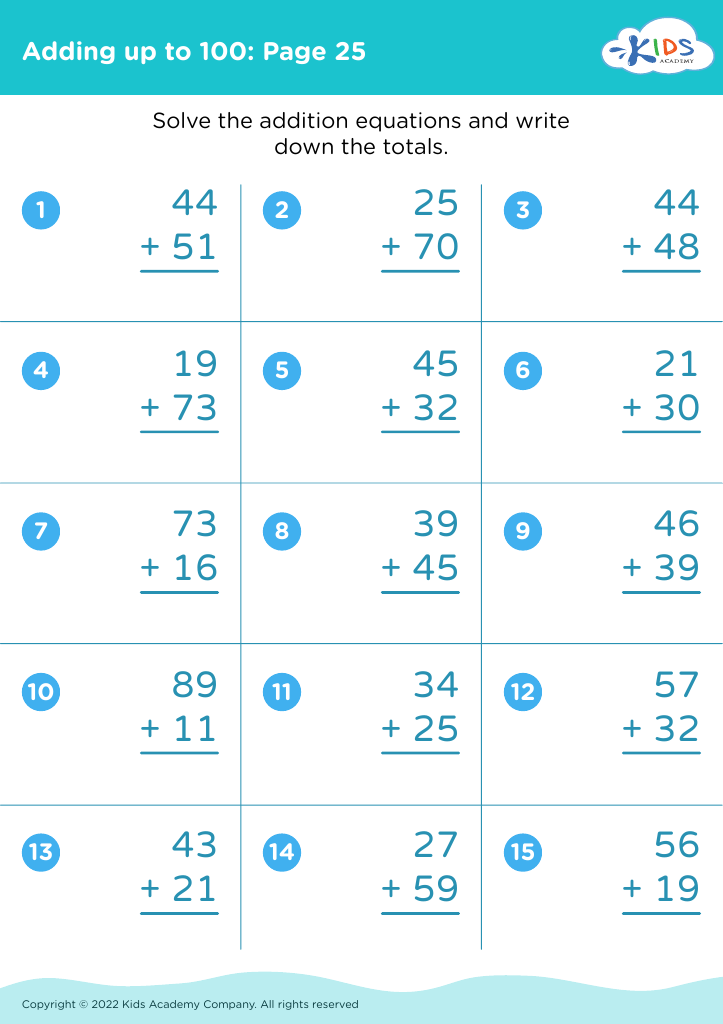
Adding up to 100: Page 25

Adding up to 100: Page 25

Adding up to 100: Page 25
Worksheet
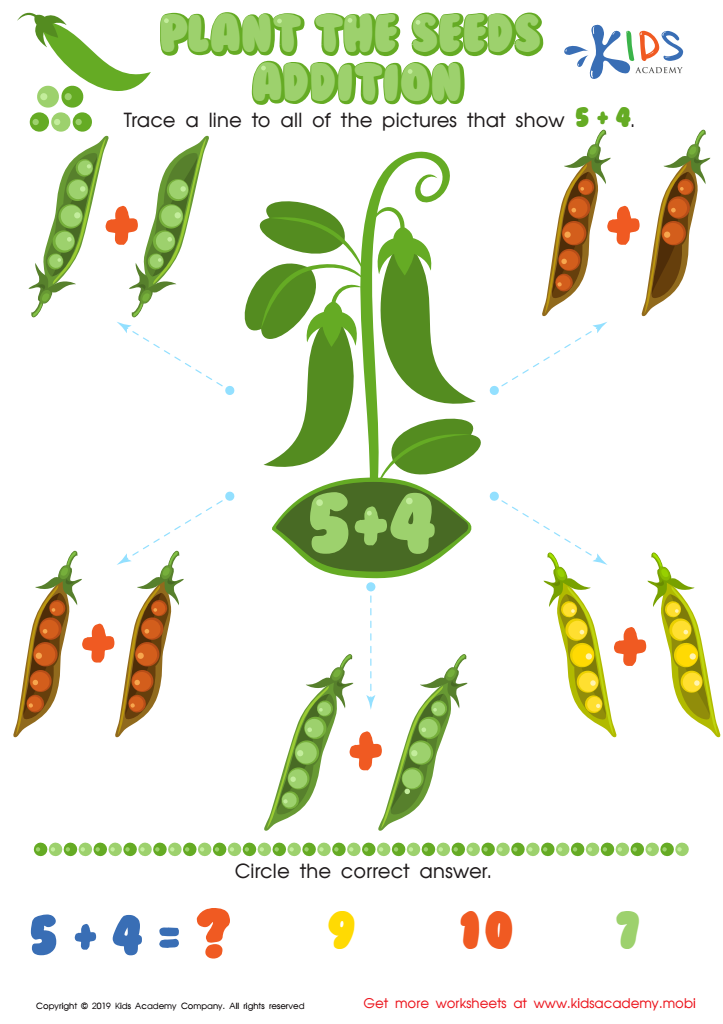
Plant the Seeds Addition Worksheet

Plant the Seeds Addition Worksheet

This worksheet combines math and learning about plants. Ask kids to name their favorite plants and which ones they see the most. Have them trace a line to all pictures in the middle which show the equation 5+4. Enjoy the beauty of plants while introducing math skills!
Plant the Seeds Addition Worksheet
Worksheet
Food Pattern Fun Worksheet

Food Pattern Fun Worksheet

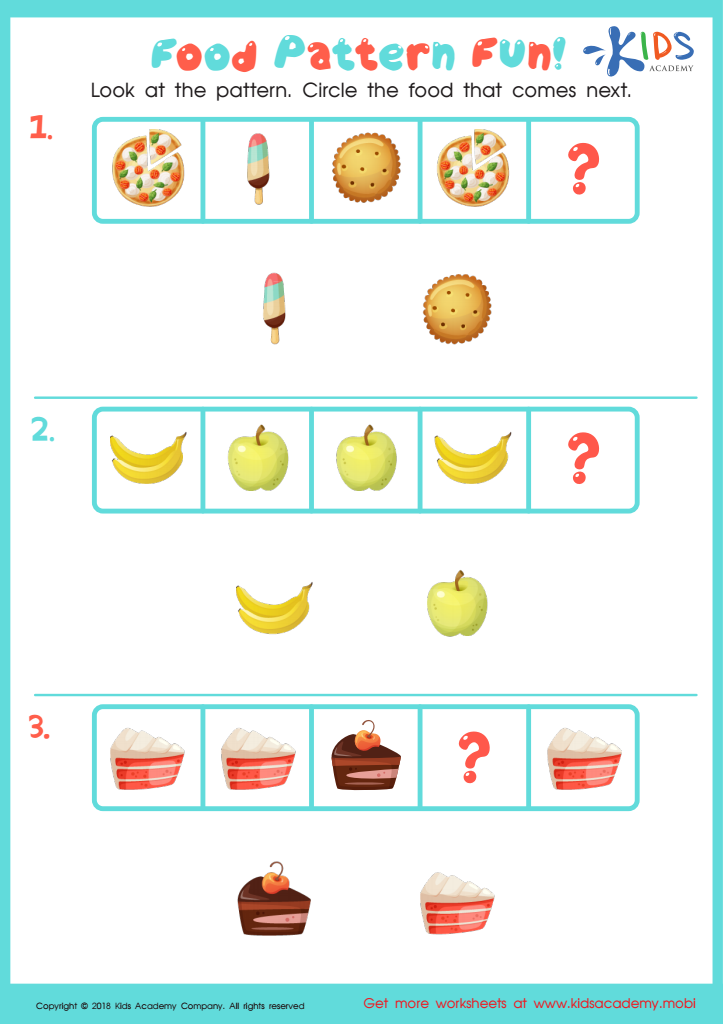
Got kids who love snacks? Get them excited with this fun food pattern worksheet! Ask them to identify the foods in the printout then spot the pattern and circle the next food in each row. It's a great way to get them thinking and have fun at the same time!
Food Pattern Fun Worksheet
Worksheet
Peter Pan Worksheet Preview

Peter Pan Worksheet

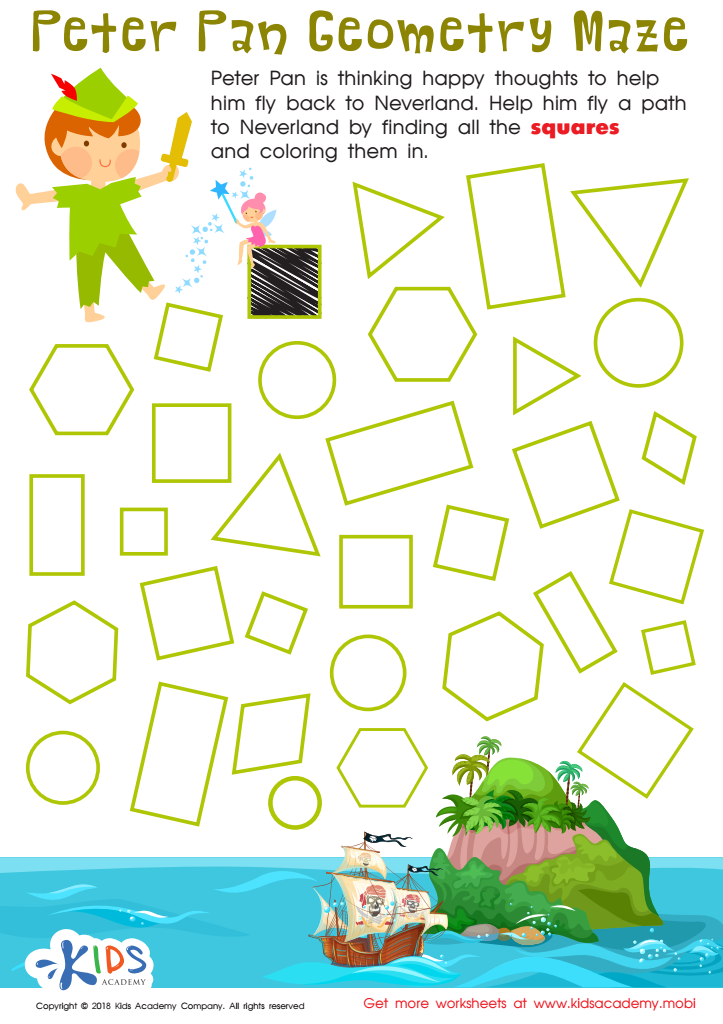
Kindergarteners can join Peter Pan on an adventure to Neverland! They can help him by coloring squares to create a path, strengthening their shape identification skills in a fun maze. Let the journey begin!
Peter Pan Worksheet
Worksheet
Adding Up to 5 in the Sea: Page 19
Worksheet
Tracing Winter Words : Snowman

Snowman Tracing Winter Words Worksheet
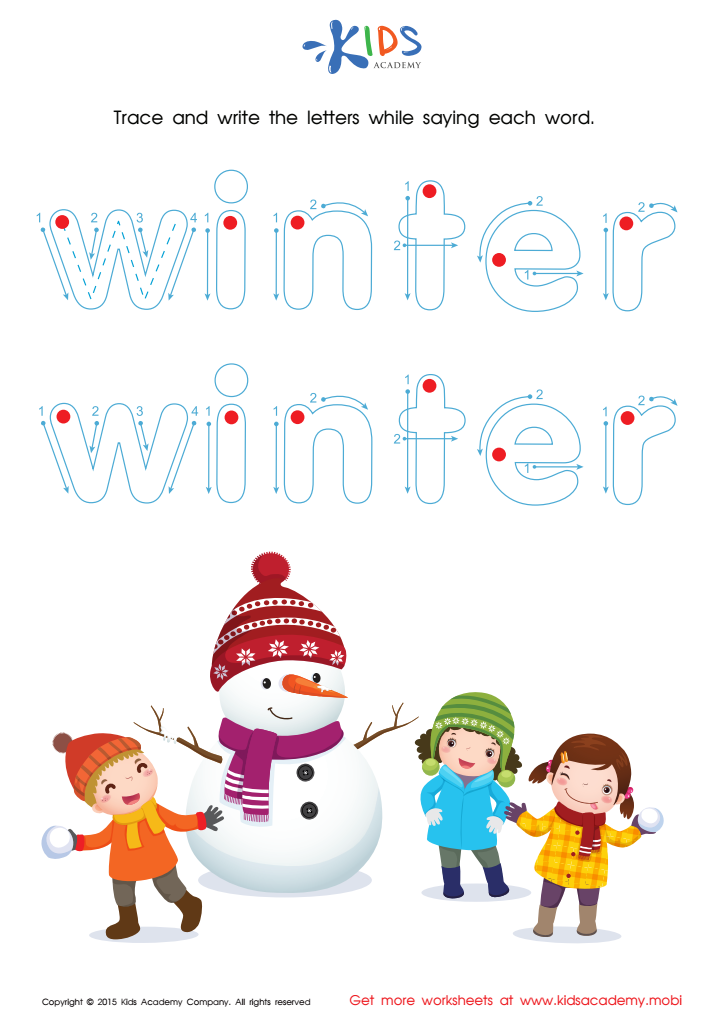
This free winter printable teaches handwriting and spelling with the word "snowman". It's a fun way to get your kid ready for Christmas cheer! Want more tracing worksheets? Check out here.
Snowman Tracing Winter Words Worksheet
Worksheet
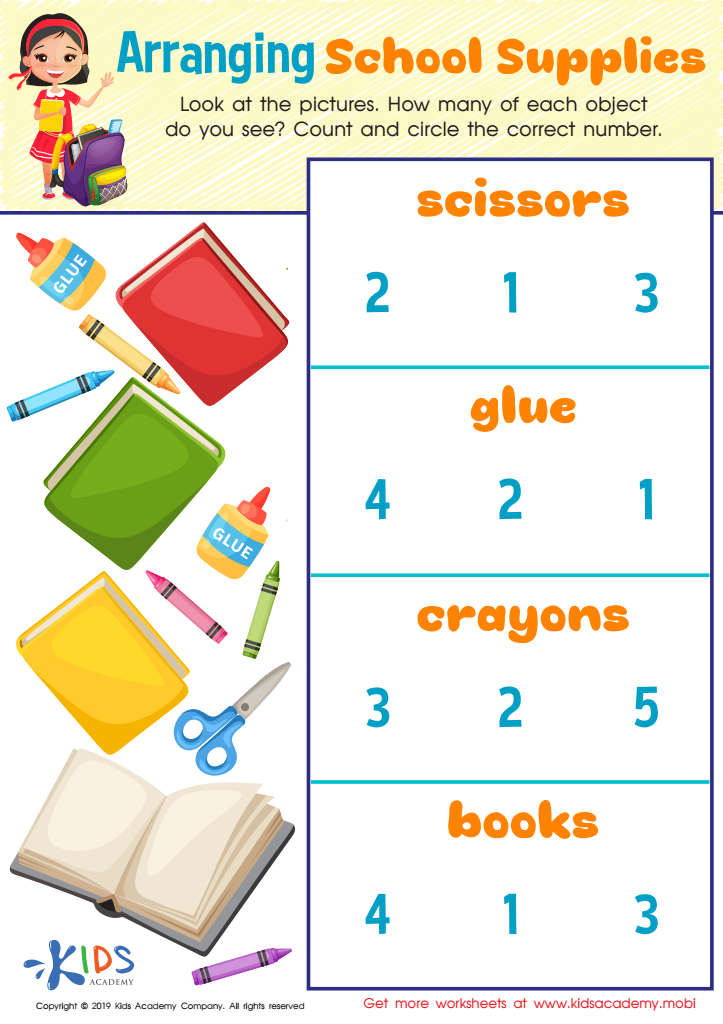
Arranging School Supplies Worksheet
Arranging School Supplies Worksheet
Help your kids identify and count the school supplies in this colorful printout. Ask them to circle the correct number from the options provided. This is an easy and fun way for your child to practice their counting skills and recognize everyday objects.
Arranging School Supplies Worksheet
Worksheet
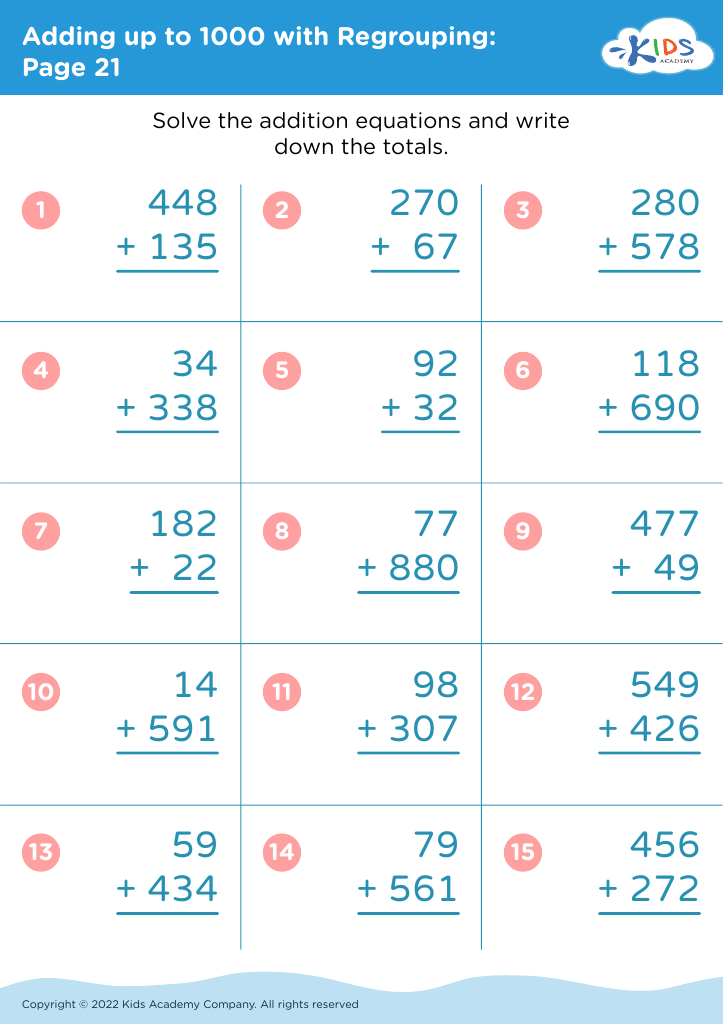
Adding up to 1000 with Regrouping: Page 21
Worksheet
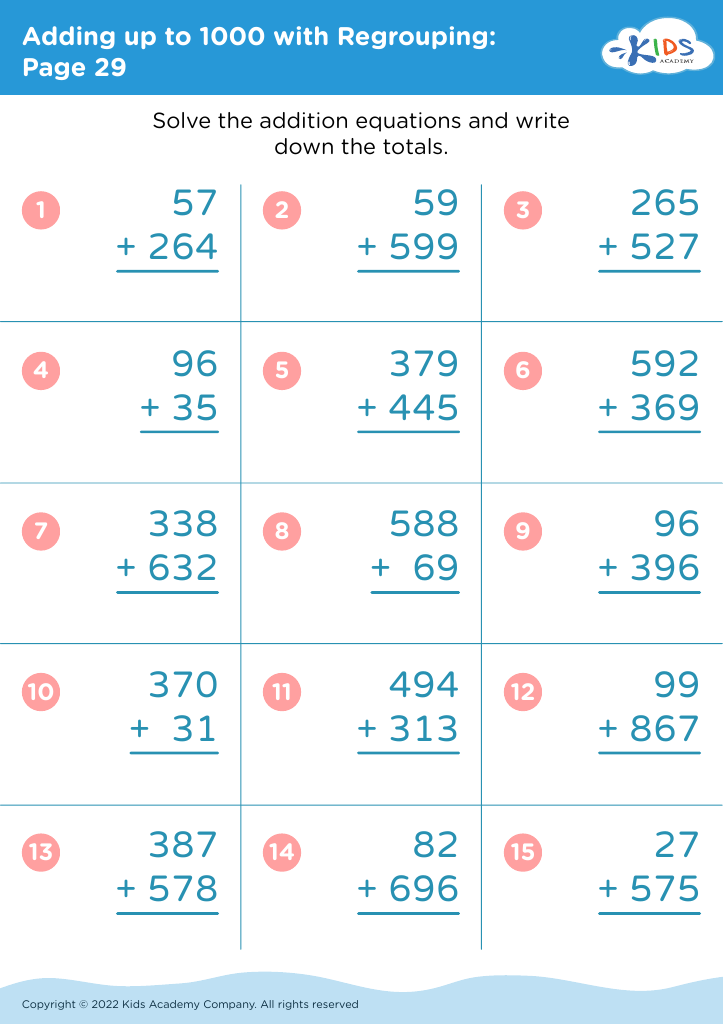
Adding up to 1000 with Regrouping: Page 29
Worksheet
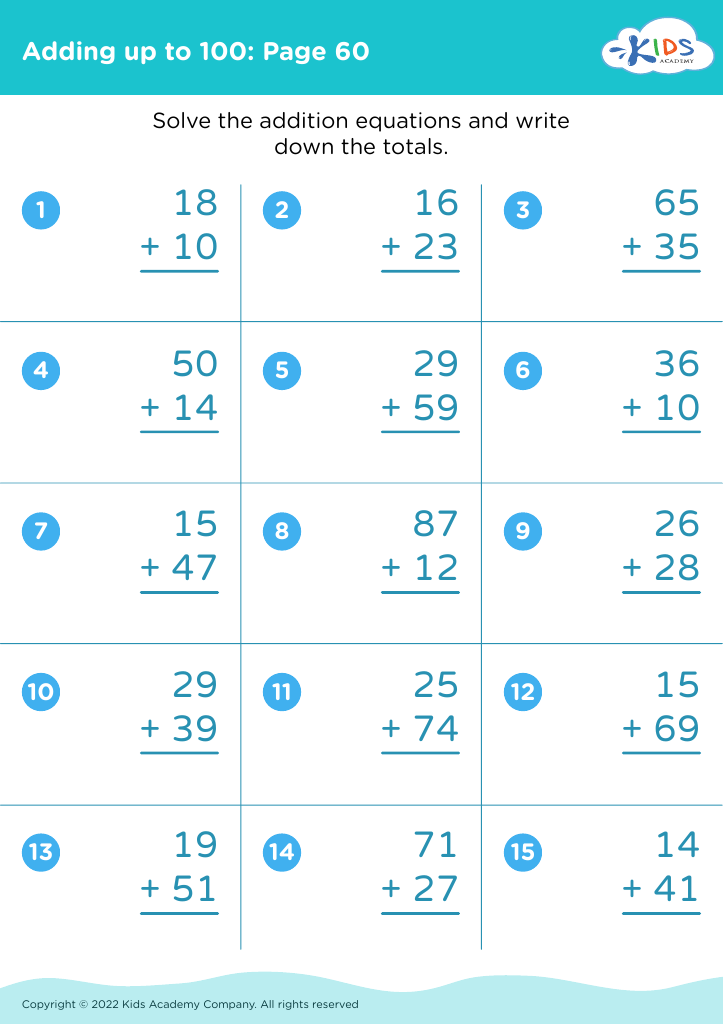
Adding up to 100: Page 60

Adding up to 100: Page 60

Adding up to 100: Page 60
Worksheet
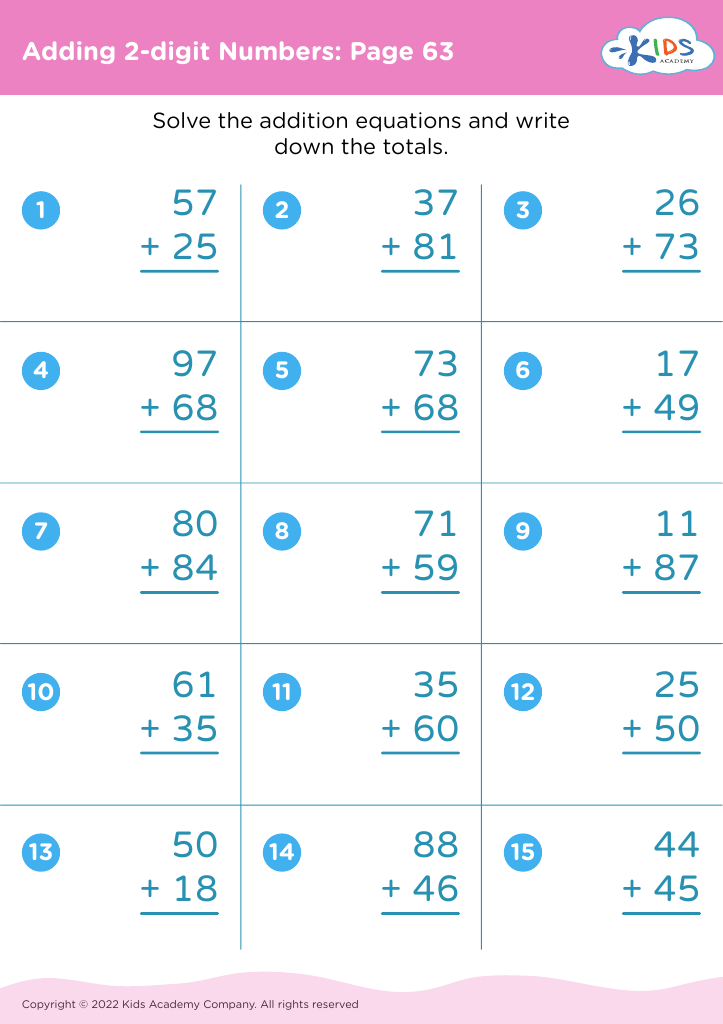
Adding 2-digit Numbers: Page 63

Adding 2-digit Numbers: Page 63

Adding 2-digit Numbers: Page 63
Worksheet
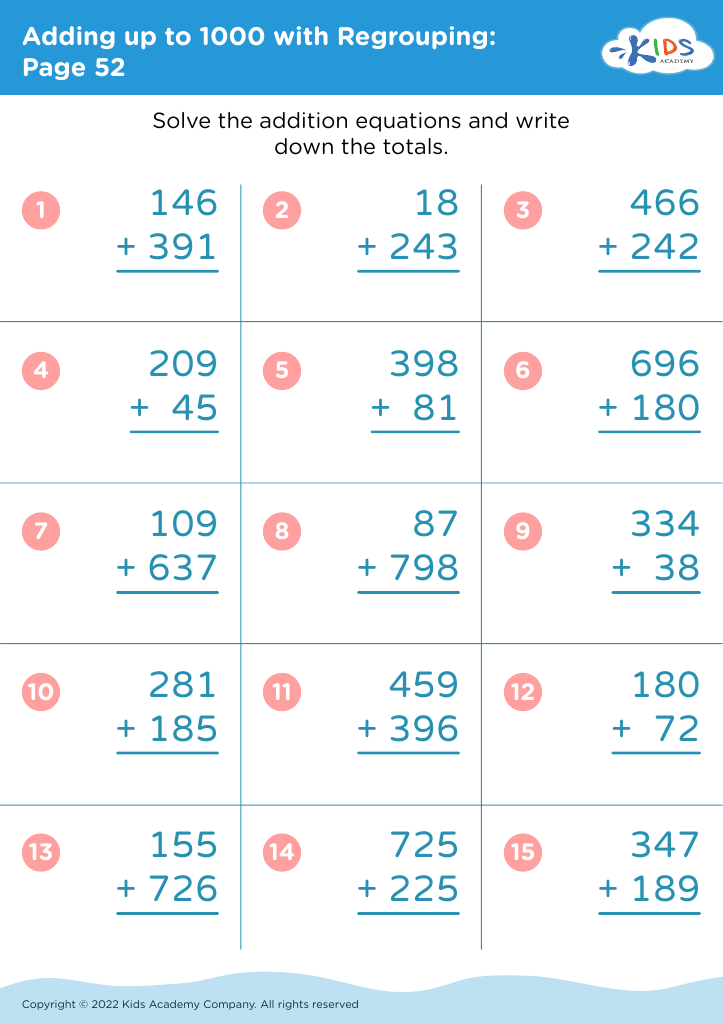
Adding up to 1000 with Regrouping: Page 52
Worksheet
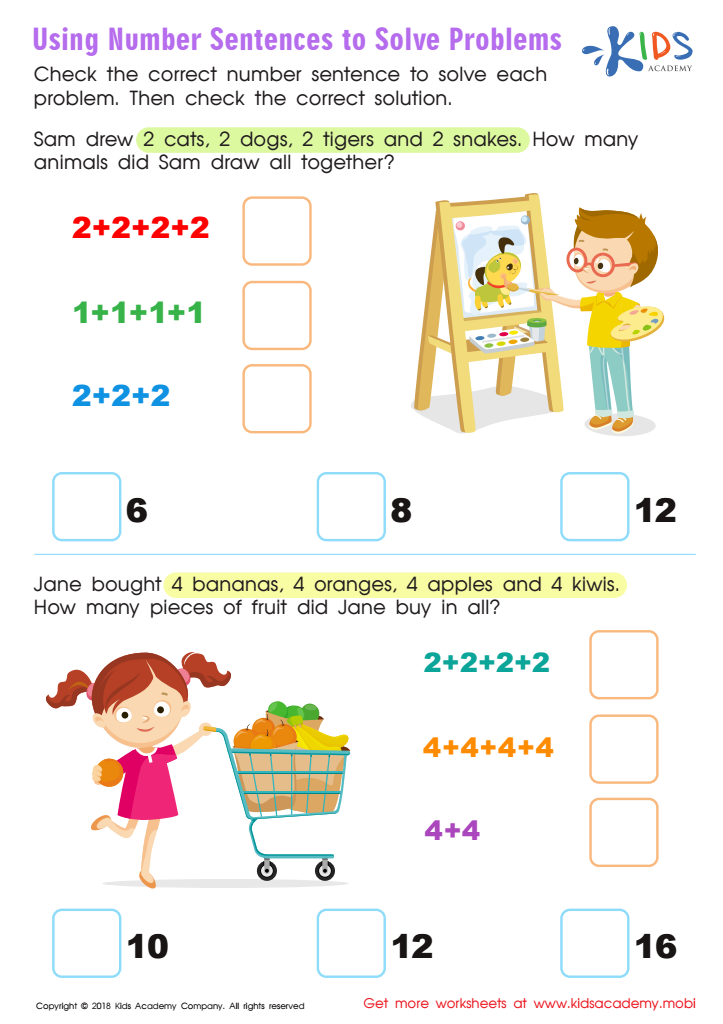
Using Number Sentences to Solve Problems Worksheet

Using Number Sentences to Solve Problems Worksheet

Solving math problems requires an efficient strategy. Picture representation can help young mathematicians with basic addition problems, especially when it involves repeated addends. As they gain confidence, they'll be able to apply their number sentence solving abilities to more complex equations.
Using Number Sentences to Solve Problems Worksheet
Worksheet
Carnivore Counting to 120 Worksheet
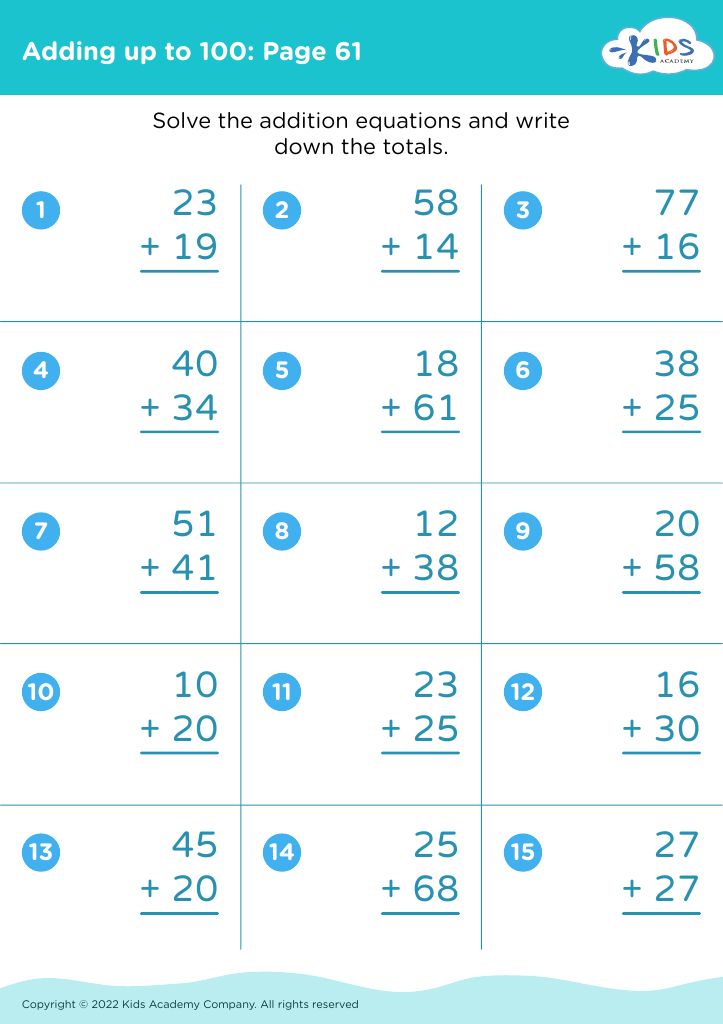
Carnivore Counting to 120 Worksheet

Ask your child to name some popular carnivores. Can they tell you what the animal in the worksheet is? A Tiger? Get them to count from 100 to 120 to connect the dots. After they finish the first picture, keep counting to help them practice!
Carnivore Counting to 120 Worksheet
Worksheet
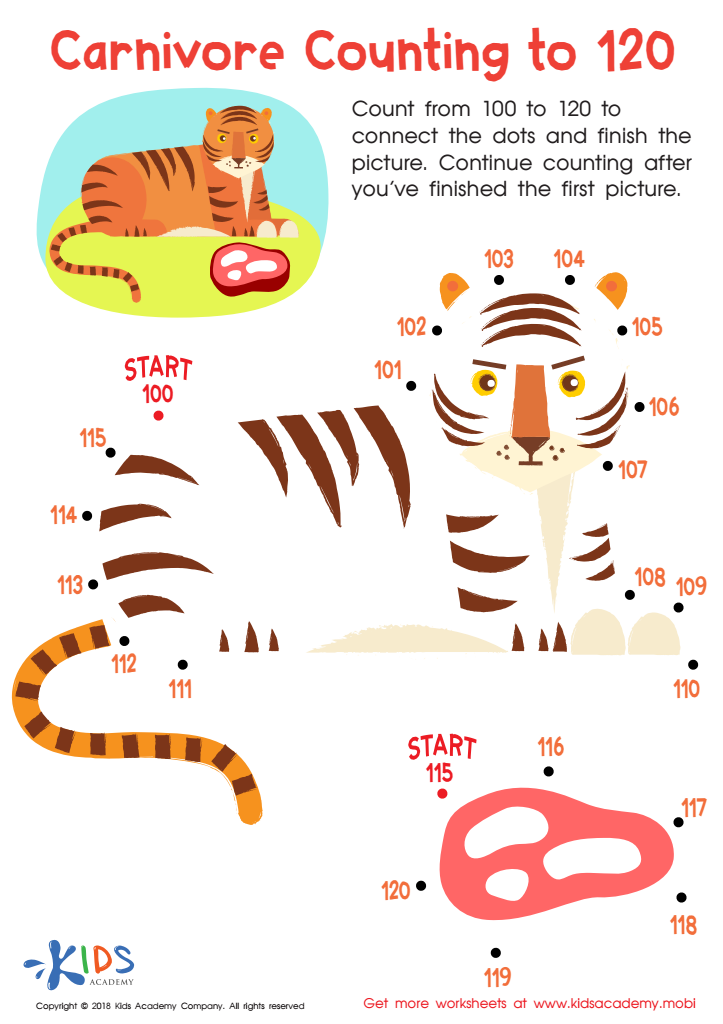
Adding up to 100: Page 61

Adding up to 100: Page 61

Adding up to 100: Page 61
Worksheet
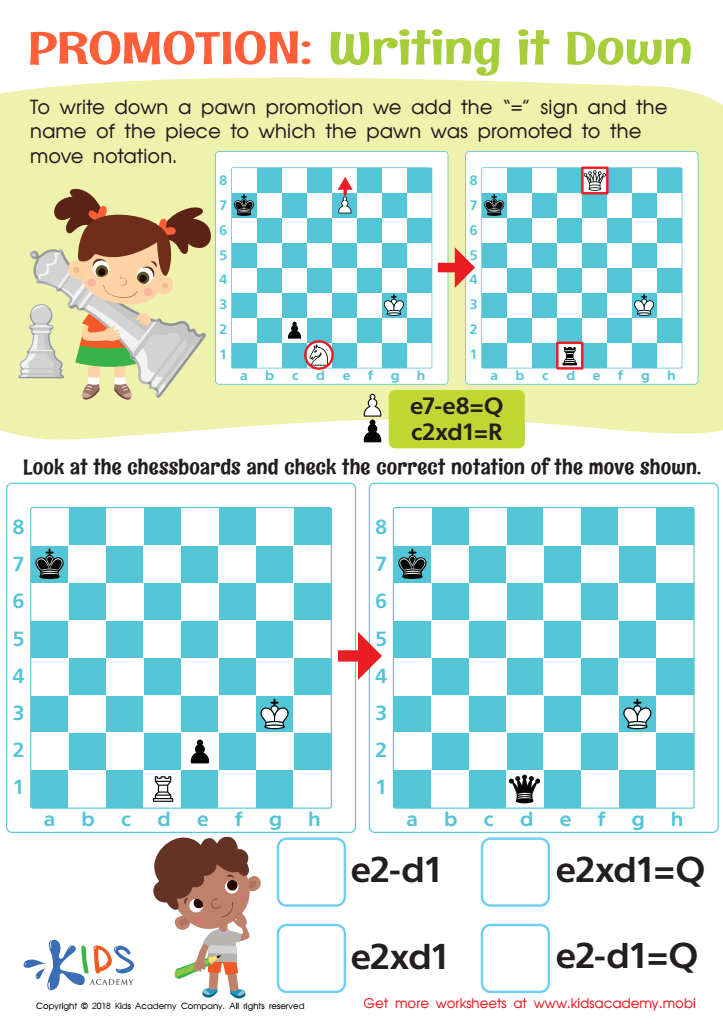
Writing it Down Worksheet

Writing it Down Worksheet

To document pawn promotion, add "=<piece name>" to the move notation. For example: e7-e8=Q. Ask your child to look at the chessboard and take note of the moves. Check the notations are correct. (80 words)
Writing it Down Worksheet
Worksheet
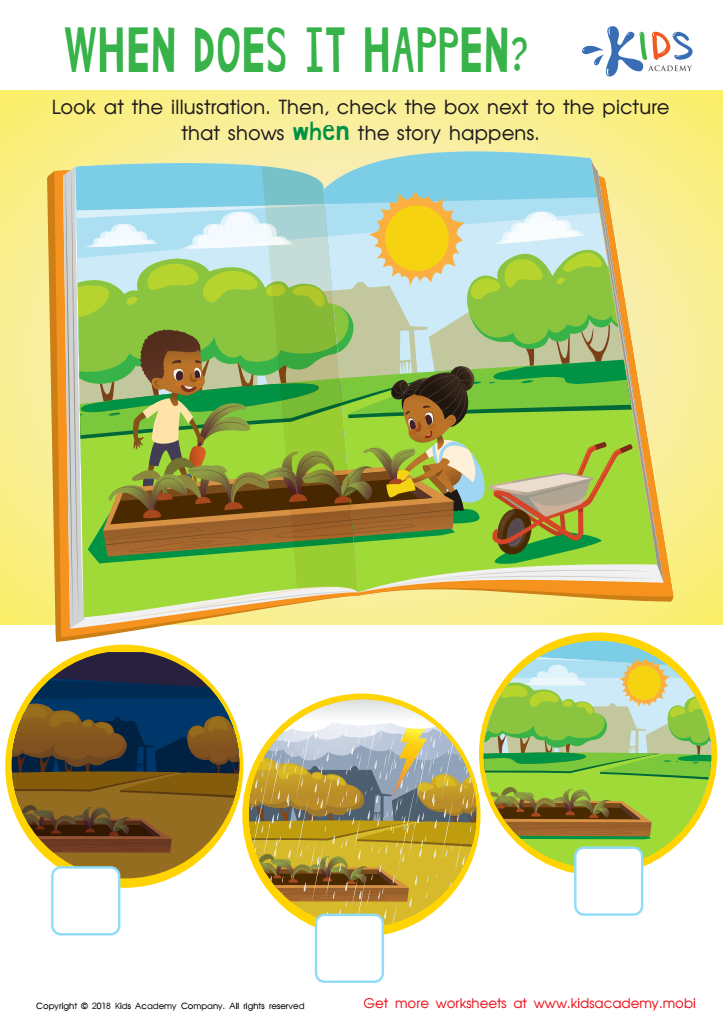
When Does It Happen? Worksheet
When Does It Happen? Worksheet

Help your kids learn about the different times of day and when events occur using this worksheet. Ask them to look at the pictures and determine which box shows when the story happened. Then, discuss how they can use this knowledge to better describe events that occur.
When Does It Happen? Worksheet
Worksheet
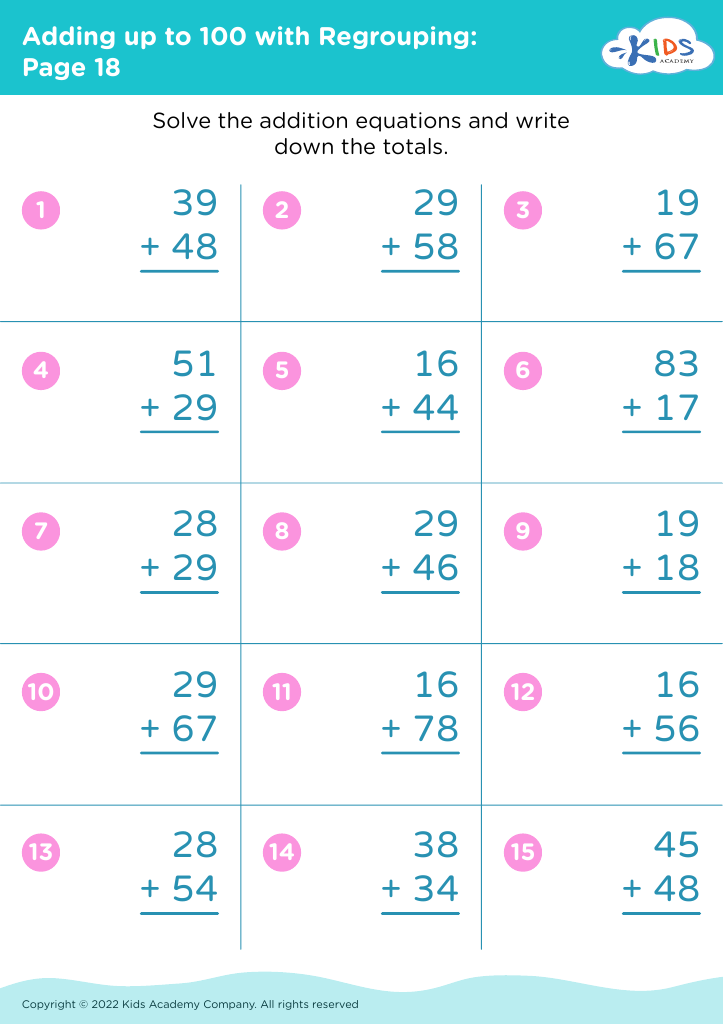
Adding up to 100 with Regrouping: Page 18
Worksheet
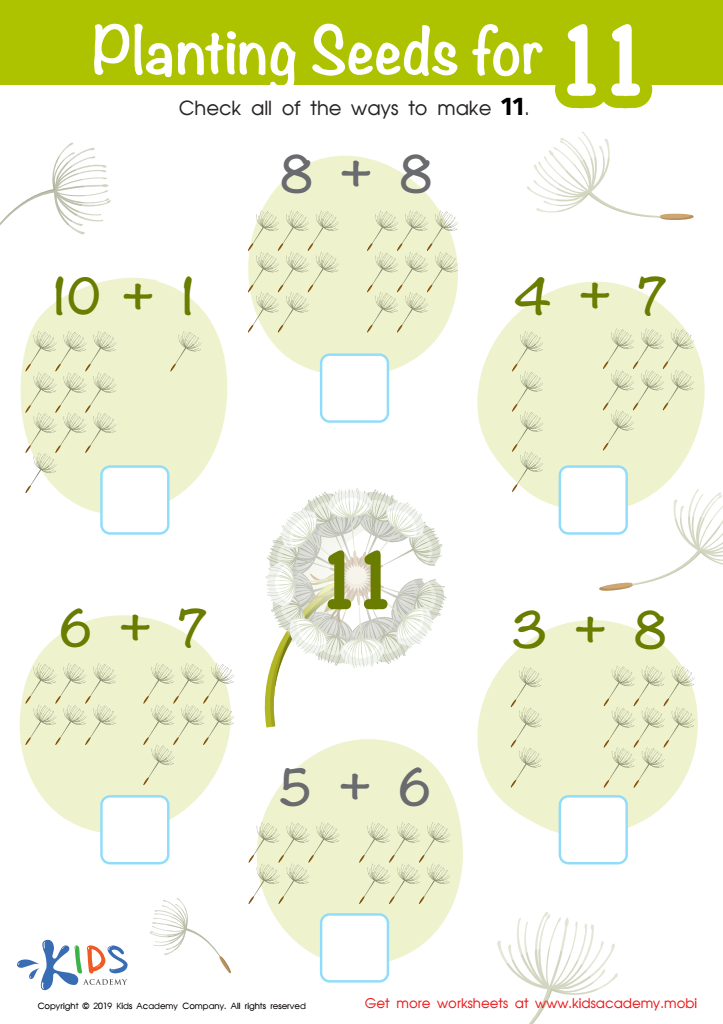
Planting Seeds for 11 Worksheet

Planting Seeds for 11 Worksheet

Before starting, ask your students to count as high as they can. Explain that different numbers can add up to the same total. Give examples like 2+2 =4 and 3+1 =4. Ask if they can think of other examples. Then have them work through the equations in the printout and circle all that add up to 11.
Planting Seeds for 11 Worksheet
Worksheet
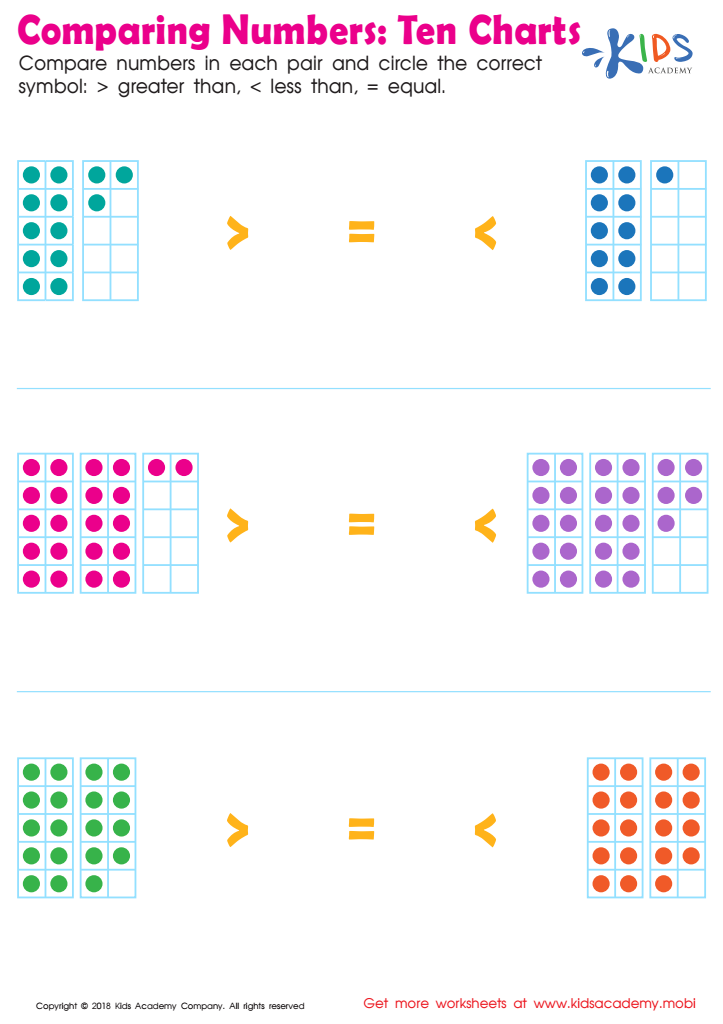
Ten Charts Worksheet

Ten Charts Worksheet

Help your child learn numbers in a creative way using this printable worksheet. They'll learn the difference between numbers, how to add them, and the symbols of "greater than", "less than" and "equals to". They can compare two sides, and identify which is greater, less or equal. Let their maths knowledge bloom!
Ten Charts Worksheet
Worksheet
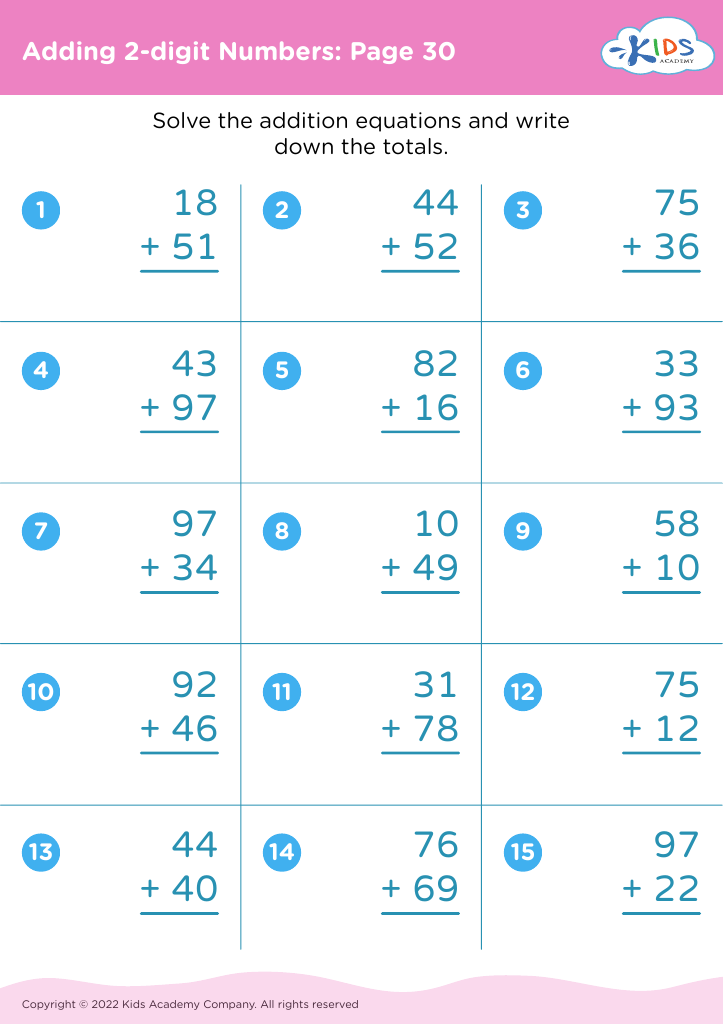
Adding 2-digit Numbers: Page 30

Adding 2-digit Numbers: Page 30

Adding 2-digit Numbers: Page 30
Worksheet
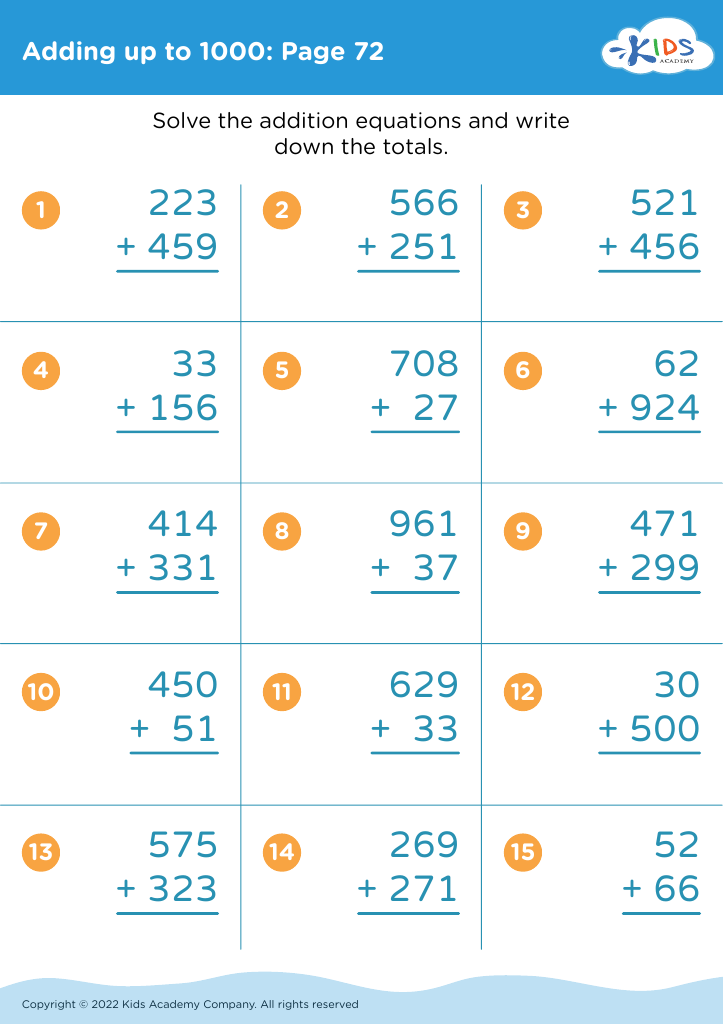
Adding up to 1000: Page 72

Adding up to 1000: Page 72

Adding up to 1000: Page 72
Worksheet
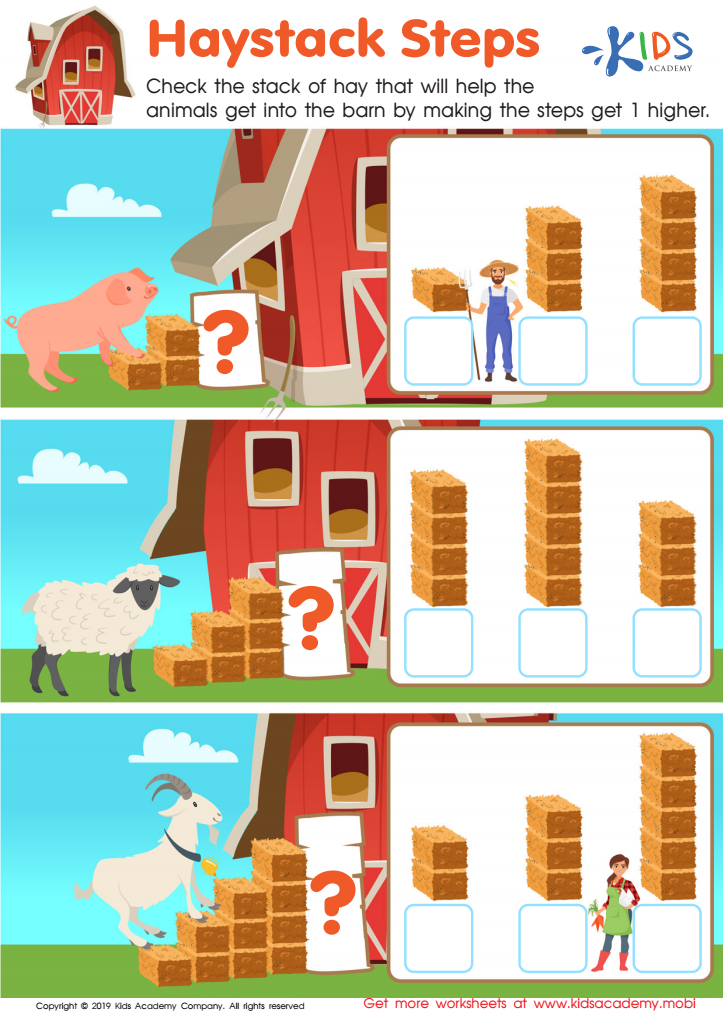
Haystack Steps Worksheet
Haystack Steps Worksheet

Have your kids ever visited a farm? What activities and sights did they enjoy? Farmers are essential to our lives, growing food and providing us with dairy and eggs. In this worksheet, a farmer has made a haystack for his animals to climb into the barn. Ask your kids to add an extra layer to the stack to make the climb easier.
Haystack Steps Worksheet
Worksheet
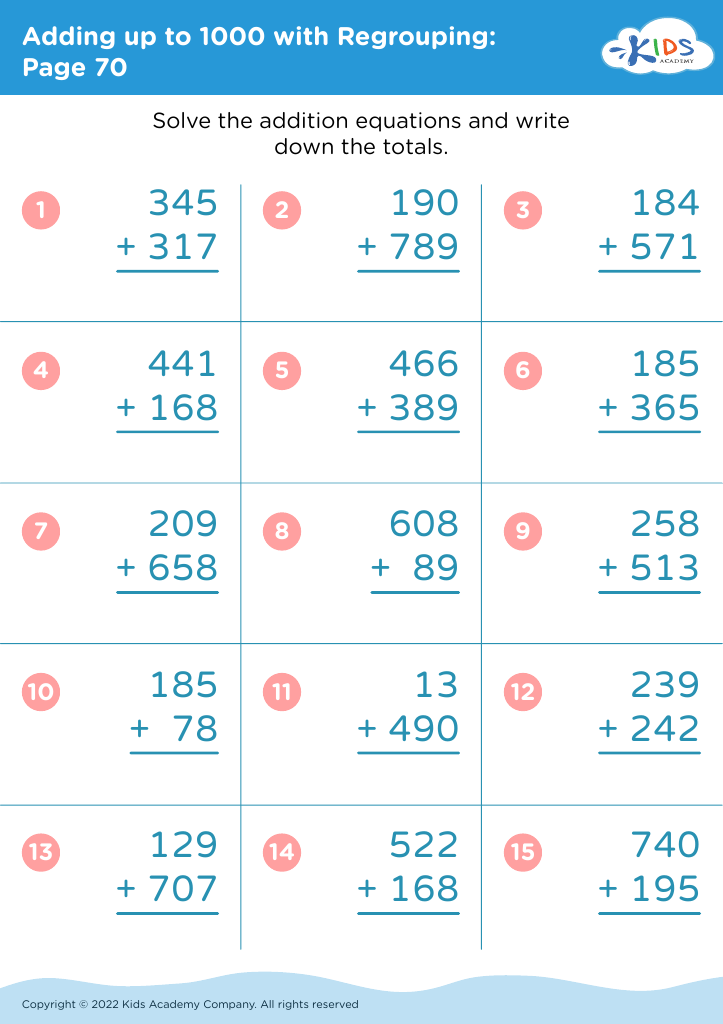
Adding up to 1000 with Regrouping: Page 70
Worksheet


Parents and teachers should prioritize understanding sequences for children ages 4-7 because it serves as a foundation for critical thinking and problem-solving skills. Sequencing, the ability to identify patterns and order events logically, is vital for cognitive development. It helps young children grasp basic concepts in mathematics, such as counting and operations, as well as comprehend stories and instructions, thus enhancing their reading comprehension and general communication skills.

By learning sequences, children also improve their memory skills. Understanding the order of events helps them retell stories and understand cause-and-effect relationships, both of which are crucial for academic success. Moreover, practicing sequences aids in the development of patience and persistence, as children learn that processes take steps and time to complete.

Furthermore, mastering sequences prepares children for future learning in areas such as science, where understanding life cycles and procedural steps are crucial. It also nurtures their ability to logistically navigate daily routines, contributing positively to their social and emotional development. In essence, integrating sequenced activities in daily learning gears children toward a path of structured thinking, better comprehension, and solid organizational skills, all of which are essential for their educational journey and beyond.