Shape identification 2D Shapes Worksheets for Ages 4-7
9 filtered results
Difficulty Level
Grade
Age
-
From - To
Subject
Activity
Standards
Discover our engaging 2D Shapes Worksheets designed for children ages 4-7! Perfect for early learners, these printable resources make shape identification fun and interactive. Kids will explore various common shapes, such as squares, circles, triangles, and more, through vibrant illustrations and easy-to-follow activities. Our worksheets emphasize recognition, comparison, and categorization of shapes, laying a solid foundation for future math skills. Whether in the classroom or at home, these educational materials help foster creativity and enhance learning. Start your child's journey to mathematical success with our captivating shape identification worksheets today!
Favorites
With answer key
Interactive
Geometry Worksheet
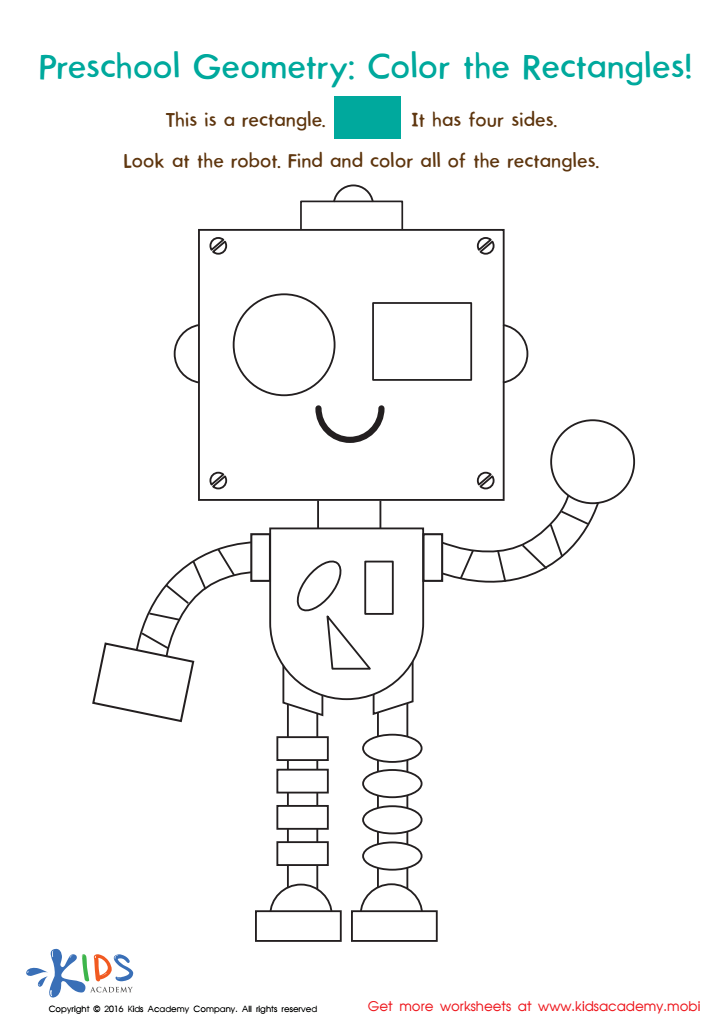
Geometry can be fun for kids! They explore shapes that create their favorite pics and objects. This preschool worksheet explains that rectangles have four sides, then kids color rectangles on a funny robot!
 Assign to My Students
Geometry Worksheet
Worksheet

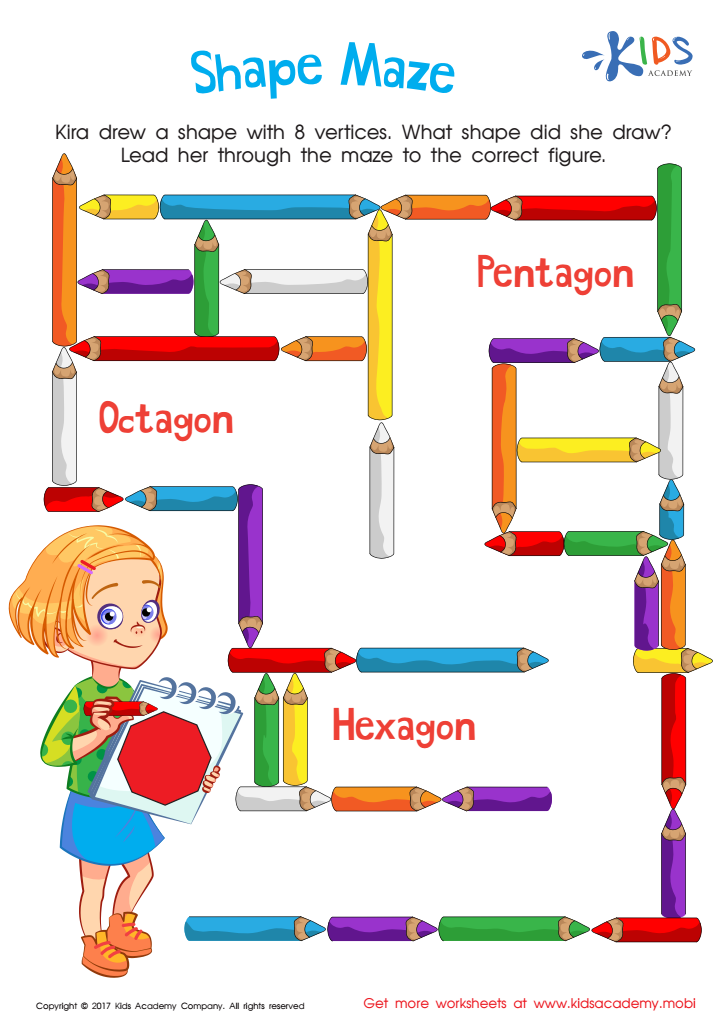
Shape Maze Worksheet
Test your child's geometry knowledge with this fun printable maze! They'll need to identify shapes with 8 vertices to find their way through the maze and get the correct answer.
Shape Maze Worksheet
Worksheet
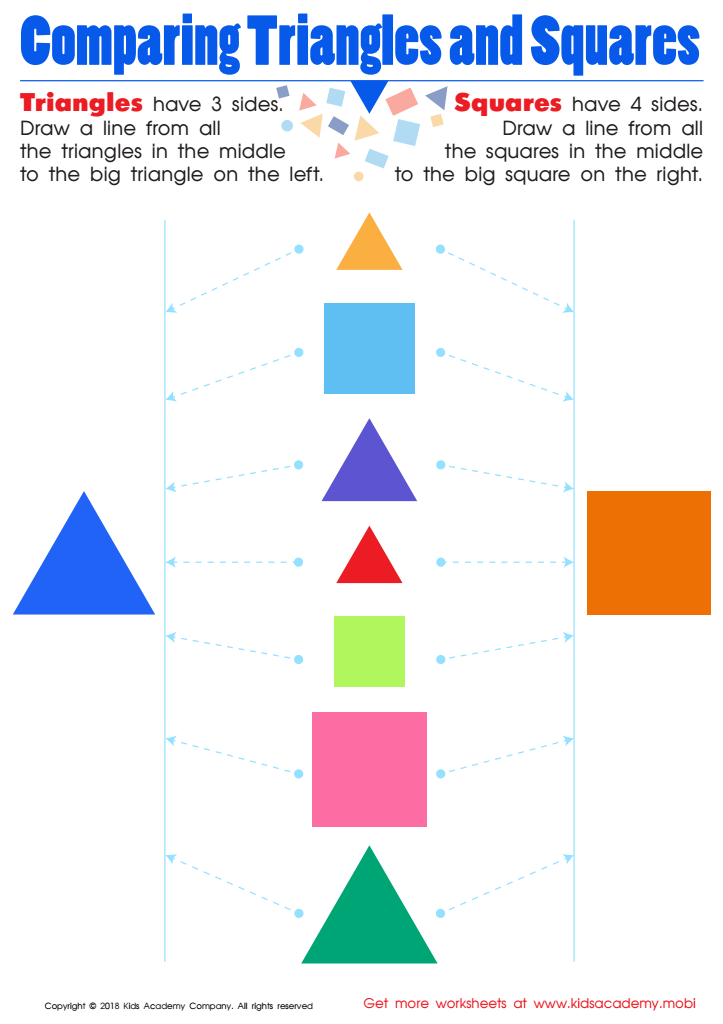
Comparing Triangles Squares Worksheet
Squares and triangles are different in the number of sides they have. Challenge kids to compare them with this fun worksheet! Read the descriptions at the top, then use the left and right shapes to match up the middle ones. Go down the page, joining the middle shapes to the side using the dotted lines!
Comparing Triangles Squares Worksheet
Worksheet
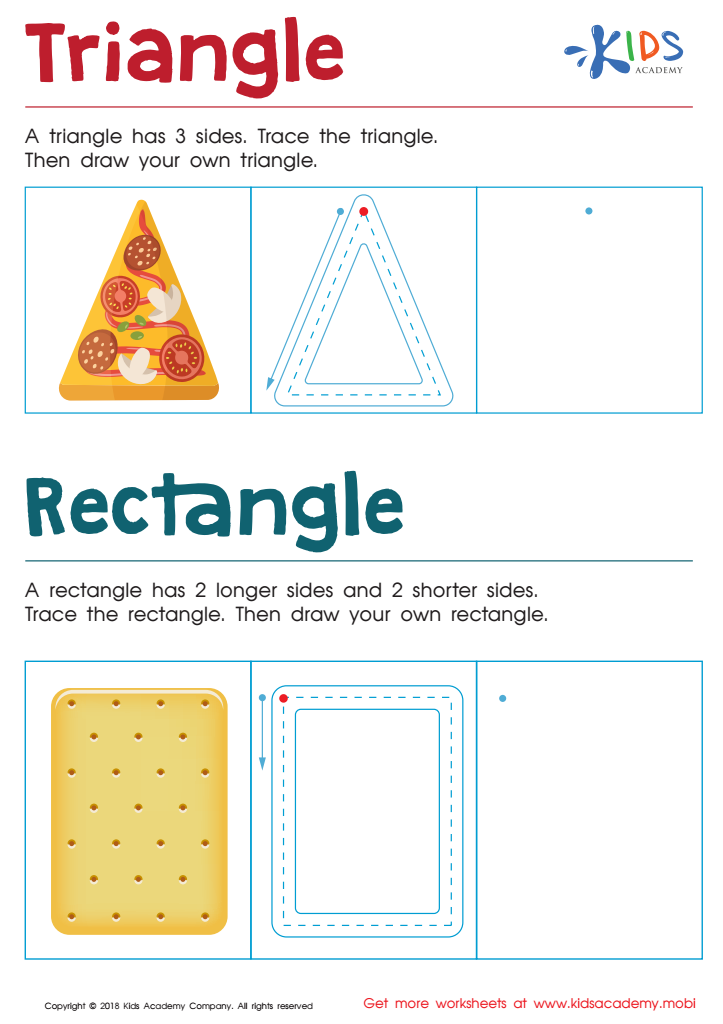
Triangle Rectangle Worksheet
This printable worksheet helps kids draw rectangles and triangles. Have your child trace the pizza and cracker shapes to become familiar, then try their own. Perfect for second graders! Coloring and creativity make this fun and educational.
Triangle Rectangle Worksheet
Worksheet
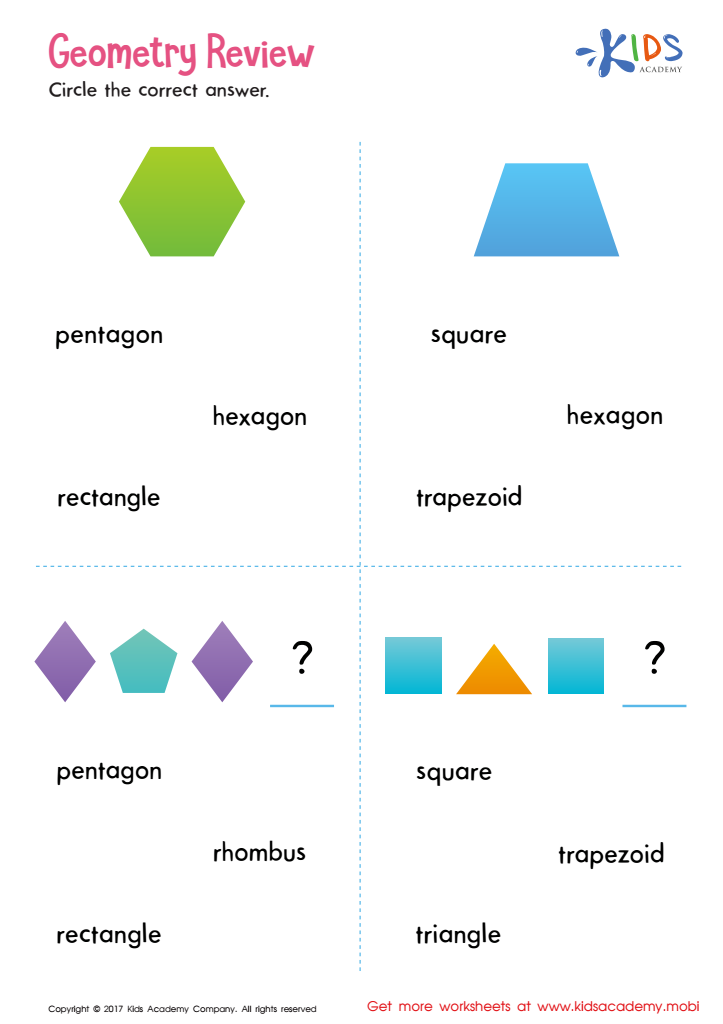
Geometry Review Printable
Repetition is key to success; give your child the practice they need with this geometry worksheet.
Geometry Review Printable
Worksheet
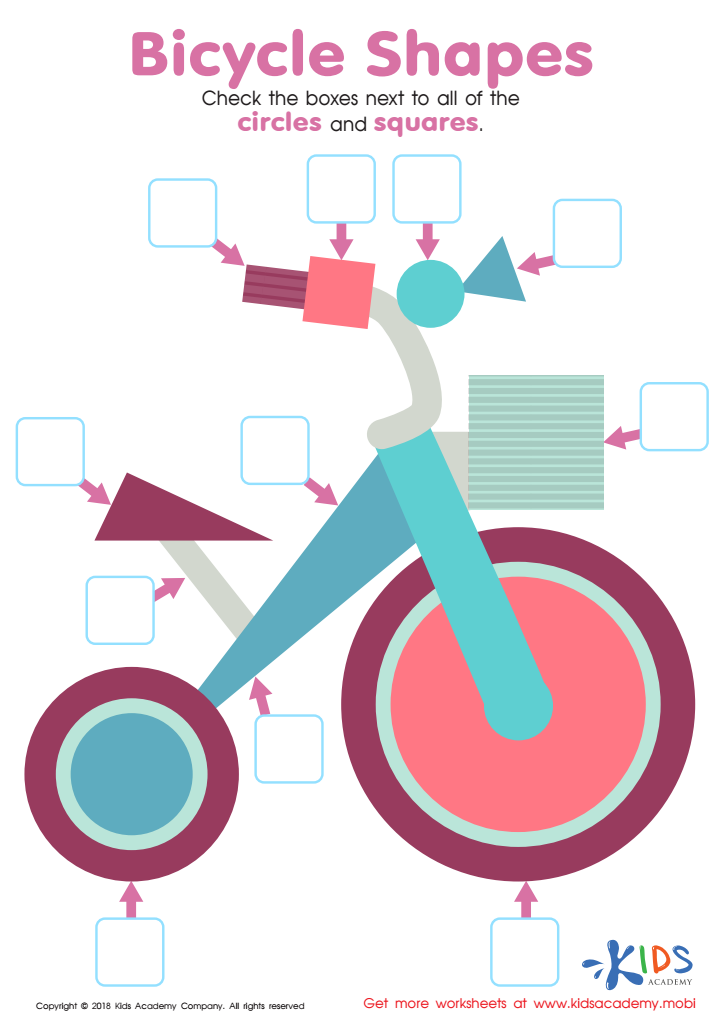
Bicycle Shapes Worksheet
This fun geometry worksheet for preschoolers asks the child to spot hidden shapes (circles, squares) in a colorful bicycle. Each shape varies in size and the child checks the box when it's found. It's a visual way to teach shapes.
Bicycle Shapes Worksheet
Worksheet
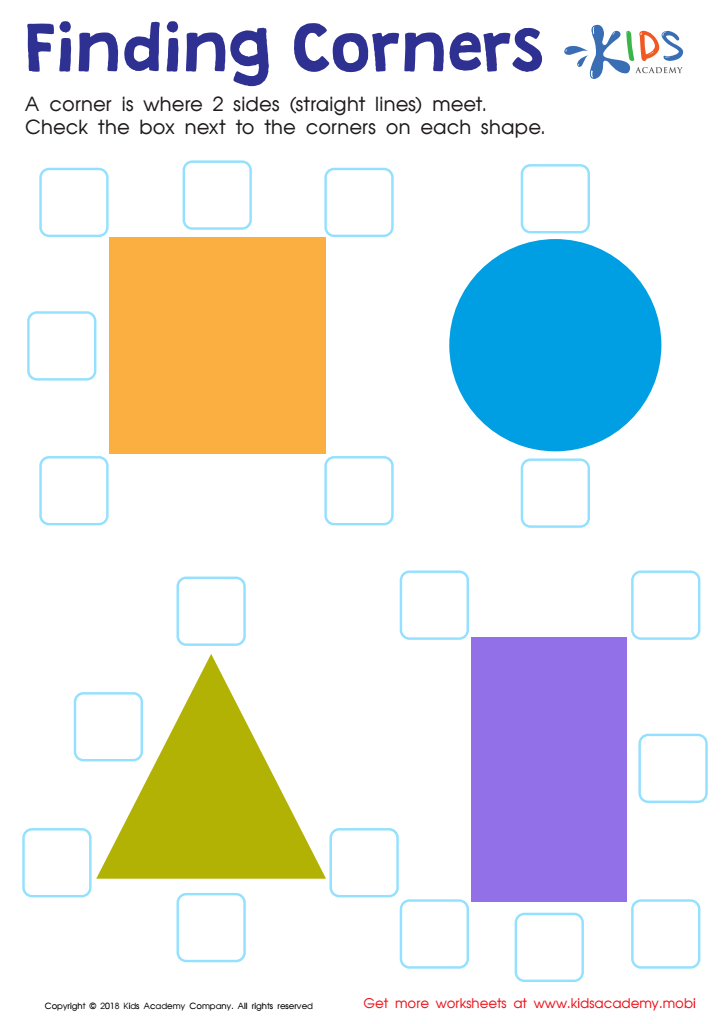
Finding Corners Worksheet
This vibrant worksheet introduces young learners to the fundamentals of geometric shapes. Through the downloadable PDF, they'll develop an understanding of corners - the intersection of two line segments - and how to identify them on different shapes. Fun colors and boxes let them label corners, helping them master this concept for future geometric reasoning.
Finding Corners Worksheet
Worksheet
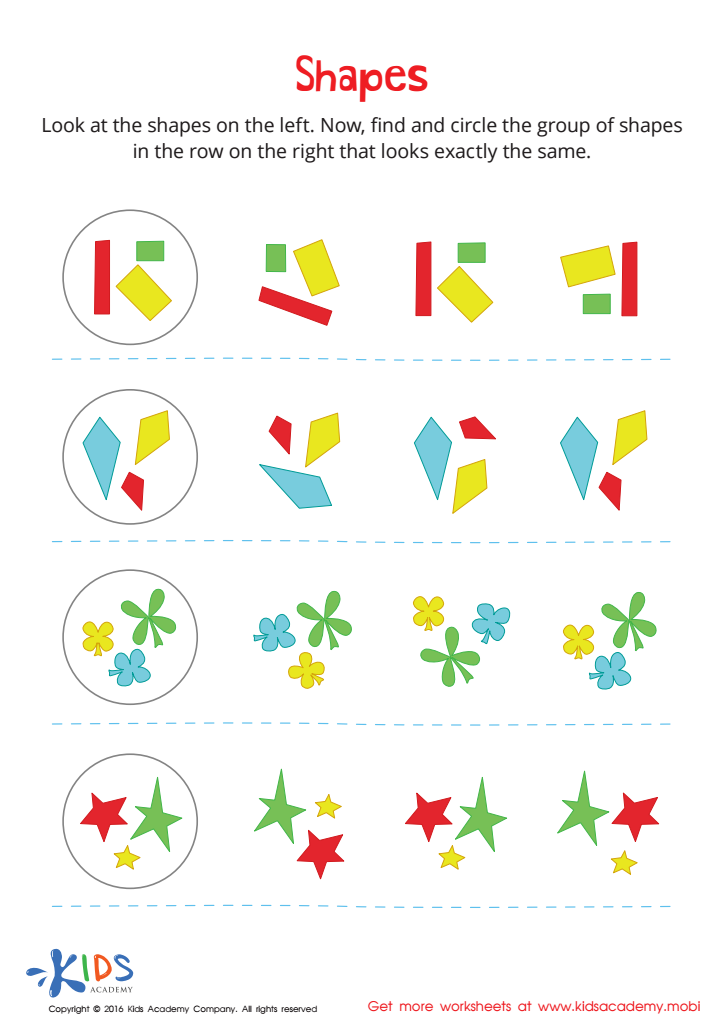
Shapes Worksheet
This fun worksheet will challenge your child to recognize tricky patterns, sort through similar ones, and create strategies to get the right answer. It'll also help them to strengthen problem-solving skills and build confidence. With more challenging tasks, your child will be ready to tackle higher level math and sequencing skills.
Shapes Worksheet
Worksheet
Join Kids Academy for Free
Who is primarily going to use this learning content?








Shape identification is a crucial skill for children aged 4-7, as it lays the foundation for various cognitive, mathematical, and spatial abilities. Parents and teachers should care about this developmental milestone for several reasons. First, recognizing and naming 2D shapes like circles, squares, triangles, and rectangles enhance a child's understanding of their environment. These shapes are foundational in interacting with objects and recognizing patterns.
Moreover, mastering shape identification fosters early mathematical skills. Young learners begin to understand concepts such as symmetry, dimensions, and area, which are essential for future math learning. Engaging with shapes also promotes critical thinking and problem-solving as children learn to categorize and compare different characteristics.
In addition to cognitive development, enhancing shape identification skills contributes to language development. Children learn the vocabulary associated with shapes, improving their communication skills and ability to describe the world around them.
Socially, shape activities can be integrated into collaborative games, encouraging teamwork and interpersonal skills. By prioritizing shape identification, parents and teachers can support children's holistic development, paving the way for future academic success and greater engagement in the learning process. Overall, nurturing these skills is vital for building a strong foundation in early education.