Shape Recognition 2D Shapes Worksheets for Ages 4-7 - Page 2
33 filtered results
-
From - To
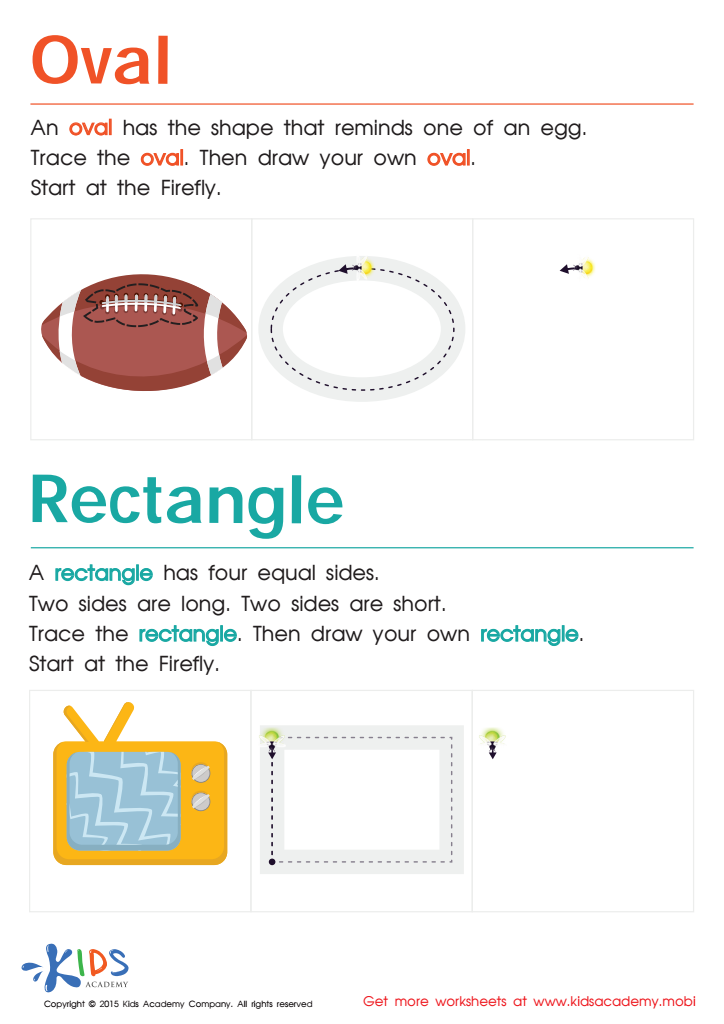
Easy Drawing of Ovals And Rectangles Worksheet
 Assign to My Students


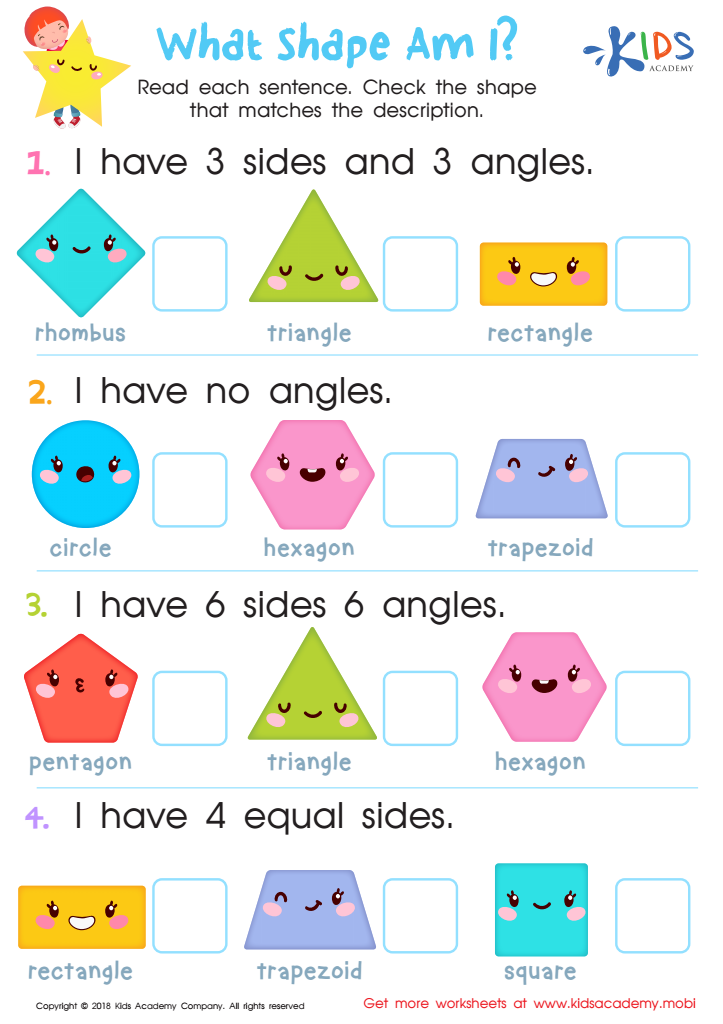
What Shape Am I? Worksheet
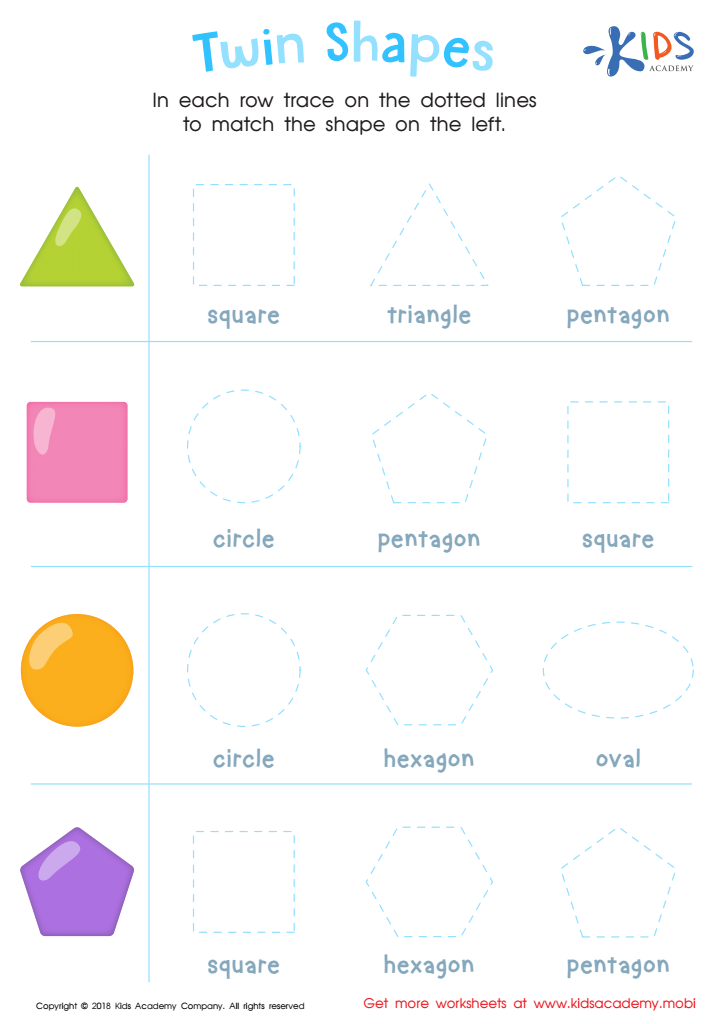
Twin Shapes Dot-to-Dot Worksheet
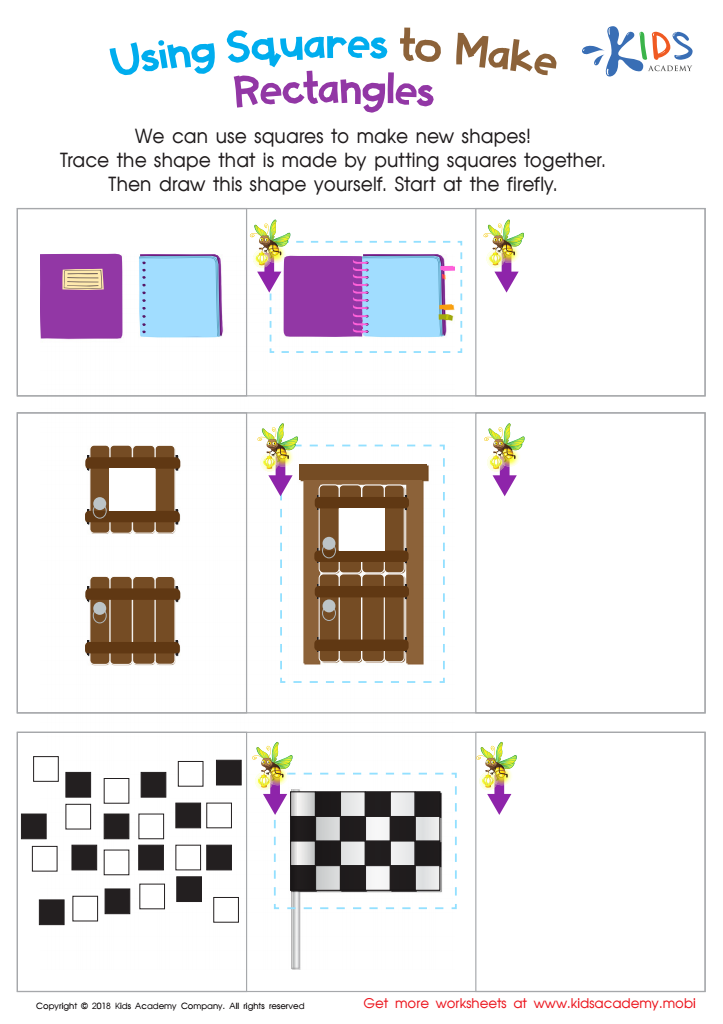
Using Squares to Make Rectangles Worksheet
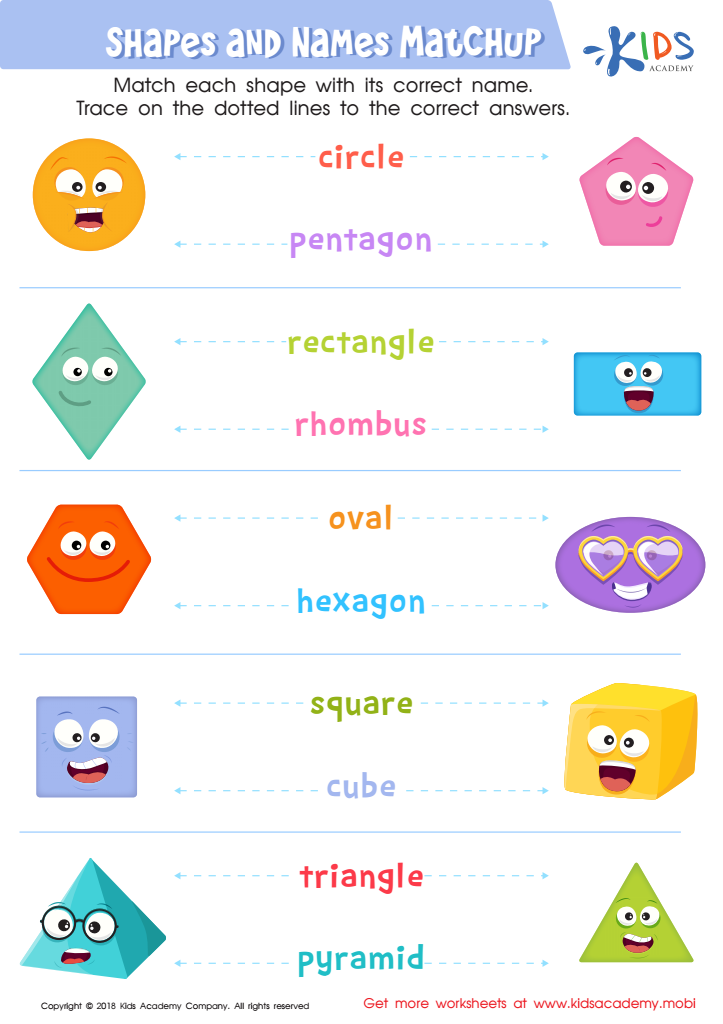
Shapes and Names Matchup Worksheet
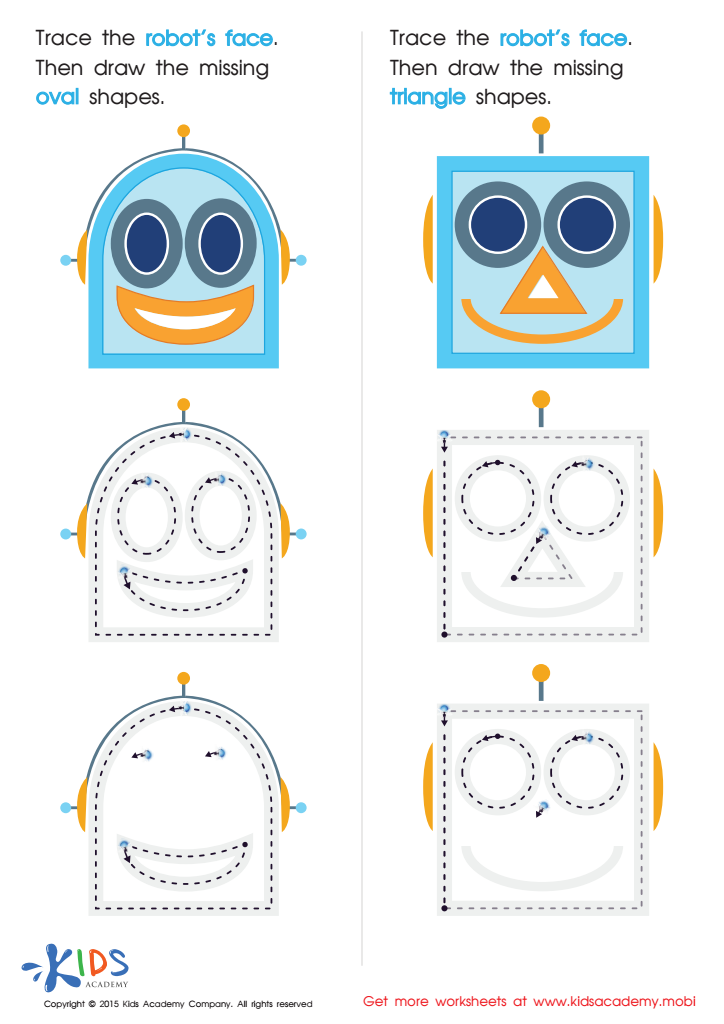
Drawing Ovals And Triangles with Fun Printable
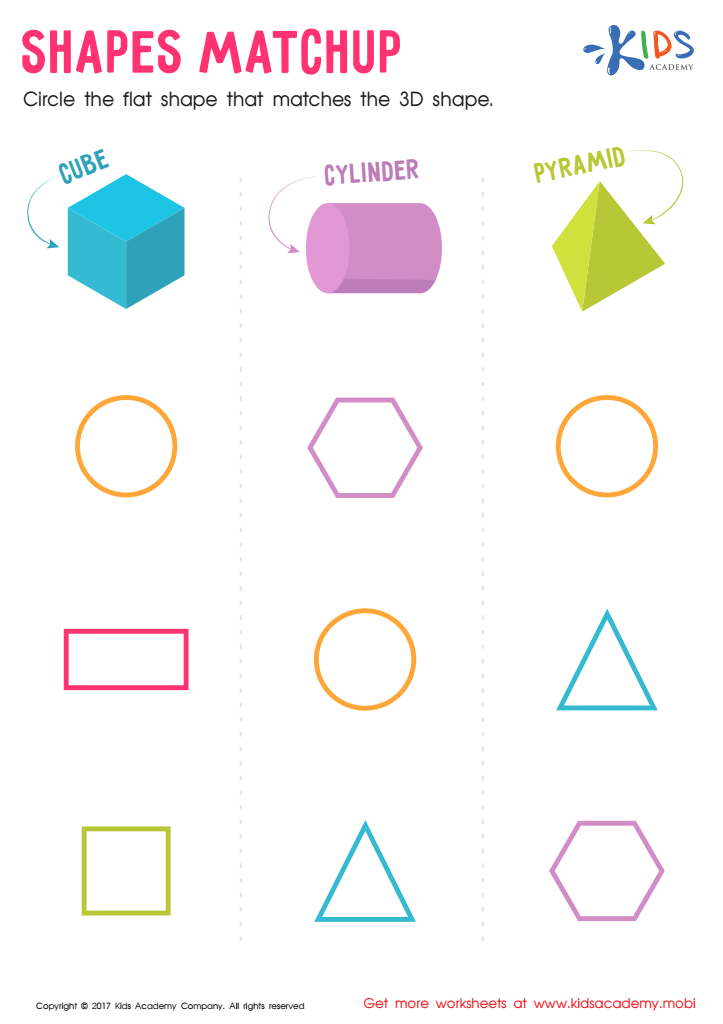
Shapes Matchup Worksheet
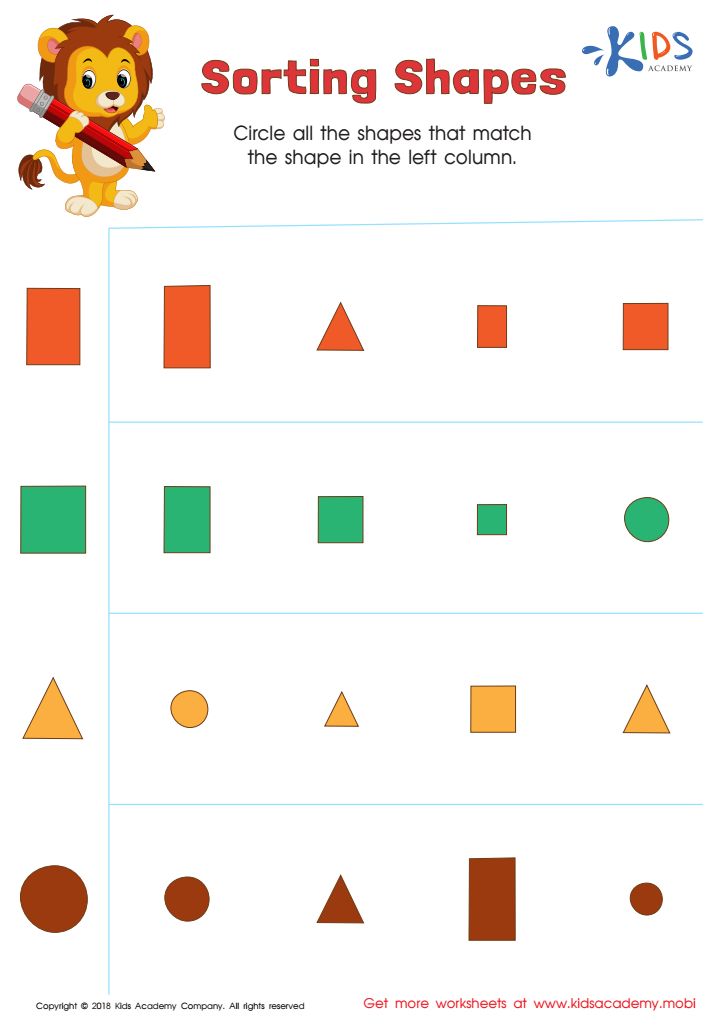
Sorting Shapes - Part 2 Worksheet
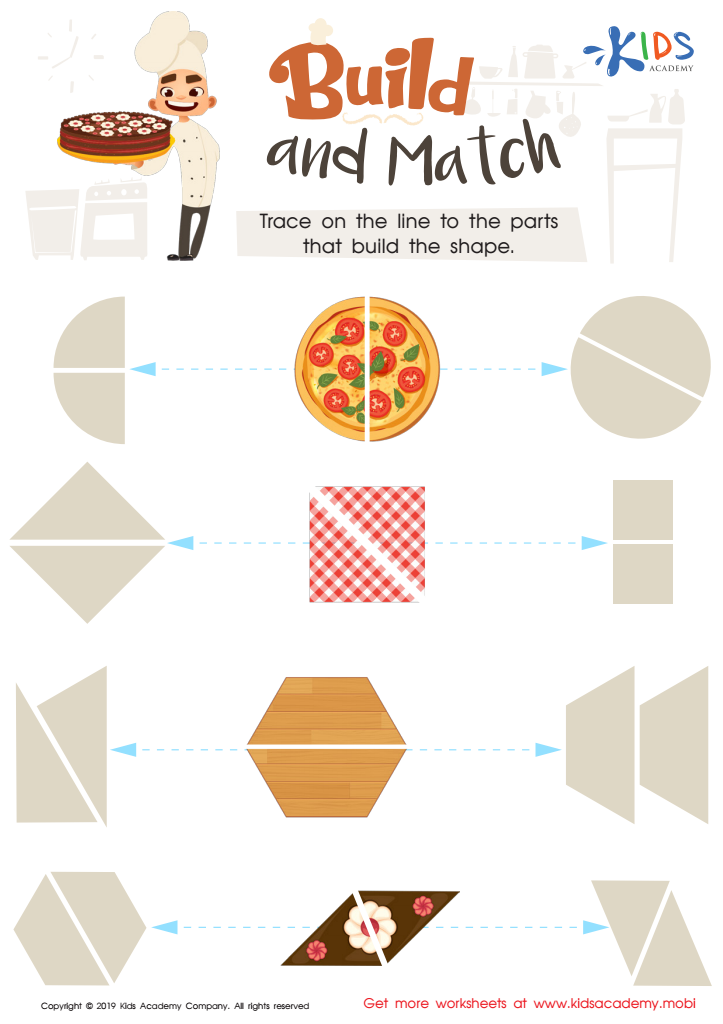
Build and Match Worksheet








Shape recognition of 2D shapes is a foundational skill crucial for children ages 4-7, and parents and teachers should emphasize its importance for several reasons. First, it forms the bedrock of early mathematical learning. Recognizing and understanding shapes fosters geometric awareness and introduces children to spatial reasoning, both of which are essential for later math skills, including problem-solving and logical reasoning.
Secondly, shape recognition contributes to a child's cognitive development. By identifying shapes, children develop categorization skills, which enhance their ability to group similar objects together and recognize patterns. These cognitive skills are transferable to other academic areas, enriching their overall learning experience.
Moreover, 2D shape recognition aids in language development. As children learn to name and describe different shapes, they expand their vocabulary and improve descriptive language abilities. This can boost their confidence in communicating and expressing ideas.
Socially and psychologically, mastering shape recognition can build self-esteem. Children often feel a sense of accomplishment when they accurately identify shapes, leading to greater confidence in their learning abilities.
In summary, fostering shape recognition in young children is crucial not only for their academic skills but also for cognitive growth, language development, and self-confidence. It creates a solid foundation for lifelong learning.