Cognitive Development Adding in the Sea Worksheets for Ages 4-7
28 filtered results
-
From - To
Dive into learning with our "Cognitive Development Adding in the Sea Worksheets for Ages 4-7"! These engaging, ocean-themed worksheets make math fun as children explore addition while developing essential cognitive skills. Designed specifically for young minds, the activities enhance numerical understanding, problem-solving, and logical thinking. Featuring colorful sea creatures and captivating scenarios, kids stay motivated and excited about learning. Ideal for both classroom settings and at-home practice, our worksheets encourage a positive attitude towards math, helping little ones build a strong foundation during their crucial early years. Grab your worksheets now, and watch your child’s math skills bloom like coral in the ocean!
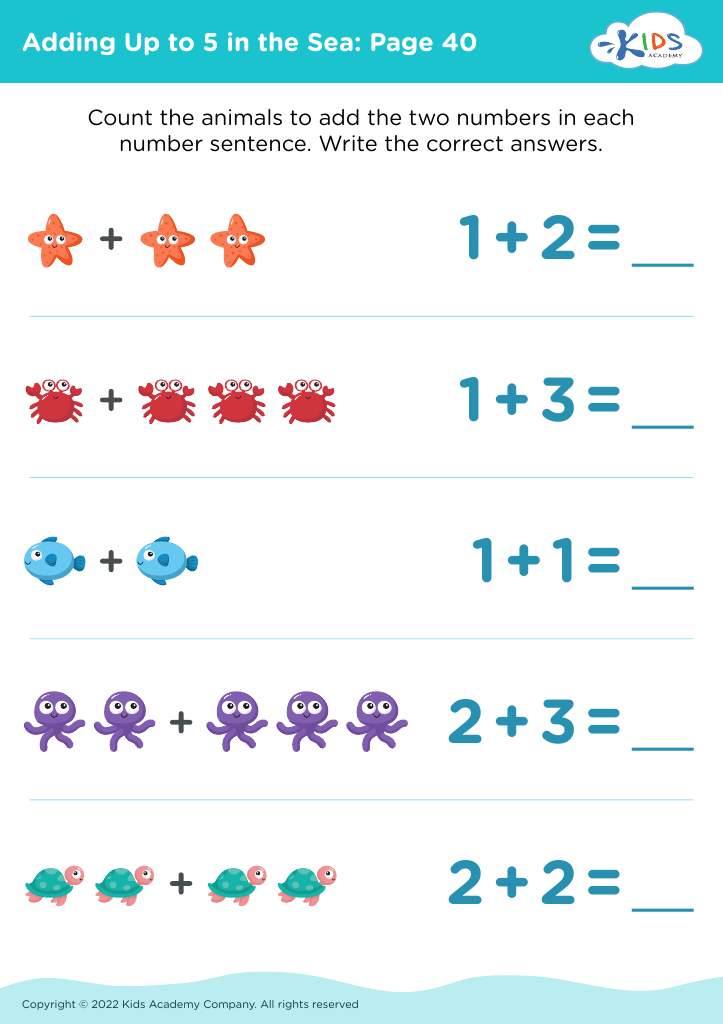
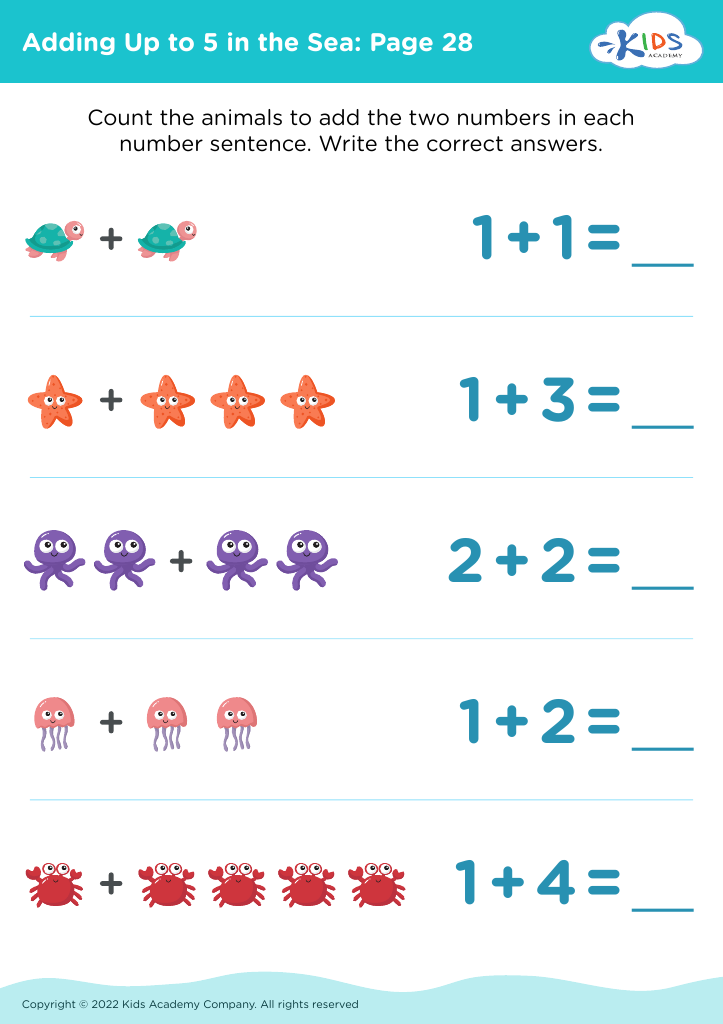
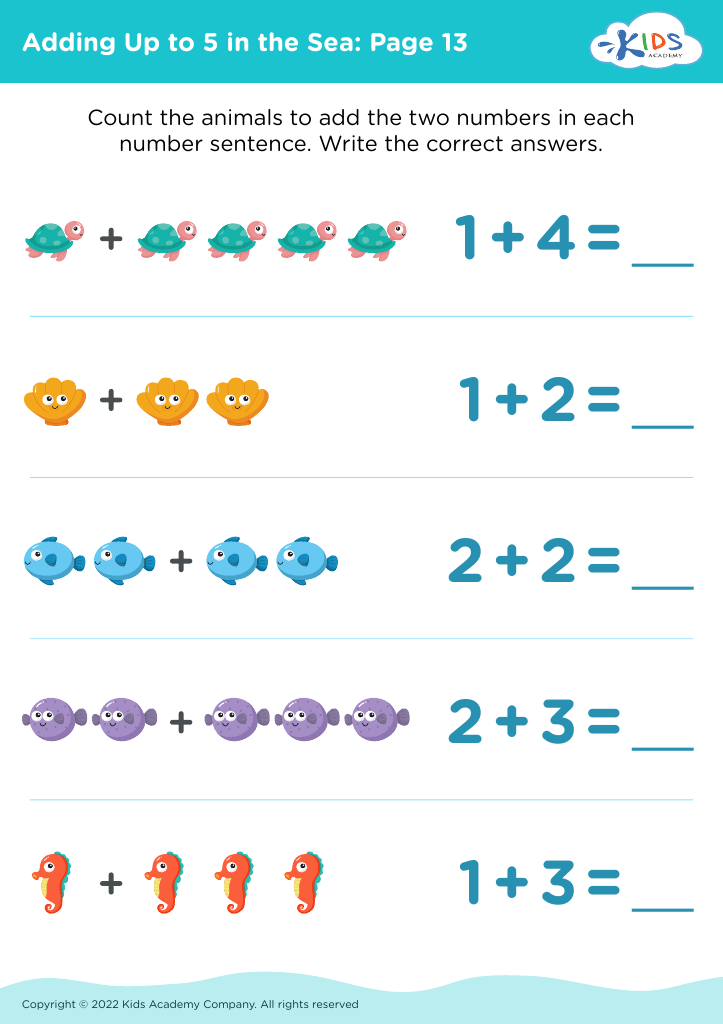
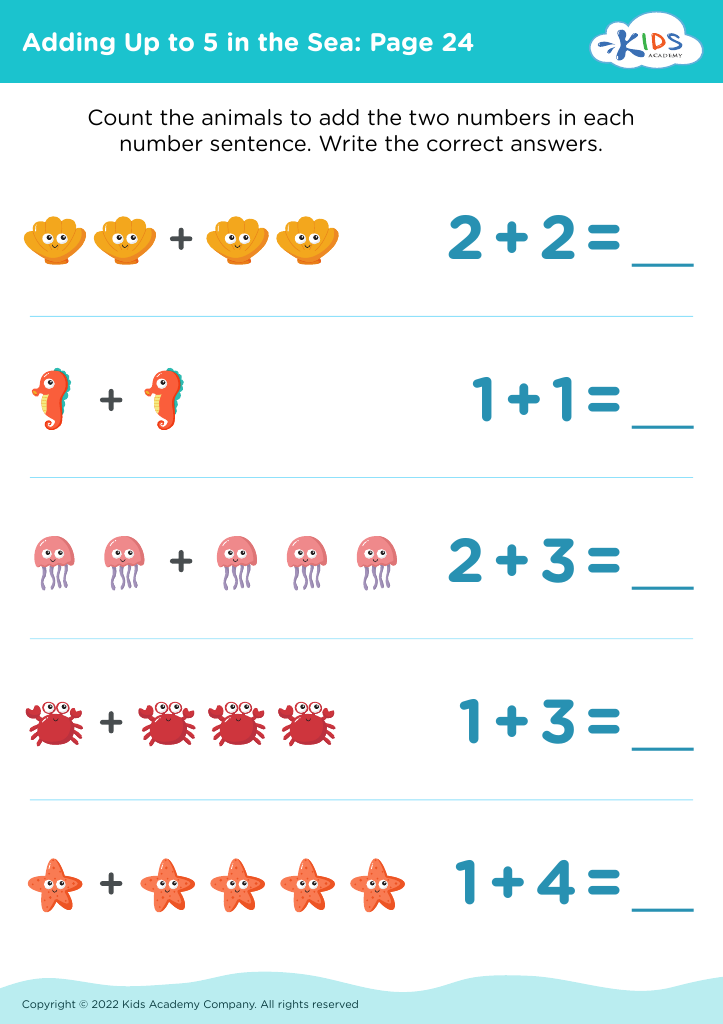
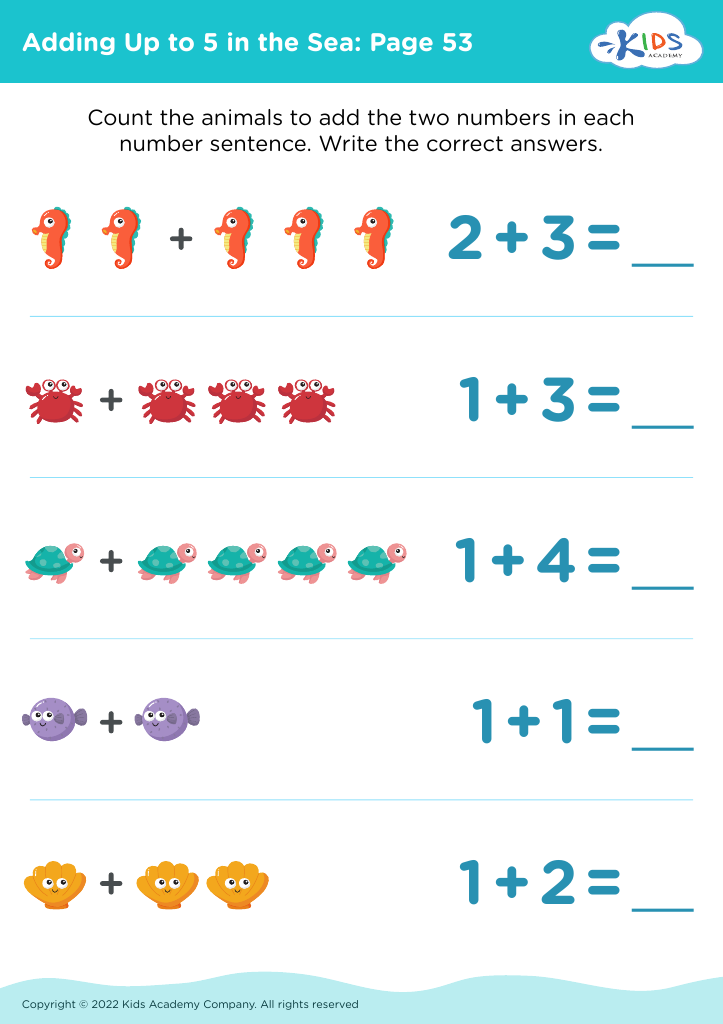
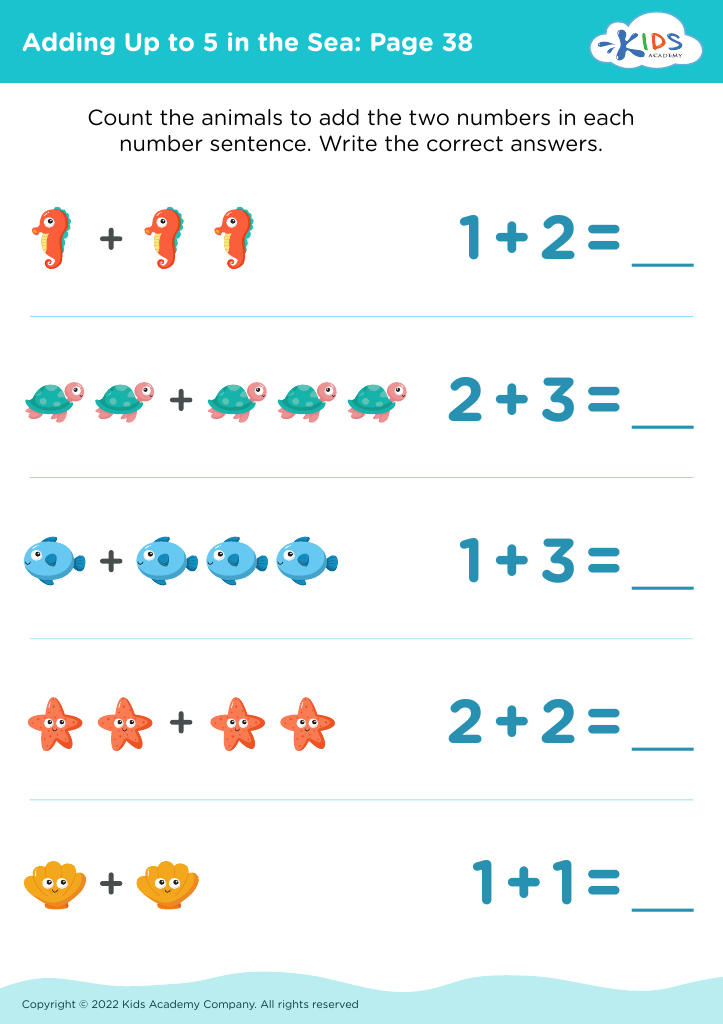
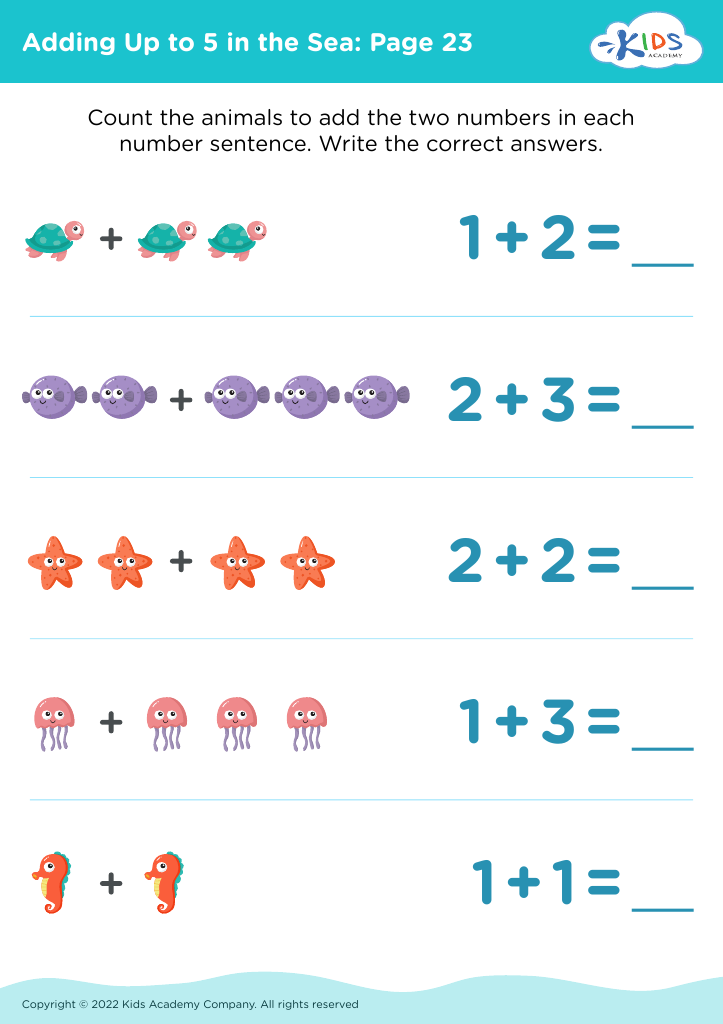
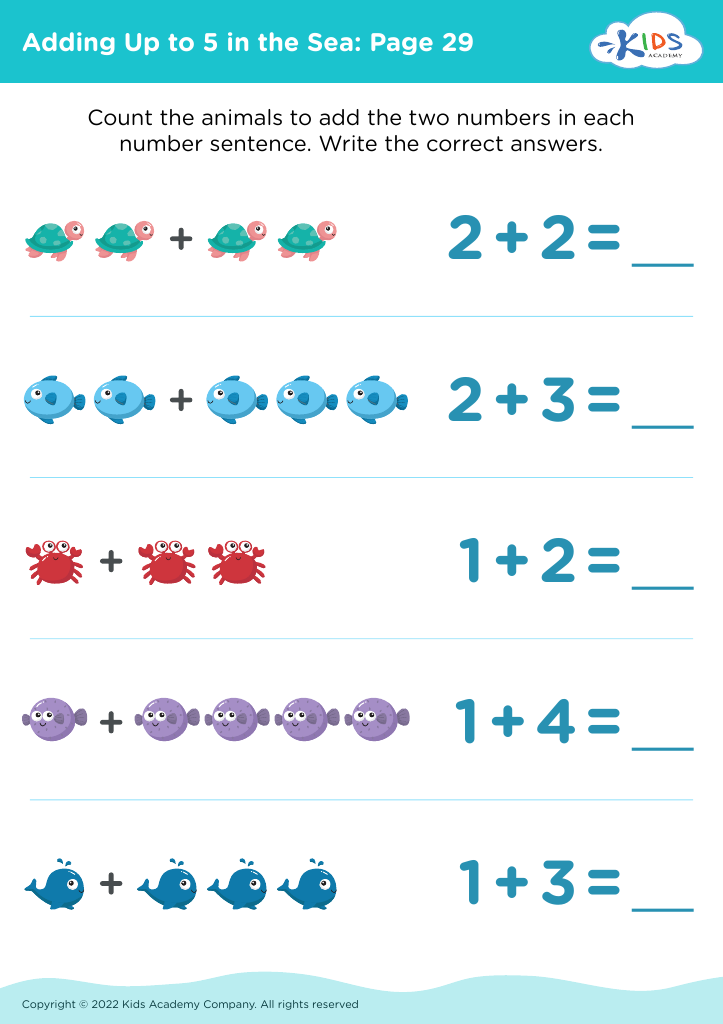
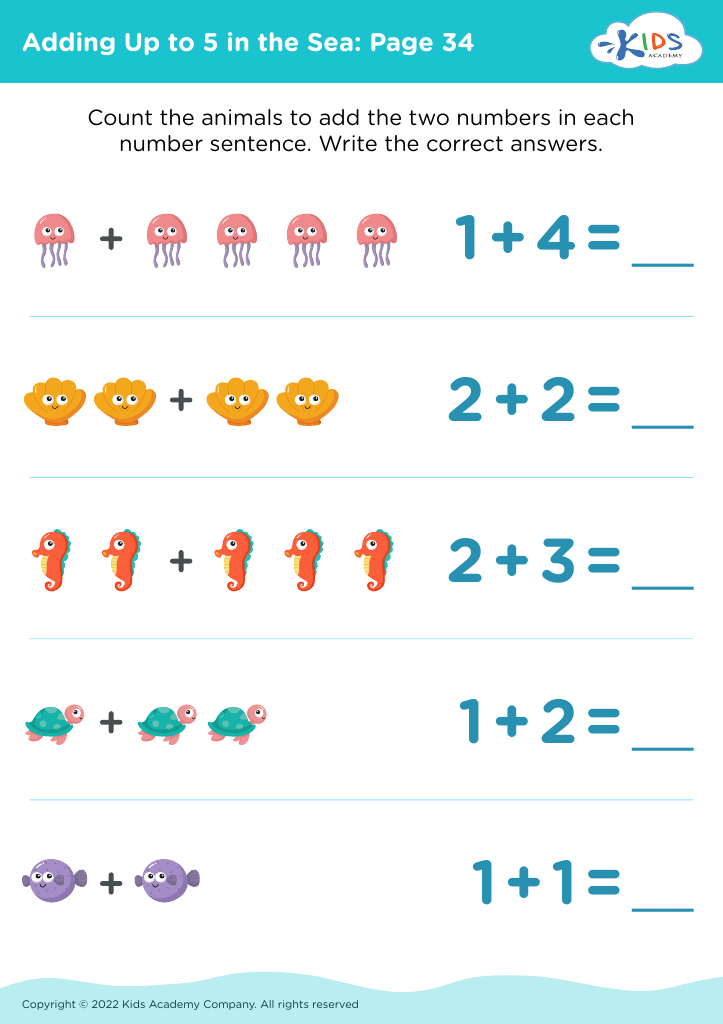
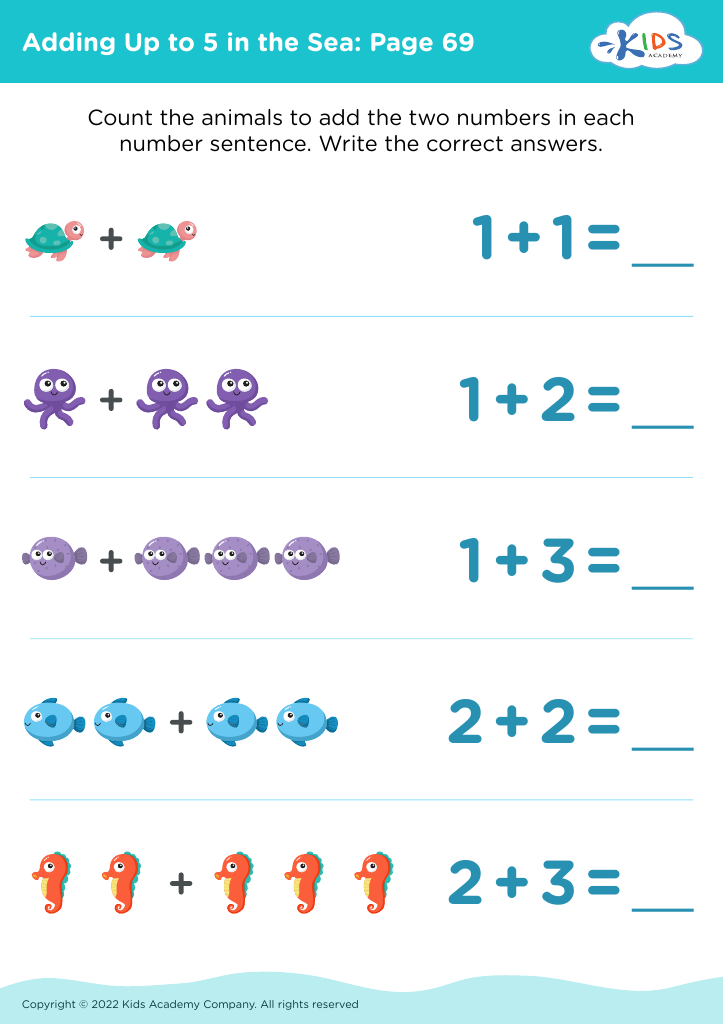
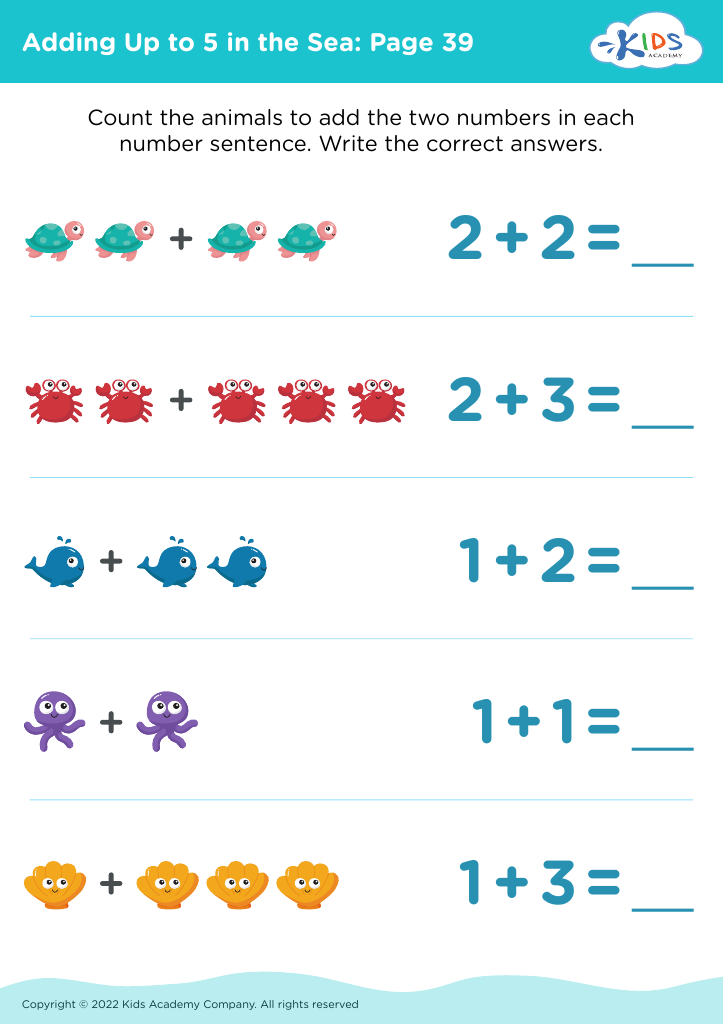
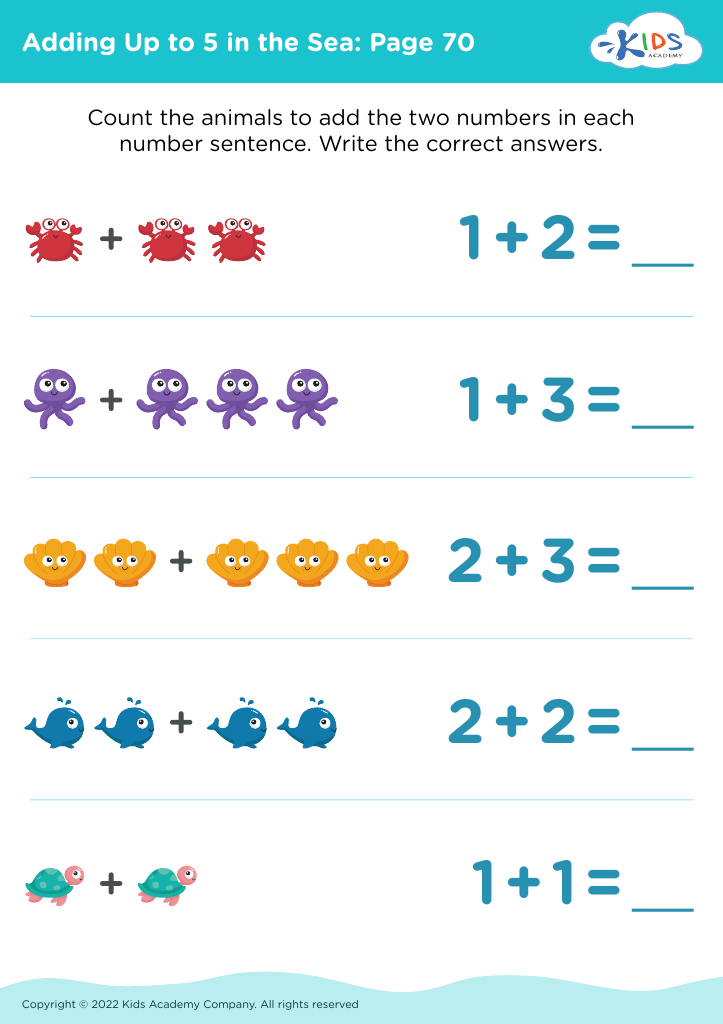
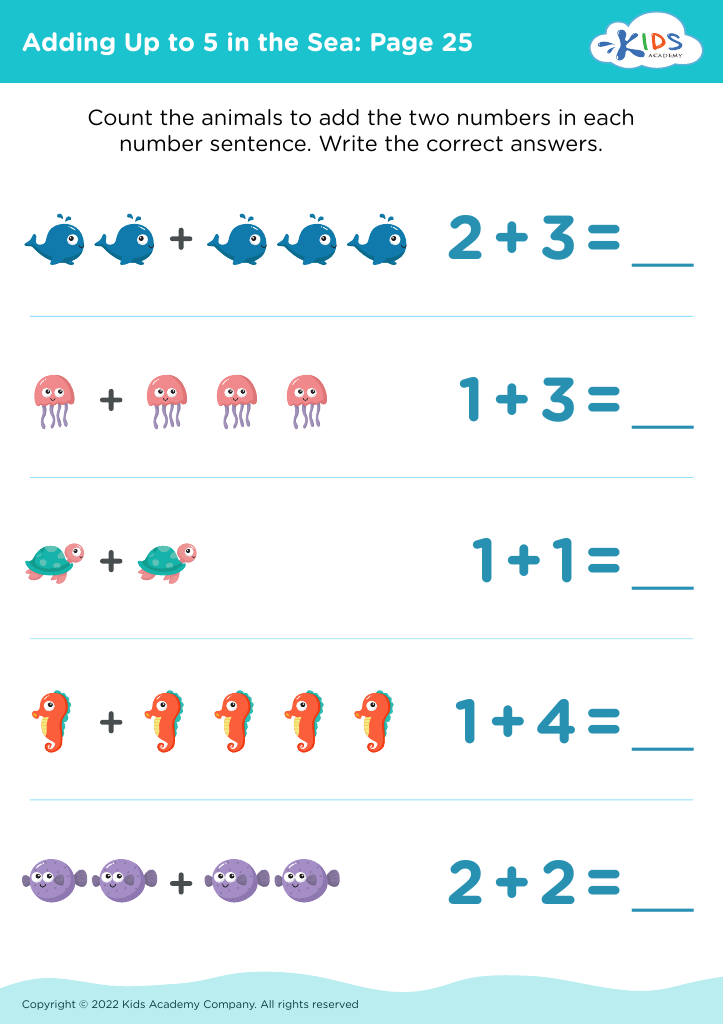
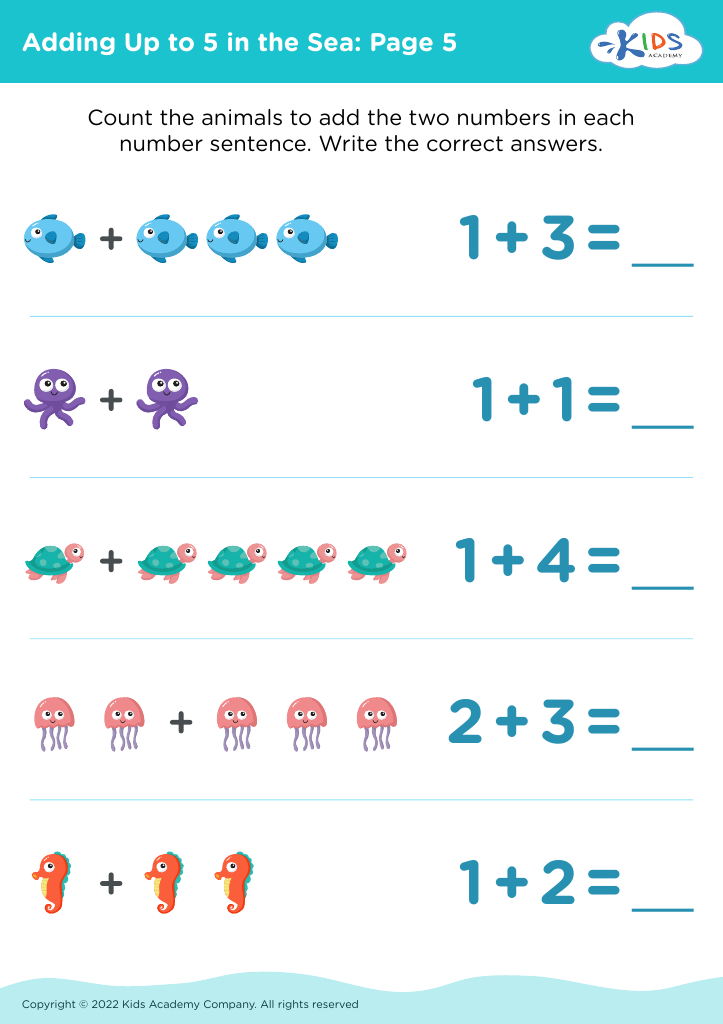
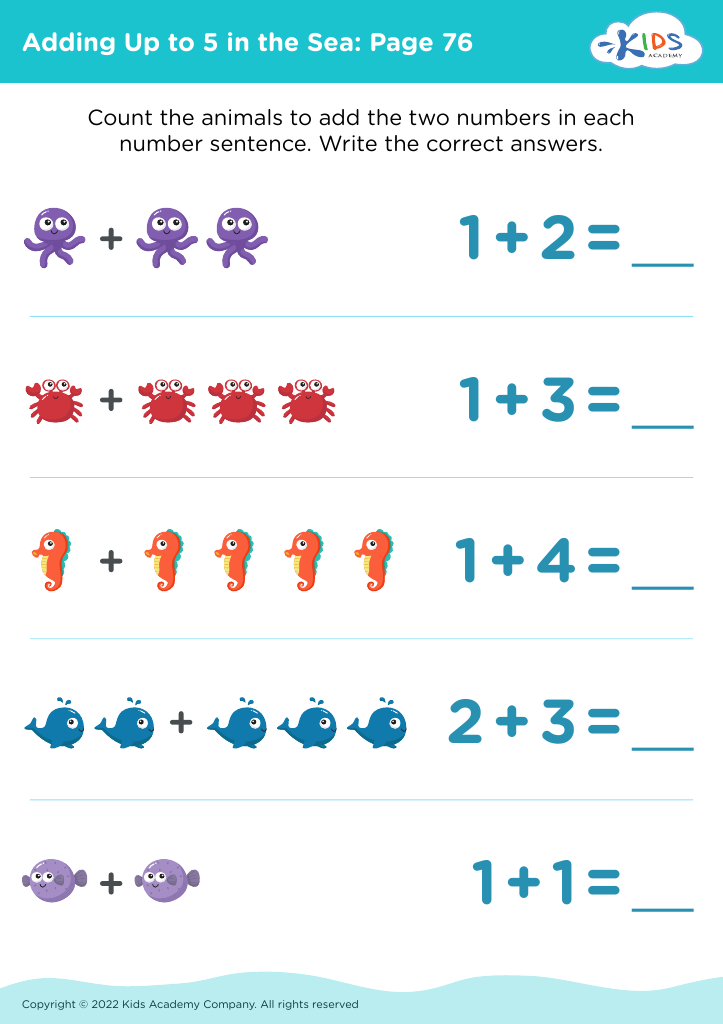
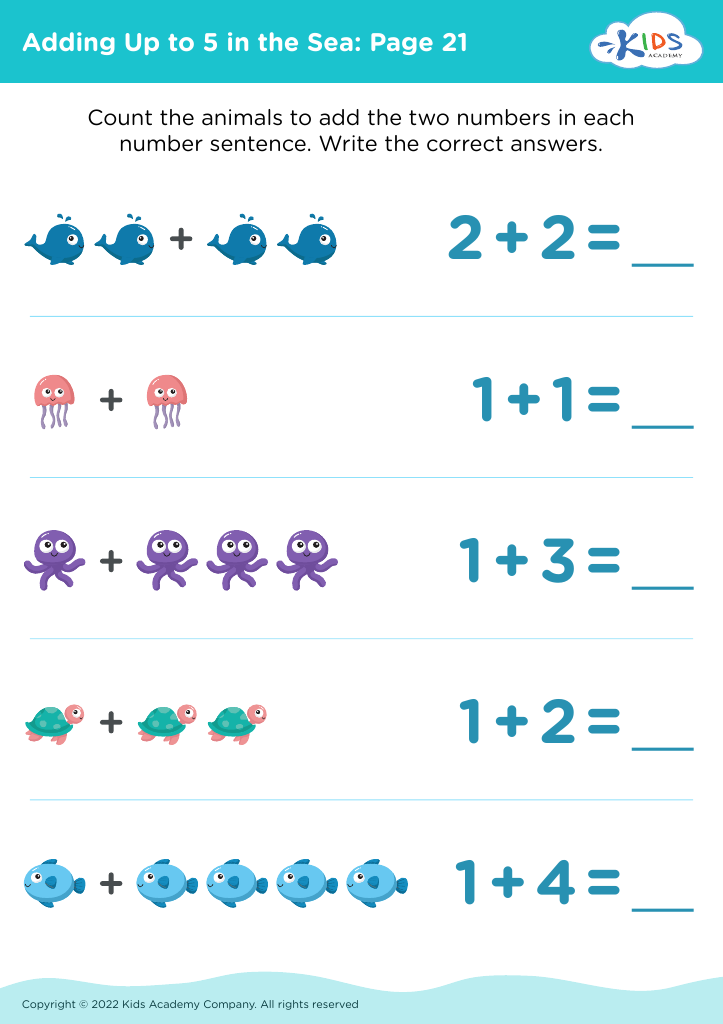
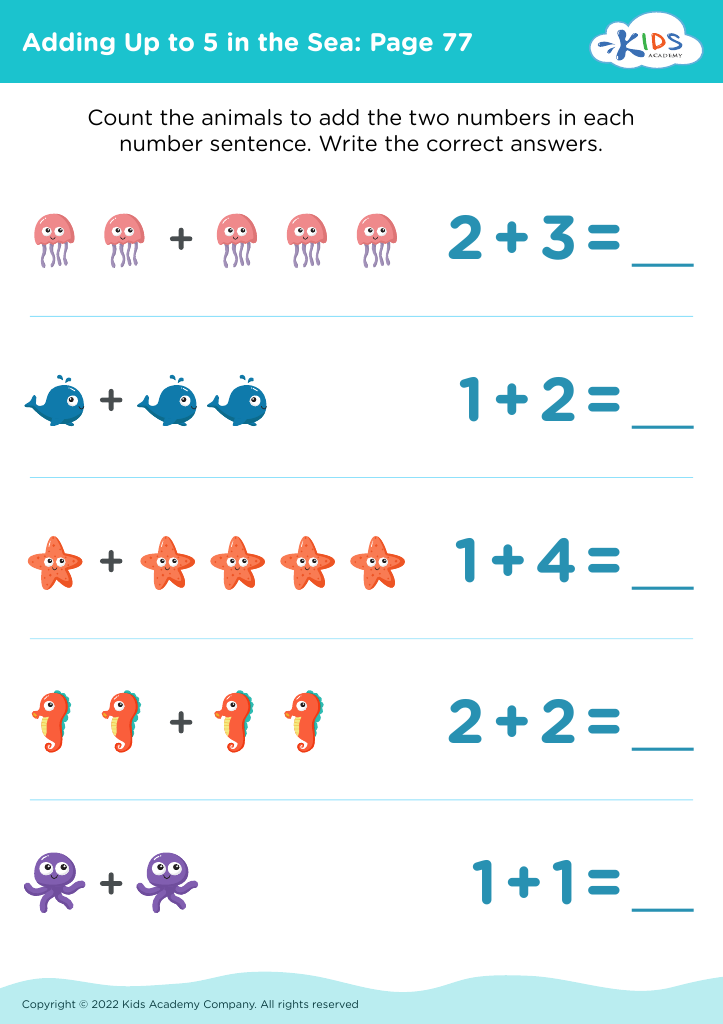
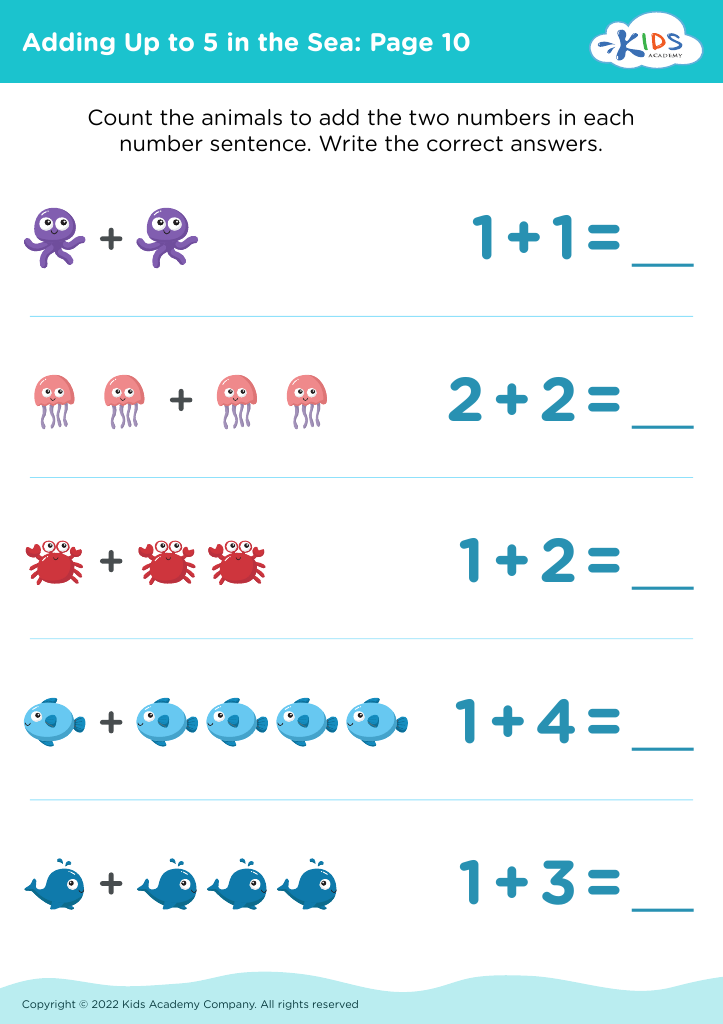
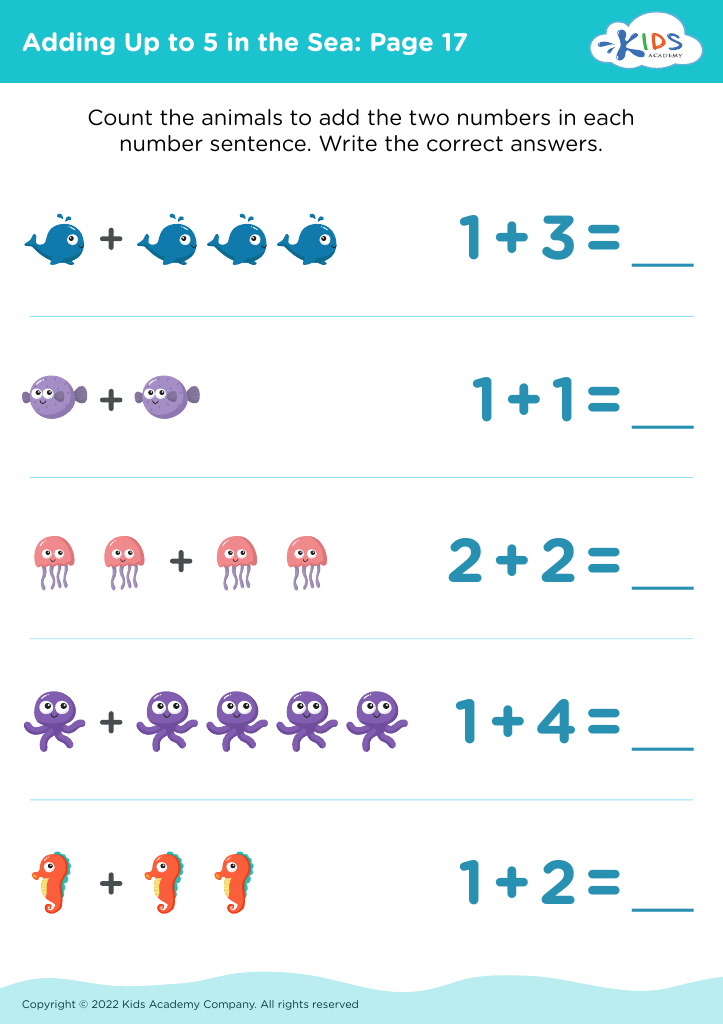
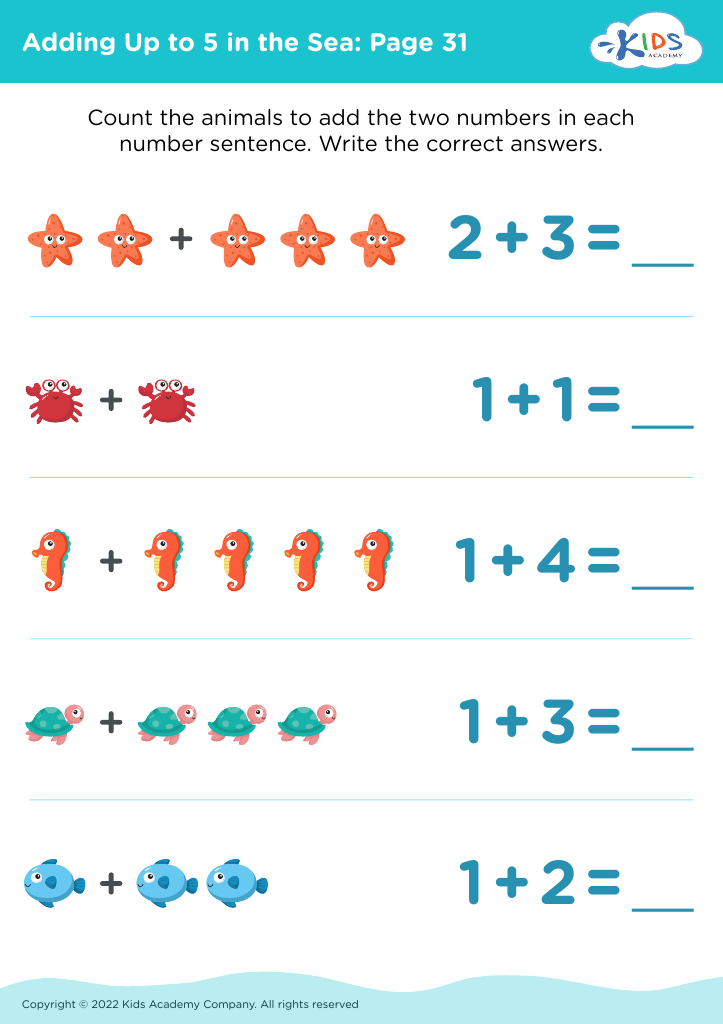
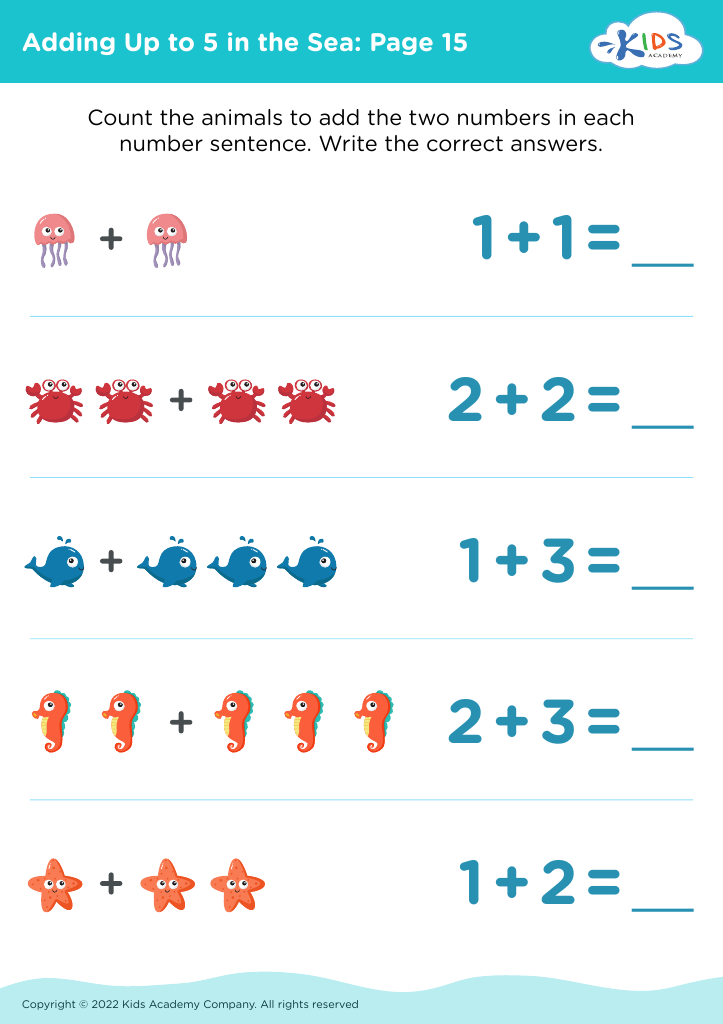
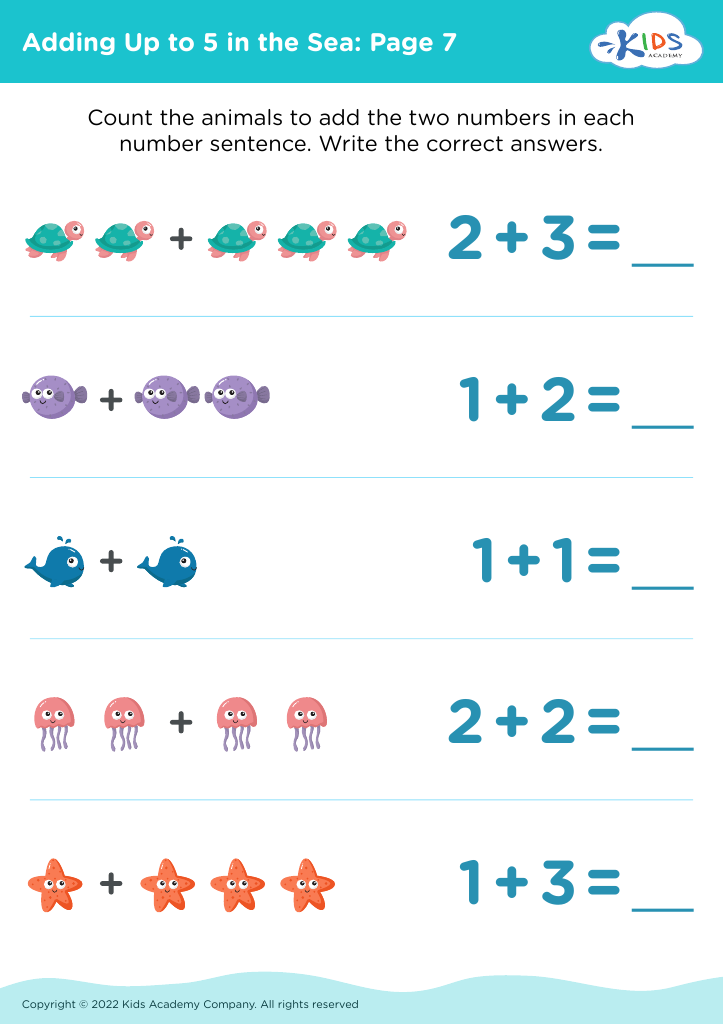
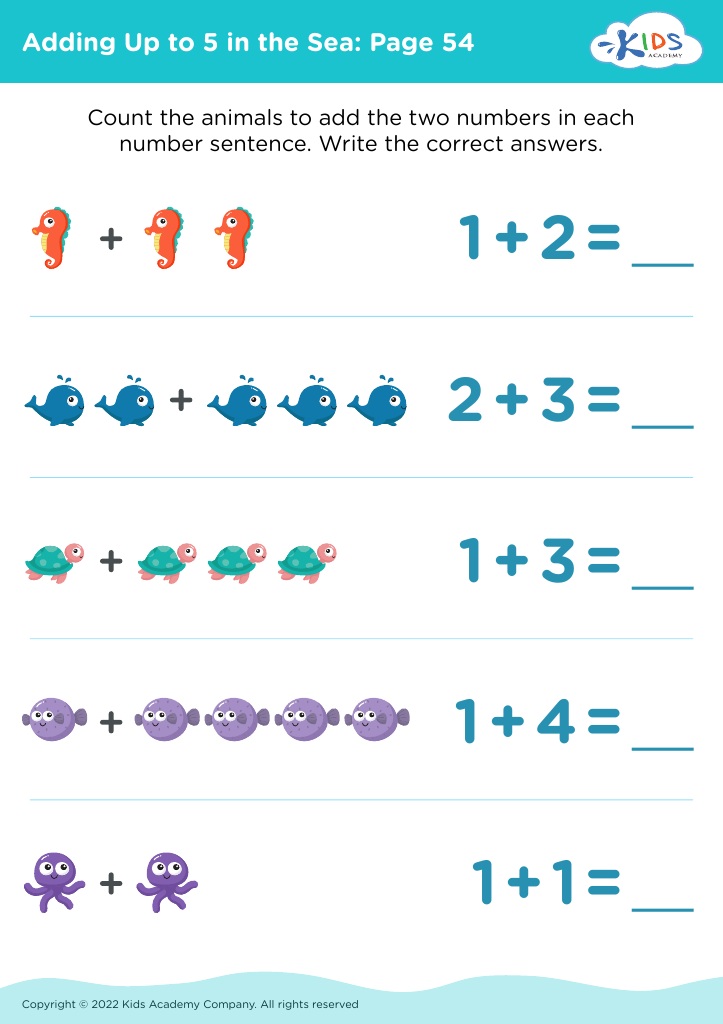
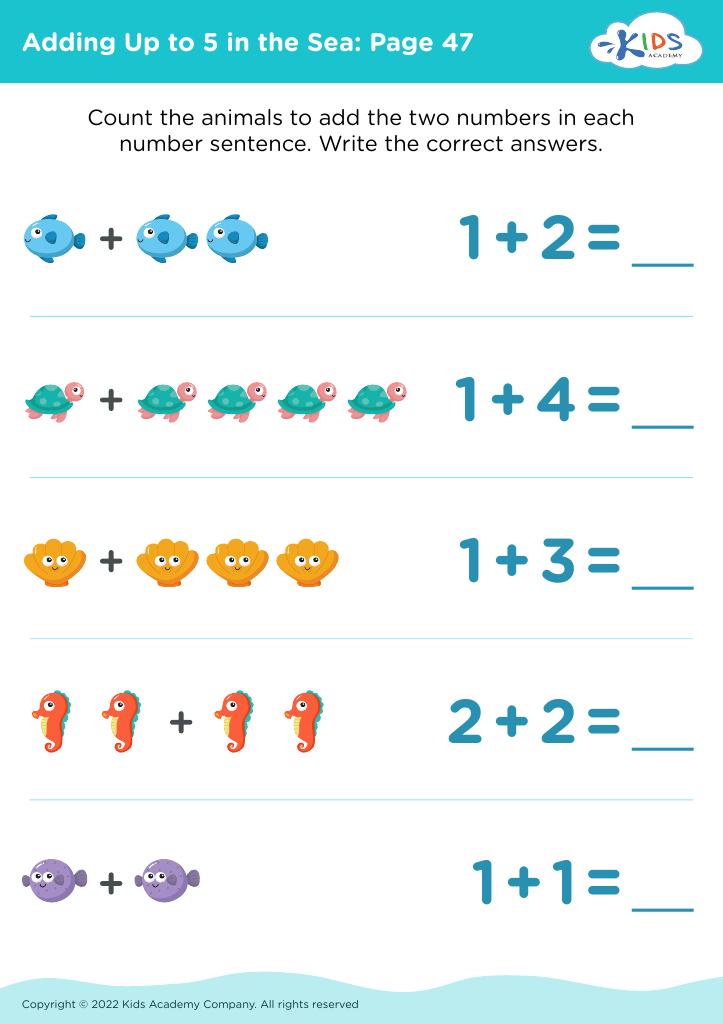



Parents and teachers should care profoundly about cognitive development in young children, specifically concerning learning activities like "Cognitive Development Adding in the Sea" for ages 4-7. This period marks a critical stage in a child's development when their brains are most malleable and receptive to learning foundational skills that will serve them throughout their lives. Integrative activities such as "Adding in the Sea" merge academic concepts, like arithmetic, with engaging and often visual themes tied to marine life. This dual approach caters to various learning styles and helps maintain a child’s interest and motivation.
Interactive and thematic learning strengthens neural connections by associating numbers and mathematical operations with real-world contexts. This kind of activity fosters problem-solving skills, enhances memory retention through repetition and recognition, and supports the development of higher-order thinking. Additionally, using familiar elements like sea creatures to teach adding can make the learning experience enjoyable, reducing anxiety around math and encouraging a positive attitude towards learning.
Investing in cognitive development during these early school years aids in establishing a strong academic foundation, confidence, and curiosity. Ultimately, ensuring that children are mastering fundamental skills in an engaging way prepares them for future academic demands and nurtures their overall intellectual growth.